

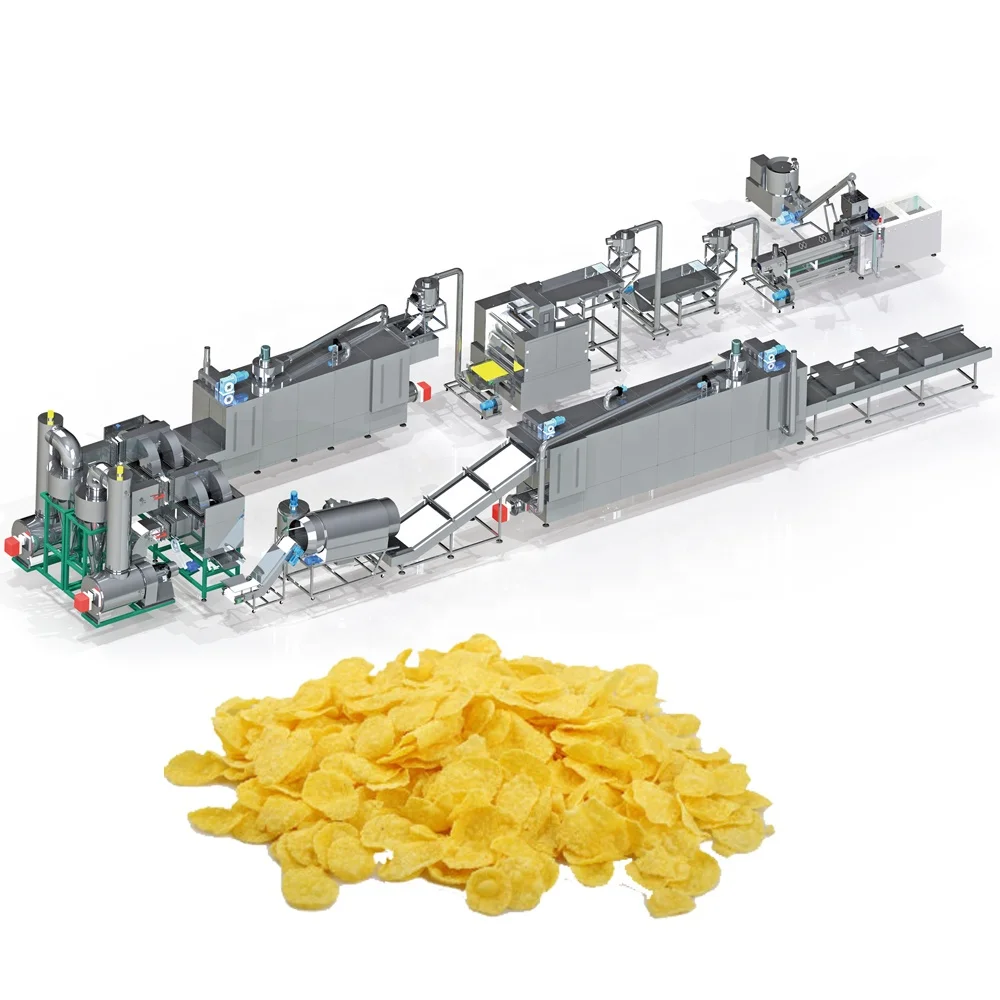
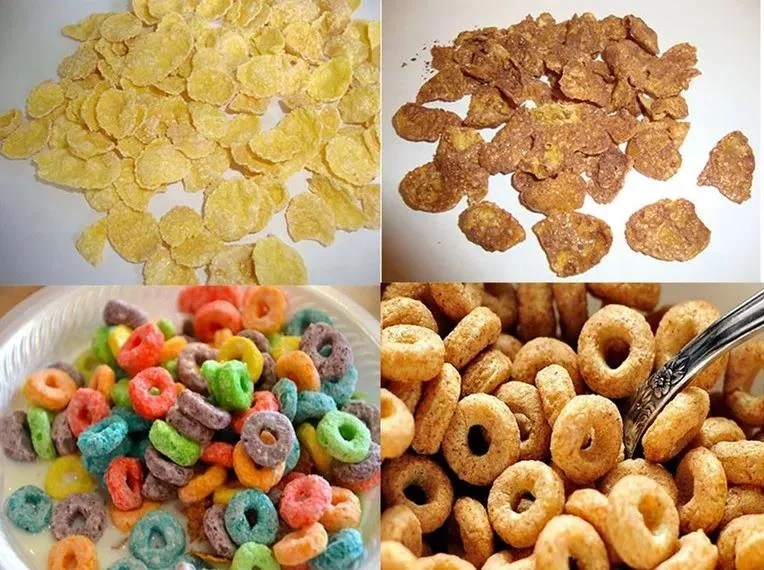
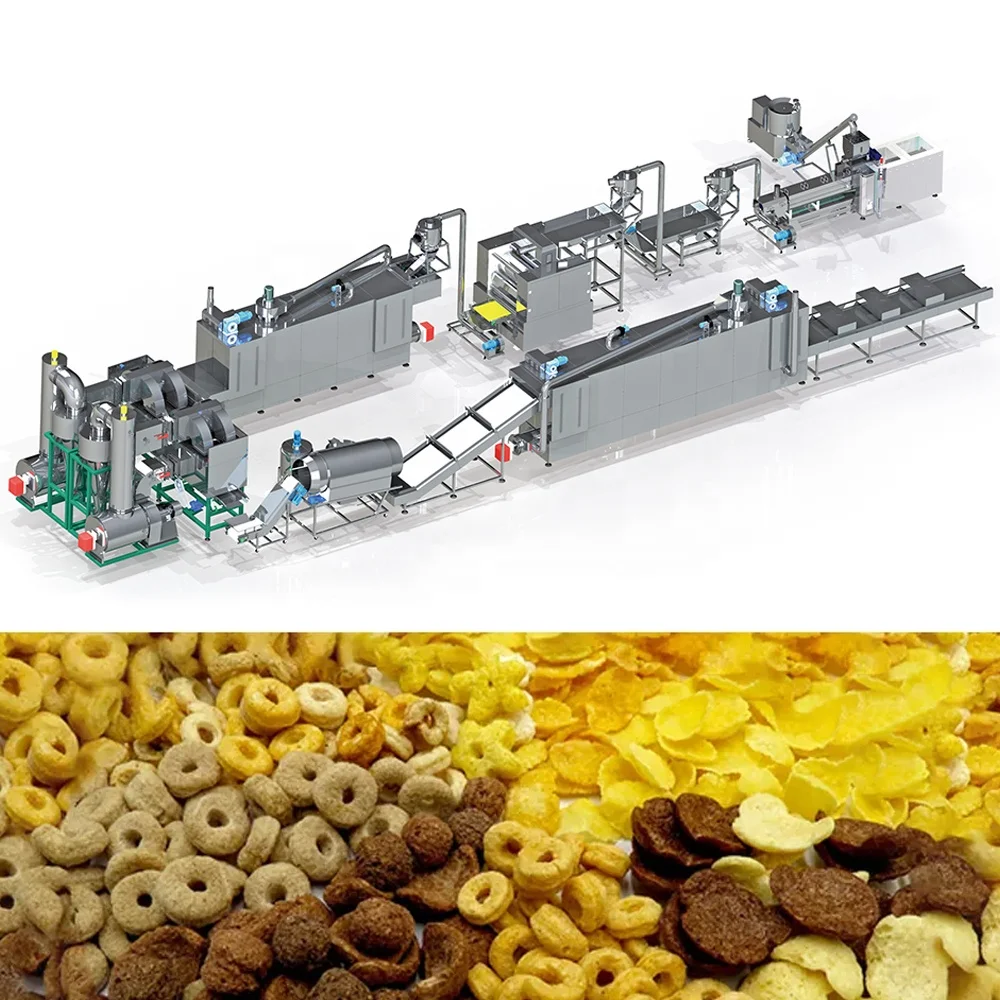
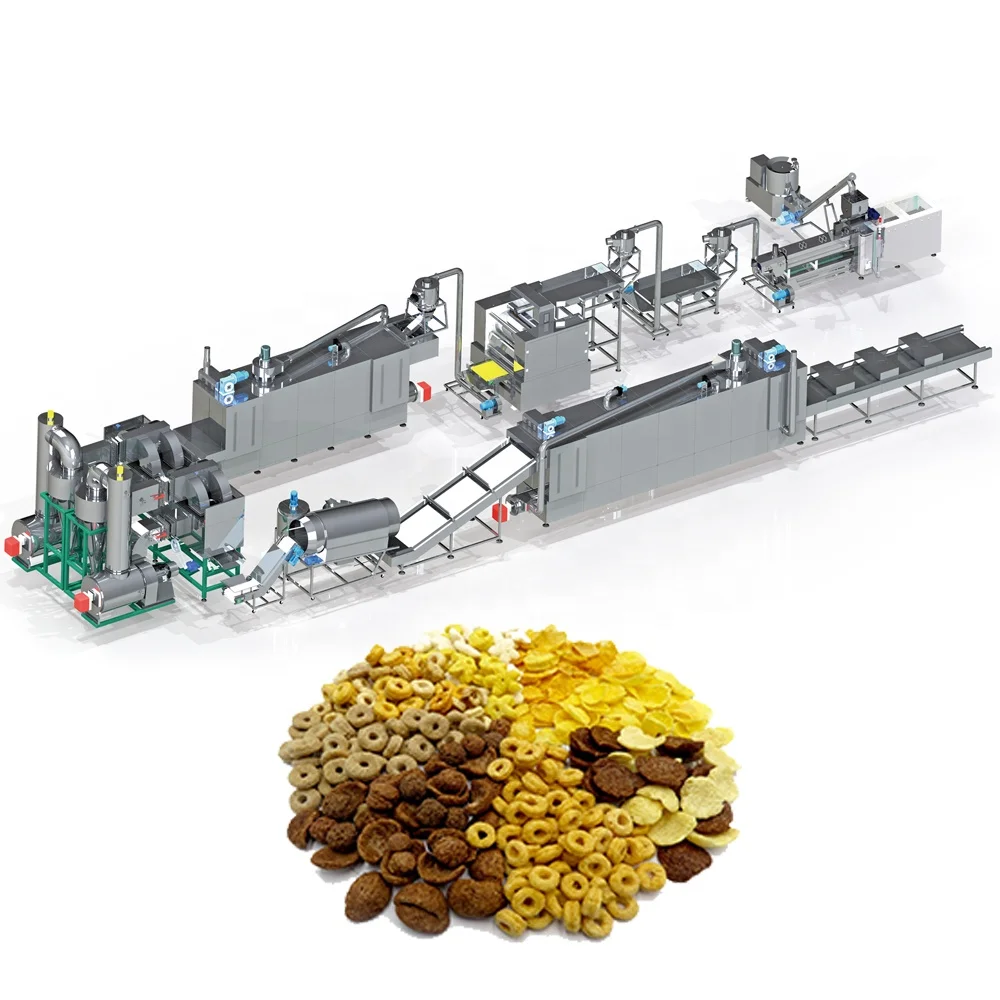
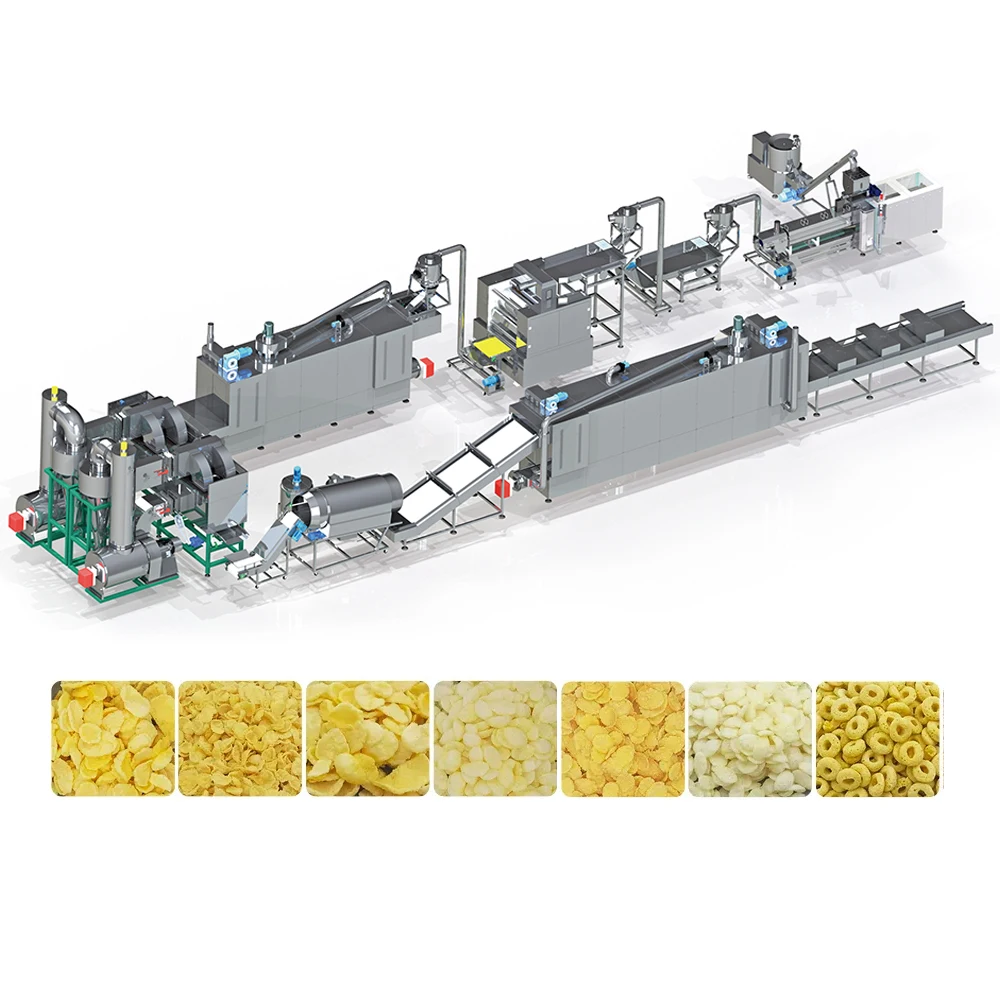
MT75 Twin Screw Extruder Corn Flakes Production Line, 300-500 kg/h, 210 kW Installed Power — configured as a complete turnkey system from mixing through extrusion, flaking, roasting, coating, and packing. Screw configuration and die design are matched to your raw material and target flake density, with PLC-controlled hydraulic flaking rollers and infrared temperature sensing for consistent thickness. Every station’s throughput is calculated and balanced so no single unit bottlenecks the line. Trial runs on your actual formulation are completed in our testing workshop before shipment, with full documentation covering layout, electrical schematics, and CE conformity.
Description
Turnkey line integration — throughput matched from mixing through packing so no single station bottlenecks your corn flakes output.
Technical Specifications
| Parameter | Value |
|---|---|
| Product Type | Twin Screw Extruder Corn Flakes Production Line |
| Model | MT75 |
| Screw Type | Twin-screw |
| Installed Power | 210 kW |
| Power Consumption | 150 kW |
| Output Capacity | 300–500 kg/h (basis not stated in source) |
| Overall Dimensions | 45 × 1.5 × 3.5 m |
| Control System | PLC control available |
| Line Stations | Mixing → Extruding → Flaking → Drying → Hot Air Roasting → Sugar Spraying / Coating → Drying → Cooling → Packing |
| Flaking Machinery | Hydraulic double-roller system, double motors, infrared sensor temperature control |
| Dryer Heating Source | Gas or Electric |
| Hot Air Roasting Oven | Vibrating pan, dual circulating fans, cyclone dust removal |
| Coating System | Double tumble sugar melter, elevator, coating drum, spraying nozzle |
| Raw Materials | Corn, rice, wheat, oat, barley powder |
| Assembly State | Complete turnkey line |
| Standards | CE, ISO |
Application Suitability
| Application | Material or Output |
|---|---|
| Natural corn flakes production | Corn grits, corn flour |
| Sugar-coated breakfast cereal | Corn, rice, wheat blends with sugar coating |
| Multigrain cereal flakes | Oat, barley, wheat powder formulations |
| Puffed snack shapes | Ball, tube, ring, star, wheel via die adjustment |
| Fortified breakfast cereal | Grain blends with added nutritional premix |
What "300–500 kg/h" Leaves Out About Your Corn Flakes Line
Nominal capacity means nothing if the flaker or dryer cannot keep pace with the extruder on your specific grain formulation.
Many breakfast cereal projects stall not because the twin-screw extruder fails, but because downstream stations were sized on paper rather than matched to the actual moisture curve and gelatinisation behaviour of the buyer’s raw material. I have walked into plants where semi-finished flakes piled up on conveyors, absorbing ambient humidity and clumping before they ever reached the roasting oven. A corn flakes production line turnkey only delivers its promise when every station — from the hydraulic flaking rolls to the cyclone-equipped roaster — is calculated against the same throughput reality [NEED_CITE: throughput matching across extrusion line stations].
How Screw Configuration Controls Flake Density and Crispness
The twin-screw extruder in this corn flakes production line turnkey uses a screw configuration and die design specified to the buyer’s grain blend and target flake thickness. Corn behaves differently from oat or barley under shear and heat — starch gelatinisation temperature, moisture absorption rate, and expansion ratio all shift with the raw material profile. Matching the screw element sequence and barrel temperature zones to that profile determines whether the extrudate emerges with the right internal structure for consistent flaking downstream.
Why the Flaking and Roasting Stages Decide Final Product Quality
The hydraulic double-roller flaking machinery applies uniform pressure across the roller gap, with infrared sensors monitoring surface temperature to maintain flake consistency batch after batch. After drying, the hot air roasting oven uses a vibrating pan and dual circulating fans to create the characteristic surface bubbling that defines a quality corn flake. The cyclone dust removal device captures fine particulate before it can settle back onto the product or accumulate in the oven chamber [NEED_CITE: hot air roasting dynamics in breakfast cereal processing]. Without this stage properly sized, flakes emerge pale, under-toasted, or unevenly crisped.
Reading the Specs That Actually Matter
The MT75 carries an installed power of 210 kW with operational consumption around 150 kW, which tells you the thermal and mechanical headroom available for processing dense grain formulations. The 45-meter overall line length reflects the physical footprint needed for sequential drying, roasting, coating, and cooling — compressing this layout typically means sacrificing residence time in the dryer or roaster, directly affecting final moisture and shelf stability. The PLC control system coordinates timing across stations, ensuring the flaking rolls receive extrudate at the correct temperature window before surface moisture evaporates. Voltage and frequency must be confirmed against the destination market before electrical cabinets are built [NEED_CITE: voltage and frequency standards by export market].
The Hidden Cost of Mismatched Downstream Capacity
When a coating drum is undersized relative to extruder output, sugar-coated flakes queue up in the elevator, sticking together in clumps that must be discarded. An undersized dryer forces the roaster to handle moisture removal it was never designed for, resulting in uneven toasting and shortened oven component life. These failures rarely show up in the quotation — they surface weeks after commissioning, when the line is expected to run at sustained capacity [NEED_CITE: common bottlenecks in cereal extrusion lines].
Why Procurement Through This Line Builder Works
Every station from batching to packing comes from a single supplier, meaning throughput calculations are internally verified rather than negotiated between separate vendors. The in-house testing workshop runs your actual grain formulation through the extruder and flaker before shipment, producing a trial run report that confirms capacity against your real material. Screw and die configurations are documented specifically for your target flake density, not copied from a generic build. Electrical schematics arrive with voltage and frequency already confirmed for your facility, avoiding commissioning delays. Pre-sales engineering covers the full line layout including utility planning, so floor space, gas supply, and electrical load are mapped before production begins.
Documentation & Verification
- Line layout with capacity calculation showing station-by-station throughput matching
- Trial run report conducted on your grain formulation before dispatch
- Screw and die configuration record specific to your target flake density
- Electrical schematic with confirmed voltage, frequency, and control language
- CE declaration of conformity and ISO certificate for the complete line
- Factory test record documenting operational parameters at time of inspection
Installation, Commissioning & Support
- Foundation and floor space planning based on the 45 × 1.5 × 3.5 m line footprint
- Electrical supply sizing for 210 kW installed load with dedicated circuit recommendations
- Phased assembly sequence from extruder through packing stations with utility connection schedule
- First-run parameter setting covering barrel temperatures, roller pressure, and roaster fan speed
- Operator training on PLC interface, hydraulic flaker adjustment, and coating drum operation
- Wear parts list covering screws, dies, and roller surfaces with recommended replacement intervals
What to Prepare Before Requesting a Quote
To scope a corn flakes production line turnkey accurately, share your primary grain type and any secondary flours in the formulation, along with the target flake thickness and whether sugar coating is required. Confirm your facility voltage and frequency, available gas supply for the dryer and roaster, and the physical dimensions of the production hall including ceiling height. If you have existing upstream milling or downstream packing equipment, specify the interface points so the line can be integrated without redundant stations.
Frequently Asked Questions
Q: How is line capacity verified against my specific raw material and formulation?
A: Your grain blend runs through the extruder and flaker in the testing workshop before shipment. A trial run report documents actual throughput, flake thickness, and moisture levels at each station. This confirms the 300–500 kg/h range against your real material rather than a generic benchmark, and any necessary screw or die adjustments are made before the line leaves the factory.
Q: What utility planning is needed for a full corn flakes line?
A: You need to confirm local voltage and frequency for the 210 kW electrical load, gas supply capacity if selecting gas-heated dryers and roasters, and floor space for the 45-meter line layout including operator walkways. Ceiling height must accommodate the 3.5-meter equipment profile plus ventilation ducting. These details are mapped during the layout proposal stage before production begins.
Q: How do you ensure throughput matching between the extruder, flaker, dryer, and coater?
A: Each station is sized against the same capacity calculation rather than selected from a standard catalogue. The hydraulic flaker, drying oven, hot air roaster, and coating drum are all specified to handle the extruder output at your target moisture curve, preventing material buildup at any transfer point. The layout document shows these matched figures station by station.
Q: What does on-site installation and commissioning cover on this turnkey project?
A: Engineers oversee mechanical assembly, utility connections, and sequential startup from mixing through packing. Commissioning includes setting barrel temperature profiles, flaker roller pressure, and roaster fan speeds on your actual grain supply. Operator training covers PLC operation, hydraulic adjustment, coating system use, and daily maintenance routines before the team departs.
Related products
-

Full Automatic Crispy Maize Chocos Corn Flakes Breakfast Cereals Processing Production Line Industrial Equipment
¥1,000.00 Select options This product has multiple variants. The options may be chosen on the product page -

New Condition Automatic Corn Puff Snacks Food Extruder Cheese Ball Making Machine Plant
¥100.00 Select options This product has multiple variants. The options may be chosen on the product page -

Automatic Puffed Food Snack Machine Electric Corn Puffs Snacks Making Machinery New Condition Flavorful Puff Snack Production
¥7,550.00 Select options This product has multiple variants. The options may be chosen on the product page -

New Stainless Steel Automatic Snack Food Machinery Extruder Puffed Corn Maize Puff Processing Line for Food Industry High
¥12,350.00 Select options This product has multiple variants. The options may be chosen on the product page


