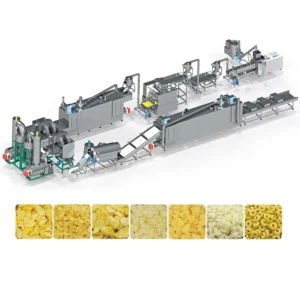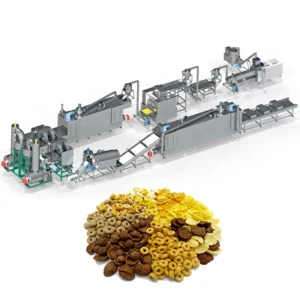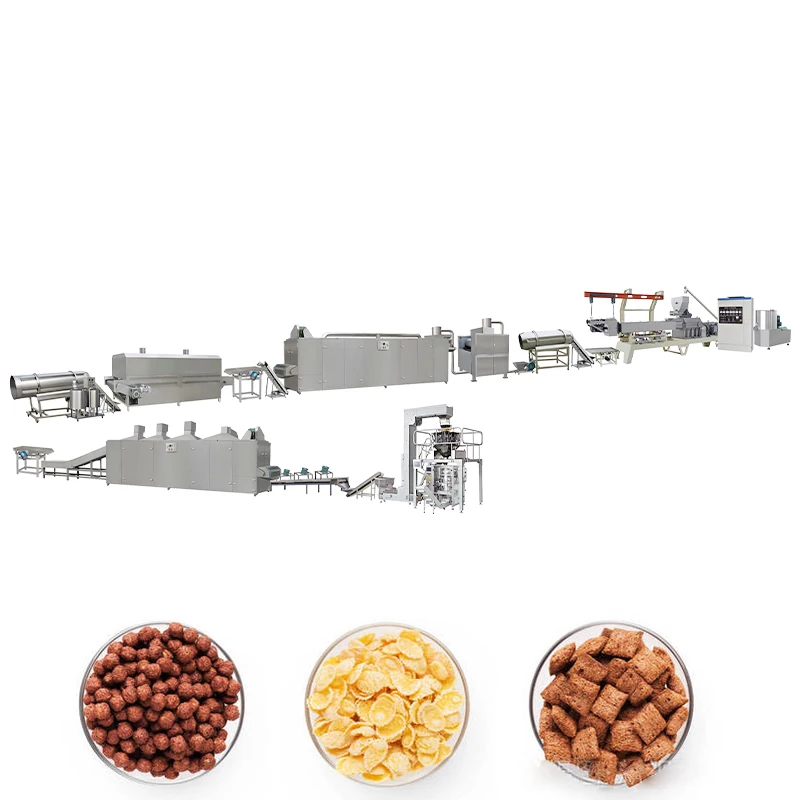


Backed by in-house testing on your actual raw material before shipment, throughput-matched stations across every position, and full documentation from line layout to CE declaration.
Description
Throughput-Matched Stations — Every section from batching through extrusion, flaking, roasting, coating to packing is sized by one supplier so the corn flakes breakfast cereal production line holds its rated output without downstream bottlenecks.
Technical Specifications
| Parameter | Value |
|---|---|
| Product Type | Corn Flakes Breakfast Cereal Production Line |
| Model Options | MT-65 / MT-70 / MT-85 / MT-75 |
| Extruder Type | Twin-screw |
| Installed Power | 84 kW (MT-65) / 132 kW (MT-70) / 239 kW (MT-85) / 186 kW (MT-75) |
| Real Power Consumption | 59 kW (MT-65) / 92 kW (MT-70) / 167 kW (MT-85) / 140 kW (MT-75) |
| Output Capacity | 120–150 kg/h (MT-65, basis not stated in source — confirm raw material / moisture) / 200–250 kg/h (MT-70, basis to be confirmed) / 300–400 kg/h (MT-85, basis to be confirmed) / 400–500 kg/h (MT-75, basis to be confirmed) |
| Overall Dimensions | 21000×1200×2200 mm (MT-65) / 23000×1500×2200 mm (MT-70) / 28000×3500×4300 mm (MT-85) / 24000×1500×2800 mm (MT-75) |
| Control System | PLC and MCC centralized control with real-time data storage, monitoring, alarm and reminder |
| Line Stations | Mixer → Screw Conveyor → Twin Screw Extruder → Air Conveyor → Dryer → Hoister → Flaking Machine → Hot Air Roaster → Flavoring Drum / Sugar Spraying System → Cooling Machine → Packing Machine |
| Dryer Configuration | Three, five, or seven layers; electric or gas heating |
| Flaking Machine Roller | Cast iron roller, 45# steel shaft, carbon steel frame |
| Hot Air Roaster | Max temperature up to 400 °C; electric or gas heating |
| Sugar Spraying System | 28.75 kW total power; Ø600 × 2700 mm roller; 4000×1900×1880 mm overall |
| Packing Machine Options | 420 / 520 / 620 / 720 vertical packing machine |
| Raw Material Form | Powder (flour) or grits |
| Assembly State | Complete turnkey line |
| Standards | CE, ISO |
Application Suitability
| Application | Material or Output |
|---|---|
| Corn flakes and maize flakes | Corn grits or corn flour as primary ingredient |
| Sugar-coated breakfast cereal | Plain flakes coated via sugar spraying drum |
| Multi-grain flakes | Rice, millets, wheat, oat, barley blended with corn |
| Fortified breakfast cereal | Vitamin and mineral premix added at batching stage |
| Vegan breakfast cereal | Plant-based formulation without dairy or animal-derived coating |
Why Nominal Capacity Numbers Mislead Buyers on a Corn Flakes Line
A line rated at a given throughput only holds that number when every downstream station — flaking, drying, roasting, coating — is matched to the extruder’s actual output on your specific grain blend.
I once watched a corn flakes line stall on its first production day because the flaking machine and hot air roaster could not keep pace with the extruder. Material piled up on the conveyor, and the crew spent two full shifts clearing the backlog before the line ran continuously. The root cause was a corn flakes production line turnkey package assembled from separate vendors whose individual machines had never been tested together under load [NEED_CITE: throughput mismatch causes in multi-vendor food processing lines]. When the extruder pushes wet, gelatinized corn grits downstream faster than the flaking rollers can compress them, you get a bottleneck that no amount of operator adjustment can fix. The fix starts at the layout stage, where each station’s real capacity on your raw material must be calculated before the line is built.
Station Matching Across the Full Extrusion-to-Pack Sequence
A corn flakes production line turnkey project succeeds or fails on whether throughput is balanced at every transfer point. The mixer feeds the screw conveyor at a controlled rate, the twin-screw extruder gelatinizes the starch, and the extrudate moves through an air conveyor into the dryer. From there, the hoister lifts material into the flaking machine, which compresses it into thin sheets before the hot air roaster puffs the flakes at temperatures reaching 400 °C. If any single station is undersized, the entire line slows to that station’s pace, and the nominal output becomes unreachable during continuous operation.
Screw and Die Configuration Tuned to Your Grain Blend
Corn behaves differently from rice or oat under shear and heat inside the barrel. The screw profile, compression ratio, and die geometry must be specified to the buyer’s raw material and target flake thickness rather than copied from a generic build. A corn flakes production line turnkey solution configured for pure corn grits will produce a different expansion profile than one designed for a multi-grain blend with oat or barley. The configuration record is documented before production begins and validated during the in-house trial run so adjustments happen at the factory, not on your floor [NEED_CITE: twin-screw extrusion screw configuration impact on cereal texture].
Reading the Power and Footprint Numbers
Installed power figures across the MT-65 through MT-85 range reflect the total connected load of every motor, heater, and blower on the line, while real power consumption represents the typical draw during steady-state production. The difference matters for utility planning: a plant wiring a new line needs to provision for the installed figure at startup, but operating cost calculations should use the real consumption values. The overall dimensions — reaching up to 28000×3500×4300 mm on the MT-85 — dictate floor space, ceiling height, and access corridors. Before the line ships, the electrical schematic confirms voltage and frequency so transformers and switchgear are ready on arrival.
The Cost of Skipping Throughput Verification
When a flaking machine or dryer is sourced separately and its capacity is not verified against the extruder output, the result is a line that idles while operators clear jams. Downtime during the first production week is common on mismatched installations, and the lost output can exceed the price difference between a matched line and a pieced-together one [NEED_CITE: hidden costs of unbalanced food processing lines]. Flakes that sit too long before roasting lose moisture unevenly, producing inconsistent texture that fails quality checks. These problems compound when the sugar spraying system is also undersized, creating a second bottleneck after the roaster.
Why Sourcing the Complete Line from One Supplier Matters
Every station on this corn flakes production line turnkey system is specified under one responsibility, so throughput calculations are cross-checked before fabrication rather than reconciled after installation. The screw and die configuration is matched to the buyer’s raw material, not borrowed from a default setup. An in-house testing workshop runs the buyer’s actual grain blend before shipment, producing a trial run report that confirms flake thickness, expansion, and texture. The PLC and MCC control system is programmed with the correct language and voltage before the line leaves the factory. Pre-sales consultation, on-site installation, commissioning, operator training, and ongoing maintenance support are delivered by the same engineering team that designed the layout.
Documentation & Verification
- Line layout drawing with capacity calculation for each station on your grain blend
- Screw and die configuration record matched to your raw material formulation
- Factory test report from in-house trial run on your corn grits or flour before dispatch
- Electrical schematic with voltage, frequency, and control language confirmation
- CE declaration of conformity and ISO certificate for the complete line
- Wear parts list covering screws, dies, and flaking roller components
Installation, Commissioning & Support
- Floor plan review ensuring the 21–28 m line length fits your workshop with access corridors
- Dedicated power circuit sized to the installed power rating of your selected model
- Sectional delivery with on-site assembly aligning extruder, flaking machine, and roaster
- First-run commissioning setting barrel temperature, roller gap, and roaster airflow to your recipe
- Operator training on PLC interface covering alarm response and batch data storage
- Initial spare parts package including replacement screws, dies, and cast iron roller segments
What to Include in Your Inquiry
To configure the right line, share your primary grain type and whether you will use flour or grits, your target daily output in kilograms, and your workshop dimensions including ceiling height. Specify the local voltage and frequency, the preferred control language, and whether you need gas or electric heating for the dryer and roaster. If you plan to send raw material for a pre-shipment trial run, provide the formulation and moisture content so the testing workshop can prepare.
Frequently Asked Questions
Q: How is the output capacity of each model verified before delivery?
A: Each model’s capacity depends on the raw material type, moisture content, and target flake specification. Before shipment, the testing workshop runs your actual grain blend through the line and documents throughput, flake thickness, and texture in a trial run report. This confirms what the line produces on your formulation, not on a generic test material.
Q: How do you prevent bottlenecks between the extruder and downstream stations?
A: Every station — flaking machine, dryer, hot air roaster, sugar spraying drum, cooling conveyor — is sized against the extruder’s real output on your grain blend during the layout phase. Throughput matching is calculated before fabrication so no single section limits the line below its intended rate.
Q: Can the voltage, frequency, and control language be adapted to my market?
A: Yes. The electrical schematic is confirmed with the buyer before production. Voltage and frequency are set to match local supply standards, and the PLC interface language is programmed accordingly. This avoids commissioning delays caused by incompatible power or unreadable controls on site.
Q: Is a pre-shipment trial run available using my own raw material?
A: The in-house testing workshop conducts trial runs on the buyer’s corn grits, flour, or multi-grain blend before the line is packed for shipment. The resulting report records capacity, flake quality, and process parameters, giving you verified data before the equipment reaches your facility.
Q: How are spare wear parts managed for screws, dies, and flaking rollers?
A: A wear parts list is provided with the line documentation, identifying screws, dies, and cast iron roller components along with their expected service intervals. Replacement parts are available from the factory, and the first set can be included in the initial shipment to cover early production needs.
Related products
-
Hot Selling Automatic Corn Flakes Breakfast Cereal Production Line Making Machine
¥20,000.00 Select options This product has multiple variants. The options may be chosen on the product page -
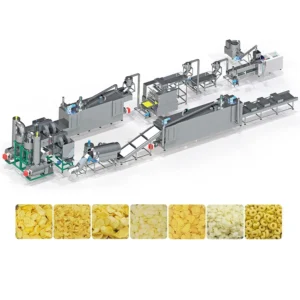
Automatic Cornflakes Making Machine Corn Flakes Breakfast Cereals Processing Production Line
¥500.00 Select options This product has multiple variants. The options may be chosen on the product page -
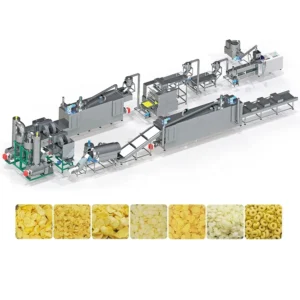
Whole Grain Choco Hoop Crunchy Wheat Cereal Ring Fruit Loops Snacks Extruder Machine /breakfast Cereals Corn Flakes Production
¥48,000.00 Select options This product has multiple variants. The options may be chosen on the product page -
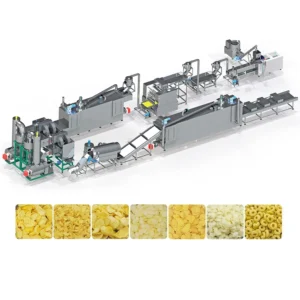
Automatic Commercial Breakfast Wheat Circle Corn Flake Production Line
¥65,000.00 Add to cart