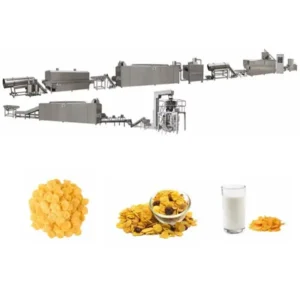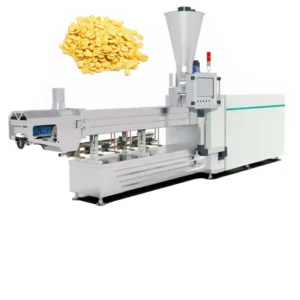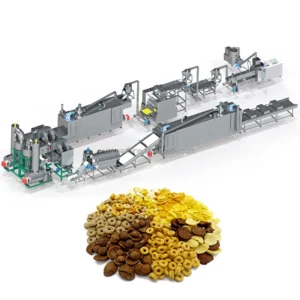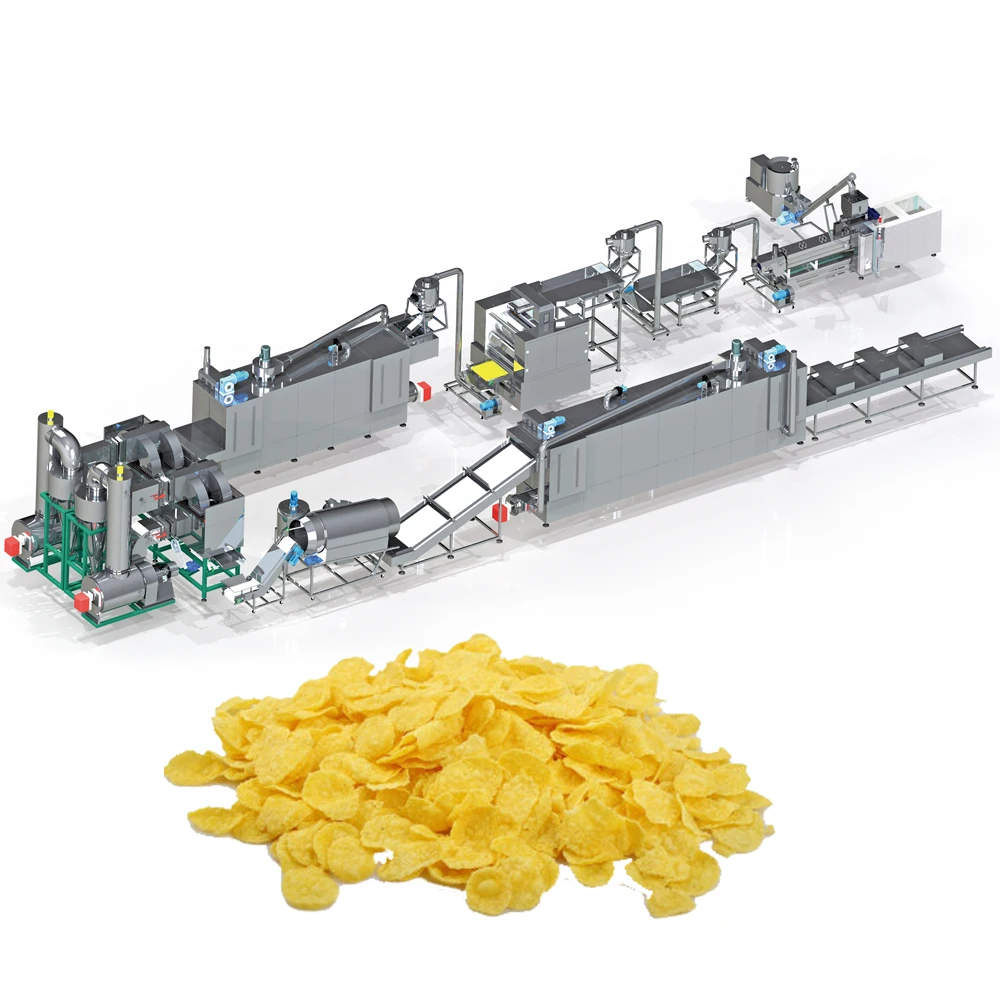
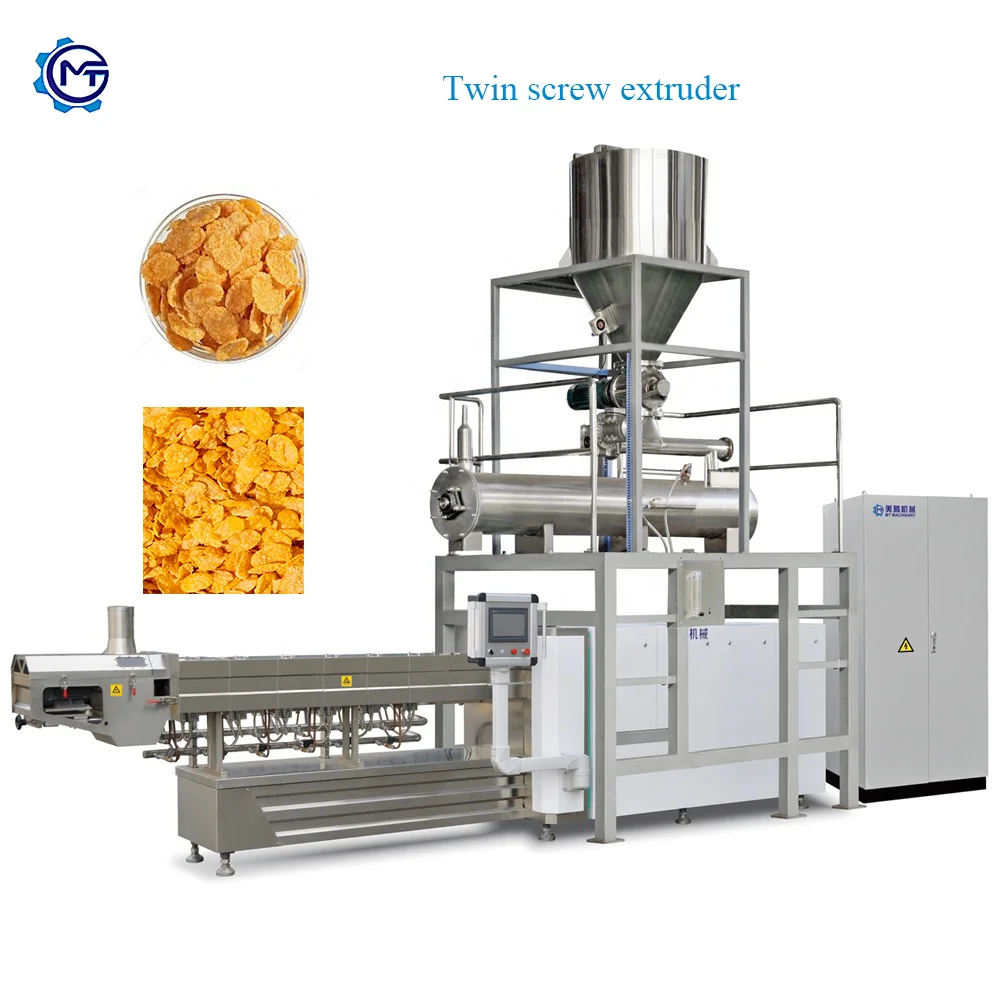
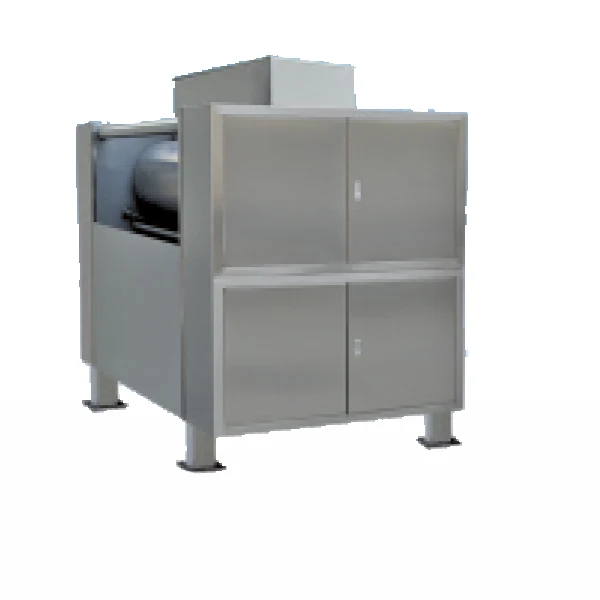
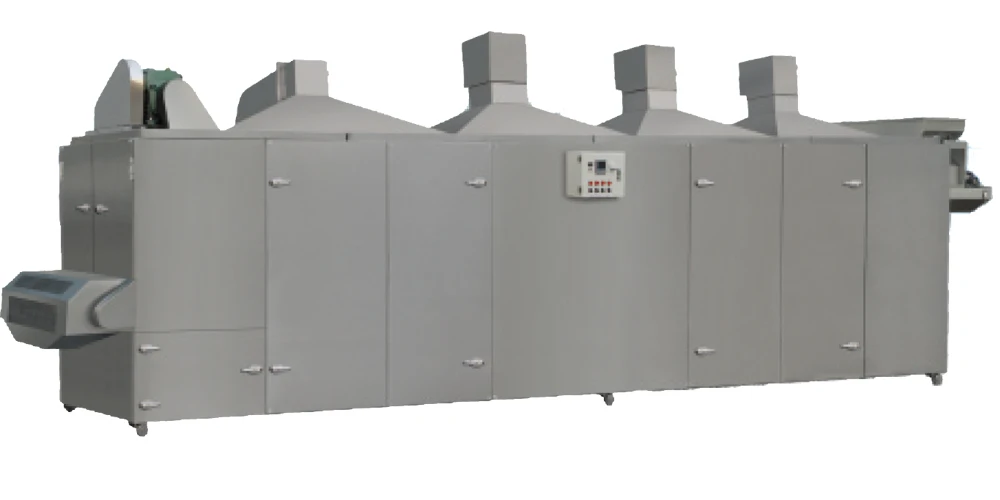
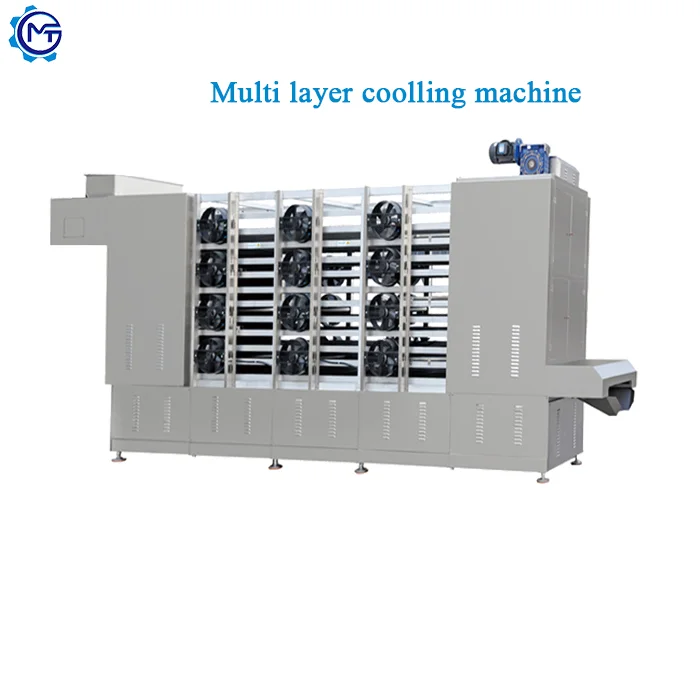

MT-65 Corn Flakes Production Line, Twin-Screw Extrusion, Gas Oven Baking, Sugar Coating — integrated from mixing through flaking to packing under one turnkey project scope.
- Co-rotating twin-screw extruder with sectional modules matched to corn grits gelatinisation and target flake density
- Throughput-matched stations including press, high-temperature oven and sugar spraying system sized as one project
- Layout, phased installation schedule and commissioning delivered with operator training
Trial runs on buyer’s own raw material in our testing workshop confirm real output before shipment.
Description
Throughput-Matched Station Design — Every station from the mixer to the sugar spraying system is calculated against the extruder’s real output on your specific grain formulation, preventing bottlenecks before the line ships.
Technical Specifications
| Parameter | Value |
|---|---|
| Product Type | Corn Flakes Production Line |
| Output Capacity (MT-65) | 120-150 kg/h (basis not stated in source) |
| Output Capacity (MT-70) | 200-250 kg/h (basis not stated in source) |
| Output Capacity (MT-75) | 300-400 kg/h (basis not stated in source) |
| Output Capacity (MT-85) | 400-500 kg/h (basis not stated in source) |
| Installed Power (MT-65 to MT-85) | 84 kW / 132 kW / 186 kW / 239 kW |
| Real Power Consumption | 59 kW / 92 kW / 140 kW / 167 kW |
| Overall Dimensions (L×W×H) | 12m to 28m length, depending on model |
| Extruder Screw Type | Twin-screw, co-rotating sectional modules |
| Corn Flakes Press Machine Power | 16.12 kW |
| High-Temperature Oven Heating Source | Gas, both-side baking system |
| Sugar Spraying System Roller Size | Ø600×2700 mm |
| Control System | PLC and MCC control options available |
| Standards | CE, ISO |
Application Suitability
| Application | Material or Output |
|---|---|
| Breakfast Cereal Production | Corn grits, corn flour, wheat flour, oat blends |
| Puffed Snack Processing | Rice flour, corn starch, multi-grain formulations |
| Core-Filled Snack Formats | Peanut, walnut, sugar-based fillings with cereal shells |
| Fortified Cereal Lines | Vitamin and mineral pre-mixed with base grain flours |
What "Nominal Capacity" Means When the Extruder Hits the Flaking Mill
A line is only as fast as its most constrained station, not the number on the extruder nameplate.
When sourcing a corn flakes production line turnkey, buyers often receive a quote based on the extruder’s maximum theoretical output. But if the downstream corn flakes press machine cannot handle that volume, or if the high-temperature oven lacks the residence time to bake the flakes evenly at that throughput, the entire line stalls. I have walked onto factory floors in Southeast Asia where the extruder was running at half capacity because the flaking mill kept jamming, or where the oven output was wet and under-baked because the gas burners could not keep up with the feed rate [NEED_CITE: throughput matching principles in continuous food processing lines]. The capacity number is meaningless unless every station is balanced to the actual raw material and moisture profile you intend to run.
Station Sequencing and Material Flow
The sequence from mixer to screw conveyor to twin-screw extruder, then through the corn flakes press machine, high-temperature oven, and sugar spraying system, must function as a single continuous loop. If the mixer batch size does not align with the extruder’s feed rate, operators are either waiting for the next batch or dumping excess material. The screw conveyor must maintain a steady, metered flow into the extruder hopper to prevent surging, which directly affects the gelatinization consistency inside the barrel.
Moisture, Gelatinization, and Flake Integrity
The twin-screw extruder with co-rotating sectional modules handles the cooking, mixing, and forming in one continuous process. The degree of starch gelatinization achieved inside the barrel dictates whether the extruded pellet will flatten into a clean, intact flake at the press machine or shatter into dust. This is where screw configuration and barrel temperature profiling must be matched to the buyer’s specific corn grits or flour blend [NEED_CITE: starch gelatinization behavior in twin-screw extrusion]. A generic screw setup that works for one corn variety may produce a pellet that is too dry or too dense for another, resulting in poor flake yield and excessive waste at the press station.
Power Draw and Utility Planning
The distinction between installed power and real power consumption matters when planning the electrical infrastructure for a corn flakes production line turnkey. The MT-75, for example, lists 186 kW installed but draws approximately 140 kW in real operation. The sugar spraying system alone requires 28.75 kW, and the corn flakes press machine pulls 16.12 kW. These loads must be distributed across dedicated circuits, and the total connected load must account for startup surges, particularly on the extruder main drive and the oven circulation fans. Voltage and frequency must be confirmed against the site supply before the control panels are wired, as a 50 Hz motor running on a 60 Hz supply will over-speed and fail prematurely.
The Cost of a Mismatched Downstream Station
When the flaking press roller gap is not adjustable to match the extruded pellet size, or when the roller cooling system cannot dissipate the heat generated by continuous contact with hot pellets, the flakes stick to the rollers and tear. This forces operators to stop the line, clean the rollers, and restart, destroying any meaningful throughput. Similarly, if the high-temperature oven’s both-side baking system does not provide uniform heat distribution, flakes on one side of the belt will be over-browned while the other side remains under-dried, leading to inconsistent texture and shelf-life issues [NEED_CITE: thermal uniformity requirements in cereal baking ovens]. These are not minor adjustments; they are fundamental design mismatches that require equipment replacement or extensive modification to resolve.
Why Sourcing as One Project Matters
The corn flakes production line turnkey is engineered as a single project rather than assembled from separate vendors, which means the mixer tank size of Ø600×500 mm and the 10-30 kg batch capacity are calculated to feed the extruder without interruption. The screw conveyor dimensions and 0.75 kW drive are sized to match the extruder’s intake rate. The in-house testing workshop runs trial production on the buyer’s actual raw material before shipment, confirming that the screw and die configuration produces a pellet that flakes correctly at the press machine. The line layout and capacity calculation document shows the throughput balance across every station, and the electrical schematic confirms voltage and frequency alignment with the buyer’s site. On-site installation includes phased commissioning, starting with individual station checks before the full line is run continuously, and operator training covers the specific screw configuration and temperature profiles established during the trial run.
Documentation & Verification
- Line layout drawing showing station spacing and utility connection points for the selected model footprint
- Trial run report on buyer’s specific corn grits or flour blend, documenting pellet texture and flake yield
- Screw and die configuration record matched to target flake thickness and density specifications
- Electrical schematic with voltage, frequency, and control language confirmed against site requirements
- Factory test record verifying throughput balance between extruder, press machine, and oven
Installation, Commissioning & Support
- Foundation must support the full line length, up to 28 meters for the MT-85 configuration
- Dedicated electrical circuits required for the extruder main drive and the 28.75 kW sugar spraying system
- Gas supply line must be sized for the high-temperature oven’s both-side baking system demand
- Commissioning begins with individual station verification before full-line continuous run
- Operator training covers PLC interface navigation and screw configuration adjustment procedures
- Wear parts list includes twin-screw sectional modules, press machine roller surfaces, and die plates
What We Need to Configure Your Line
To prepare an accurate line layout and capacity calculation, we need the specific grain formulation you intend to process, including moisture content and particle size distribution. Provide the target daily output and the available workshop floor area, including ceiling height, so the line can be arranged in a straight or U-shaped configuration. Confirm the local voltage, frequency, and the preferred control language for the PLC interface, as well as whether the sugar spraying system will use a standard glaze or a custom coating formulation.
Frequently Asked Questions
Q: How is the output capacity verified on my specific raw material before the line ships?
A: The in-house testing workshop conducts trial runs using the buyer’s actual corn grits or flour blend. The extruder screw configuration and barrel temperature profile are adjusted until the pellet produces a clean, intact flake at the press machine. A trial run report documents the real throughput achieved, the moisture content at each station, and the final flake texture and density.
Q: How do you ensure throughput is matched between the extruder, flaking press, and oven?
A: Each station is sized based on the extruder’s real output on the buyer’s raw material, not the nominal nameplate capacity. The mixer batch cycle, screw conveyor feed rate, press machine roller speed, and oven belt speed are all calculated to maintain continuous flow without material buildup or starvation at any point.
Q: What voltage and control options are confirmed before production begins?
A: The electrical schematic is prepared only after the buyer confirms the site voltage, frequency, and phase configuration. The PLC and MCC control system can be configured for the local power supply, and the operator interface language is set to the buyer’s preference before the control panels are assembled and wired.
Q: What does on-site installation and commissioning include?
A: The process follows a phased schedule, starting with station-level mechanical and electrical checks, then individual station dry runs, and finally a full-line continuous production run. Operator training covers the specific screw configuration, temperature profiles, and press machine roller gap settings established during the pre-shipment trial run.
Q: How is the sugar spraying system integrated into the line sequence?
A: The sugar spraying system, with its Ø600×2700 mm roller and 28.75 kW total power, is positioned after the high-temperature oven. The glaze or coating formulation is prepared in the integrated melting tank at a controlled temperature, and the spraying rate is synchronized with the oven output to ensure even coverage without over-wetting the baked flakes.
Related products
-

200kg/h Breakfast Cereal Extruder Making Machine Hot Sale Corn Flake Production Line
¥30,000.00 Select options This product has multiple variants. The options may be chosen on the product page -
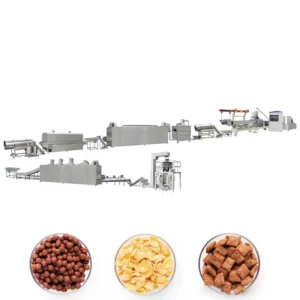
1000 Lbs Automatic Corn Flakes Production Line Mixer Breakfast Cereal Corn Flakes Production Line
¥45,000.00 Select options This product has multiple variants. The options may be chosen on the product page -
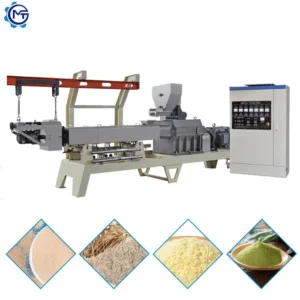
New Technical Automatic Cereal Nutritional Powder Instant Porridge Baby Food Making Machine
¥10,000.00 Select options This product has multiple variants. The options may be chosen on the product page -
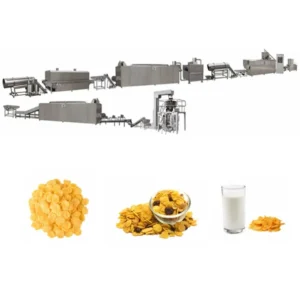
Cereals Corn Flakes with Sugar Corn Flakes Extrusion Food Machine Breakfast Cereal Production Line
¥23,000.00 Select options This product has multiple variants. The options may be chosen on the product page