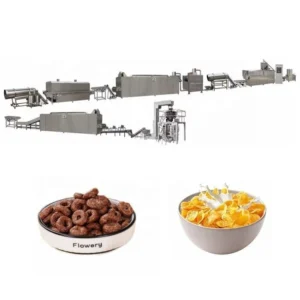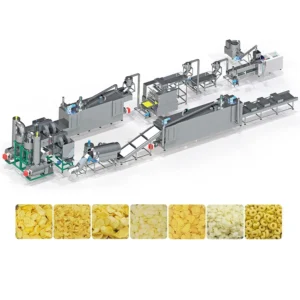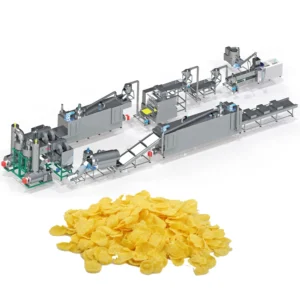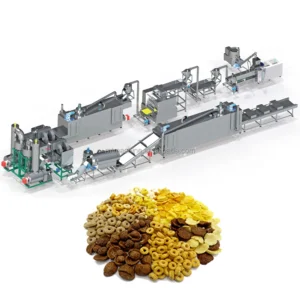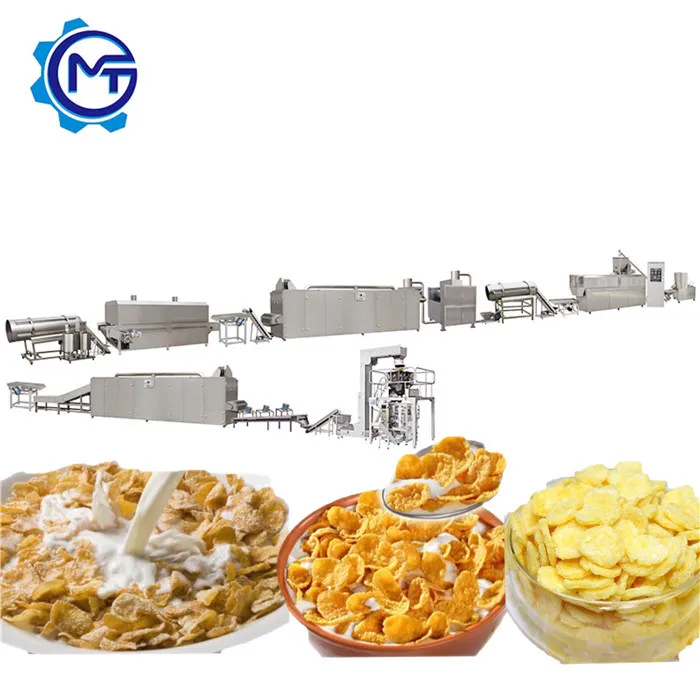

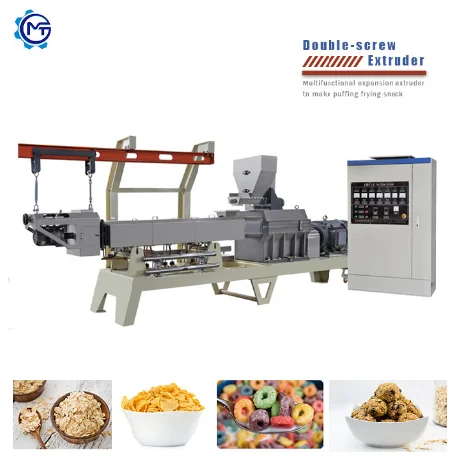

MT75 Twin Screw Corn Flakes Production Line, 210 kW, PLC Control — configured from raw material blend to target flake density, with hydraulic double-roller flaking and infrared temperature monitoring for consistent thickness. Die interchangeability supports natural and sugar-coated formats across corn, rice, wheat, oat and barley bases.
- Hot air roasting with dual circulating fans ensures uniform blistering
- Every station throughput-matched from mixing through packing
- Trial runs on your grain formulation completed before shipment
Description
Balanced Throughput Across Every Station — each section of this corn flakes line is matched from extruder output to flaking, drying and packing so rated capacity actually holds on your grain formulation.
Technical Specifications
| Parameter | Value |
|---|---|
| Model | MT75 |
| Product Type | Twin Screw Corn Flakes Production Line |
| Screw Type | Twin Screw |
| Installed Power | 210 kW |
| Power Consumption | 150 kW |
| Output Capacity | 300–500 kg/hr (basis not stated in source — confirm raw material type, moisture content and product format) |
| Overall Dimensions | 45 × 1.5 × 3.5 m |
| Control System | PLC |
| Flaking System | Hydraulic double-roller, dual motor separate drive, infrared temperature sensor |
| Dryer Heating Source | Gas / Electric |
| Roasting System | Hot air oven, conciliation burner, dual circulating fans, cyclone dust removal |
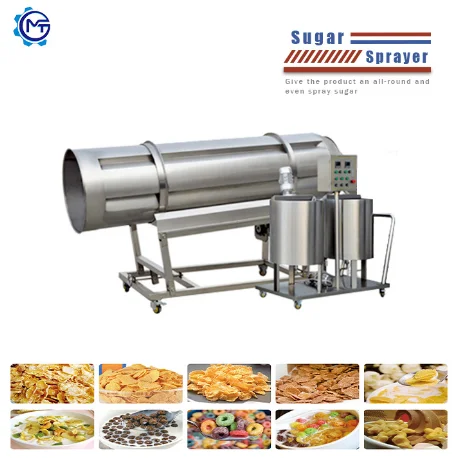
| Coating System | Double tumble sugar melting, elevator, coating drum, spraying nozzle |
| Extruder Features | Automatic lubricating, cooling function, wear-resistant screw elements |
| Standards | CE |
Application Suitability
| Application | Material or Output |
|---|---|
| Natural corn flakes for breakfast cereal retail | Corn powder, corn grits |
| Sugar-coated corn flakes with glaze finish | Corn, rice, wheat base with sugar coating |
| Multi-grain cereal from blended cereals | Corn, rice, wheat, oat, barley powder blends |
| Shaped cereal snacks via die change | Ball, tube, stick, ring, fruit loop, star, wheel, flower, heart formats |
Why Nominal Capacity Fails on Real Grain Blends
A corn flakes production line turnkey project quoted at a peak number often collapses once the buyer’s specific grain mix and moisture content hit the barrel. Line capacity must be verified against your actual raw material before the contract is signed.
I spent years in after-sales before moving into turnkey project coordination, and the most common call I received was from operators whose extruder could not sustain nameplate output on their local corn supply. The grain arrived at a different moisture level, the starch gelatinisation shifted, and throughput dropped while energy consumption climbed. The dryer then became the bottleneck because it was sized for a number the extruder never actually reached [NEED_CITE: raw material moisture impact on extrusion throughput]. When we scope a corn flakes production line turnkey project now, we start from the buyer’s grain specification — not a generic data sheet.
Throughput Matching From Mixing to Packing
Every station on a corn flakes production line turnkey layout must pass the same mass flow rate. If the extruder delivers at one rate but the dryer or flaking roll is undersized, product piles up or quality degrades. We calculate capacity at each node — mixing batch cycle, extruder screw fill, hydraulic flaking roll throughput, dryer belt load, and roasting oven residence time — then align them so no single station chokes the line.
PLC Coordination Across the Full Line
The PLC system ties extruder barrel temperature zones, hydraulic flaking pressure, infrared temperature monitoring on the rolls, and roasting oven burner modulation into one control architecture. When a formulation change requires a different barrel profile, the downstream dryer temperature and roasting fan speed adjust accordingly. This coordination prevents operators from manually chasing setpoints across isolated panels, which is where most batch-to-batch inconsistency originates [NEED_CITE: PLC integration in food extrusion lines].
Reading the Specs That Actually Matter
The MT75 twin screw configuration is central to corn flake quality. Twin screws provide positive conveying and higher shear than single screw designs, which matters when gelatinising corn starch at the moisture levels needed for proper flake texture. The 210 kW installed power with 150 kW operating draw reflects the motor capacity needed to maintain screw speed under the viscous load of hydrated grain mash. The hydraulic double-roller flaking station with dual motor separate drive gives independent control over each roll, preventing the uneven flake thickness that occurs when a single motor drives both rolls through a gear linkage. Infrared temperature sensors on the flaking rolls catch the thermal drift that changes flake density as the rolls heat up during a production run.
The Cost of Mismatched Line Stations
When a corn flakes line is assembled from separate vendors, the extruder supplier quotes one capacity and the dryer supplier quotes another, and nobody owns the gap between them. The flaking station arrives with roll pressure that cannot handle the extruder’s actual output density. The roasting oven lacks the cyclone dust removal needed for the fines your specific corn variety generates. These mismatches surface during commissioning, when change orders are expensive and lead times stretch [NEED_CITE: turnkey line integration risks in food processing]. Operators then run the line below capacity to avoid quality rejects, which is the scenario every buyer tries to prevent.
Why Source This Line From One Supplier
The layout, capacity calculation, and throughput matching all originate from a single engineering team, so accountability does not fragment across vendors. The in-house testing workshop runs your grain blend through the extruder and flaking station before shipment, producing a trial run report that confirms achievable output on your material. Screw configuration and die design are documented against your target flake specification rather than pulled from a generic build. Electrical schematics confirm voltage and frequency to your facility standard before fabrication begins. Wear parts lists for screws, dies, and flaking roll surfaces ship with the line so first replacements are on hand when needed [NEED_CITE: pre-shipment trial run practices in food extrusion].
Documentation & Verification
- Line layout and capacity calculation showing throughput at every station against your grain blend
- Trial run report on customer-supplied corn, rice or multi-grain material before dispatch
- Screw and die configuration record matched to target flake thickness and density
- Electrical schematic with voltage, frequency and control language confirmed to destination
- Factory test record covering PLC function, hydraulic flaking pressure and roasting oven temperature profile
- Wear parts list with replacement intervals for screw elements, dies and flaking roll surfaces
Installation, Commissioning & Support
- Foundation plan for the 45 m line length with utility connection points for gas or electric dryer heating
- Dedicated circuit planning for 210 kW installed load with PLC panel power isolation
- Phased assembly starting from extruder and flaking station alignment through to packing integration
- First-run parameter setting on your grain blend including barrel temperature profile and roll pressure
- Operator training covering PLC screen navigation, die changeover and hydraulic flaking adjustment
- Spare screw elements, dies and flaking roll wear parts delivered with initial shipment
What to Include With Your Inquiry
Provide your grain formulation and typical moisture content so we can size the extruder and dryer correctly. Share your facility voltage, frequency, and available floor length for the 45 m line footprint. If you plan to produce both natural and sugar-coated variants, specify target coating weight so the sugar melting and spraying station is matched to your output rate.
Frequently Asked Questions
Q: How is line capacity verified against my specific grain formulation and moisture level?
A: We conduct a trial run in our testing workshop using your actual corn, rice or multi-grain blend. The extruder, flaking station and dryer are operated at target settings, and a report documents achievable throughput, flake thickness and surface blister quality before the line ships.
Q: What is the phased installation and commissioning schedule for a complete cereal line?
A: Installation follows a sequence from extruder positioning and flaking station alignment through dryer and roasting oven assembly, ending with coating and packing integration. Each phase includes utility verification and PLC function checks before the next station is connected.
Q: How are extruder, dryer, flaking and coating stations throughput-matched to prevent bottlenecks?
A: We calculate mass flow at every station based on your target output and grain blend, then select dryer belt width, flaking roll diameter and coating drum volume so each matches the extruder’s actual delivery rate rather than a generic nameplate figure.
Q: Can the same line produce both natural flakes and sugar-coated variants without major changeover?
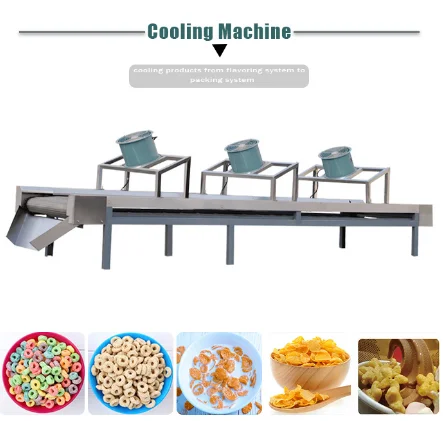
A: The sugar coating section is a parallel path with double tumble melting, coating drum and spraying nozzle. Natural flakes bypass this section directly to cooling. Switching between variants requires activating or bypassing the coating station through the PLC without mechanical reconfiguration.
Q: What operator training and spare wear parts support is included with the turnkey project?
A: Training covers PLC operation, die changes for different cereal shapes, hydraulic flaking adjustment and roasting oven tuning. A wear parts list with screw elements, dies and flaking roll surfaces ships with the line, and replacement schedules are documented in the operation manual.
Related products
-
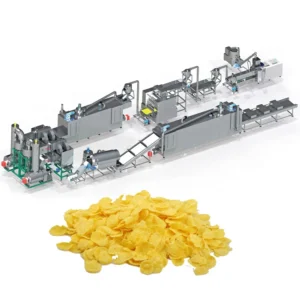
Best Price Corn Flakes Making Machine Breakfast Cereals Processing Line with Motor As Core Component
¥19,000.00 Select options This product has multiple variants. The options may be chosen on the product page -
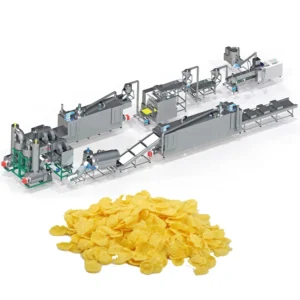
Complete Corn Flakes Production Line Breakfast Cereal Processing Machine Core Motor Component Cornflakes Processing Equipment
¥19,000.00 Select options This product has multiple variants. The options may be chosen on the product page -
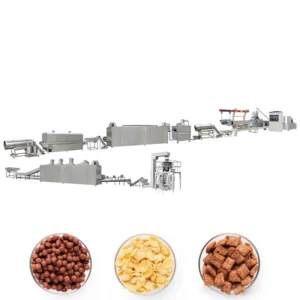
Kelloggs Corn Flakes Breakfast Cereal Normal Making Machine Breakfast Cereal Extruder Production Line
¥30,000.00 Select options This product has multiple variants. The options may be chosen on the product page -
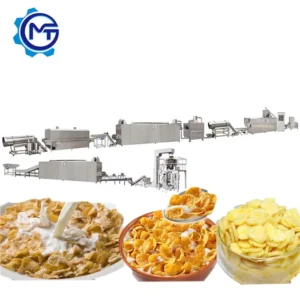
Sweet Corn Flakes Maize Breakfast Cereal Full-automatic Food Grade Stainless Steel Heat Exchanger Mixer Fryer Processing Line
¥8,000.00 Add to cart