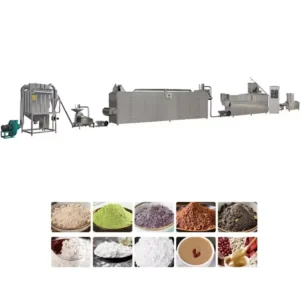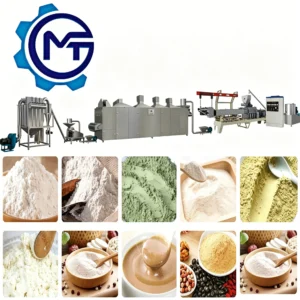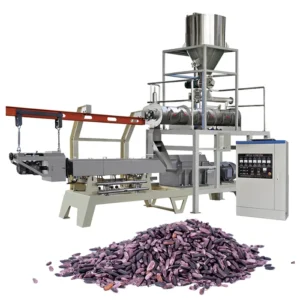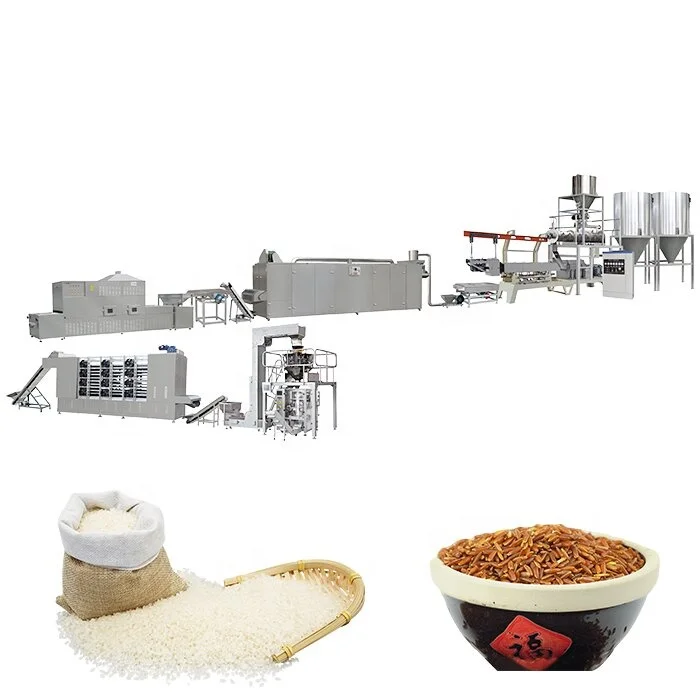
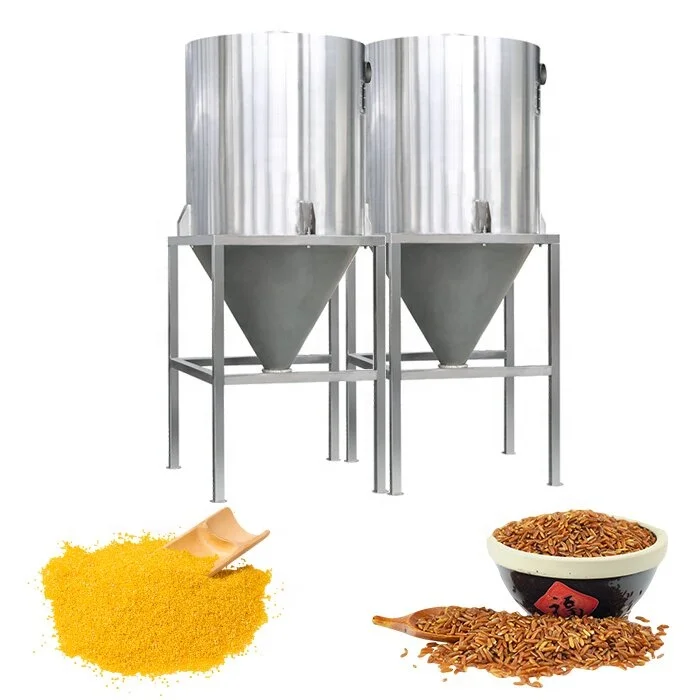
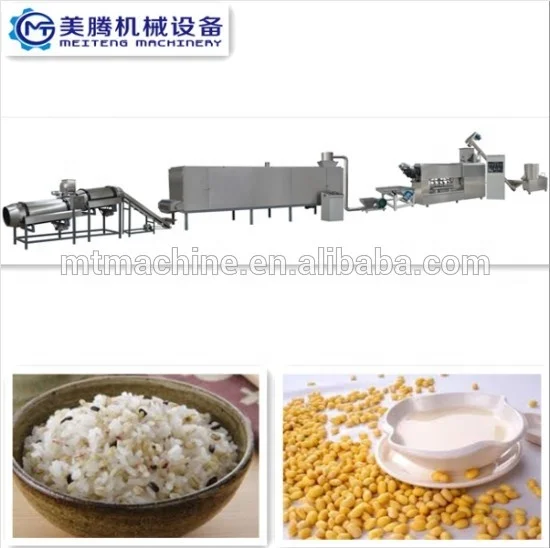

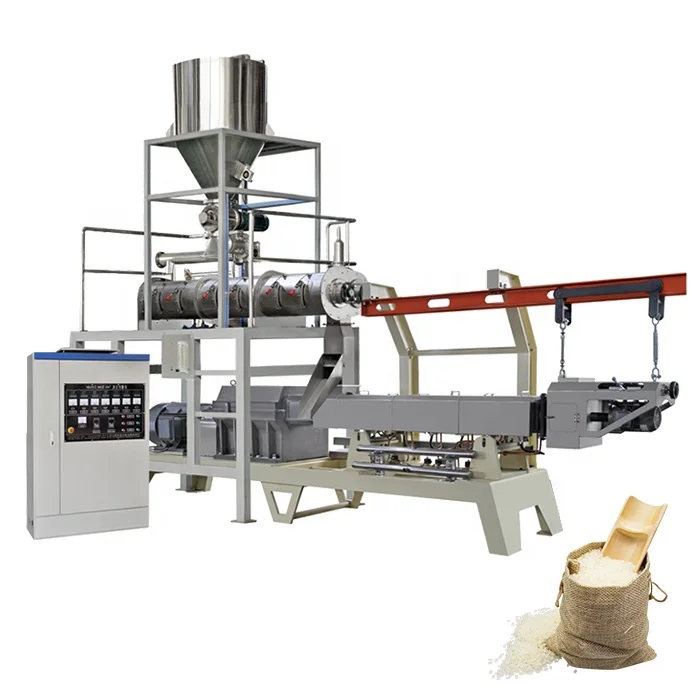
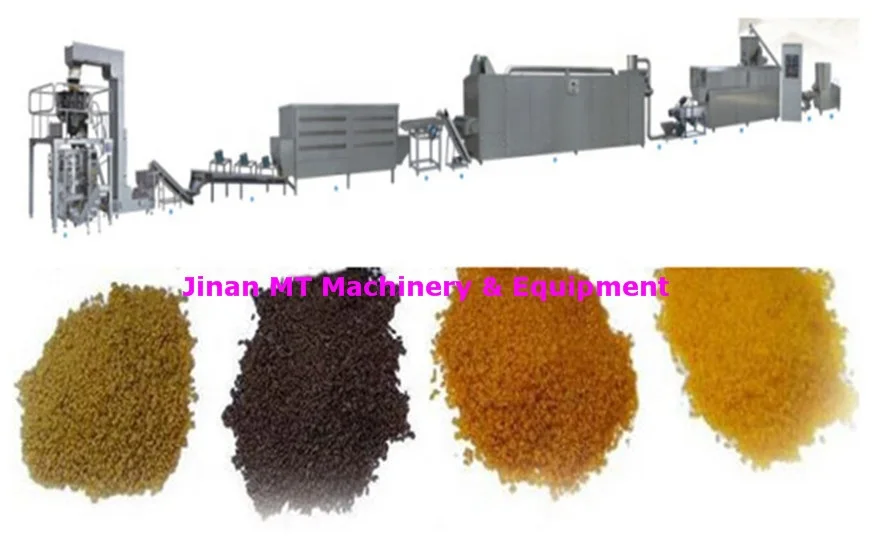
MT65 / MT70 / MT85 / MT75 / MT95 Fortified Rice Production Line, Twin-Screw, CE/ISO — engineered as a complete turnkey project from batching through extrusion, drying, and packing. Every station is throughput-matched so no single unit constrains output, with screw configuration and die design specified to your raw material and target kernel shape. Frequency-controlled feeding and adjustable drying belt ensure stable production parameters across the full line layout. Trial runs on your actual formulation are completed in our testing workshop before shipment, with full electrical schematics and voltage confirmation for your facility.
Description
Integrated extrusion engineering — every station from mixing to packing is throughput-calibrated so the line runs as one continuous process, not a collection of mismatched machines.
Technical Specifications
| Parameter | Value |
|---|---|
| Product Type | Fortified Rice and Instant Rice Production Line |
| Model Options | MT65 / MT70 / MT85 / MT75 / MT95 |
| Extruder Configuration | Twin-screw |
| Installed Power Range | 85 kW (MT65) to 260 kW (MT95) |
| Power Consumption Range | 60 kW (MT65) to 195 kW (MT95) |
| Output Capacity | 80–1000 kg/h across models (basis not stated in source — confirm raw material formulation and moisture content) |
| Line Stations | Mixing → Extruding → Vibrating → Low-temp Drying → Cooling → High-temp Roasting → Cooling → Packing |
| Feeding System | Single or double screw, selectable by material |
| Control System | Frequency speed control, automated |
| Screw Material | Wear-resistant special alloy |
| Drying Oven Heating | Electric or gas |
| Drying Feature | Circulation drying with frequency-controlled mesh belt |
| Voltage & Frequency | Customized to buyer’s local standard |
Application Suitability
| Application | Material or Output |
|---|---|
| Fortified rice kernel production | Broken rice and rice bran blended with vitamins and minerals |
| Artificial rice manufacturing | Starch-rich grains including corn, millet, wheat, and buckwheat |
| Instant rice processing | Pre-cooked rice formulations from grain and starch blends |
| Nutrition programme supply | Micro-nutrient fortified kernels for food aid initiatives |
| Value-added rice conversion | Broken rice and by-products reconstituted into uniform kernels |
Why Capacity Claims Collapse Before the First Bag Is Packed
A Fortified Rice Production Line turnkey only delivers rated output when every station — mixer, extruder, dryer, roaster — is calculated against your actual formulation.
Extrusion lines often fail at the dryer. The extruder pushes product at full speed, but the downstream oven cannot remove moisture fast enough to meet kernel density targets. The result is a bottleneck that forces the entire Fortified Rice Production Line turnkey to run below nameplate capacity. [NEED_CITE: throughput matching between extrusion and drying stations in grain processing]
I have walked factory floors where operators deliberately starve the extruder to prevent the dryer from backing up. That is not a production strategy; it is a design failure that compounds daily.
Throughput Calculation Across the Full Line
Every station in this Fortified Rice Production Line turnkey is sized against the same throughput target. The mixer batch time is matched to extruder feed rate. The dryer belt length and residence time are calculated from the moisture differential between extrudate and finished kernel. The roaster capacity mirrors the cooling conveyor speed that follows it.
This prevents the most common failure mode in grain extrusion projects: one station dictating the pace for the entire line.
Screw Configuration Matched to Your Starch Blend
The twin-screw extruder in this line is configured after reviewing your raw material sheet. The screw profile — forward elements, kneading blocks, reverse elements — is arranged to control shear, residence time, and starch gelatinisation for your specific blend of broken rice, corn, or millet. [NEED_CITE: twin-screw configuration impact on starch gelatinisation degree]
Die design is specified to the target kernel shape and expansion ratio, not copied from a generic rice die set.
What the Specifications Actually Mean for Your Factory Floor
The installed power range from 85 kW to 260 kW across the five models reflects barrel length and screw diameter differences, not just motor size. A larger barrel requires more torque to maintain screw speed under load, which directly affects your ability to process high-viscosity starch blends without stalling.
The drying oven offers electric or gas heating. Gas-fired ovens lower operating cost at high throughput but require ventilation and gas line infrastructure. The frequency-controlled mesh belt means belt speed adjusts independently of extruder output, letting you fine-tune moisture removal without changing upstream parameters.
Automatic lubrication and cooling systems are integrated into the extruder, reducing manual maintenance intervals and preventing barrel overheating during continuous runs.
The Cost of Skipping the Raw Material Trial
Buyers who approve a line configuration without a trial run on their own broken rice or grain blend often discover texture and density problems only after installation. The kernel may crack during roasting, or the fortified nutrients may not bind properly into the starch matrix. [NEED_CITE: importance of pre-shipment extrusion trials on customer raw materials]
These issues are solvable, but solving them on your factory floor is slower and more expensive than solving them in a testing workshop before the equipment ships.
Engineering Accountability From Layout to Commissioning
The line layout document shows every station positioned with throughput calculations, not just a floor plan. Capacity is calculated against your confirmed formulation, so the mixer, extruder, dryer, and packing station all share the same verified output target.
Screw and die configuration records are documented before production begins, so replacements are exact matches rather than generic parts that alter product quality.
Electrical schematics confirm voltage, frequency, and control language for your facility before any panel is wired, preventing commissioning delays.
Voltage and frequency standards vary significantly by export market, and confirming these details early avoids rewiring costs after delivery [NEED_CITE: voltage and frequency standards by export market].
Documentation & Verification
- Line layout with throughput calculation across all stations from mixer to packer
- Screw and die configuration record specific to your grain formulation and kernel shape
- Trial run report on your raw material conducted in the testing workshop
- Electrical schematic confirming voltage, frequency, and HMI language for your site
- Factory test record documenting run parameters before crating
- CE declaration of conformity and ISO certificate for customs and compliance
Installation, Commissioning & Support
- Foundation and utility plan reflecting the 28–36 m line length depending on model selected
- Dedicated electrical circuit sizing based on confirmed installed power up to 260 kW
- Modular station delivery allowing phased assembly in facilities with restricted access
- First-run commissioning with parameter logging for your specific starch blend
- Operator training covering screw configuration changes and die maintenance procedures
- Wear parts list with reorder intervals for screws, dies, and dryer belt segments
What We Need to Build Your Line
To configure a line that matches your output target, share your raw material formulation including the percentage of broken rice, starch binders, and micro-nutrient premix. Confirm your local voltage and frequency, the control language your operators require, and whether gas or electric drying suits your facility. If you have a target kernel dimension or density specification, include that with your inquiry.
Frequently Asked Questions
Q: How is line capacity verified against my specific raw material and formulation?
A: Before shipment, we run your actual raw material blend — including your broken rice source and micro-nutrient premix — in our testing workshop. The trial documents extruder parameters, drying times, and finished kernel density. These results confirm the capacity calculation used in the line layout, so the throughput figure in your contract reflects your formulation, not a generic test grain.
Q: What is the phased installation and commissioning schedule for a complete turnkey line?
A: The line arrives in station modules sized for standard container transport. Assembly follows a defined sequence: extruder and feeder first, then drying and cooling sections, then packing integration. Commissioning progresses through dry runs, water trials with inert material, and finally production runs with your formulation. The schedule accounts for utility connections and operator training between phases.
Q: How do you match throughput between the extruder, dryer, and packing stations?
A: Each station is calculated against the same verified output target based on your raw material. The dryer belt length and residence time are sized to remove the specific moisture differential your formulation produces. The roaster and cooling conveyors are then matched to that flow rate. No station is specified from a catalogue page independent of the others.
Q: Is operator training included, and what does ongoing maintenance cover?
A: Training covers daily operation, screw and die changeover procedures, frequency drive adjustments, and troubleshooting common faults. The wear parts list supplied with the line identifies replacement intervals for screws, dies, dryer belt segments, and seals. Maintenance support continues after commissioning with access to technical documentation and replacement part supply.
Related products
-

Automatic Instant Powder Production Line Nutritional Powder Extruder Machine
¥10,000.00 Select options This product has multiple variants. The options may be chosen on the product page -

Automatic Iron Fortified Baby Rice Cereal Nutrition Powder Making Machine 500kg/h PLC Controlled
¥8,238.27 Add to cart -
150-500kg/h Twin Screw Extruder Baby Rice Flour Making Machine
¥9,500.00 Select options This product has multiple variants. The options may be chosen on the product page -
Commercial Stainless Steel Baby Rice Powder Grinding Mixing Machine
¥8,238.27 Select options This product has multiple variants. The options may be chosen on the product page