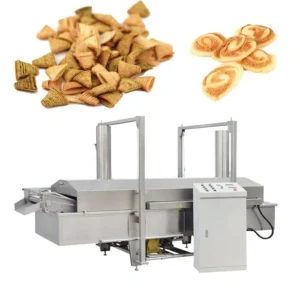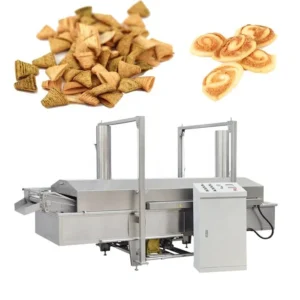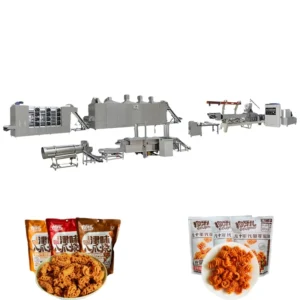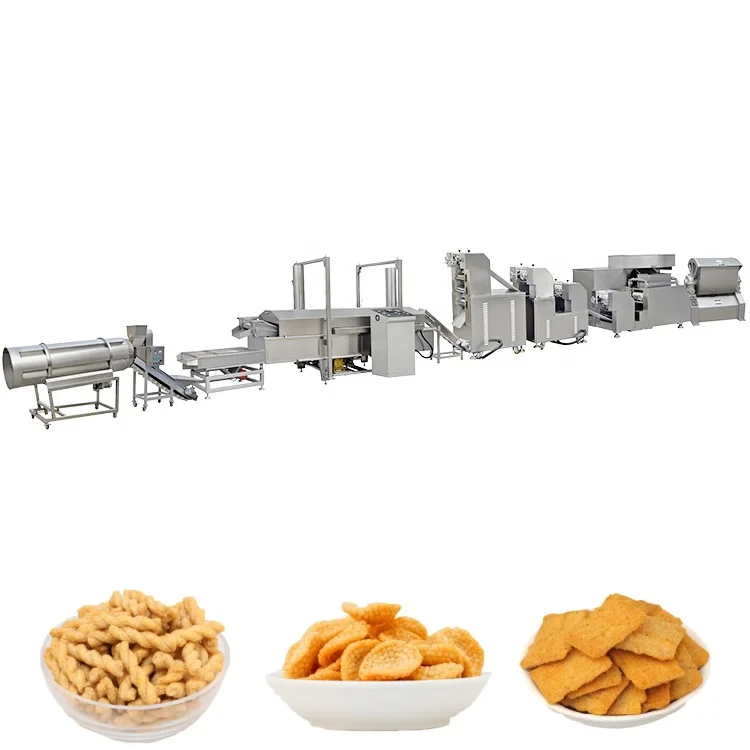

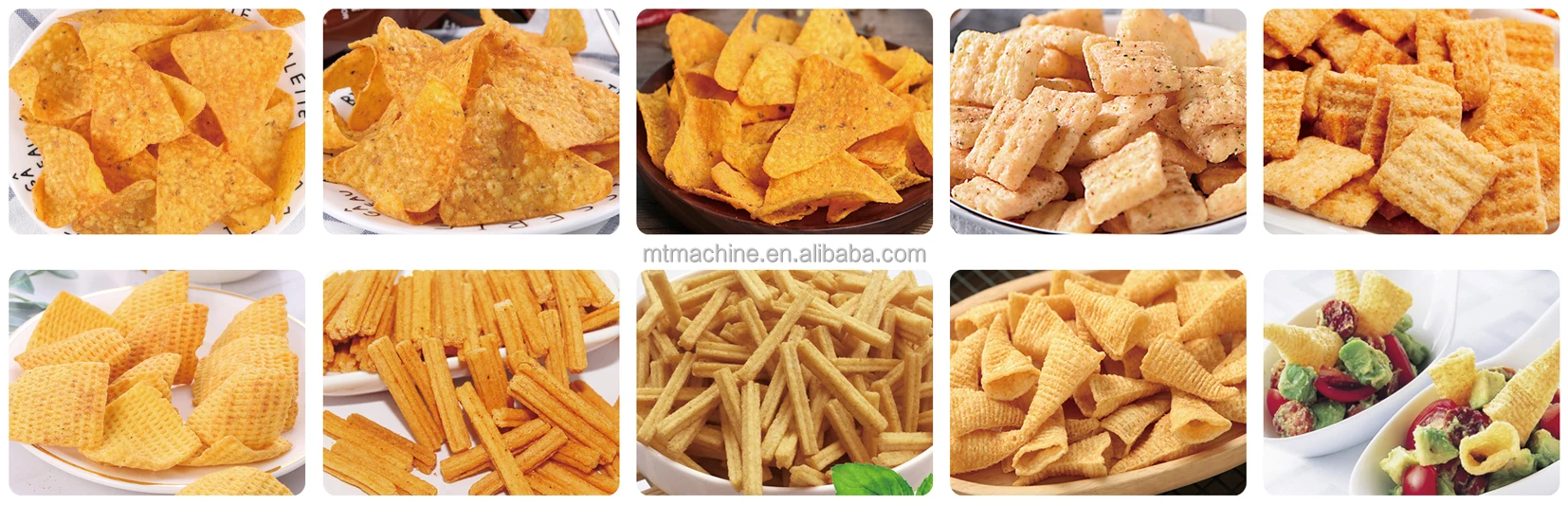
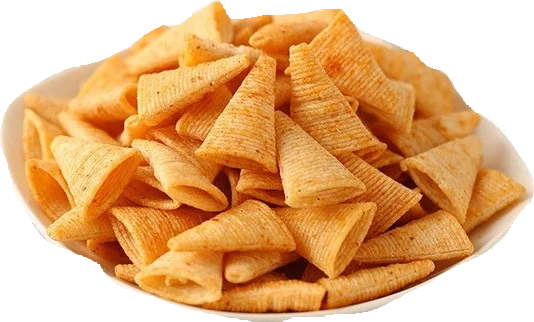

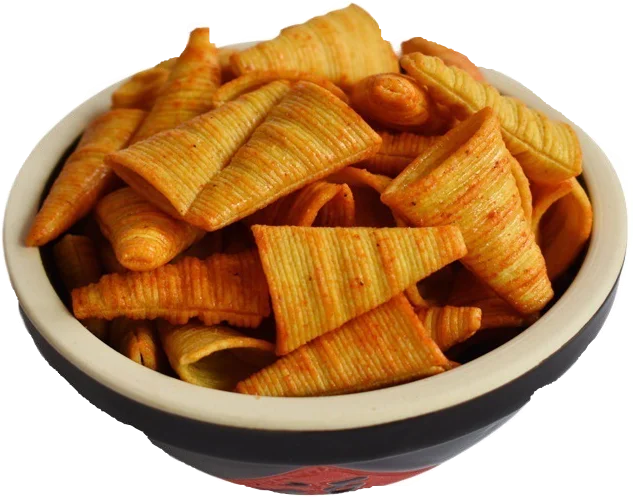
MT-65 / MT-70 / MT-85 / MT-75 / MT-95 Fried Pellet Snack Extrusion Line, Twin-Screw, PLC & MCC Control — configured as a turnkey project from batching through extrusion, cutting, drying, frying, flavouring and packing. Every station is throughput-matched to your raw material and target output, eliminating bottlenecks between the extruder, dryer and fryer. Screw configuration and interchangeable dies are specified to your pellet shape — bugles, chips, sticks or novelty formats — with voltage and control language confirmed before build.
- Complete line factory-tested on your raw material before shipment, with trial report, CE declaration, and on-site commissioning included.
Description
Complete Line Throughput Matching — every station from batching to packing sized to your actual raw material so no single unit bottlenecks the whole fried pellet snack production line.
Technical Specifications
| Parameter | Value |
|---|---|
| Model | MT-65 / MT-70 / MT-85 / MT-75 / MT-95 |
| Product Type | Fried Pellet Snack Food Extrusion Production Line |
| Screw Type | Twin-screw, co-rotating with sectional modules |
| Main Motor Power | MT-65: 100 kW; MT-70: 130 kW; MT-85: 180 kW; MT-75: 185 kW; MT-95: 280 kW |
| Output Capacity | MT-65: 120–150 kg/h (basis to be confirmed); MT-70: 200–250 kg/h (basis to be confirmed); MT-85: 300–500 kg/h (basis to be confirmed); MT-75: 400–500 kg/h (basis to be confirmed); MT-95: 800–1000 kg/h (basis to be confirmed) |
| Raw Materials | Corn powder, wheat flour, potato starch, potato powder, corn starch |
| Drying Method | Gas / electric / diesel heating (selectable) |
| Cutting Machine Power | 1.47 kW |
| Mixer Power Options | 4 kW / 7.5 kW / 15 kW |
| Fryer Belt | 600 mm stainless steel, automatic temperature and belt speed adjustment |
| Energy Options | Electricity, fuel gas, and others configurable per station |
| Voltage & Frequency | Configurable to buyer’s grid (e.g. 3ph 380V 50Hz, 3ph 415V 60Hz, 3ph 220V 60Hz) |
| Control System | Automated PLC and MCC control |
| Die Configuration | Interchangeable dies and shaping rollers for bugles, sticks, square sheet, rib chips, diamond, wavy, pillow, shell, screw, square tube, round tube, wave formats |
| Standards | CE, ISO certified |
| Warranty | 1 year complete warranty, lifetime maintenance service |
Application Suitability
| Application | Material or Output |
|---|---|
| 3D corn bugles and novelty fried pellets | Corn powder and corn starch blends |
| Fried corn chips and crispy ribbed shapes | Wheat flour and potato starch mixtures |
| Pillow and shell-shaped fried snacks | Potato powder with corn starch formulations |
| Stick, diamond, and wavy pellet chips | Multi-grain flour blends with adjusted moisture |
| Turnkey snack line projects for new factories | Full production from batching through packing |
What "Rated Capacity" Leaves Out About Your Fried Pellet Snack Production Line Turnkey
The number on the nameplate means nothing if the dryer cannot keep up with the extruder.
I have walked into plants where a twin-screw extruder was pushing dough through the die at full speed, but the downstream dryer was still running batches from two hours ago. The cutter sat idle half the shift waiting for moisture to drop. When a snack food manufacturer sources each station from a different vendor, nobody takes responsibility for the gaps between them. A fried pellet snack production line turnkey only delivers its quoted throughput when every station — mixer, extruder, cutter, dryer, fryer, flavouring drum — is sized against the same raw material formulation and target output [NEED_CITE: throughput matching methodology for continuous food processing lines].
Matching Every Station to Your Actual Raw Material
When I installed a 3D bugles line in Jeddah, the customer switched from the trial corn flour to a locally milled coarse grind on day one. The extruder barrel pressure climbed, expansion dropped, and the pellets came out flat and dense. The fryer had nothing good to work with. We spent four days reconfiguring the screw modules and adjusting feed moisture before the line held stable output. A fried pellet snack production line turnkey must be validated on the buyer’s exact raw material before it ships, not after it arrives on the factory floor.
Screw Configuration and Die Design as Product Variables
The sectional twin-screw modules on the MT series allow the screw profile to be rebuilt for each formulation. A high-starch corn blend needs a different compression ratio and residence time than a potato-starch-heavy mix. The interchangeable dies and shaping rollers then determine whether the output is a 3D bugle, a ribbed chip, or a pillow shell. Getting both the screw stack and the die geometry right is what separates a pellet that puffs evenly in the fryer from one that stays dense and oily [NEED_CITE: twin-screw extrusion screw profile design for starch-based snacks].
Reading the Power and Capacity Numbers Correctly
The main motor range spans from 100 kW on the MT-65 to 280 kW on the MT-95, reflecting the mechanical work needed to gelatinise starch at increasing throughputs. Higher motor power drives greater shear inside the barrel, which directly affects how completely the starch granules rupture and absorb moisture. The fryer’s 600 mm stainless steel belt and adjustable speed must then match the extruder’s output rate so that pellets spend the correct time in hot oil — too fast and they are undercooked, too slow and they darken past specification. The mixer options at 4 kW, 7.5 kW, and 15 kW cover different batch sizes to keep feed consistent. Voltage and frequency are confirmed to the buyer’s local grid before production starts, because a 50 Hz motor running on a 60 Hz supply changes screw speed and alters the entire process balance.
The Hidden Cost of Skipping the Trial Run
I have seen lines arrive at a port with no record of what screw configuration was inside the barrel. The operator opens the maintenance manual and finds a generic build sheet that does not match the pellet shape the customer ordered. Commissioning stretches into weeks of trial and error while raw material burns through the budget. When the extruder ships without a matching dryer capacity, the entire line sits at half speed and the buyer blames the wrong station [NEED_CITE: common commissioning delays in snack extrusion projects].
Why This Line Is Built as One Project
The batching system, extruder, cutter, dryer, fryer, flavouring drum, cooler, and packing station all come from a single supplier, so throughput is calculated across every transition point rather than left to chance. The screw configuration and die design are specified against the buyer’s raw material and target pellet shape before production begins. An in-house testing workshop runs trial batches on the customer’s actual formulation, generating a report that travels with the shipment. PLC and MCC controls are programmed in the operator’s language and wired to the confirmed voltage. The line ships with a screw and die configuration record, electrical schematic, and factory test record so that commissioning starts from a known baseline rather than from guesswork.
Documentation & Verification
- Line layout and capacity calculation with throughput matched across every station
- Trial run report on customer raw material from the in-house testing workshop
- Screw and die configuration record specific to buyer’s formulation and pellet shape
- Electrical schematic with voltage, frequency, and control language confirmation
- CE declaration of conformity and ISO certificate included with shipment
- Operation and maintenance manual with wear parts list and packing photographs
Installation, Commissioning & Support
- Foundation and floor space planned around the full line dimensions for each model
- Power supply sized to the confirmed main motor rating from 100 kW to 280 kW with dedicated circuits
- PLC and MCC cabinets wired to the buyer’s local voltage and frequency before dispatch
- On-site commissioning includes screw configuration verification and first-run parameter setting
- Operator training covers die changeover, fryer belt speed adjustment, and moisture control
- Free wearing parts included with recommended two to three years of additional spares
Before You Request a Quote
To configure the right line, share your target pellet format, the exact raw material formulation you will run, and the daily output you need to hit. Confirm your facility’s voltage, frequency, and available floor space so the layout can be drafted before production starts. If you want a trial run on your own material before the line ships, send a sample batch to the testing workshop early in the process.
Frequently Asked Questions
Q: How is line throughput matched between the extruder, dryer, fryer, and coating stations?
A: Each station is sized against the same raw material formulation and target output. The extruder’s output rate determines the dryer’s residence time and belt length, which then sets the fryer’s belt speed and oil volume. The flavouring drum and packing station are matched to the same rate so no single unit creates a bottleneck.
Q: Can a trial run be done on my raw material before the line ships?
A: Yes. The in-house testing workshop runs your actual formulation through the extruder with the specified screw and die configuration. A trial run report documents the results including pellet shape, expansion, and moisture content, and this report ships with the line.
Q: What voltage, frequency, and control language options are confirmed before production?
A: The electrical system is configured to the buyer’s local grid, such as 3-phase 380V 50Hz or 415V 60Hz. The PLC and MCC control interface language is set to the operator’s preference. All values are confirmed in writing before production begins.
Q: How is screw and die configuration chosen for my target pellet shape?
A: The screw module stack is selected based on your raw material’s starch content, moisture level, and the expansion required for your pellet format. The die and shaping roller are matched to the specific shape — bugles, chips, pillows, or tubes — and both are recorded in the configuration document.
Q: What does on-site installation and operator training cover?
A: Engineers oversee mechanical assembly, electrical connection, and first-run parameter tuning. Training covers daily start-up and shut-down, die and screw changeover, fryer temperature and belt speed adjustment, moisture monitoring, and routine maintenance schedules for wear parts.
Related products
-
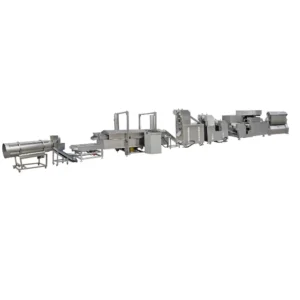
Frying Crispy 3D Corn Bugles Pellets Fried Chips Snacks Food Machine Production Line Bugles Making Extruder
¥100.00 Select options This product has multiple variants. The options may be chosen on the product page -
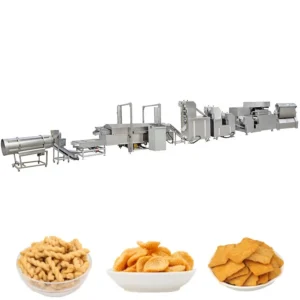
Frying Crispy 3D Corn Bugles Pellets Fried Chips Snacks Food Machine Production Line Bugles Making Extruder
¥100.00 Select options This product has multiple variants. The options may be chosen on the product page -
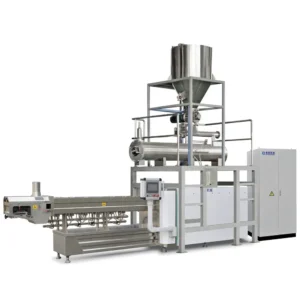
New Automatic 150-200kg/h Nimko Fried Pasta Snacks & Kurkure Making Machine Food Grade Stainless Steel High Productivity
¥8,585.00 Select options This product has multiple variants. The options may be chosen on the product page -
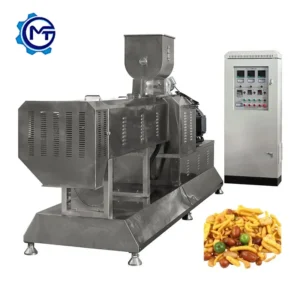
New 100-200kgh Automatic Fried Nimko Extruder Machine Food Grade Stainless Steel for High Productivity Fried Snacks Processing
¥8,575.00 Select options This product has multiple variants. The options may be chosen on the product page