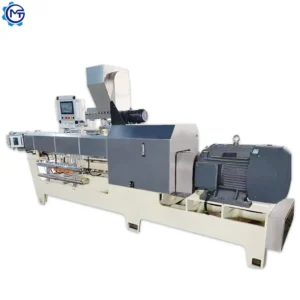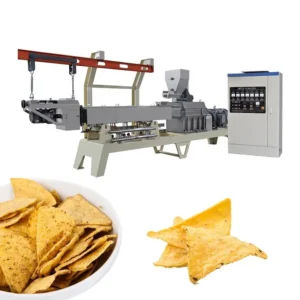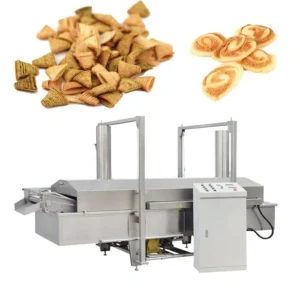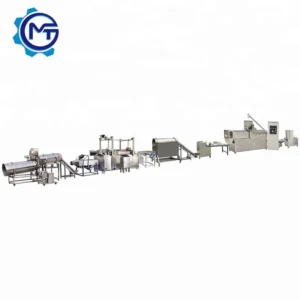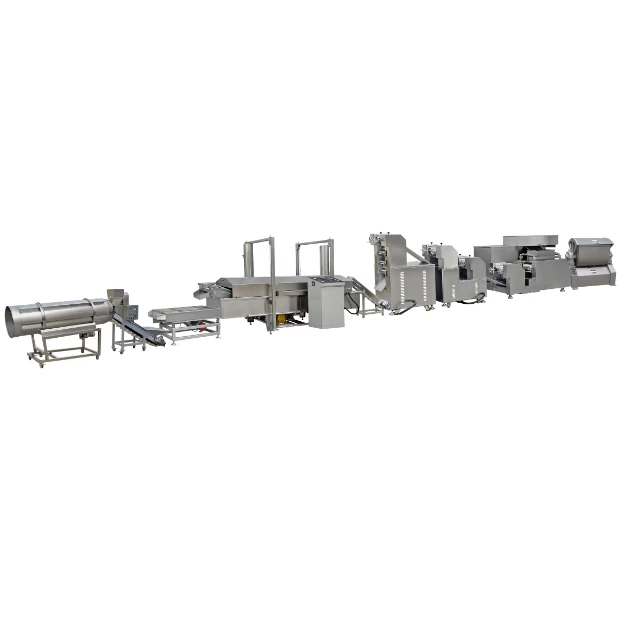

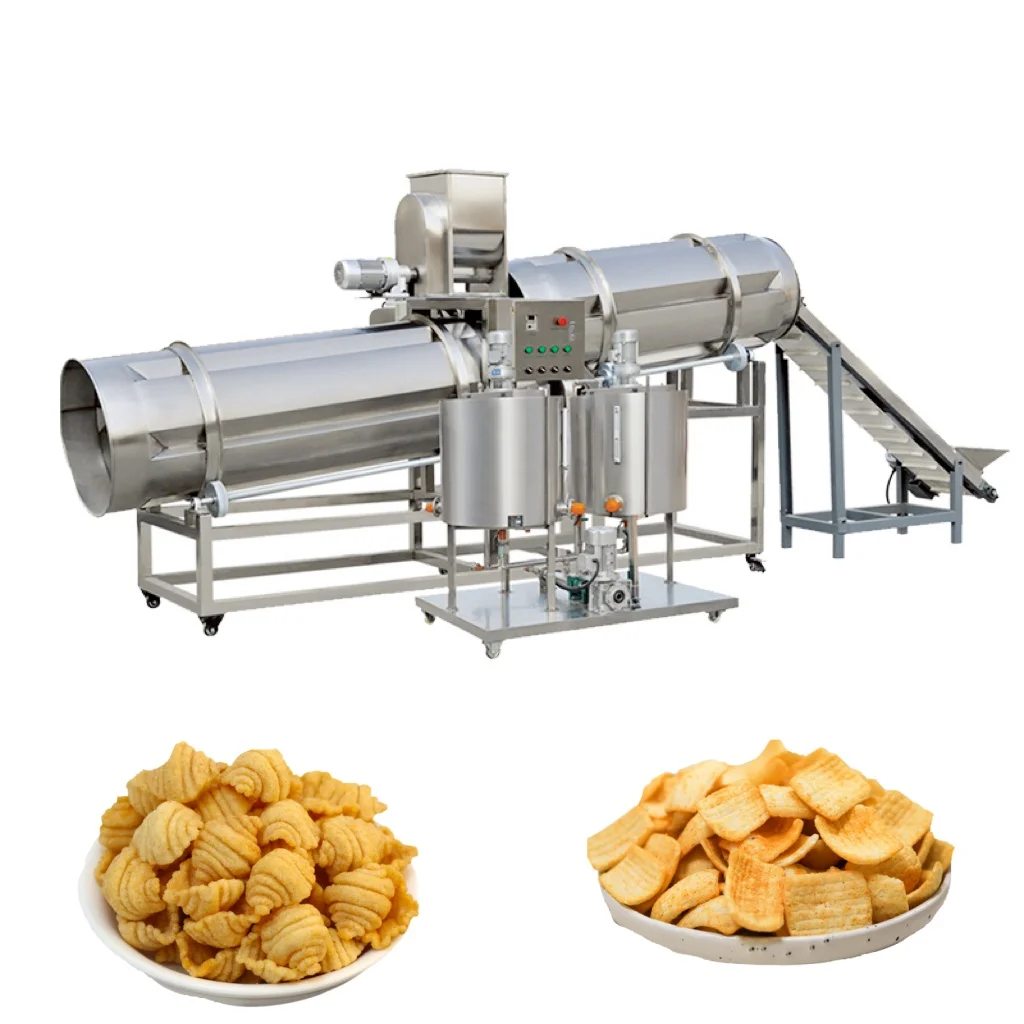
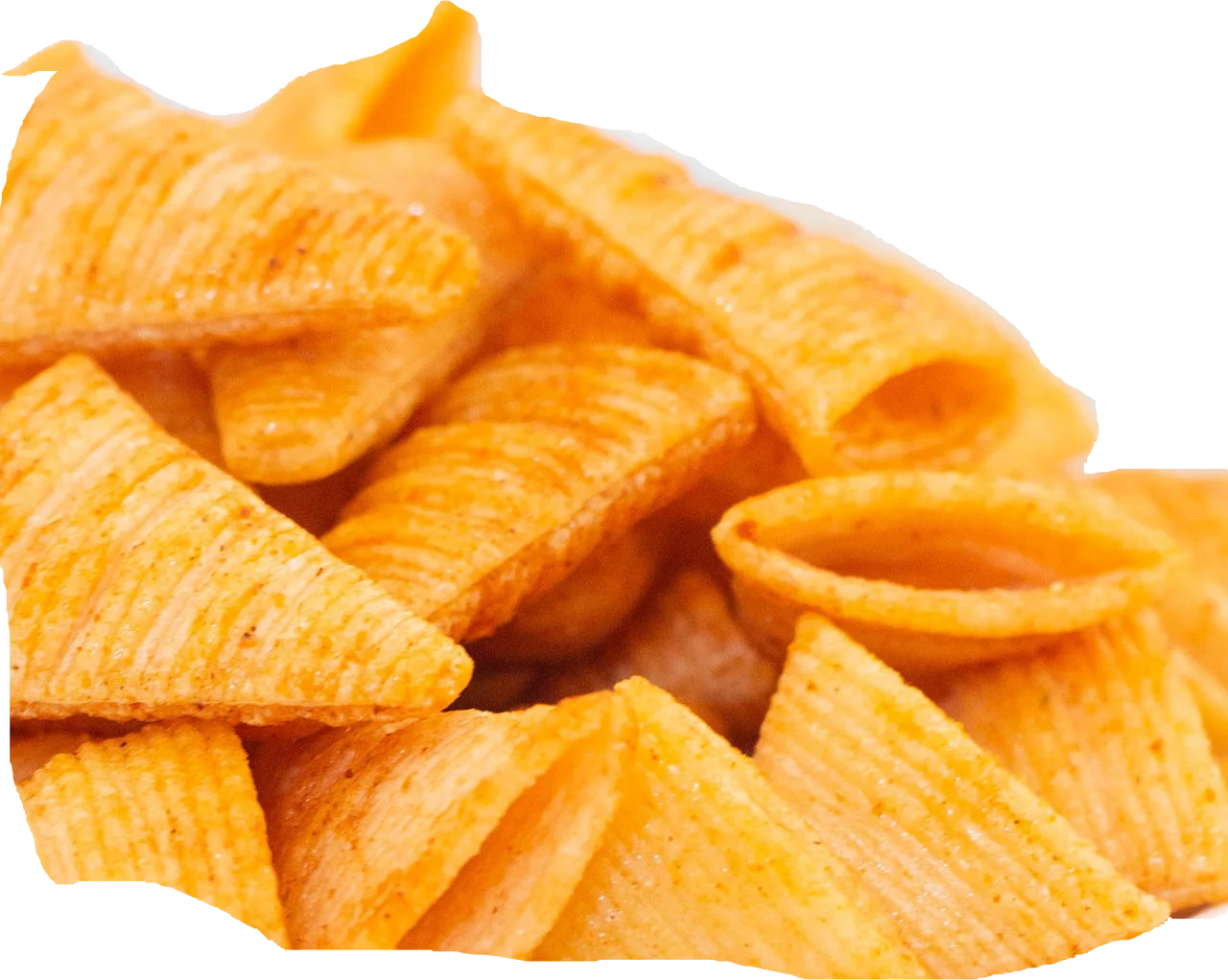
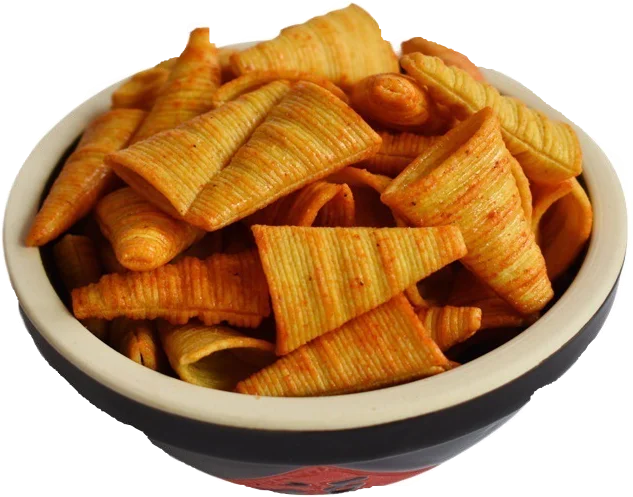
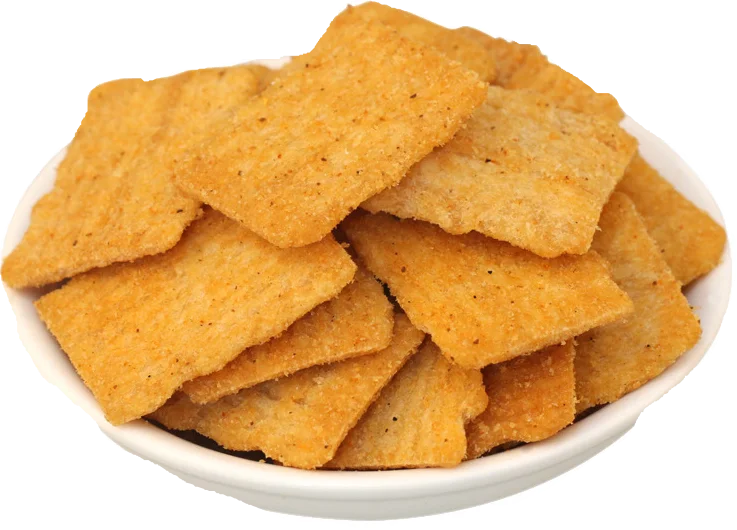
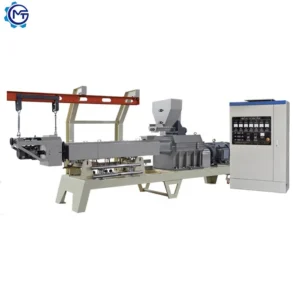
MT-65, MT-70, MT-85, MT-75, MT-95 Fried 3D Pellet Chips & Bugles Snack Production Line, Twin-Screw Co-Rotating Extruder, Gas/Electric/Diesel Fryer — engineered as a single turnkey project where every station from mixing through extrusion, cutting, and frying is throughput-matched to your raw material formulation. Screw configuration and die design are specified to your target chip shape, density, and market expectation.
- Fryer features 600 mm stainless steel belt with automatic temperature and speed control
- Voltage and frequency customized to buyer’s supply before production begins
- In-house testing workshop runs your actual raw material before shipment, with full trial report provided
Description
Turnkey Line Engineering — Every station from batching to frying is throughput-matched against your specific raw material formulation before the line ships.
Technical Specifications
| Parameter | Value |
|---|---|
| Product Type | 3D Pellet Fried Chips & Bugles Snack Production Line |
| Model Options | MT-65, MT-70, MT-85, MT-75, MT-95 |
| Extruder Type | Twin screw, co-rotating with sectional modules |
| Main Motor Power | 100 kW (MT-65) / 130 kW (MT-70) / 180 kW (MT-85) / 185 kW (MT-75) / 280 kW (MT-95) |
| Output Capacity | 120–150 kg/h (MT-65, basis not stated in source) / 200–250 kg/h (MT-70, basis not stated in source) / 300–500 kg/h (MT-85, basis not stated in source) / 400–500 kg/h (MT-75, basis not stated in source) / 800–1000 kg/h (MT-95, basis not stated in source) |
| Line Stations | Mixer → Twin Screw Extruder → Cutting / Forming Machine → Fryer |
| Cutting Machine Power | 1.47 kW |
| Cutting Machine Dimension | 2500 × 600 × 1100 mm |
| Fryer Belt Width | 600 mm stainless steel belt |
| Fryer Heating Options | Electricity / Fuel Gas / Diesel |
| Drying Method | Gas / Electric / Diesel heating |
| Raw Materials | Corn powder, wheat flour, potato starch, potato powder, corn starch, water, vegetable oil, salt |
| Voltage & Frequency | Customizable (e.g., 3ph 380V 50Hz, 3ph 415V 60Hz, 3ph 220V 60Hz) |
| Standards | CE certified |
| Warranty | 1 year complete warranty with life-time maintenance service |
Application Suitability
| Application | Material or Output |
|---|---|
| Bugles and corn chip production | Corn powder and corn starch-based formulations |
| 3D pellet fried snack lines | Wheat flour and potato starch blends |
| Pillow and stick-shaped savory snacks | Mixed grain and starch recipes with vegetable oil frying |
| Wavy and diamond chip formats | Potato powder and corn starch with die and roller changes |
| Square sheet rib and crisp corner snacks | Custom starch-protein formulations for extrusion and frying |
Why Nominal Line Capacity Rarely Survives Contact with Your Raw Material
A fried chips production line turnkey package only delivers its rated output when every station is balanced against your actual recipe, not a generic benchmark.
I spent years on workshop floors watching lines stall because the extruder was sized to a catalog number while the fryer was sized to a different one. One project involved a Middle East buyer running high-moisture corn flour through a 3D pellet line. The extrusion rate dropped noticeably because the material expanded less than the standard test formula assumed, and the downstream fryer ended up overloaded with semi-dense pellets that could not crisp properly. The whole fried chips production line turnkey setup sat idle while we reconfigured the screw profile and adjusted the fryer belt speed. [NEED_CITE: impact of raw material moisture on extrusion expansion rate]
That is why throughput verification on your specific raw material must happen before the line leaves the factory, not after it arrives at your facility.
Matching Every Station to Prevent Bottlenecks
A turnkey project succeeds or fails on whether the mixer, extruder, cutting machine, and fryer all move product at the same pace. When one station runs faster than the next, material piles up, moisture changes, and product quality drifts. This bugles snack extrusion line is configured so that each station’s throughput is calculated against the same raw material formulation and target product density, keeping the entire sequence synchronized from batching through frying.
Layout Planning for Your Workshop Footprint
Floor space dictates how the line folds and flows. The overall dimensions vary across the MT-65 through MT-95 range, and the fryer belt alone requires clear access on both sides for maintenance and belt tensioning. A proper turnkey layout accounts for raw material staging before the mixer, intermediate buffer conveyors between the cutting station and fryer, and finished product cooling space after frying. Getting this wrong on paper means moving heavy equipment after installation. [NEED_CITE: food processing line layout planning standards]
Reading the Specs That Actually Matter
The twin-screw co-rotating design with sectional modules lets the screw profile be rebuilt for different starch gelatinization requirements — corn powder needs a different shear history than potato starch. The 600 mm stainless steel fryer belt width determines how much product can pass through the oil bath per minute; a narrow belt forces a slower line speed or a thicker product bed, both of which change fry uniformity. The cutting machine at 1.47 kW handles the forming load for 3D pellet shapes, but die and roller changes are what actually switch the output between bugles, waves, and diamond chips. Voltage customization before production means the MCC panel and motor drives arrive configured for your local supply, avoiding the commissioning delays that happen when a 50 Hz motor meets a 60 Hz grid.
What Happens When Stations Are Mismatched
When an extruder pushes more volume than the fryer can handle, semi-cooked pellets accumulate on the conveyor, absorbing ambient moisture and sticking together. When the fryer runs faster than the extruder, oil temperature spikes during empty cycles, degrading oil quality and raising operating costs. Either scenario means the line never reaches the output the buyer paid for. I have seen entire commissioning schedules slip by weeks because the throughput balance was assumed rather than calculated. [NEED_CITE: consequences of throughput mismatch in snack food processing lines]
Why Source This Line as a Single Project
Every station from the mixer through the fryer comes from one supplier, so throughput calculations are done across the full sequence rather than patched together from separate vendor quotes. The screw configuration and die design are specified to your raw material and target shape before production starts. An in-house testing workshop runs your actual formulation through the extruder and documents the results before the line ships. The fried chips production line turnkey package includes layout design, utility planning, and a phased installation schedule so your facility is ready when the equipment arrives. On-site commissioning covers operator training and wear parts orientation so your team can run the line independently from the first production shift.
Documentation & Verification
- Line layout drawing showing station spacing and throughput match for your recipe
- Trial run report on your raw material from the in-house testing workshop
- Screw and die configuration record matched to your target chip shape
- Electrical schematic with confirmed voltage, frequency, and panel language
- CE declaration of conformity for export clearance
- Operation and maintenance manual with wear parts list
Installation, Commissioning & Support
- Floor plan review against the longest frame dimension before foundation work begins
- Dedicated power circuit sized for the main motor up to 280 kW on the MT-95
- Fryer gas or diesel burner connection to local fuel supply verified on site
- Twin screw barrel alignment and sectional module assembly during installation
- PLC and MCC control language set to operator preference before first run
- Wear parts inventory including spare screw elements and die plates for initial replacements
What We Need to Configure Your Line
To engineer a bugles snack extrusion line that actually holds its output in your facility, share your raw material formulation including moisture content, your target daily production volume, and your workshop dimensions with ceiling height. Confirm your local voltage and frequency so the motor drives and control panel are built to match. Let us know if you need a trial run on your specific recipe before shipment.
Frequently Asked Questions
Q: How is line throughput verified against my specific raw material before shipment?
A: Your raw material is run through the twin-screw extruder in the in-house testing workshop. The trial documents expansion rate, product density, and actual output against your recipe. Screw configuration and die selection are adjusted based on these results, and a full trial run report is provided before the line is cleared for shipment.
Q: How is throughput balanced between the extruder, fryer, and downstream stations?
A: Each station is sized against the same raw material formulation and target product specification. The extruder output, cutting machine cycle rate, and 600 mm fryer belt speed are calculated together so no single station creates a bottleneck or forces product to queue between stages.
Q: What is the floor space requirement and how is the layout designed?
A: Overall dimensions depend on the selected model, ranging from the MT-65 footprint to the MT-95 line length. The layout accounts for mixer staging, extruder clearance, conveyor routing to the fryer, and finished product cooling area, all drawn against your workshop dimensions before production begins.
Q: How are voltage, frequency, and control language confirmed before production?
A: Your local power supply specifications are collected during the inquiry stage. Motor drives, heating elements, and the MCC panel are built to your confirmed voltage and frequency. The control panel language is set to your operator preference, and all of this is documented in the electrical schematic before manufacturing starts.
Q: What does installation and commissioning look like on site?
A: Engineers arrive for phased installation starting with the extruder barrel and screw assembly, followed by fryer positioning and conveyor alignment. Commissioning includes first-run parameter tuning on your raw material, operator training on the control system, and a wear parts briefing so your team knows when to replace screw elements and die plates.
Related products
-
Puffed Octopus Snack Processing Line – Full-Automatic Fried Octopus Production Machinery
¥65.00 Select options This product has multiple variants. The options may be chosen on the product page -
Hot Selling Full Automatic Fried Dough Wheat Flour Bugles Snacks Frying Machine Fried Puffed Food Bugles Snack Production Line
¥7,349.41 Select options This product has multiple variants. The options may be chosen on the product page -
New Automatic Portable High Productivity Frying Salad Sticks Chips Snacks Food Production Line
¥100.00 Select options This product has multiple variants. The options may be chosen on the product page -
Industrial Fully Automatic Stainless Steel Deep Fried Line – Snack Factory Miscellaneous Grains Special Processing Equipment
¥65.00 Select options This product has multiple variants. The options may be chosen on the product page