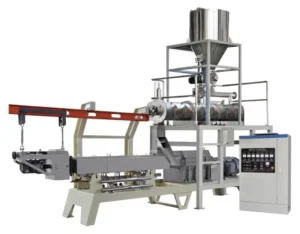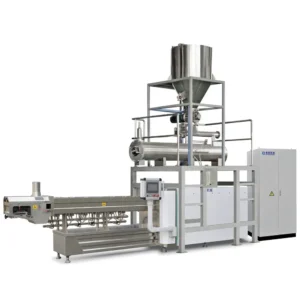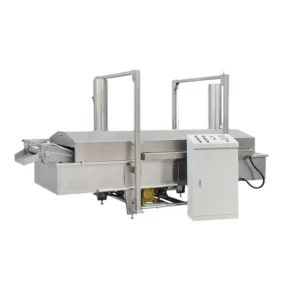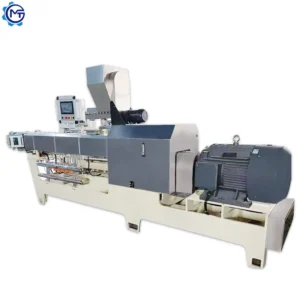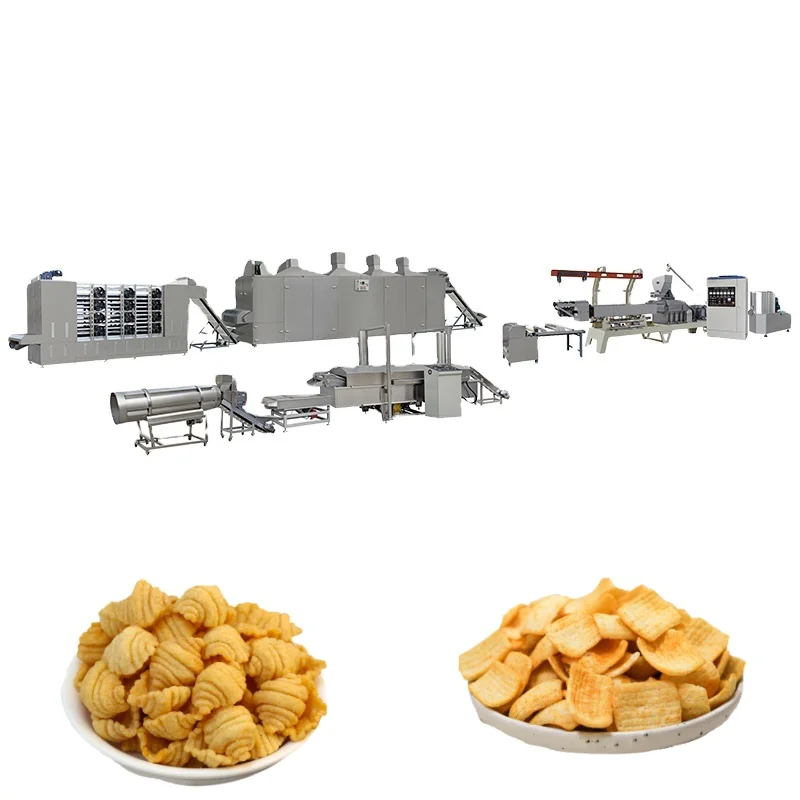
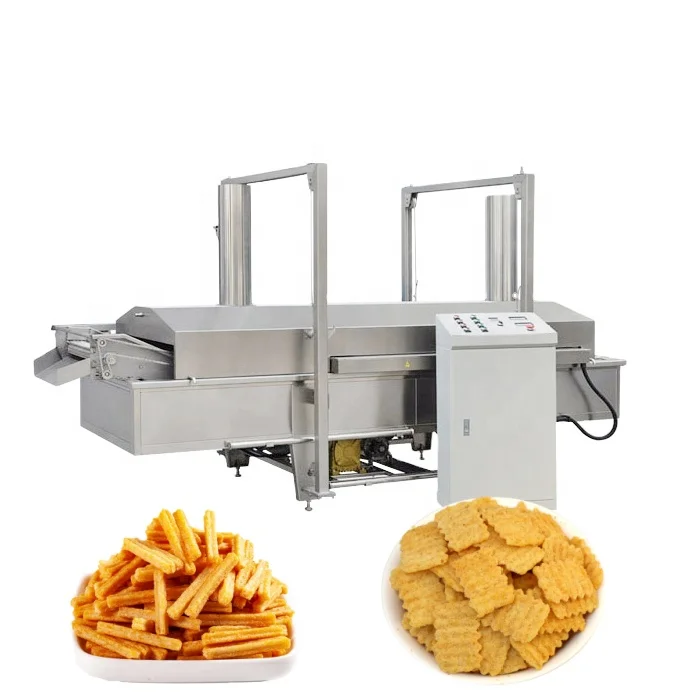
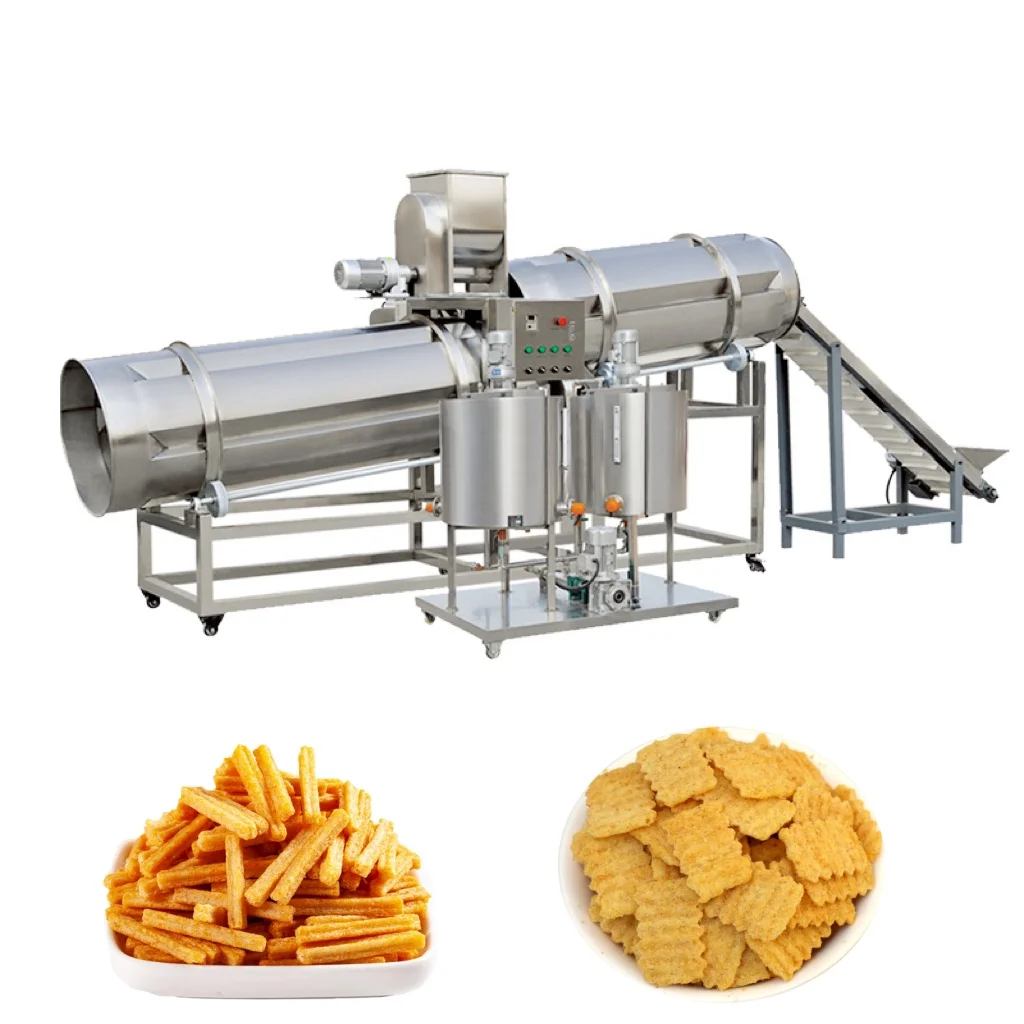
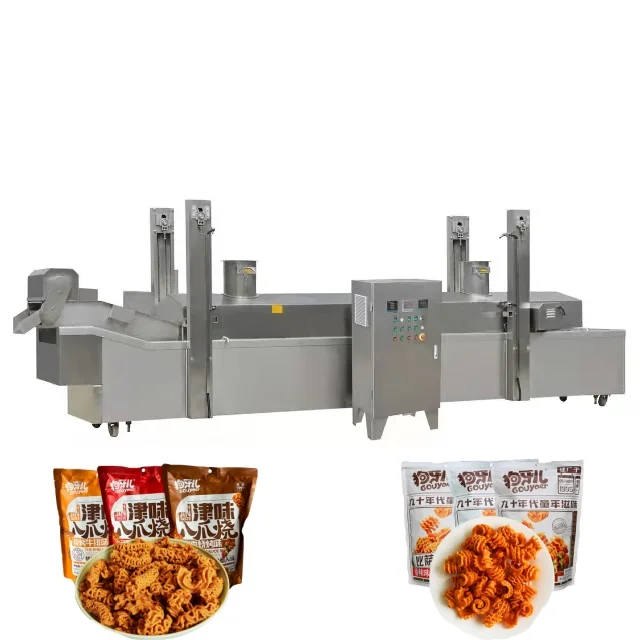
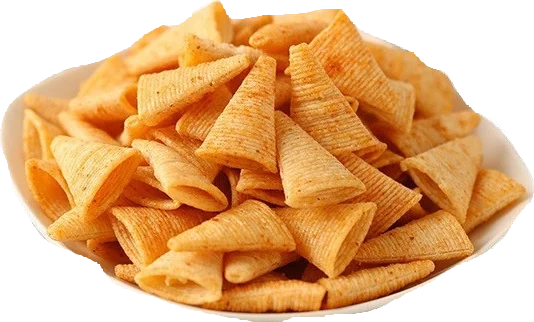
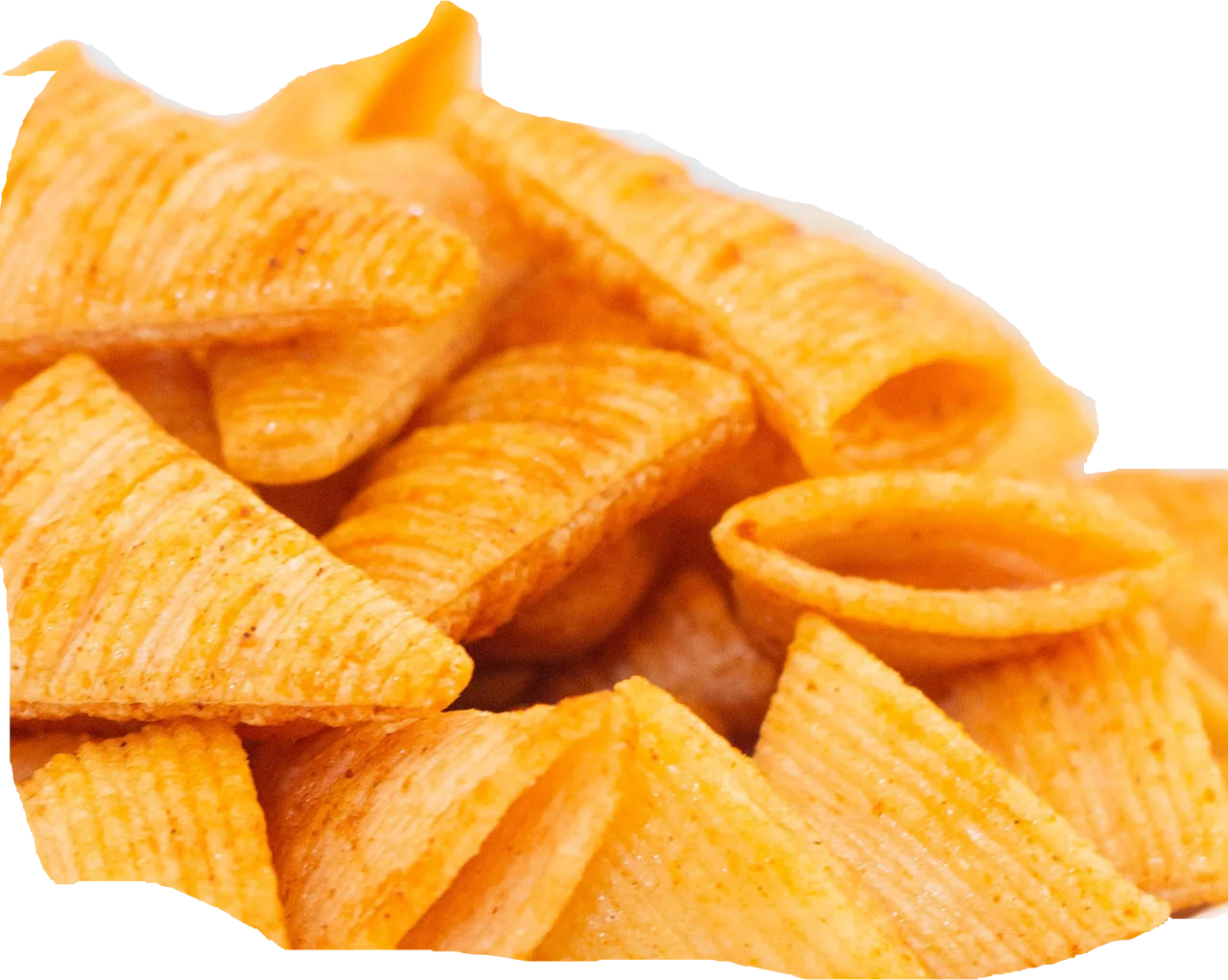
Fried Bugles Snack Production Line, Twin-Screw Extrusion, 600mm Fryer Belt — complete turnkey layout from batching through frying with throughput matched across every station. Co-rotating twin-screw design with sectional modules and interchangeable dies enables rapid changeover between bugles, chips, shells and tubes on one extrusion platform. Fryer features adjustable belt speed and automatic temperature control with gas, electric or diesel heating options. – In-house testing workshop validates your flour formulation and moisture content before shipment, supported by full documentation from layout design to commissioning.
Description
Integrated Extrusion-to-Frying Line — every station throughput calculated against your actual corn and wheat flour formulation before the line ships, so the fryer belt never runs dry or backs up.
Technical Specifications
| Parameter | Value |
|---|---|
| Product Type | Automatic Fried Bugles Snack Production Line |
| Extruder Models Available | MT-65 / MT-70 / MT-85 / MT-75 / MT-95 |
| Screw Type | Twin screw, co-rotating with sectional modules |
| Main Motor (MT-65) | 100 kW |
| Main Motor (MT-70) | 130 kW |
| Main Motor (MT-85) | 180 kW |
| Main Motor (MT-75) | 185 kW |
| Main Motor (MT-95) | 280 kW |
| Mixer Power | 4 kW / 7.5 kW / 15 kW (matched to line capacity) |
| Cutting Machine Power | 1.47 kW |
| Fryer Belt Width | 600 mm stainless steel mesh belt |
| Drying Method | Gas / electric / diesel heating options |
| Fryer Energy Options | Electricity / fuel gas |
| Voltage & Frequency | Customizable per destination market |
| Construction | Painted steel frame; stainless steel food-contact parts |
| Die System | Interchangeable dies and rollers for multiple shapes |
| Key Features | PLC or MCC control available; CE compliant for export |
Application Suitability
| Application | Material or Output |
|---|---|
| Fried bugles and horn-shaped snacks | Corn flour, wheat flour, corn starch blends |
| Pellet chip and corn chip production | Potato starch, potato powder, wheat flour |
| Extruded-and-fried pillow and shell snacks | Corn grits, rice flour, mixed grain formulations |
| Stick, diamond and wavy chip formats | Wheat and corn-based dough at controlled moisture |
| Snack lines targeting children and adult savoury markets | Multi-shape output from a single extrusion platform |
What "300 kg/h" Leaves Out About Line Capacity
Throughput only matters when every station from the mixer to the fryer holds the same rate on your actual recipe.
I have watched turnkey projects stall because the extruder was rated on a generic corn flour blend at ideal moisture, while the buyer’s local wheat-corn mix produced a heavier, slower-cooking dough that the cutting machine could not keep up with. The Automatic Fried Bugles Snack Production Line turnkey project must account for raw material density, moisture absorption rate, and expansion behaviour — not just a brochure number. When one station lags by even a few minutes per batch, product piles on the conveyor and hardens before it reaches the fryer belt [NEED_CITE: throughput matching methodology across extrusion line stations].
Throughput Matching Across the Extrusion and Frying Chain
The Automatic Fried Bugles Snack Production Line turnkey configuration starts with a mixer sized to feed the extruder without pause, and a cutter timed so formed pieces drop onto the fryer belt at a steady interval. Each station — mixing, extruding, cutting, frying, drying, flavouring — is calculated against the next so that the belt loading remains consistent throughout a production shift.
Recipe Validation Before Equipment Leaves the Workshop
Before any line ships, the testing workshop runs the buyer’s actual flour blend through the twin-screw extruder and records expansion ratio, piece density, and moisture drop at each stage. That trial run report captures screw speed, barrel temperature profile, and die pressure on the specific formulation, not a reference recipe. These records travel with the machine so the commissioning engineer can dial in the same settings on site [NEED_CITE: in-house trial run documentation standards for food extrusion equipment].
Reading the Spec Sheet Against Your Production Target
The twin-screw co-rotating design with sectional screw modules lets the operator rearrange forward-transport, mixing, and de-gassing zones to suit different flour ratios. A wheat-heavy blend for bugles needs a longer cooking zone than a pure corn starch mix for pellet chips, and the modular screws accommodate that shift without replacing the barrel. The 600 mm fryer belt width sets an upper bound on pieces-per-minute; belt speed and oil temperature together control the final moisture and crunch of the finished snack. Interchangeable dies and rollers allow shape changeover from bugles to shells or tubes on the same platform, keeping capital expenditure tied to one extrusion line rather than separate machines for each format.
The Hidden Cost of Skipping Station-Level Verification
When a fryer is specified only by oil volume and heating capacity, buyers often discover too late that the belt length cannot cool and drain pieces fast enough for the downstream flavouring drum. The result is oil-soaked product entering the seasoning station, causing uneven coating and frequent drum blockages. A line assembled from separate vendors rarely includes a single document that traces piece flow from extruder die to packing weigh-head, and the gaps between stations become the buyer’s problem once the containers arrive [NEED_CITE: consequences of mismatched station capacity in snack production lines].
Why Source the Full Line From One Supplier
The MT-65 through MT-95 extruder range covers startup capacity to high-volume production, so the same engineering team sizes the mixer, cutter, and fryer to match. Screw and die configurations are documented for each buyer’s target shape and density, not copied from a generic build. An in-house testing workshop runs the buyer’s raw material before shipment, generating a trial report that becomes the baseline for on-site commissioning. Electrical schematics and control-panel language are confirmed to the destination market’s voltage and frequency standard before production begins. Pre-sales engineering, phased installation, and operator training remain with the same team that configured the line.
Documentation & Verification
- Line layout drawing showing matched throughput at mixer, extruder, cutter, fryer, and packing stations
- Trial run report on your wheat and corn flour blend with recorded expansion and moisture data
- Screw module arrangement and die specification sheet for each target snack shape
- Electrical schematic with confirmed voltage, frequency, and control-panel language
- CE declaration of conformity for export compliance
- Wear parts list covering screws, dies, and fryer belt sections
Installation, Commissioning & Support
- Foundation plan aligned to the full line footprint including fryer oil drainage and exhaust routing
- Dedicated power circuit sizing for the selected main motor rating up to 280 kW
- Extruder barrel and cutter assembly alignment verified on site against trial run baseline settings
- Fryer belt speed and oil temperature profiling during first production run with buyer’s recipe
- Operator training covering screw module changeover, die replacement, and fryer belt maintenance
- Recommended spare stock of sectional screw elements and die inserts for two to three years of operation
What We Need to Size Your Line
Send us the flour type and ratio you plan to run, the moisture content at mixing, and the snack shapes you want to produce. Include your workshop floor plan with ceiling height so we can route the dryer exhaust and fryer ventilation. Confirm the local voltage, frequency, and the language your operators need on the control panel. If you already have upstream batching or downstream packing equipment, share the model and throughput so we can match the interface points.
Frequently Asked Questions
Q: How is line capacity verified on my specific flour formulation before I commit?
A: We run your actual raw material in our testing workshop, recording extruder screw speed, barrel temperature, and piece expansion at each moisture level. The trial report becomes part of your documentation package and sets the baseline for on-site commissioning.
Q: How are throughput rates matched between extruder, cutter, fryer, and dryer?
A: Each station is calculated against the next using your confirmed recipe output rate. The line layout document shows piece flow and belt loading at every transfer point so no station runs dry or backs up during continuous operation.
Q: Can voltage, frequency, and control-panel language be set to my country’s standard?
A: Yes. Electrical schematics are confirmed with the buyer before production begins. The motor, heating elements, and control system are built to the destination market’s voltage and frequency, and the HMI language is set to match your operators.
Q: Which spare wear parts should I stock for the first few years?
A: We supply a wear parts list covering sectional screw modules, die inserts, cutting blades, and fryer belt sections specific to your line configuration. We recommend stocking two to three years of high-wear items based on your planned production schedule.
Related products
-
Hot Selling Puffed Ball Snacks Food Processing Line Fried Snacks Processing Line Corn Puff Snacks Machine
¥100.00 Select options This product has multiple variants. The options may be chosen on the product page -
Electric Heating Fried Puffed Food Production Line – Salad Sticks Making Equipment
¥65.00 Select options This product has multiple variants. The options may be chosen on the product page -
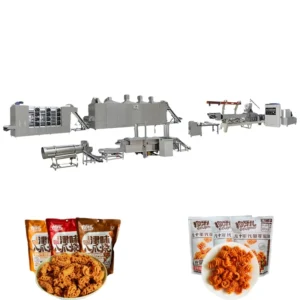
Fried Flour Corn Bugles Extruded Chips Pellets Doritos Snacks Food Machine Production Line Extruder
¥100.00 Select options This product has multiple variants. The options may be chosen on the product page -
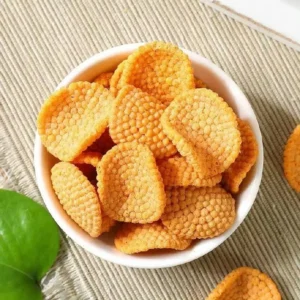
New Automatic Bugles Puff Snack Production Line Price Corn Chips Making Machine Fried Maize Machine High Productivity Large
¥8,570.00 Select options This product has multiple variants. The options may be chosen on the product page