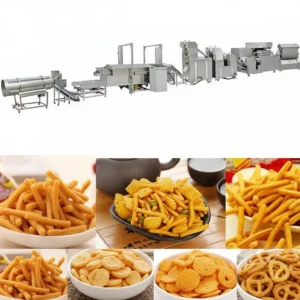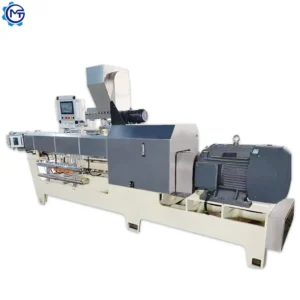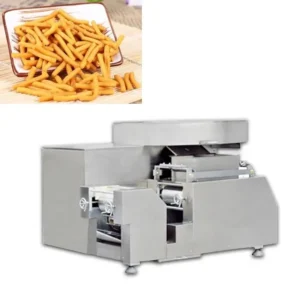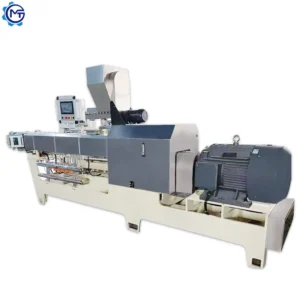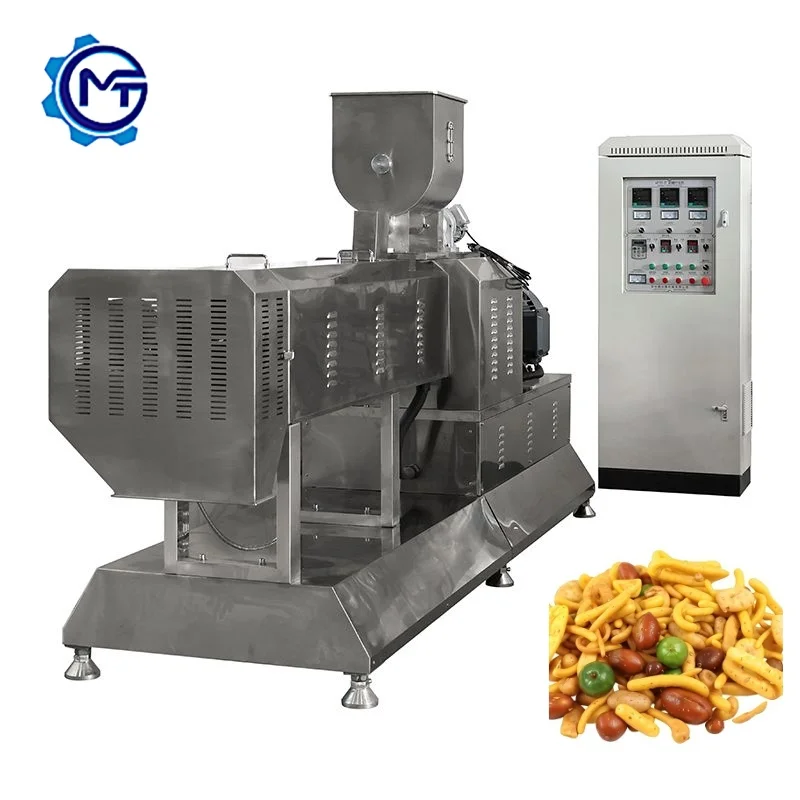
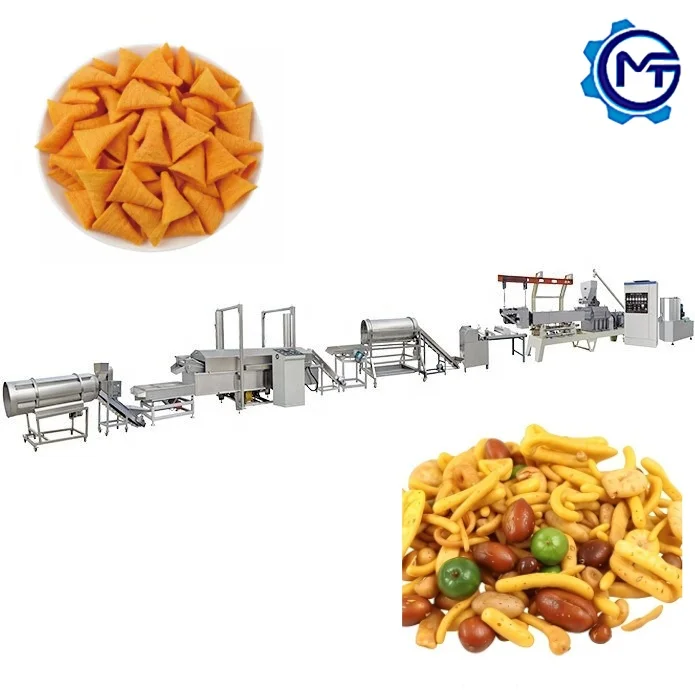

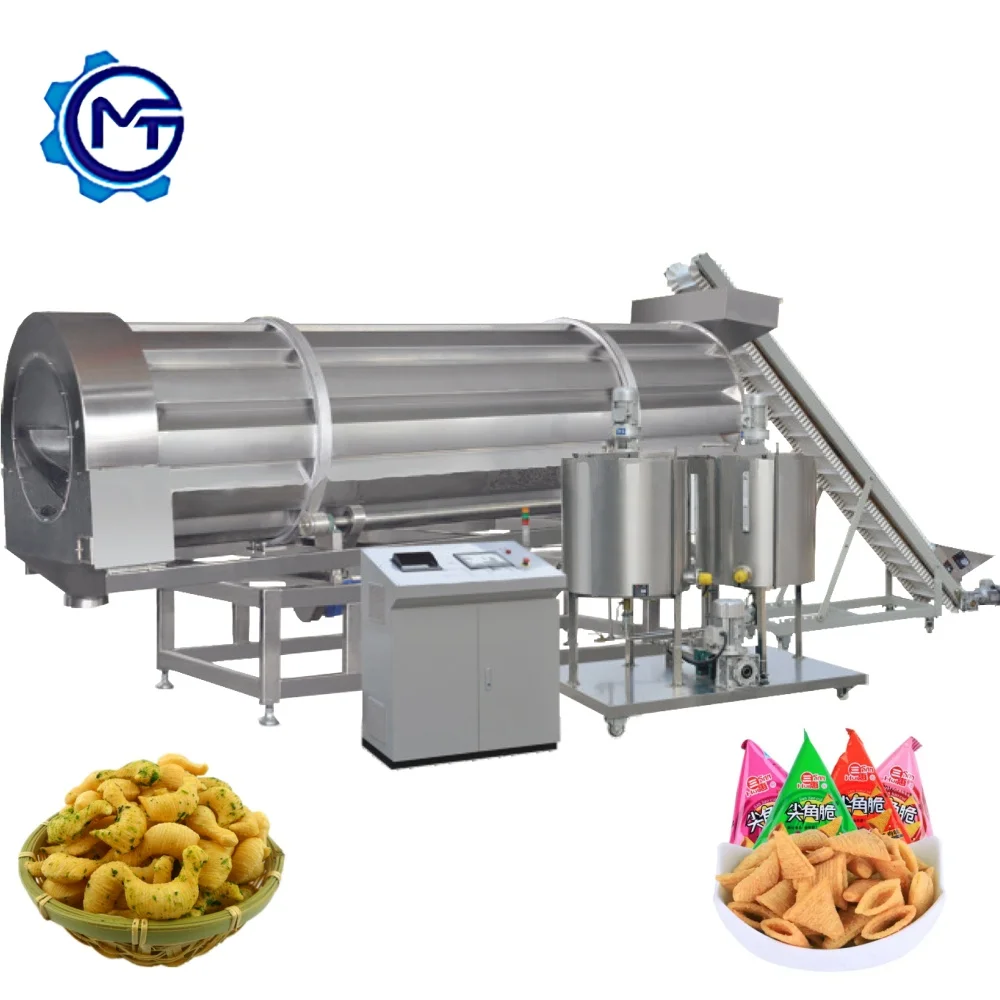

Fried Snacks Production Line, 60 kW heating, PLC control, 320 L oil capacity — continuous fryer with dual-layer mesh belt and stepless speed regulation. Engineered as one integrated turnkey project, throughput is matched across frying, de-oiling, seasoning and packing stations to eliminate bottlenecks. Oil circulation filtration extends service life while configurable electric or gas heating aligns with site utilities.
- Includes line layout, capacity calculation and trial run report on customer raw material before shipment
- On-site installation, commissioning schedule and operator training provided within the project scope
- Voltage, frequency and control language confirmed prior to production to avoid commissioning delays
Description
Integrated Project Engineering — Throughput across frying, de-oiling, and seasoning stations is calculated against your upstream extruder output before layout is finalized, so no single station bottlenecks the line.
Technical Specifications
| Parameter | Value |
|---|---|
| Product Type | Continuous Frying Machine / Fried Snacks Production Line |
| Heating Tube Power | 60 kW (electric heating mode) |
| Drive Power | 2.6 kW |
| Voltage & Frequency | 380V / 50HZ |
| Control System | PLC |
| Oil Capacity | 320 L |
| Overall Dimensions (L×W×H) | 6700 × 2200 × 1200 mm |
| Net Weight | 2000 KG |
| Output Capacity | 100–1000 kg/h (basis to be confirmed) |
| Material | Food-grade 304 Stainless Steel |
| Belt Type | Upper and lower double-layer mesh belt |
| Speed Control | Frequency conversion stepless speed regulation |
| Oil Filtration | Continuous oil circulation filtration system |
| Slag Discharge | Bottom slag discharge system |
| Lifting System | Automatic lifting system for upper hood and mesh belt |
| Heating Method | Electricity / Gas / Coal (configurable) |
| Certification | CE |
Application Suitability
| Application | Material or Output |
|---|---|
| Nimko snack lines | Extruded or formed dough pieces based on gram flour, rice flour, or semolina blends |
| Potato and root vegetable chips | Sliced tubers requiring precise temperature hold and short residence time |
| Pellet-based fried snacks | 2D and 3D starch pellets expanded through deep frying |
| Coated and battered products | Protein or vegetable substrates with pre-applied batter layers |
Why Belt Speed Matters More Than the Nameplate Capacity on a fried snacks production line turnkey
A fryer rated at a given throughput is only accurate when belt speed, oil temperature recovery, and product load per square meter are specified for your exact dough formulation.
I learned this the hard way. A Middle East buyer once commissioned a fried snack line that ran perfectly on our standard test dough. When their own recipe — which carried a significantly higher protein content — hit the fryer at their facility, oil temperature collapsed under the thermal load. The product emerged undercooked and dense, the line blocked downstream, and they lost two full production days before we could recalibrate. That incident changed how I handle every subsequent project: no line leaves our testing workshop without a trial run on the customer’s actual raw material, and all parameters are locked before crating [NEED_CITE: impact of raw material composition on frying thermodynamics].
When the fryer capacity does not align with the upstream extruder or forming station, the result is either product queuing before the fryer or the belt running half-empty — both destroy your cost per kilogram.
Throughput Matching Across the Full Line
A fried snacks production line turnkey project succeeds or fails at the junction points between stations. The fryer output must feed the de-oiling conveyor at a rate the de-oiler can handle; the de-oiler must deliver to the seasoning drum at a speed that allows full coating contact time. If any station is undersized, product piles up, cools unevenly, and falls out of specification. Our line layout starts with your target packed output and works backward through every station to confirm that each one carries the same mass flow, with allowance for moisture loss during frying.
Phased Installation and Utility Coordination
Deploying a complete frying line involves coordinating gas supply or electrical infrastructure, exhaust ducting, oil storage and filtration plumbing, and drainage for cleaning cycles. We sequence the installation so that utility connections are verified before the fryer is positioned, and downstream stations are staged to come online progressively. This avoids the situation where the fryer is running but the packing station is still waiting on conduit [NEED_CITE: industrial food line installation sequencing practices]. Commissioning happens in stages — first the fryer alone under no-load conditions, then with product, then the full line synchronized.
How Key Parameters Shape Your Daily Output
The 60 kW heating element bank in electric mode determines how quickly the oil recovers temperature after each batch of cold product enters. A higher thermal load means faster recovery and more consistent color and texture across the belt width. The double-layer mesh belt prevents lightweight products like nimko from floating to the surface, keeping them fully submerged for uniform heat transfer. Frequency conversion stepless speed regulation gives operators fine control over residence time — critical when switching between a thin, fast-frying chip and a denser pellet snack that needs a longer soak. The 320 L oil capacity, combined with continuous circulation filtration, slows the rise in free fatty acids so oil replacement intervals extend and running costs drop.
The Hidden Cost of Misconfigured Heating and Control
Choosing the wrong heating method for your site utility profile creates ongoing expense. A buyer who installs an electric fryer in a region with high industrial tariffs will see energy costs dominate the P&L, while the same line configured for gas heating at a site without adequate gas pressure will suffer temperature fluctuations that ruin product consistency. Equally, operating a PLC-controlled fryer without confirming the local voltage and frequency before production means the drive motor may overheat or the heating contactors may fail prematurely — issues that only surface after installation, when the line is supposed to be generating revenue [NEED_CITE: voltage mismatch consequences in exported industrial equipment].
Why Source the Entire Line from One Project Supplier
Throughput accountability. Every station is sized against the same mass-flow calculation, so no vendor can blame the other when output falls short.
Single layout document. One drawing covers extruder, fryer, de-oiler, seasoning drum, and packing conveyor with all utility tie-in points marked.
Pre-shipment trial runs. Your actual raw material is tested in our workshop; parameters are documented and shipped with the machine.
Matched documentation. Electrical schematics, PLC program backups, and maintenance schedules reference the exact components installed on your line.
Operator training scope. Our commissioning team trains your operators on the full sequence, not just one isolated station.
Documentation & Verification
- Line layout with throughput calculation matching fryer output to de-oiling and packing rates
- Electrical schematic confirming voltage, frequency, and control language for your market
- Trial run report on your raw material with locked frying temperature and belt speed parameters
- CE declaration of conformity covering the complete frying line assembly
- Wear parts list specifying mesh belt dimensions, heating elements, and filter cartridges
Installation, Commissioning & Support
- Foundation must support 2000 KG net weight plus oil and product load across the 6700 mm footprint
- Dedicated electrical circuit rated for 60 kW heating load plus 2.6 kW drive, confirmed before placement
- Automatic lifting hood allows overhead crane access for mesh belt inspection and replacement
- PLC parameters loaded from trial run report; operators verify against actual first-run output
- Continuous oil filtration system inspected and filter media replaced at first scheduled maintenance interval
- Training covers belt speed adjustment via frequency converter for different product formats
What We Need to Scope Your Frying Line
To configure a line that matches your production target, share your product format (nimko, chips, pellet snacks), the raw material formulation with moisture and protein content, and your target daily packed output. We also need your site voltage, frequency, available heating fuel, and the floor area allocated for the line so we can draft a layout that integrates with your existing upstream and downstream equipment.
Frequently Asked Questions
Q: How is line throughput verified end-to-end before shipment?
A: We run your actual raw material through the fryer in our testing workshop, measuring belt speed, oil temperature profile, and output mass. The de-oiling and seasoning stations are then verified against this confirmed frying output to ensure no station bottlenecks the line. All parameters are documented and shipped with the equipment.
Q: What voltage and control language options are confirmed before production?
A: Before the line enters production, we confirm your site voltage, frequency, and the preferred PLC interface language. The electrical schematic is updated to reflect these values, and the control panel is built and tested against them so commissioning proceeds without electrical rework on site.
Q: How is fryer capacity matched to our upstream extruder or forming machine?
A: We calculate the mass flow from your extruder or former — accounting for moisture loss during frying — and size the fryer belt width and speed range to absorb that flow continuously. The same calculation feeds downstream into de-oiling and seasoning station selection.
Q: What does the installation and commissioning schedule look like?
A: The schedule is phased: utility connections first, then fryer positioning and oil fill, followed by no-load testing, product trials, and finally full-line synchronization. Each phase has a defined checklist, and our team remains on site until your operators can run the line independently.
Q: Which spare wear parts should we stock, and what is the reorder lead time?
A: We recommend stocking replacement mesh belt sections, heating elements, and oil filter cartridges specific to your fryer configuration. A wear parts list with part numbers and typical multi-week lead times is included in your documentation package so you can plan reorders before stock runs out.
Related products
-
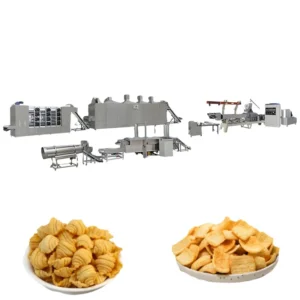
New Automatic Portable High Productivity Frying Salad Sticks Chips Snacks Food Production Line
¥100.00 Select options This product has multiple variants. The options may be chosen on the product page -
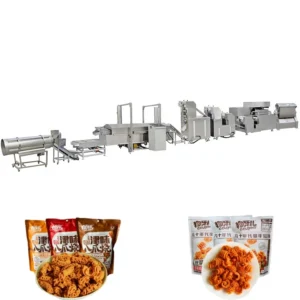
Puffed Octopus Snack Processing Line – Full-Automatic Fried Octopus Production Machinery
¥65.00 Select options This product has multiple variants. The options may be chosen on the product page -
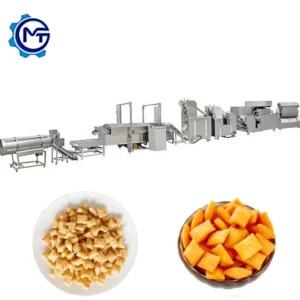
Hot Selling Full Automatic Fried Dough Wheat Flour Bugles Snacks Frying Machine Fried Puffed Food Bugles Snack Production Line
¥7,349.41 Select options This product has multiple variants. The options may be chosen on the product page -
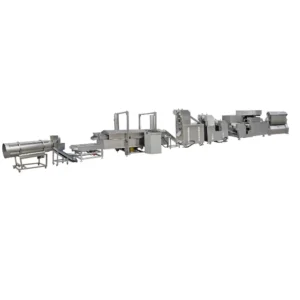
Frying Crispy 3D Corn Bugles Pellets Fried Chips Snacks Food Machine Production Line Bugles Making Extruder
¥100.00 Select options This product has multiple variants. The options may be chosen on the product page