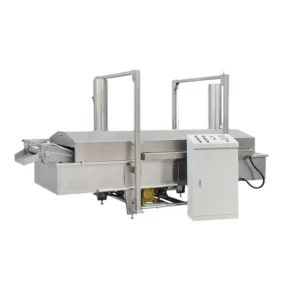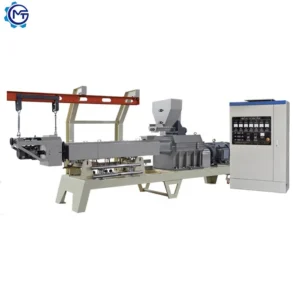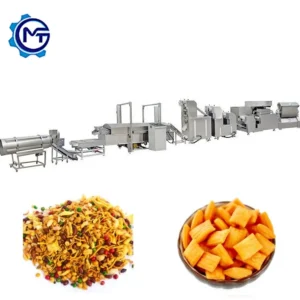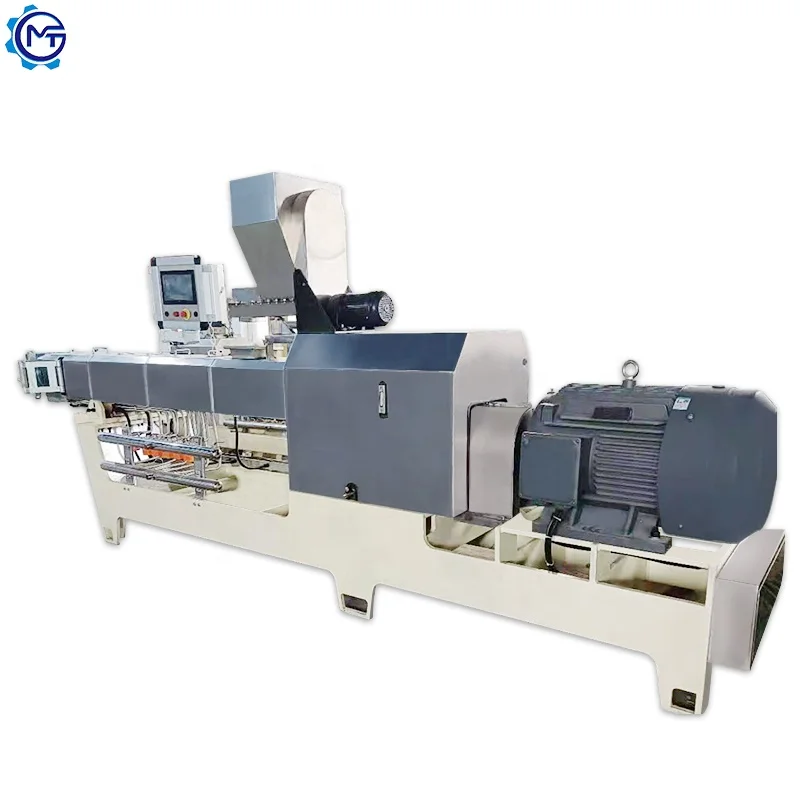
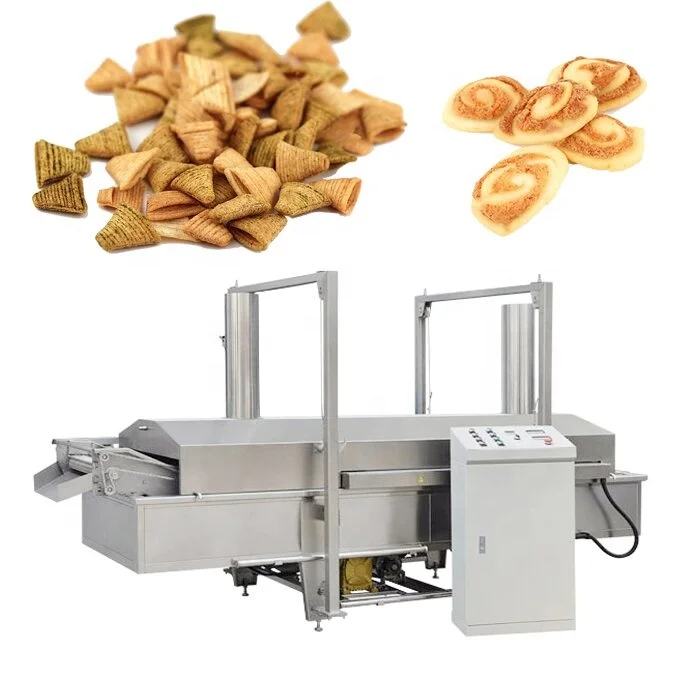

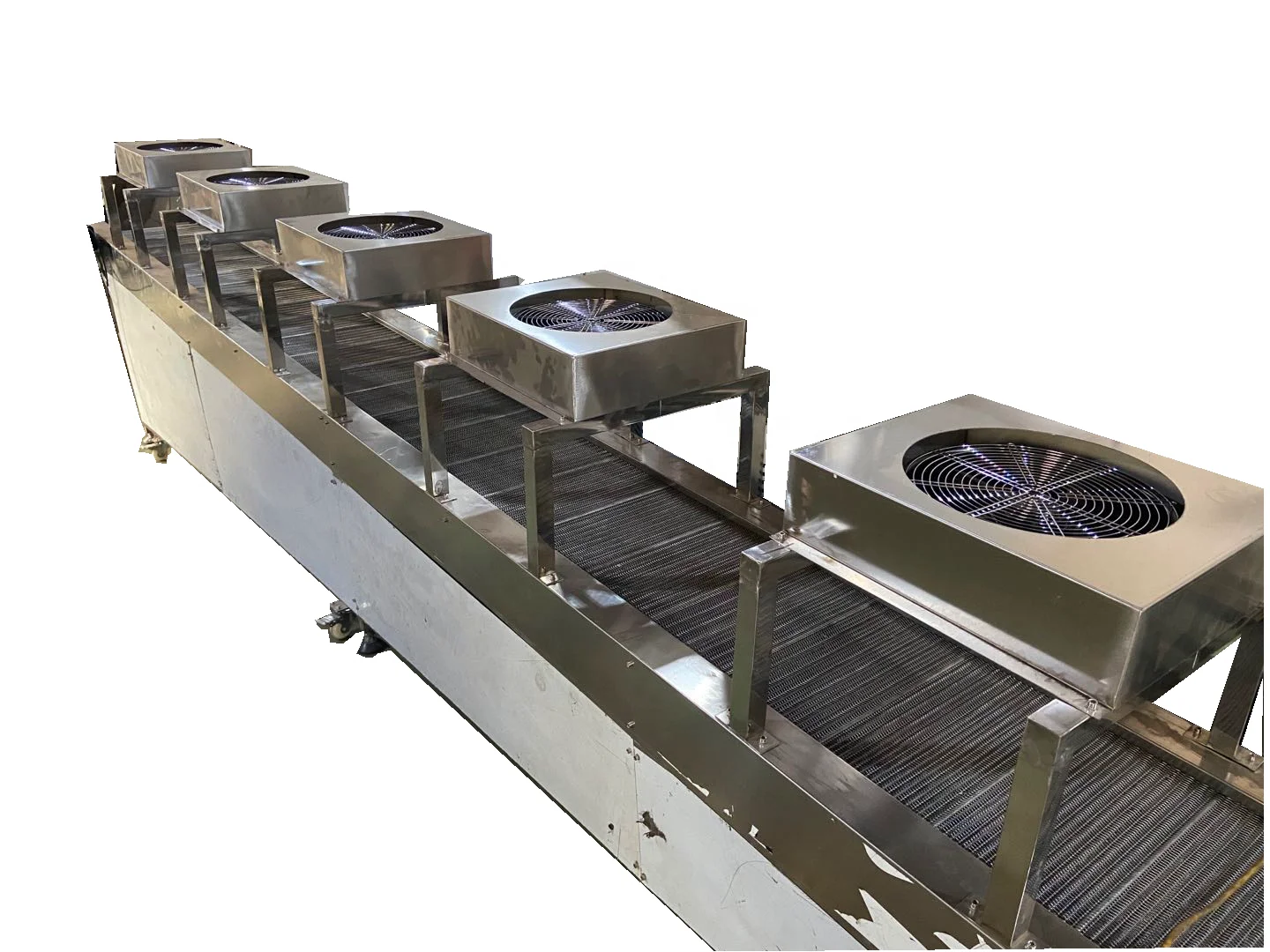
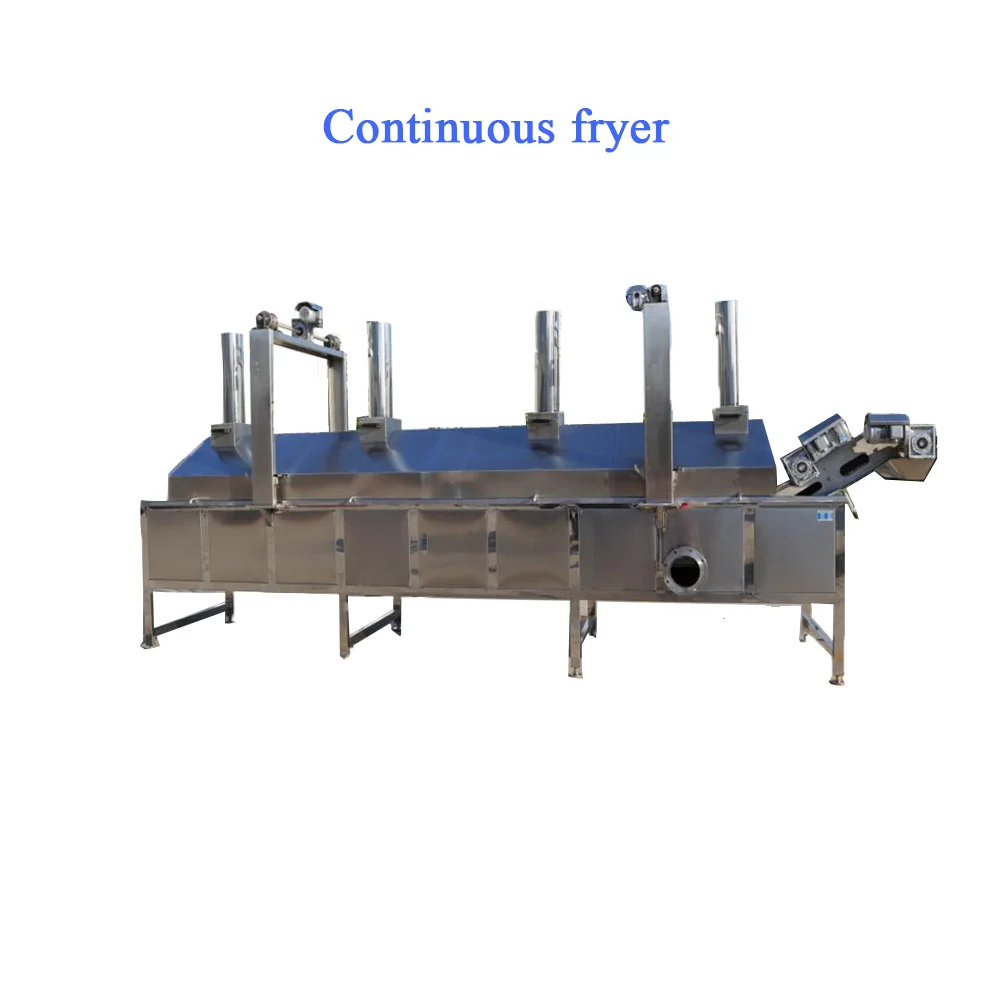

MT65 / MT70 / MT85 / MT75 / MT95 Fried Snack Food Processing Line, Twin-Screw Extruder, 142–370 kW — configured as a complete turnkey project from powder mixing through frying to flavoring. Screw configuration and die design are matched to your flour blend and target snack geometry, controlling expansion, density, and final chip texture across every station.
- Throughput matched between extruder, fryer, and flavoring to eliminate line bottlenecks
- Layout design, phased installation, commissioning schedule, and operator training included under one supplier
Description
Throughput-Matched Line Engineering — every station from powder mixing through frying to flavoring is calculated against the buyer’s actual flour blend and target snack geometry before capacity is quoted.
Technical Specifications
| Parameter | Value |
|---|---|
| Product Type | Fried Snack Food Processing Line |
| Models Available | MT65 / MT70 / MT85 / MT75 / MT95 |
| Output Capacity (MT65) | 120-150 kg/h (basis to be confirmed) |
| Output Capacity (MT70) | 200-250 kg/h (basis to be confirmed) |
| Output Capacity (MT85) | 300-500 kg/h (basis to be confirmed) |
| Output Capacity (MT75) | 400-500 kg/h (basis to be confirmed) |
| Output Capacity (MT95) | 800-1000 kg/h (basis to be confirmed) |
| Installed Power Range | 142 kW (MT65) to 370 kW (MT95) |
| Real Power Consumption | 100 kW (MT65) to 280 kW (MT95) |
| Extruder Type | Twin Screw |
| Fryer Temperature Range | 0-260°C |
| Fryer Capacity | 200-300 kg/h (basis to be confirmed) |
| Powder Mixer Tank Volume | 150 kg |
| Powder Mixer Rotary Speed | 385 rpm |
| Powder Mixer Mixing Time | 10 min per batch |
| Overall Line Dimensions (MT65) | 22000 × 1200 × 2200 mm |
| Overall Line Dimensions (MT95) | 30000 × 1500 × 2800 mm |
| Material of Construction | Stainless steel (304 grade) |
| Warranty | 1 year complete warranty |
| Assembly State | Complete production line (batching through flavoring) |
| Standards | CE, ISO |
Application Suitability
| Application | Material or Output |
|---|---|
| Rice crust chip production | Rice flour and starch blends fried to a crisp, porous texture |
| Tortilla chip and corn chip processing | Corn masa or wheat flour extruded into flat sheet geometries before frying |
| Bugles and cone-shaped snack forming | Corn and wheat flour blends extruded through shaped dies for hollow cone output |
| Pizza rolls and filled snack formats | Flour-based dough with seasoning incorporated before twin-screw extrusion |
| Decorative shape snacks (duck, tree, triangle) | Specialty die plates producing novelty geometries for seasonal or themed product runs |
| Golden corners and fish crisp shapes | Wheat and rice flour mixes shaped by custom die configurations |
Why Nominal Capacity Fails on Your Actual Flour Blend
Capacity figures only hold when screw configuration, die geometry, and moisture profile match your specific raw material.
I once worked with a buyer who ordered a Fried Snack Food Processing Line turnkey based on a brochure number, only to find the fryer could not keep up with the extruder once production started. The problem was not the machine itself — it was that the line had been quoted on a generic corn grits recipe, while the buyer was running a high-moisture wheat blend. The extruder pushed product faster than the fryer could handle, oil absorption went out of spec, and the seasoning drum ended up as the third bottleneck in a row. That is what happens when throughput is never calculated as a chain. [NEED_CITE: throughput matching between extrusion and frying stations]
Station Sequencing and Throughput Chain Logic
A Fried Snack Food Processing Line turnkey is not a collection of standalone machines — it is a sequence where each station’s output defines the next station’s input. The powder mixer batches at 150 kg per cycle with a 10-minute mix time, which sets the feed rate into the twin-screw extruder. If the extruder is specified without accounting for that batch rhythm, the screw barrel either starves or overfeeds, both of which degrade product density and shape consistency.
How Die Configuration Determines Final Snack Geometry
The die plate at the extruder outlet defines whether the output is a hollow cone, a flat triangle, or a solid curl. Each geometry expands differently in the fryer oil. A cone shape with thin walls fries faster and absorbs less oil than a solid curl of the same mass, which means fryer residence time and oil temperature must be adjusted to the die choice. Specifying the die without adjusting the fryer profile is a common reason finished snacks emerge either under-crisped or over-browned. [NEED_CITE: relationship between extrusion die geometry and frying oil absorption]
Reading the Power and Capacity Data Across Models
The MT65 draws 142 kW installed but consumes around 100 kW in real operation, while the MT95 peaks at 370 kW installed with approximately 280 kW actual draw. This gap between installed and consumed power reflects motor start-up surges and safety margins rather than continuous load. For facility planning, the real power consumption figure determines transformer sizing and dedicated circuit requirements. The fryer’s 0-260°C range covers the typical 160-190°C frying window for most flour-based snacks, with headroom for products requiring a high-temperature flash finish.
The Hidden Cost of Mismatched Fryer and Flavoring Capacity
When the fryer capacity does not align with extruder output, product backs up on the conveyor, cooling unevenly and arriving at the flavoring drum at inconsistent temperatures. Seasoning adhesion depends on a specific surface temperature window — too hot and the powder cakes, too cold and it falls off. Buyers who discover this mismatch after installation face weeks of reformulation and conveyor speed adjustments that could have been avoided with a matched line layout. [NEED_CITE: seasoning adhesion and product temperature at flavoring drum entry]
Why Procure the Entire Line from One Source
Every station on this Fried Snack Food Processing Line turnkey is sized against the others before the layout is finalized, so the extruder output, fryer belt speed, and flavoring drum throughput move as one chain. The twin-screw configuration and die plate are specified to your flour blend and target snack shape, not copied from a generic build. An in-house testing workshop runs your actual raw material before the line ships, producing a trial run report that confirms product texture, oil absorption, and shape integrity. Electrical schematics and voltage specifications are confirmed for your target market before production begins, preventing commissioning delays caused by incompatible power supply. Operator training covers the full station sequence, and a wear parts list with screw and die replacements is included from day one.
Documentation & Verification
- Line layout and capacity calculation showing throughput at every station for your product format
- Screw and die configuration record matched to your flour blend and target snack geometry
- Electrical schematic with voltage and frequency confirmed for your facility before build
- Trial run report on your raw material from the in-house testing workshop
- Factory test record and packing photographs provided before dispatch
Installation, Commissioning & Support
- MT65 line requires a minimum 22-meter clear floor length with 2.2-meter ceiling clearance
- MT95 line draws 280 kW real power; dedicated transformer circuit must be confirmed before arrival
- All stations ship partially disassembled; on-site mechanical assembly includes conveyor alignment and fryer leveling
- First commissioning run sets fryer temperature profile and extruder screw speed against your recipe
- Operator training covers batch mixing ratios, die changeover, and fryer oil management procedures
- Wear parts list covers screws, dies, and fryer mesh belt segments with replacement intervals noted
What to Include in Your Line Inquiry
To configure a line that holds its rated throughput on your material, share your flour blend composition, target snack shape with reference images or samples, and expected daily output in kilograms. Confirm your facility voltage and frequency, available floor space with ceiling height, and whether you need the line to integrate with existing upstream batching or downstream packing equipment. If your raw material has unusual moisture content or fat levels, request a trial run in the testing workshop before the line enters production.
Frequently Asked Questions
Q: How is line capacity verified against my specific flour blend and target snack shape?
A: Before quoting throughput, the screw configuration and die plate are selected based on your flour composition, moisture content, and target geometry. A trial run using your raw material is conducted in the testing workshop, and the resulting data on expansion, density, and oil absorption informs the final capacity calculation for each station.
Q: How do you ensure throughput matching between extruder, fryer, and flavoring stations?
A: Each station’s throughput is calculated as part of a chain. The extruder output rate sets the fryer belt speed and oil volume requirement, and the fryer discharge rate determines the flavoring drum feed. The line layout document specifies the calculated throughput at every station, so no single point becomes a bottleneck.
Q: What voltage, frequency, and control language options are confirmed before production?
A: Your facility’s electrical supply — voltage, phase, and frequency — is confirmed before the electrical schematic is finalized. Control panel labeling and interface language are set to match your operator team. This prevents commissioning delays caused by mismatched power supply or unreadable interface screens on arrival.
Q: Can I run a trial with my raw material before the line ships?
A: The in-house testing workshop conducts trial runs using your actual flour blend and target recipe. The trial produces samples for your evaluation and generates a report documenting screw speed, barrel temperature profile, fryer temperature, and finished product characteristics. Adjustments are made before the line leaves the factory.
Related products
-
Fried Flour Corn Bugles Extruded Chips Pellets Doritos Snacks Food Machine Production Line Extruder
¥100.00 Select options This product has multiple variants. The options may be chosen on the product page -
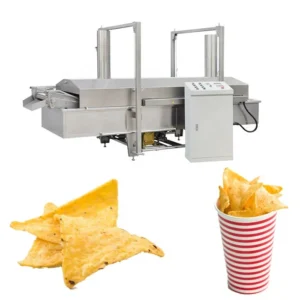
New Fully Automatic Large Capacity 304 Stainless Steel Savory Frying Snack Production Line Crisp Bugles Chips Processing Machine
¥30.00 Select options This product has multiple variants. The options may be chosen on the product page -
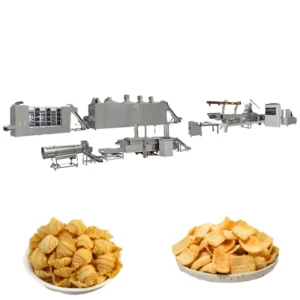
Hot Selling Puffed Ball Snacks Food Processing Line Fried Snacks Processing Line Corn Puff Snacks Machine
¥100.00 Select options This product has multiple variants. The options may be chosen on the product page -
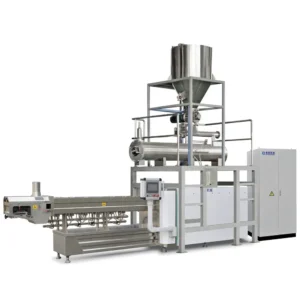
New Automatic 150-200kg/h Nimko Fried Pasta Snacks & Kurkure Making Machine Food Grade Stainless Steel High Productivity
¥8,585.00 Select options This product has multiple variants. The options may be chosen on the product page