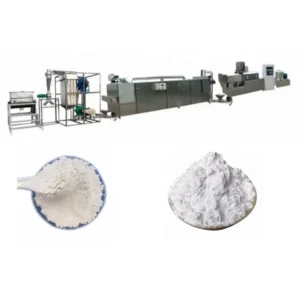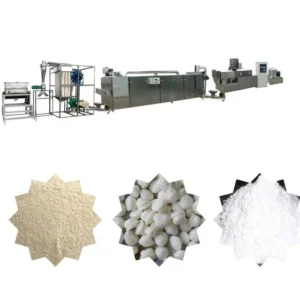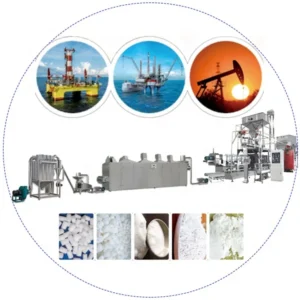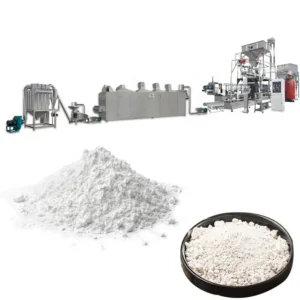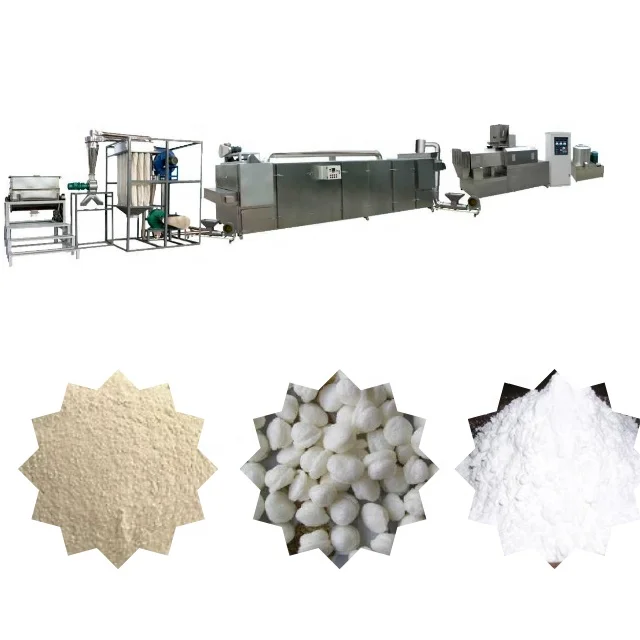

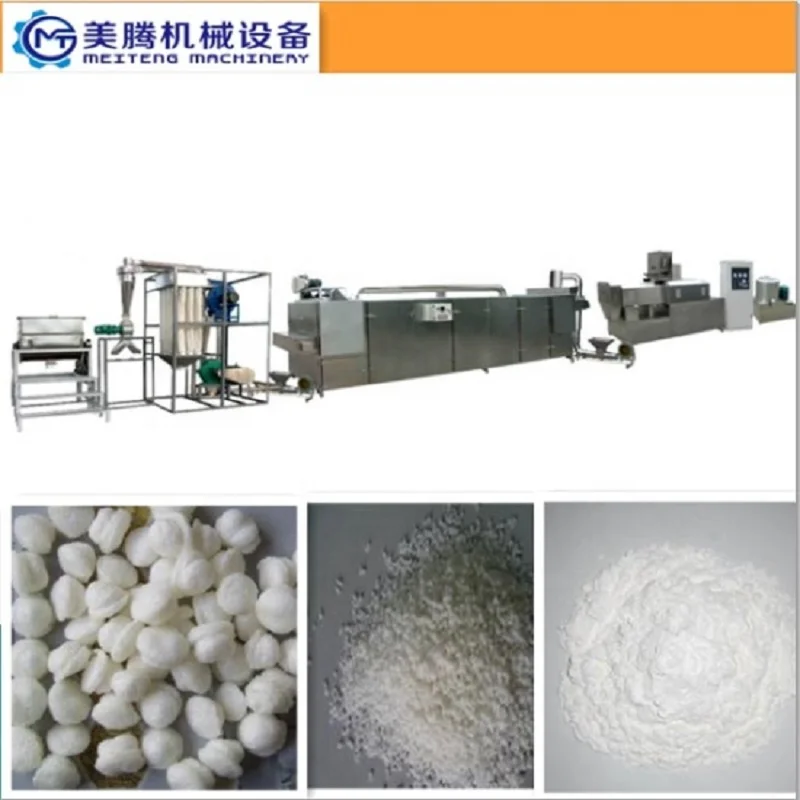
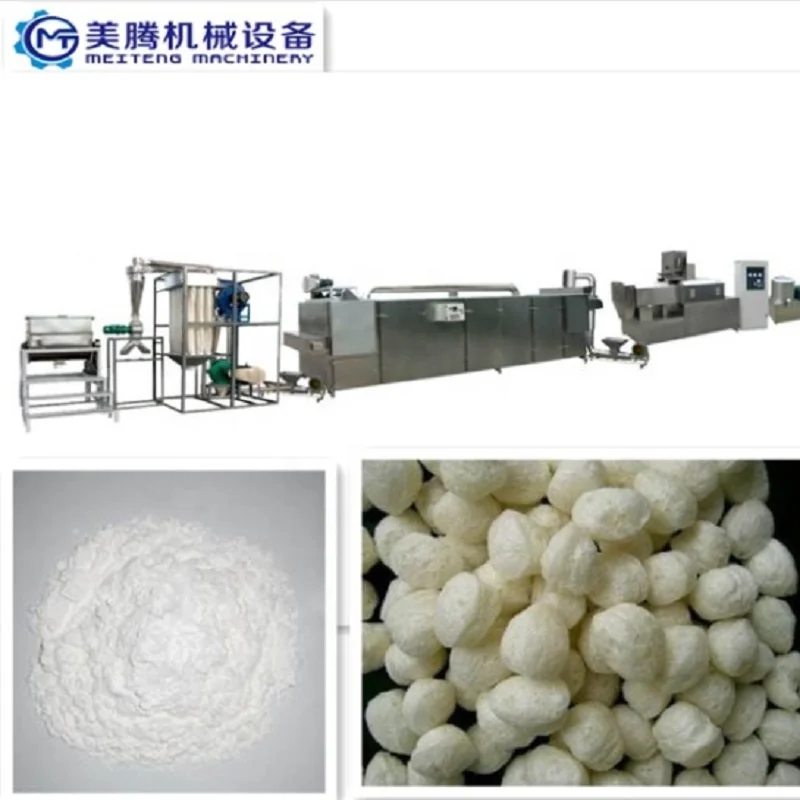
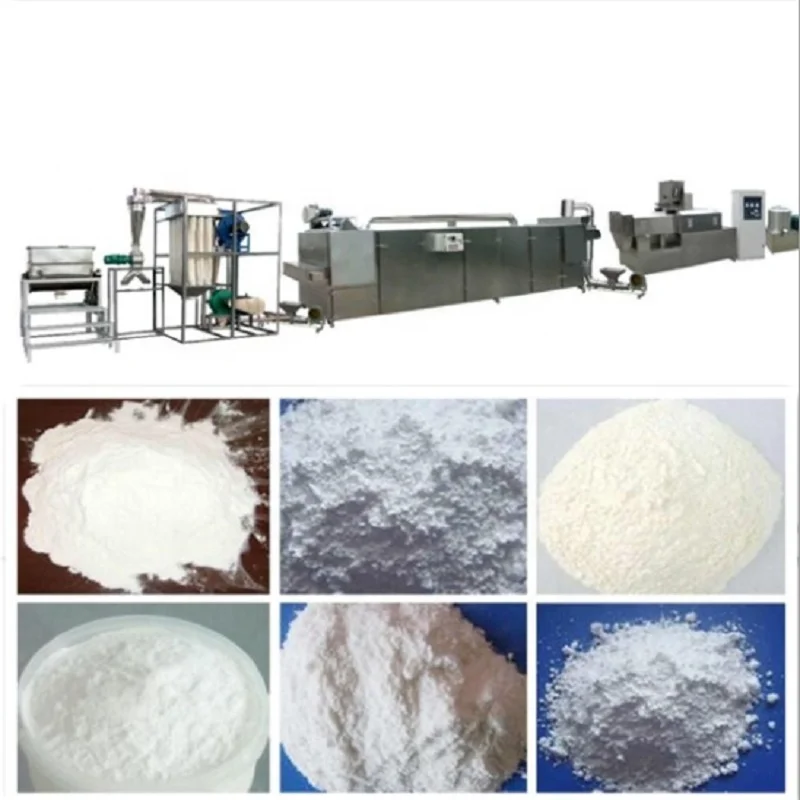
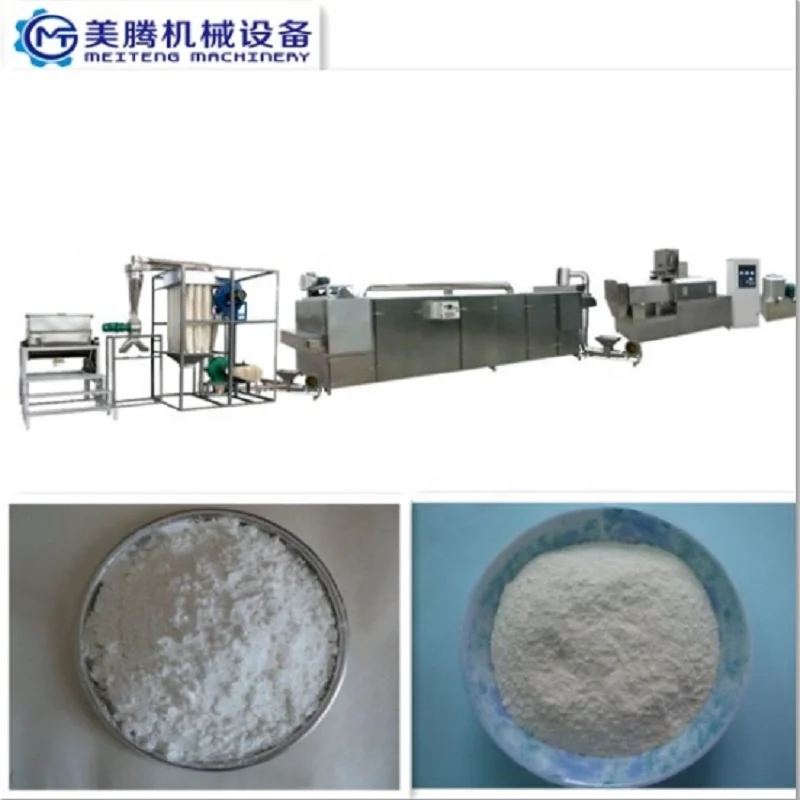
Modified Starch Extrusion Production Line, Twin-screw, 3-Phase Modular Screw Design — engineered for thermochemical modification of maize, potato, and cassava starch with matched throughput across mixing, extrusion, and baking stations.
- Screw gap and die configuration calibrated to raw material type and target modification degree
- Four capacity tiers (MT-65 through MT-95) supporting phased production scaling
- Complete line layout with utility planning and commissioning schedule under single-supplier coordination
Trial runs on customer-supplied raw material conducted in-house before shipment, with full configuration record and electrical schematic delivered for site-specific integration.
Description
Throughput-Matched Engineering — Every station in this modified maize starch production line is sized against your actual raw material profile, not a generic catalog figure, so the extruder, baking, and packing stages advance at the same pace from day one.
Technical Specifications
| Parameter | Value |
|---|---|
| Product Type | Modified Starch Extrusion Production Line |
| Extruder Configuration | Twin-screw with 3-phase modular screw design (conveying, smelting, inflated) |
| Available Capacity Tiers | MT-65 / MT-70 / MT-85 / MT-95 |
| Motor Power Range | 45 kW (MT-65) to 90 kW (MT-95) |
| Voltage Options | 380V / 220V / 430V configurable to site utility supply |
| Overall Dimensions (MT-65) | 2 × 3 × 5 m |
| Overall Dimensions (MT-95) | 2.8 × 6 × 10 m |
| Screw and Barrel Material | Carbon steel |
| Line Stations | Mixing → Extrusion → Baking (thermochemical treatment) |
| Assembly State | Complete production line |
| Installation Duration | 2–3 weeks including operator training and machinery test |
| Compliance | CE, ISO certified manufacturer |
Application Suitability
| Application | Raw Material and Process Context |
|---|---|
| Modified maize starch | Thermochemical extrusion of native corn starch for adjusted gelatinisation and viscosity profiles |
| Pregelatinised starch | Pre-cooking extrusion for cold-water solubility in food and industrial binders |
| Cassava starch modification | Shear and heat treatment adapted to cassava’s lower gelatinisation onset temperature |
| Potato starch processing | Barrel temperature profiling matched to potato starch’s narrow peak viscosity window |
When Capacity Claims Ignore the Raw Material
A modified starch production line turnkey system quoted on nominal capacity means nothing if the screw configuration was designed for a different starch source. The throughput number only holds when the screw gap, die geometry, and barrel temperature curve are calibrated to your specific starch type and target modification degree.
I once configured a line for modified corn starch using standard testing protocols. When the buyer’s facility ran waxier maize with a different amylose content, the gelatinisation temperature shifted and viscosity targets could not be met on-site. Two weeks of reworking screw combinations and thermal profiles followed before the line produced within specification [NEED_CITE: starch amylose content and gelatinisation behaviour]. That gap between catalog capacity and actual output is where most turnkey starch projects stall.
Thermal Profiling Across Starch Sources
Maize, potato, and cassava starches each carry distinct gelatinisation onset and peak temperatures. A modified starch production line turnkey setup must account for these differences through barrel zone heating and screw shear intensity. The three-phase modular screw design — conveying, smelting, and inflated — lets the process engineer adjust residence time and mechanical energy input independently at each phase, keeping the starch granule transformation within the narrow window that defines the target viscosity and solubility.
Throughput Matching Between Extrusion and Baking
Extruder output means little if the downstream baking station cannot keep pace. When line stations are sourced from separate vendors, the baking capacity often lags behind the extruder’s rated throughput, creating a bottleneck that forces the entire modified starch production line turnkey system to run below its design rate [NEED_CITE: extrusion line throughput bottleneck between thermal processing stations]. Sizing every station under a single supplier’s capacity calculation eliminates this mismatch before the line is built.
Reading the Screw and Barrel Specifications
The twin-screw configuration provides continuous self-wiping action, which is essential when processing starches that gelatinise and become adhesive under heat. Carbon steel screws and barrels withstand the sustained friction of thermochemical treatment while maintaining dimensional accuracy over extended production runs. The 3-phase modular design means worn screw elements in the smelting or inflated phase can be replaced individually — there is no need to swap an entire screw assembly, keeping maintenance downtime contained. Motor power scales from 45 kW on the MT-65 to 90 kW on the MT-95, with each tier matched to the corresponding barrel volume and target throughput range. Voltage configurability across 380V, 220V, and 430V ensures the drive system aligns with the buyer’s facility power supply without needing an external transformer bank.
The Cost of Skipping Raw Material Trials
Shipping an extruder without a prior trial run on the buyer’s exact starch source turns installation week into an unplanned development phase. Screw combinations that worked on one maize variety may leave another under-gelatinised, producing starch that fails viscosity specifications and cannot be sold [NEED_CITE: thermochemical starch modification validation before production]. The downstream consequences — wasted raw material, delayed first shipment, contractual penalties — far outweigh the time invested in a pre-shipment test.
Why This Line Is Specified Here
Every station from mixing through extrusion to baking is sized under one capacity calculation, so no single stage throttles the others. Screw configuration and die design are documented against the buyer’s raw material sample rather than copied from a generic build. An in-house testing workshop runs the buyer’s actual starch before shipment, producing a trial run report that confirms viscosity and gelatinisation targets. The complete electrical schematic ships with voltage and frequency matched to the destination facility. Twin-screw expertise spans modified starch, pregelatinised starch, and texturized protein applications, so the same engineering team handles starch projects alongside adjacent food extrusion lines.
Documentation & Verification
- Line layout drawing with throughput verified against your starch source and target modification degree
- Screw and die configuration record specifying gap, pitch, and barrel zone settings for your material
- Trial run report from in-house testing workshop using your raw material sample before shipment
- Electrical schematic with confirmed voltage, frequency, and control language for your site
- Factory test record documenting assembly, motor load, and thermal profile validation before dispatch
Installation, Commissioning & Support
- Foundation and utility layout provided for the selected extruder tier footprint, up to 2.8 × 6 × 10 m
- Dedicated power circuit sized for motor loads ranging from 45 kW to 90 kW at confirmed site voltage
- 2–3 week on-site installation covering mechanical assembly, electrical termination, and first production run
- Barrel temperature and screw speed parameter sets documented during commissioning for repeat runs
- Operator training on screw element inspection and individual modular replacement procedures
- Wear parts list identifying carbon steel screw segments and barrel liners by individual part number
What to Prepare Before Requesting a Quote
Share the specific starch source — maize variety, potato, or cassava — along with any existing lab data on amylose content and current gelatinisation behaviour. Specify your target modification outcome, whether pregelatinisation, cross-linking, or viscosity adjustment, and the intended daily output volume. Confirm your facility’s available voltage and frequency so the drive system is specified correctly from the start. If you operate existing upstream mixing or downstream packing equipment, provide those capacity figures so the new extrusion and baking stations are matched to your current throughput.
Frequently Asked Questions
Q: How is throughput matched between the extruder, baking station, and packing to prevent bottlenecks?
A: Each station is sized under a single capacity calculation based on your starch source and target output rate. The baking station’s thermal capacity and dwell time are specified to handle the extruder’s full output continuously, and packing speed is verified against the cooled product flow. This prevents any single stage from throttling the modified starch production line turnkey system once commissioned.
Q: What screw and die configuration differences apply to potato versus maize versus cassava starch?
A: Each starch type has a different gelatinisation temperature range and shear sensitivity. The screw element arrangement in the smelting and inflated phases is adjusted to deliver the correct residence time and mechanical energy. Die geometry is selected to control expansion and product density. These settings are documented in the configuration record before the line ships.
Q: What does the pre-shipment trial run cover and what report is delivered?
A: The buyer’s raw material sample is processed through the configured extruder in the in-house testing workshop. The trial run report records barrel temperature profiles, screw speed, product viscosity, gelatinisation degree, and visual quality. This confirms the line meets target specifications before it leaves the factory.
Q: How long does installation and operator training take on site?
A: On-site installation, commissioning, and training typically require two to three weeks. This covers mechanical and electrical assembly, parameter setting across all barrel zones, production test runs, and operator instruction on screw inspection, modular element replacement, and daily maintenance routines specific to the installed extruder tier.
Q: Can worn screw elements be replaced individually without changing the full screw set?
A: Yes. The three-phase modular screw design allows individual conveying, smelting, or inflated phase elements to be swapped as needed. Carbon steel wear parts are listed by individual part number in the documentation, so only the affected segments are ordered and replaced, reducing both spare parts cost and maintenance downtime.
Related products
-
API Standard Pregelatinized Starch Line for Oilfield Drilling Fluid. High Yield Modified Starch Equipment
¥65.00 Select options This product has multiple variants. The options may be chosen on the product page -
Modified Starch Production Line for Industrial Drilling Twin Screw Extruder Large Output Modified Starch Manufacturing Machine
¥50.00 Select options This product has multiple variants. The options may be chosen on the product page -
Automatic Industrial Adhesive Starch Modification Production Line – Pre-Gelatinization Extrusion Equipment
¥65.00 Select options This product has multiple variants. The options may be chosen on the product page -
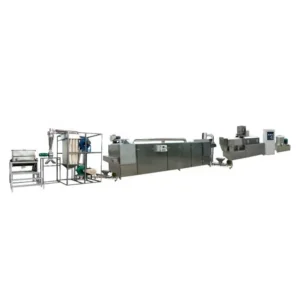
Automatic Modified Corn Starch Making Machine 304 Stainless Steel Gearbox High Efficiency Starch Processing Production Line
¥30.00 Select options This product has multiple variants. The options may be chosen on the product page