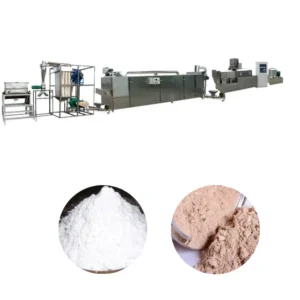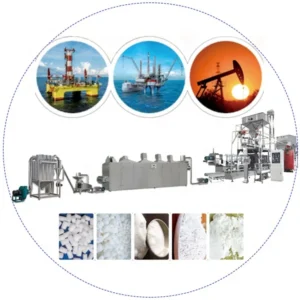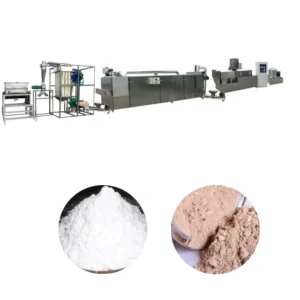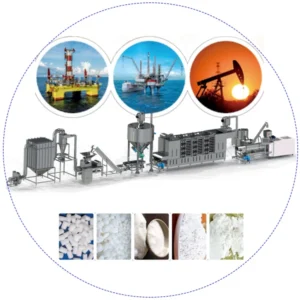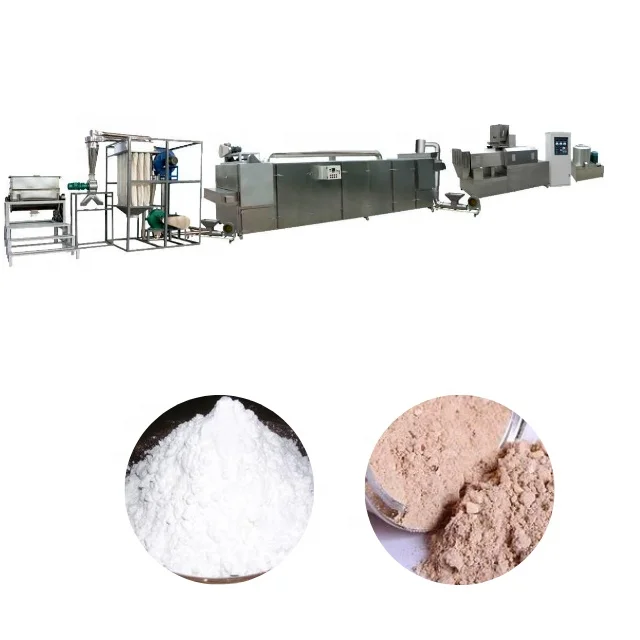


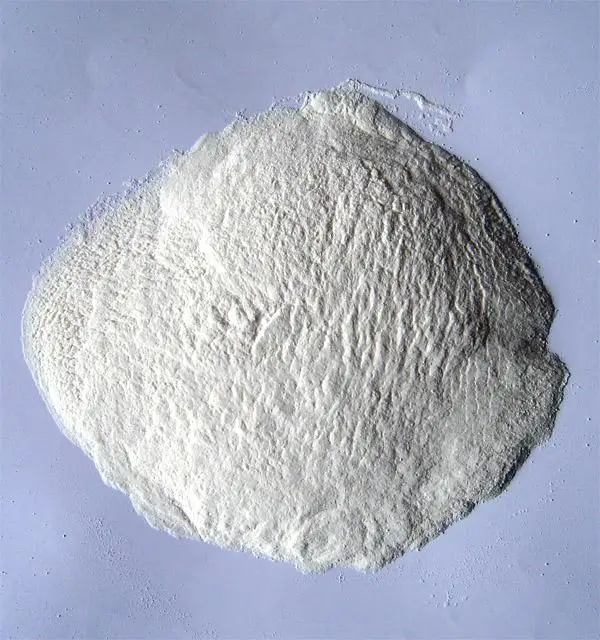
Modified Starch Processing Production Line, Twin-Screw, 100-1500KG/H Capacity, CE Certified — configured for corn, wheat, potato, and rice starch modification across food additive, oil drilling fluid, and paper-making applications.
- Screw configuration and barrel temperature profile matched to your starch type and target modification degree
- Full line integration from extruder through cooling conveyor to pulse grinder with cyclone discharge, preventing throughput bottlenecks
- Multi-fuel heating options (gas, diesel, electricity, steam) confirmed during utility planning
In-house testing workshop runs trial production on your raw material and formula before shipment, ensuring the line delivers on your specific modification targets.
Description
Integrated Turnkey Project Delivery — A modified starch production line where every station, from batching mixer to pulse grinder, is throughput-matched and utility-planned before a single component ships.
Technical Specifications
| Parameter | Value |
|---|---|
| Product Type | Modified Starch Extrusion Production Line |
| Screw Type | Twin screw |
| Power | 45–200 kW |
| Capacity | 100–1500 KG/H (basis not stated in source — confirm raw material type, moisture content, and modification degree) |
| Weight | 1000–5000 KG (source value — verify against manufacturer catalog) |
| Voltage & Frequency | 220–440V, tri-phase (50/60Hz to be confirmed per target market) |
| Raw Materials | Corn starch, wheat flour, potato starch, rice flour, soybean flour, additive materials |
| Line Stations | Twin screw extruder, cooling conveyor, pulse grinder (cyclone discharge, dust collector) |
| Heating / Fuel Options | Gas, diesel, electricity, steam (buyer to specify at quotation) |
| Contact Materials | Food-grade stainless steel (conveyors with PVC exceptions noted) |
| Certification | CE (since 2014), ISO |
Application Suitability
| Application | Material or Output |
|---|---|
| Food-grade modified starch for thickeners, stabilizers, and binders | Corn starch, wheat flour, potato starch with functional additives |
| Oil drilling fluid starch for viscosity control | Corn starch, tapioca starch with cross-linking agents |
| Paper-making starch for surface sizing and coating | Corn starch, potato starch, rice flour with cationic additives |
| Industrial adhesive starch for corrugated board | Wheat flour, corn starch with borax and caustic soda additives |
What "1000 KG/H" Leaves Out About Your Starch Formula
Capacity numbers are meaningless until verified against your specific raw material and modification recipe.
Every starch processor I have worked with in Latin America has faced the same frustration: a line rated for a certain output on paper, then falling short the moment their actual corn starch and additive blend enters the extruder. The modification degree you target—whether light pregelatinisation for food additives or heavy cross-linking for drilling fluids—changes how the material behaves under shear and heat. A modified starch production line turnkey project must therefore begin with a trial run on your exact formula, not a generic spec sheet. Without that step, you are guessing at throughput, and guessing costs you weeks of commissioning time [NEED_CITE: industrial starch modification process variables].
Matching Extrusion Shear to Your Modification Target
The twin-screw extrusion platform at the heart of this line allows screw and barrel configuration to be set according to your starch type and the degree of molecular change required. Pregelatinised starch for food use needs controlled gelatinisation with moderate shear, while cross-linked starch for oil drilling demands higher barrel temperatures and longer residence time. A modified starch production line turnkey configuration accounts for these differences before the build begins, not after installation reveals the wrong texture.
Why Station Sizing Prevents the Bottleneck That Kills Output
The extruder does not operate alone. If the cooling conveyor cannot shed heat fast enough, wet starch accumulates and spoils—especially in humid climates where I have seen entire batches lost. The pulse grinder downstream must also match the extruder’s discharge rate, or you face material backlog and inconsistent particle size. Every station in this modified starch production line turnkey project is sized against the others so that no single point restricts the whole line [NEED_CITE: throughput balancing in starch processing facilities].
Reading the Specs That Actually Matter for Starch
Power ratings spanning 45–200 kW reflect the range of screw diameters and barrel lengths available, not a single fixed motor. Higher modification degrees demand more torque, which means a larger motor and a heavier screw assembly. The voltage range of 220–440V tri-phase must be confirmed against your local supply before production begins; a 60Hz market running a 50Hz-configured motor will see reduced RPM and lower shear, directly affecting gelatinisation. Food-grade stainless steel contact surfaces are specified across the processing path to prevent contamination in food and pharmaceutical starch applications. Multi-fuel heating options—gas, diesel, electricity, steam—let the line adapt to whatever energy infrastructure your plant already has, avoiding costly utility upgrades.
The Hidden Cost of Skipping the Line Layout Phase
Buying a standalone extruder without matching upstream batching or downstream drying and grinding capacity is a mistake I have seen repeated across multiple installations. Wet, partially modified starch piles up on conveyors, degrades within hours in tropical humidity, and forces production shutdowns for cleaning and recalibration. A modified starch production line turnkey approach eliminates this by designing the complete material flow from the start. When stations are sourced from separate vendors with no single party responsible for throughput balance, the blame shifts back and forth while your line sits idle [NEED_CITE: consequences of unmatched processing line stations].
Why Procurement Here Differs from Assembling Vendors Yourself
Complete line integration under one supplier means the extruder, cooling conveyor, and pulse grinder are all specified against the same throughput target, so no station chokes the others. Screw configuration and die design are documented against your raw material and modification formula, giving you a repeatable process record for future production runs. An in-house testing workshop allows trial runs on your starch before shipment, so product development is not delayed until after installation. Pre-sales consultation covers line layout, utility planning, and phased installation scheduling so that your facility is ready when the equipment arrives. Ongoing maintenance support includes wear part supply and operator training specific to twin-screw starch extrusion, not generic machine operation.
Documentation & Verification
- Line layout and capacity calculation based on your starch type, additive formula, and target modification degree
- Screw and die configuration record documenting barrel zone settings for process repeatability
- Electrical schematic with voltage and frequency confirmed to your local power supply standard
- Trial run report on your raw material produced in the testing workshop before dispatch
- CE declaration of conformity and ISO certificate for import and regulatory compliance
- Operation and maintenance manual covering twin-screw extrusion parameters specific to starch processing
Installation, Commissioning & Support
- Foundation and floor space planning based on the full line footprint from extruder through pulse grinder
- Dedicated electrical circuit sized for 45–200 kW extruder motor with confirmed voltage and frequency
- Assembly and alignment of cooling conveyor and grinder stations to match extruder discharge height and rate
- First-run commissioning with barrel temperature profile and screw speed tuned to your modification formula
- Operator training covering twin-screw starch extrusion controls, safety interlocks, and daily cleaning procedures
- Wear parts list including screws, dies, and grinder screens with recommended replacement intervals
What to Include in Your First Inquiry
To move from a general inquiry to a workable line proposal, share your starch raw material type (corn, wheat, potato, or other), the specific modification you are targeting, and the daily output you need to justify the investment. Confirm your local voltage, frequency, and available heating fuel so that utility planning starts early. If you have existing upstream mixers or downstream packing equipment, include their throughput rates so the new line can be designed around them rather than forcing replacements.
Frequently Asked Questions
Q: How is output capacity verified against my specific starch raw material and modification formula?
A: Before shipment, your raw material and additive blend are run through the extruder in our testing workshop. The trial run report documents actual throughput, barrel temperatures, and screw speed against your target modification degree, so you see real numbers rather than nominal ratings.
Q: What voltage, frequency, and heating fuel options are confirmed during the project design phase?
A: We confirm your local tri-phase voltage (220–440V) and frequency (50/60Hz) before building the electrical cabinet. Heating fuel—gas, diesel, electricity, or steam—is selected based on your plant infrastructure so that no utility upgrades are needed after delivery.
Q: How is throughput balanced between the extruder, cooling conveyor, and grinding station to avoid bottlenecks?
A: Each station is sized against the extruder’s actual discharge rate on your material. The cooling conveyor length and airflow are calculated to handle the moisture and temperature profile of your starch, while the pulse grinder is selected to match the cooled output rate without backlog.
Q: Can a trial run be performed on my raw material and recipe before shipment and installation?
A: Yes. Our in-house testing workshop runs your exact starch type and additive formula through the configured extruder. You receive a trial run report with throughput data, product samples, and process parameters before the line is packed for shipment.
Q: What is the scope of turnkey project support from layout design through operator training?
A: The scope covers line layout, capacity calculation, utility planning, installation supervision, commissioning with your raw material, and operator training on twin-screw extrusion controls. Wear part supply and ongoing maintenance support continue after the line is operational.
Related products
-
Automatic Modified Tapioca Starch Production Line 304 Stainless Steel Flour Mill and Bakery Machine
¥30.00 Select options This product has multiple variants. The options may be chosen on the product page -
New Automatic Modified Starch Puffing Production Line – Long Service Life Pregelatinized Starch Equipment
¥65.00 Select options This product has multiple variants. The options may be chosen on the product page -
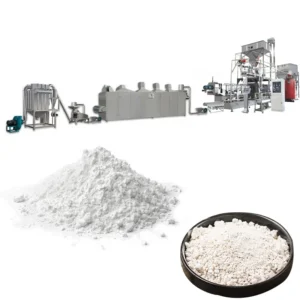
API Standard Pregelatinized Starch Line for Oilfield Drilling Fluid. High Yield Modified Starch Equipment
¥65.00 Select options This product has multiple variants. The options may be chosen on the product page -
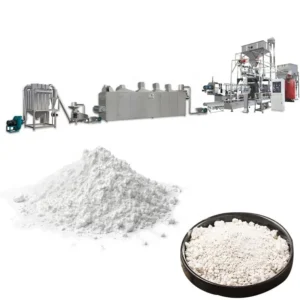
Modified Starch for Construction Adhesives Production – Custom Built Double Screw Extruder Line
¥65.00 Select options This product has multiple variants. The options may be chosen on the product page