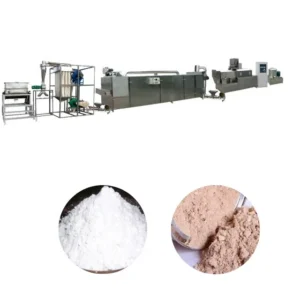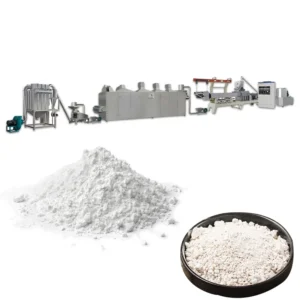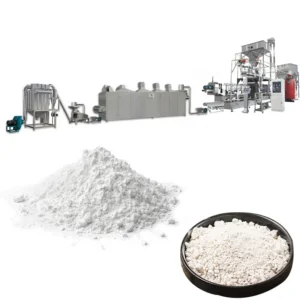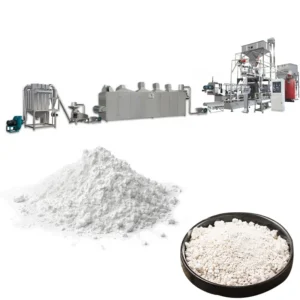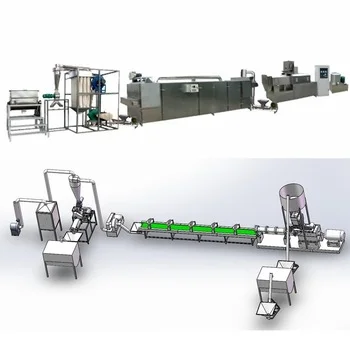


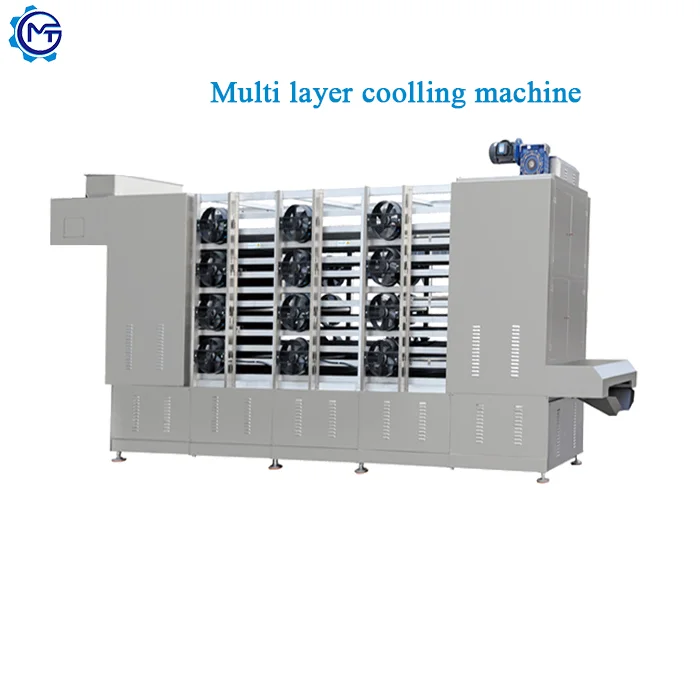

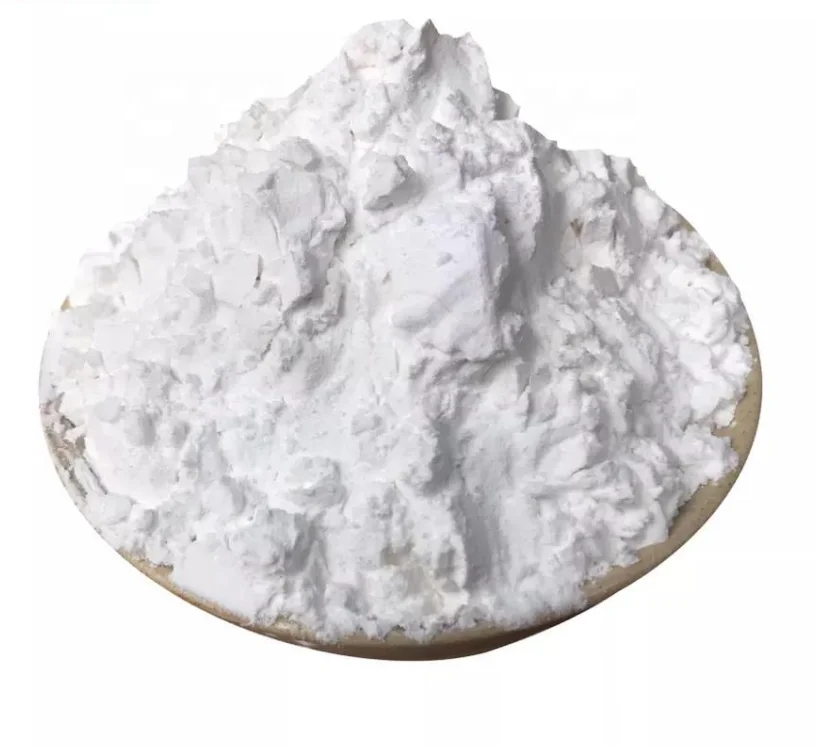
Modified Starch Processing Line, 45-200KW, Twin-Screw Extruder, PLC Control — engineered as a turnkey project from batching through extrusion, cooling, and grinding.
- Screw configuration and barrel temperature profile matched to corn, potato, or wheat starch and target modification type
- Line stations balanced for consistent throughput with air knife drying and cyclone discharge grinding
- Layout and capacity calculation provided before quotation for rational workshop planning
In-house trial runs on your raw material verify real-world output before shipment, with phased installation and operator training included.
Description
Throughput-Matched Line Design — Every station in this modified starch processing line is sized against the others on your actual raw material, eliminating bottlenecks before the first production run.
Technical Specifications
| Parameter | Value |
|---|---|
| Product Type | Modified Starch Processing Line |
| Screw Configuration | Twin-screw |
| Total Installed Power | 45–200 kW |
| Throughput Range | 100–1500 kg/h (basis not stated in source — confirm raw material, moisture, modification type) |
| Line Weight | 1000–5000 kg |
| Supply Voltage | 220–440 V, three-phase, configurable |
| Control Architecture | PLC with MCC panel |
| Core Stations | Twin-screw extruder, cooling conveyor, pulse grinder |
| Assembly State | Complete integrated production line |
| Certification | CE, ISO |
Application Suitability
| Application | Material or Output |
|---|---|
| Food-grade pregelatinised starch for bakery and instant foods | Corn starch, wheat flour, potato starch |
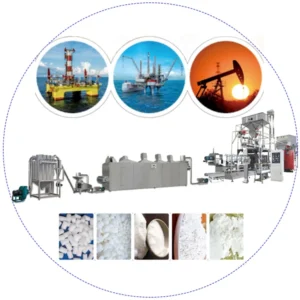
| Oil drilling fluid starch additives | Modified corn starch with controlled viscosity |
| Paper-making and textile sizing starch | Rice flour and corn starch blends |
| Nutritional and fortified food base powders | Soybean flour, rice flour, potato starch |
Why Quoted Capacity Rarely Survives First Contact with Real Starch
A modified starch processing line turnkey quotation means nothing until your raw material has actually run through the screws.
I planned a line for a Middle East client last year. The spec sheet said one thing; his corn starch had a different amylopectin ratio than the lab sample, and gelatinisation dropped. Output settled at roughly seven tenths of the nameplate figure [NEED_CITE: variability of starch gelatinisation with amylopectin content]. When you are sourcing a modified starch processing line turnkey package, the gap between brochure capacity and workshop reality is where projects stall.
Engineering the Line Around Your Starch Chemistry
A modified starch processing line turnkey project starts with the screw profile. Barrel zone temperatures, L:D ratio, and die geometry are all set against the gelatinisation window of your specific starch — corn, potato, wheat, or rice. Changing the feedstock after installation without adjusting the screw configuration typically leads to inconsistent paste viscosity and uneven expansion.
Balancing Every Station from Extruder to Grinder
Throughput matching matters more than peak extruder speed. If the cooling conveyor cannot carry the extrudate fast enough, material backs up and moisture migration ruins the grind. If the pulse grinder runs faster than the upstream feed, you waste energy and wear the hammers prematurely. Each station in this line is calculated so the modified starch processing line turnkey layout delivers steady flow without accumulation points [NEED_CITE: throughput balancing methodology for continuous starch lines].
Reading the Spec Sheet Like a Process Engineer
The twin-screw configuration gives operators independent control over shear and residence time — essential when modification targets differ between pregelatinised food starch and high-viscosity drilling starch. Power ranging from 45 to 200 kW reflects the spread from small-batch specialty starch to continuous industrial output. Voltage configurability from 220 to 440 V three-phase means the electrical schematic is confirmed against your site supply before the cabinet is wired, not after. PLC control with MCC panel provides batch-to-batch repeatability on temperature and screw speed, which directly governs starch functionality consistency.
What Happens When Stations Are Sourced Separately
Buyers who piece together an extruder from one vendor, a dryer from another, and a grinder from a third often discover that the cooling stage cannot keep pace. Material piles up on the belt, surface moisture rises, and the pulse grinder chokes. The downtime to re-balance the line with mismatched equipment is difficult to quantify but easy to avoid by specifying the entire modified starch processing line turnkey under one supplier [NEED_CITE: integration risks in multi-vendor food processing lines].
Why Buyers Keep Coming Back for Full-Line Projects
Throughput calculations are provided before quotation, so the layout fits your workshop and no station is over- or under-sized. Screw and die configuration records are written to your raw material, not copied from a generic build. An in-house testing workshop runs trial production on your starch formulation before the line ships. Electrical schematics are confirmed to your local voltage and frequency before wiring begins. Installation, commissioning, and operator training are scheduled as one continuous project phase rather than separate service calls.
Documentation & Verification
- Line layout drawing with capacity calculation for your target starch type
- Screw and die configuration record matched to your raw material profile
- Trial run report on your starch formulation before dispatch
- Electrical schematic with voltage and frequency confirmation for your market
- Operation and maintenance manual covering every station in the line
- CE declaration of conformity and ISO certificate for customs clearance
Installation, Commissioning & Support
- Foundation plan based on the 1000–5000 kg line weight and vibration profile
- Dedicated circuit sizing for the 45–200 kW total installed power draw
- Station-by-station alignment of extruder, cooling conveyor, and pulse grinder on site
- PLC parameter setup and MCC tuning against your starch modification recipe
- Operator training on screw speed, barrel temperature, and grind size adjustment
- Wear parts list covering screws, dies, and grinder screens with reorder intervals
What We Need to Move Forward
To size a modified starch processing line turnkey project correctly, share your raw material type and any lab analysis you have on amylopectin content or moisture. Let us know your target daily output and the modification you need — pregelatinisation, cross-linking, or viscosity adjustment for a specific end use. Confirm your workshop dimensions, local voltage and frequency, and whether you can send a sample batch for a trial run before shipment.
Frequently Asked Questions
Q: How do you verify that the quoted throughput holds for our specific raw material and modification target?
A: We run your actual starch sample through our in-house testing workshop before the line is finalised. The trial records gelatinisation degree, paste viscosity, and output rate under production-representative screw speed and barrel temperatures. Those results become the basis for the final configuration, not generic catalogue figures.
Q: How much workshop area does a complete modified starch line require, and what utility connections are needed?
A: Workshop footprint depends on the capacity tier you select and the cooling conveyor length required for your starch type. We provide a scaled layout drawing with the quotation. You will need a three-phase supply matching the confirmed voltage, water for barrel cooling, and compressed air for the pulse grinder’s cyclone discharge system.
Q: How do you ensure the extruder, cooling conveyor, and grinder are balanced so no station bottlenecks the line?
A: Each station is sized during the layout phase using throughput calculations based on your material’s density and moisture profile. The cooling conveyor belt speed and length are matched to the extruder output, and the pulse grinder feed rate is set to absorb peak flow without surging or starving.
Q: Can we send our raw material for a trial run before committing to the full line order?
A: Yes. Our testing workshop accepts raw material shipments for trial production. You receive a written report covering output rate, product texture, and recommended screw configuration. Many buyers use this report to validate their formulation before authorising line fabrication.
Q: What is the phased installation and commissioning schedule, and does it include operator training on our formulation?
A: Installation follows a staged sequence — mechanical placement, electrical connection, dry run, and wet trial with your starch. Commissioning engineers remain on site through the first production batches. Operator training covers PLC recipe management, screw and die changeover, and daily maintenance specific to your modification process.
Related products
-
New Automatic Modified Starch Puffing Production Line – Long Service Life Pregelatinized Starch Equipment
¥65.00 Select options This product has multiple variants. The options may be chosen on the product page -
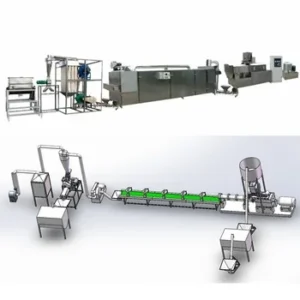
2025 New Design Modified Starch Big Capacity Industrial Use Food Additives Core Components Motor Bearing
¥50.00 Select options This product has multiple variants. The options may be chosen on the product page -
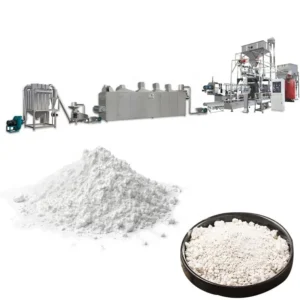
Modified Starch for Construction Adhesives Production – Custom Built Double Screw Extruder Line
¥65.00 Select options This product has multiple variants. The options may be chosen on the product page -
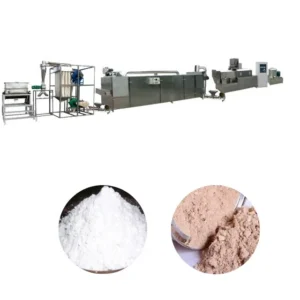
Big Capacity Modified Starch Industrial Use and Food Additives
¥50.00 Select options This product has multiple variants. The options may be chosen on the product page