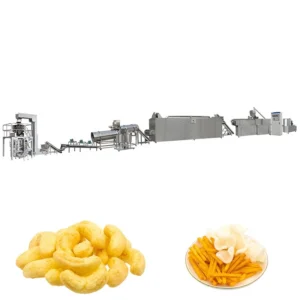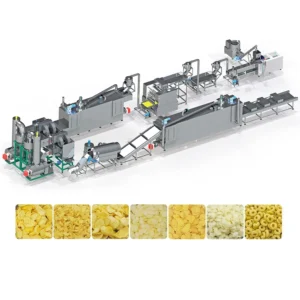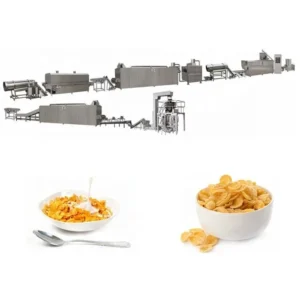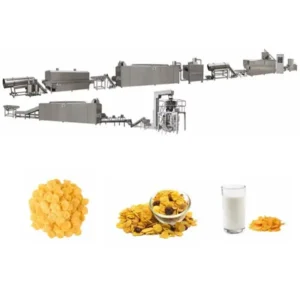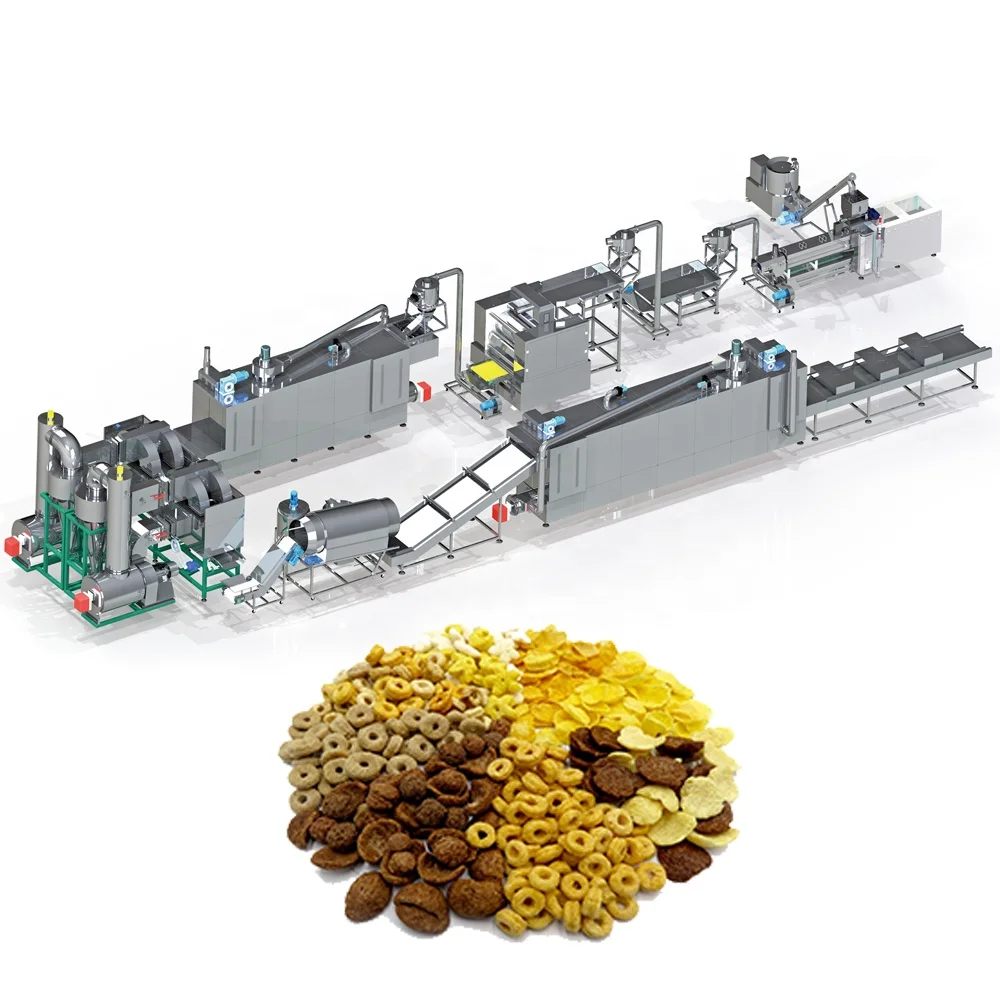

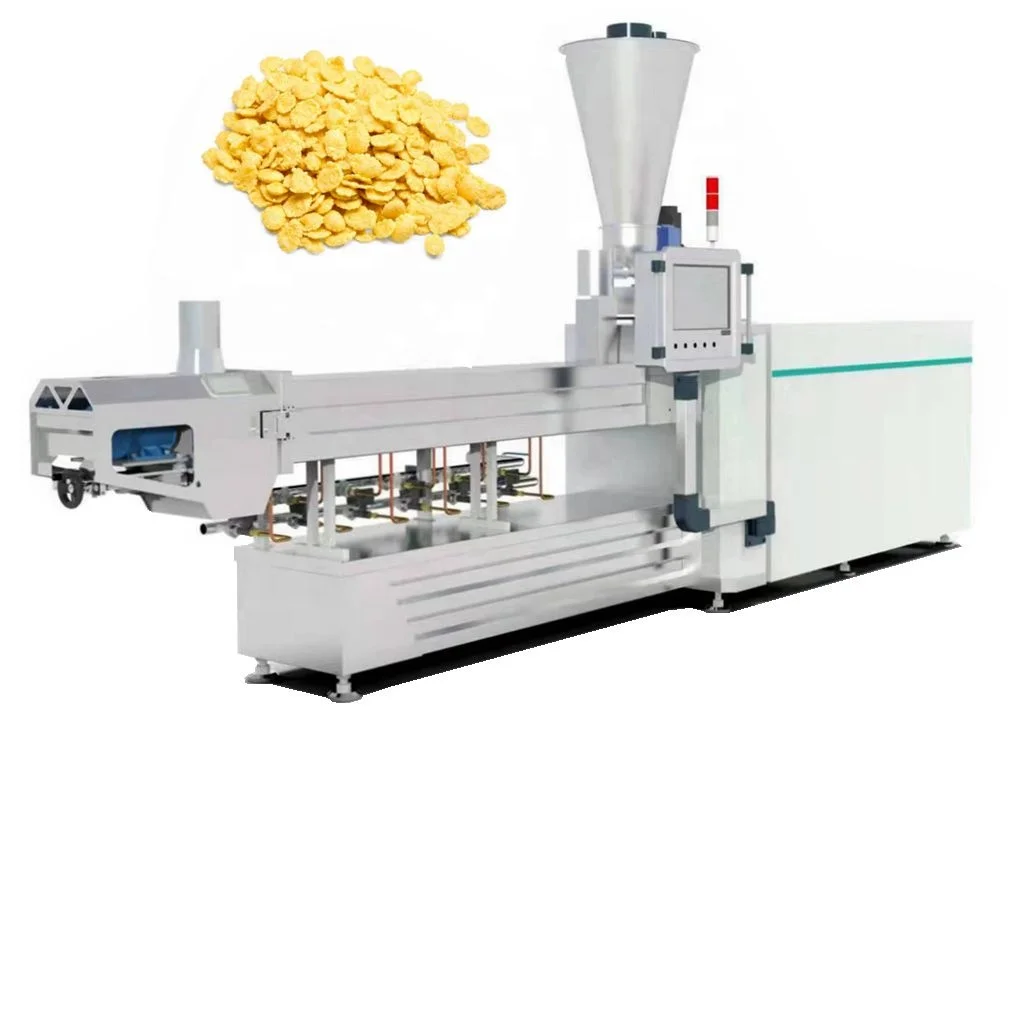
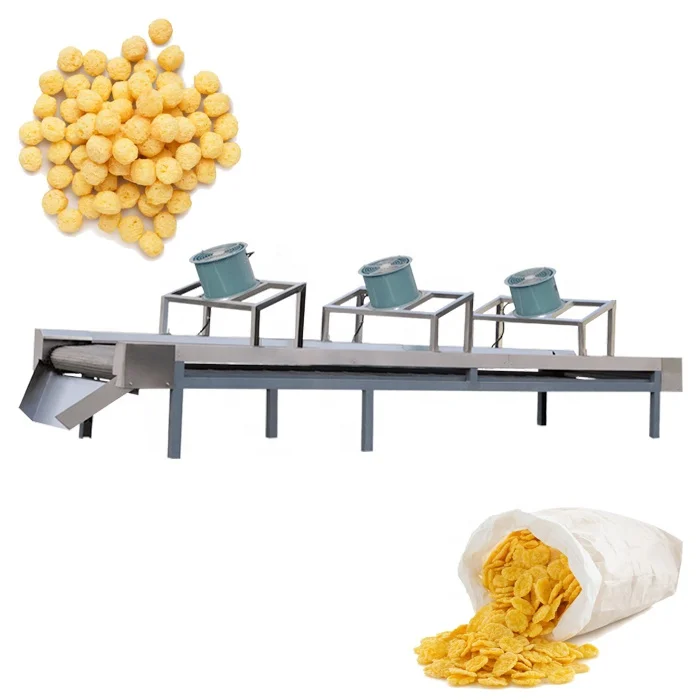

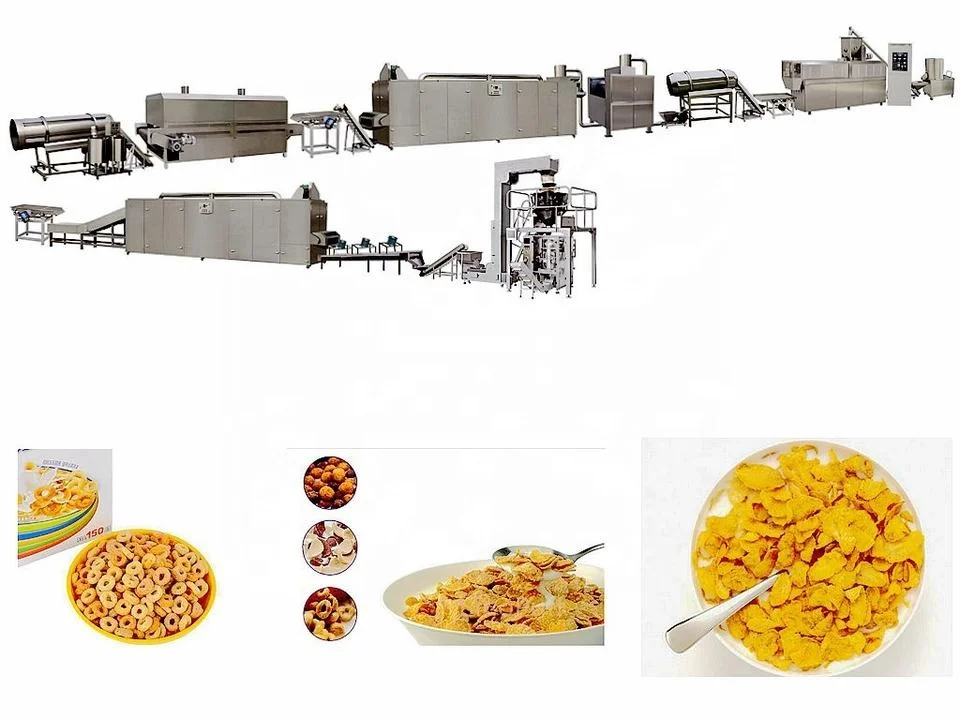
MT70 / MT85 / MT75 Corn Flakes Production Line, Twin-Screw Extrusion, PLC & MCC Integrated Control — engineered as a single turnkey project from mixing through extrusion, flaking, hot air roasting and packing.
- Screw configuration and die design specified to your raw corn blend and target flake density
- Hydraulic double-roller flaking with infrared temperature monitoring for consistent sheet thickness
- Throughput matched across every station so no unit bottlenecks the next
Trial runs on your actual raw material are completed in our testing workshop before shipment, with full configuration documentation provided.
Description
Integrated Line Engineering — Every station from mixing to packing is throughput-matched so the flaker never waits on the extruder and the roaster never starves the cooler.
Technical Specifications
| Parameter | Value |
|---|---|
| Product Type | Corn Flakes Breakfast Cereal Production Line |
| Models Available | MT70 / MT85 / MT75 |
| Installed Power | MT70: 160 kW; MT85: 190 kW; MT75: 210 kW |
| Power Consumption | MT70: 120 kW; MT85: 140 kW; MT75: 150 kW |
| Output Capacity | MT70: 150–200 kg/h (basis not stated in source); MT85: 300–400 kg/h (basis not stated in source); MT75: 300–500 kg/h (basis not stated in source) |
| Overall Dimensions (L×W×H) | MT70: 41 × 1.5 × 2.2 m; MT85: 43 × 1.5 × 3.2 m; MT75: 45 × 1.5 × 3.5 m |
| Extruder Type | Twin screw |
| Control System | PLC control for flaking machinery; MCC and PLC integrated line control |
| Flaking Drive | Double motors for separate roller driving; hydraulic system for double rollers |
| Flaking Temperature Monitoring | Infrared sensor for even temperature pipe control |
| Dryer Heating Source | Gas or electric |
| Roasting Oven | Hot air roasting with vibrating pan, dual circulating fans, cyclone dust removal, conciliation burner |
| Coating System | Double tumble for sugar melting, elevator, coating drum, spraying nozzle |
| Basic Raw Materials | Corn, rice, wheat, oat, barley powder |
| Final Product Shapes | Natural corn flakes, sugar-coated corn flakes, ball, tube, stick, ring, fruit loop, star, wheel, flower, heart |
| Line Stations | Mixing → Extruding → Flaking → Drying → Hot Air Roasting → Sugar Coating (optional) → Cooling → Packing |
| Assembly State | Complete turnkey line |
| Standards | CE certified; ISO certified |
Application Suitability
| Application | Material or Output |
|---|---|
| Natural corn flakes production | Corn grits and corn flour blends |
| Sugar-coated breakfast cereal | Corn, rice, or wheat base with sugar syrup coating |
| Extruded cereal shapes (rings, balls, stars) | Corn, rice, wheat, oat, or barley powder with mould changes |
| Small-to-medium scale cereal processing plants | Multi-grain formulations across batch runs |
Why the Voltage Question Must Come Before the Layout Drawing
A 480V/60Hz plant floor will not run a motor wound for 380V/50Hz, no matter how well the corn flakes production line turnkey is engineered.
I spent years on the procurement side before moving into project engineering, and the most expensive delay I ever witnessed had nothing to do with the extruder itself. A complete cereal line arrived at a North American facility, crated and ready, only for the electrician to discover the motors were specified for a different grid entirely. The line sat idle for weeks while transformers were sourced and rewired [NEED_CITE: voltage and frequency standards by export market]. That single oversight cost more than the dryer. When I now scope a corn flakes project, the electrical schematic and voltage confirmation are locked down before any steel is cut.
Throughput Matching Across Every Station in the Line
A corn flakes production line turnkey is only as fast as its slowest station. If the extruder pushes material faster than the flaker can press it, dough accumulates and cools unevenly before reaching the rollers. If the roaster cannot keep pace with the dryer output, flakes sit in staging bins losing the residual heat that contributes to final crispness. Each station in this line — mixing, extruding, flaking, drying, hot air roasting, optional sugar coating, cooling, and packing — is specified so that nominal throughput aligns across the full sequence.
Screw Configuration and Die Design Matched to Your Formulation
The twin-screw extruder at the heart of this line does not ship with a generic screw profile. Corn behaves differently from wheat or oat under heat and shear, and moisture content at the barrel inlet shifts gelatinisation behaviour significantly. The screw configuration and die geometry are selected based on the buyer’s specific raw material blend and the target flake density. This means the expansion rate leaving the die is controlled to produce a pellet that flakes evenly under the hydraulic rollers rather than crumbling or sticking [NEED_CITE: twin-screw extrusion starch gelatinisation parameters for cereal grains].
What the Flaking and Roasting Hardware Actually Does to the Flake
The flaking machinery uses a hydraulic double-roller system with independent dual-motor drive, meaning each roller can be adjusted separately for gap and pressure. An infrared sensor monitors temperature across the pipe to keep the dough sheet entering the rollers at a consistent state. Downstream, the hot air roasting oven uses a vibrating pan to keep flakes in motion, while two separate circulating fans and high-temperature spraying tubes deliver even surface blistering. The cyclone dust removal device pulls fines out of the air stream so they do not settle back onto finished product. These are not cosmetic features — they determine whether the final flake has the crunch and colour uniformity that retail buyers expect.
When a Generic Build Fails on Your Specific Corn Blend
I have walked into facilities where the corn flakes looked right on day one but degraded across the first production week. The cause is almost always a screw and die set that was copied from a standard template rather than matched to the buyer’s actual corn source and moisture level. The extruder runs, but the pellets arrive at the flaker slightly too dense or slightly too expanded, and the rollers cannot compensate [NEED_CITE: extruder screw configuration impact on flake density and texture]. The line produces output, but it falls outside the specification the market expects, and the buyer spends months adjusting parameters that should have been dialled in before shipment.
Why Project Contractors and Cereal Producers Source This Line Here
The complete line from batching to packing comes from one supplier, which means throughput is calculated across every station rather than assembled from separate vendors who each guarantee only their own machine. An in-house testing workshop allows trial runs on the buyer’s actual raw material before the line ships, so product development begins in the factory rather than on the installation floor. The twin-screw platform covers corn flakes and extends to extruded cereal shapes with simple mould changes, protecting the investment if the product portfolio expands. Electrical schematics with voltage and frequency are confirmed for the target market before production starts. Pre-sales engineering consultation carries through to on-site installation, commissioning, and operator training.
Documentation & Verification
- Line layout and capacity calculation confirming throughput at each station against your target corn flake output
- Trial run report on your actual corn blend conducted in the testing workshop before dispatch
- Screw and die configuration record matched to your raw material formulation and target flake density
- Electrical schematic with voltage, frequency, and control language confirmed for your facility before production
- CE declaration of conformity and ISO certificate included with shipment documentation
- Wear parts list covering screws, dies, and flaking roller components with replacement intervals
Installation, Commissioning & Support
- Foundation and floor space planning based on the selected model footprint (up to 45 m line length)
- Dedicated electrical circuits sized for the installed power draw (up to 210 kW) at your local voltage and frequency
- MCC and PLC cabinet commissioning with control language set to your operator team’s preference
- First-run parameter setting on your raw material, including barrel temperature profile and flaking roller gap
- Operator training covering screw changes, die swaps, and hydraulic roller adjustment procedures
- Wear parts supply for screws, dies, and roaster components with documented replacement schedules
What We Need to Scope Your Line Accurately
To configure a corn flakes production line turnkey that actually runs at the rate you need, share your target raw material blend and moisture range, your daily output requirement, and your facility’s voltage and frequency. Let us know whether you plan to run natural flakes only or include sugar-coated variants, and whether you have existing upstream mixing or downstream packing equipment that the line must integrate with. If your product specification calls for a particular flake thickness or colour target, include that as well.
Frequently Asked Questions
Q: How is line capacity verified before the order is confirmed?
A: Output ratings are verified through a trial run on your actual raw material in our testing workshop. The trial run report documents throughput, flake density, and product appearance under controlled conditions. This means the capacity figure you receive is based on your specific corn blend and moisture content, not a generic benchmark.
Q: How do you prevent one station from bottlenecking the rest of the line?
A: Each station — extruder, flaker, dryer, roaster, coater, and cooler — is selected and configured so its throughput aligns with the others. The line layout document shows the calculated capacity at every point. If the flaker or roaster cannot match the extruder output, the line configuration is adjusted before the quotation is finalised.
Q: Can the same line produce both natural and sugar-coated corn flakes?
A: Yes. The sugar coating station is an optional module that integrates after the roasting oven. It includes a double tumble system for sugar melting, an elevator, a coating drum, and spraying nozzles. When sugar-coated production is not needed, the line bypasses this station and feeds directly to the cooler.
Q: What electrical details are confirmed before production begins?
A: We confirm your facility’s voltage, frequency, and required control language before any motor or control panel is built. The electrical schematic is reviewed and signed off so that the MCC and PLC cabinets arrive ready to connect to your local grid without transformer modifications or rewiring delays.
Q: What does the trial run on my raw material actually cover?
A: The trial run processes your supplied corn blend through the extruder and flaker under production-representative conditions. The resulting report records screw configuration, die selection, barrel temperature profile, flake thickness, and visual product quality. You receive the report and sample product before the line ships.
Related products
-
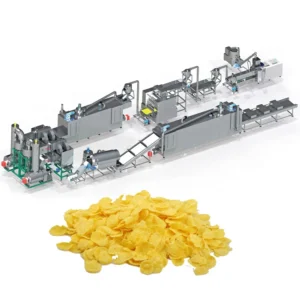
Best Price Corn Flakes Making Machine Breakfast Cereals Processing Line with Motor As Core Component
¥19,000.00 Select options This product has multiple variants. The options may be chosen on the product page -
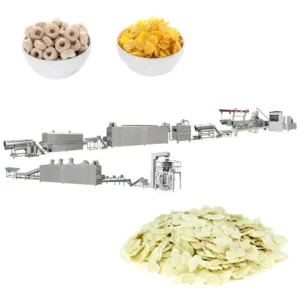
200kg/h Breakfast Cereal Extruder Making Machine Hot Sale Corn Flake Production Line
¥30,000.00 Select options This product has multiple variants. The options may be chosen on the product page -
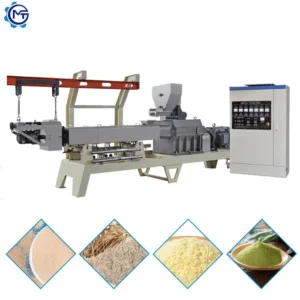
New Technical Automatic Cereal Nutritional Powder Instant Porridge Baby Food Making Machine
¥10,000.00 Select options This product has multiple variants. The options may be chosen on the product page -
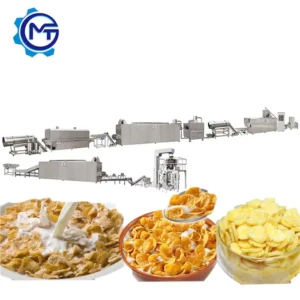
Automatic 500kg/h Corn Flakes Making Machine New Condition High Productivity Sweet Breakfast Cereal Processing Line From Factory
¥8,500.00 Select options This product has multiple variants. The options may be chosen on the product page