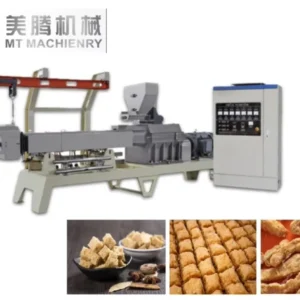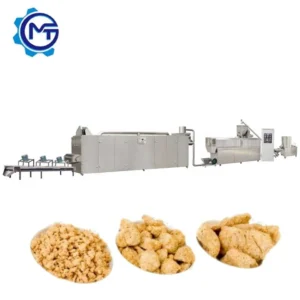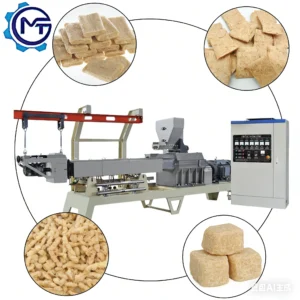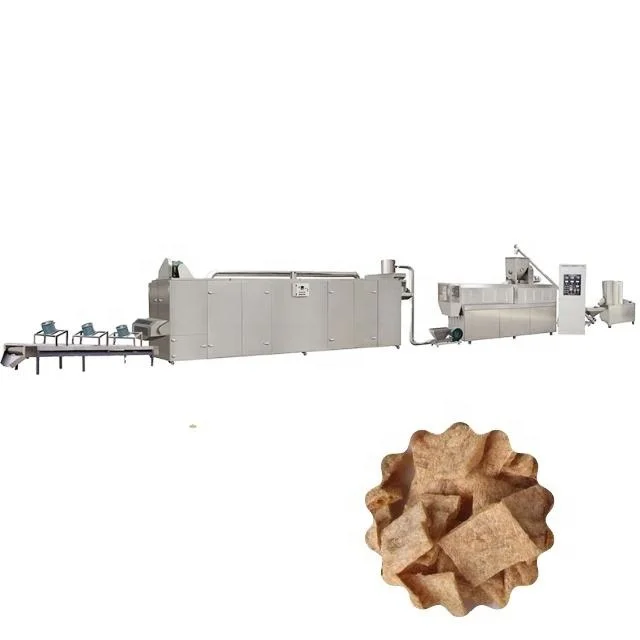


MT65 / MT70 / MT85 Textured Vegetable Protein Production Line, Twin-Screw Extrusion, PLC/MCC Control — turnkey layout from batching through extrusion, drying, cooling and packing under one supplier.
- Screw configuration and die design specified to buyer’s soy or peanut meal formulation and target fiber structure
- Throughput matched across every station to avoid bottlenecks common in multi-vendor lines
In-house testing workshop runs trial production on customer raw material before shipment, delivering a verified output report with the line.
Description
Throughput Matched Across Stations — the textured vegetable protein production line aligns mixer, extruder, dryer, and cooler capacities under one engineering source to eliminate bottlenecks between stations.
Technical Specifications
| Parameter | Value |
|---|---|
| Product Type | Textured Vegetable Protein (TVP) Extrusion Line |
| Models Available | MT65 / MT70 / MT85 |
| Extruder Type | Twin-screw |
| Installed Power | 85 kW (MT65) / 120 kW (MT70) / 195 kW (MT85) |
| Real Power Consumption | 65 kW (MT65) / 90 kW (MT70) / 165 kW (MT85) |
| Output Capacity | 150–200 kg/h (MT65) / 200–300 kg/h (MT70) / 600–800 kg/h (MT85) (basis not stated in source — confirm raw material formulation, moisture content, and target TVP density) |
| Overall Dimensions | 18,000 × 1,300 × 2,300 mm (MT65) / 20,000 × 1,500 × 2,400 mm (MT70) / 24,000 × 3,500 × 4,300 mm (MT85) |
| Mixer Capacity | 300–600 kg/h; 150 kg tank volume; ~10 min per batch |
| Dryer Output | 300–400 kg/h; 3.5 m belt length (basis not stated in source — confirm formulation) |
| Cooling Machine | Temperature range 0–260°C; capacity 200–300 kg/h (basis not stated in source — confirm formulation) |
| Control System | PLC / MCC control |
| Contact Materials | Food-grade stainless steel (304) |
| Process Stations | Batching → Mixing → Conveying → Extrusion → Drying → Cooling → Packing |
| Warranty | 1 year complete warranty with lifetime maintenance |
| Certification | CE, ISO |
Application Suitability
| Application | Material or Output |
|---|---|
| Textured soybean protein | Low-temperature soybean meal |
| Plant-based meat analog chunks and strips | Peanut meal or soy-peanut blends |
| Vegetarian sausage and ham formulations | High-protein meal blends requiring fibrous structure |
| Quick-frozen food protein base | TVP granules and chunks for further processing |
| Canned food protein ingredient | Shelf-stable textured protein pieces |
What Nominal Capacity Figures Leave Out on a TVP Line
Real throughput only exists once your specific soybean meal formulation meets the screw configuration.
A TVP extrusion line quoted at a round number often assumes a standard low-fat soybean meal at a fixed moisture content. When the actual raw material arrives — perhaps with higher residual fat or a different particle size from a local crusher — the extruder barrel pressure and residence time behave differently. The fibre structure that defines textured vegetable protein simply does not form correctly, and the output resembles crumbly meal rather than tearable meat-like strands. I spent weeks on a site in India where the local soybean meal had a fat content well above the assumed baseline, and every parameter had to be rebuilt from scratch before the line produced acceptable fibre [NEED_CITE: raw material variability impact on extrusion output].
Screw Profile and Die Geometry Determine Fibre Formation
The twin-screw extruder in this textured vegetable protein production line uses a modular screw configuration where each section — feed, compression, metering — is selected based on the protein content and particle size of your meal. The die plate geometry controls expansion rate and strand direction, which directly shapes whether the output tears like muscle fibre or crumbles like dry biscuit. Matching screw profile to die design is not a generic exercise; it depends entirely on the raw material behaviour under heat and shear inside the barrel.
Moisture and Temperature Interplay Inside the Barrel
Protein texturisation depends on bringing the material through a precise moisture and temperature window where the protein molecules align under shear. Too little moisture and the protein denatures unevenly; too much and the extrudate expands into a puffed, low-density pellet rather than a dense, fibrous chunk. The barrel temperature zones on this line are independently controlled, and the operator adjusts them in combination with the feed moisture to hold that narrow processing window steady across long production runs [NEED_CITE: protein texturisation mechanisms in twin-screw extrusion].
Reading the Power and Dimension Figures
The installed power versus real power gap across the MT65, MT70, and MT85 models reflects the difference between motor nameplate rating and typical running load — a line operating on soybean meal at moderate moisture will draw closer to the real power figure during steady-state extrusion. The overall line dimensions matter for workshop planning: the MT85 footprint at 24 metres in length and over 4 metres in height requires significant ceiling clearance and a straight run of floor space, which affects how the line integrates with upstream batching silos and downstream packing stations. The mixer’s batch cycle of roughly 10 minutes per load must be timed against the extruder’s continuous feed rate to avoid starvation or surge.
The Hidden Cost of Mismatched Downstream Stations
An extruder producing acceptable TVP fibre means little if the dryer cannot handle the volume. Moist extrudate sitting on a belt too short or too slow develops surface case-hardening while the interior stays wet, leading to spoilage or inconsistent texture after cooling. When the cooler capacity falls behind, the packing station receives product still above safe storage temperature, shortening shelf life and inviting mould [NEED_CITE: post-extrusion drying requirements for high-protein products]. These mismatches rarely show up in a single-vendor quotation but become the daily frustration of an operating plant.
Why Source the Full Line from One Engineering Responsibility
The entire textured vegetable protein production line — from batching through extrusion to packing — comes from one supplier, meaning throughput at each station is calculated against the others rather than assembled from independent vendors who each guarantee only their own machine. Screw and die configurations are specified against your raw material sample, not copied from a generic build. An in-house testing workshop runs your actual soybean or peanut meal before shipment, producing a trial report you can review before the line leaves the factory. Pre-sales consultation covers line layout and utility planning, and on-site commissioning includes operator training on the PLC interface and screw changeover procedures. CE and ISO certification applies across the build.
Documentation & Verification
- Line layout drawing with station-by-station capacity matching for your target TVP output
- Screw and die configuration record specific to your soybean or peanut meal formulation
- Factory trial run report using your raw material with moisture and fibre structure data
- Electrical schematic with voltage and frequency confirmation for your local grid
- Wear parts list covering screws, dies, and barrel liners with replacement intervals
Installation, Commissioning & Support
- MT85 line requires a minimum 24-metre straight run with 4.3-metre ceiling clearance for the dryer section
- Power supply must accommodate up to 195 kW installed load with dedicated circuit protection for the main extruder motor
- PLC and MCC panels ship pre-wired; on-site connection requires a qualified electrician familiar with your local voltage standard
- First-run commissioning includes screw speed, barrel temperature, and feed rate calibration against your specific protein meal
- Operator training covers screw configuration changeover, die plate replacement, and daily barrel cleaning procedures
- Spare screw elements and die plates shipped with initial order to cover the first replacement cycle
What to Include with Your Inquiry
Share your raw material specification — soybean meal, peanut meal, or a blend — including protein content, fat percentage, and particle size. Provide your target daily output and the fibre structure you need (chunks, strips, granules). Confirm your workshop dimensions, local voltage and frequency, and preferred control language so the electrical and PLC configuration can be locked before production begins.
Frequently Asked Questions
Q: How is actual line capacity verified before shipment?
A: Your raw material is run through the extruder in our testing workshop before dispatch. The trial report documents output rate, moisture content, fibre structure, and density achieved on your specific formulation, giving you a verified baseline rather than a nominal figure.
Q: How are screw and die configurations chosen for different protein meals?
A: Screw element arrangement and die hole geometry are specified based on your raw material’s protein content, fat level, and target product format. A high-fat soybean meal requires a different compression profile than a low-fat peanut meal to achieve proper fibre alignment.
Q: What happens if the dryer or cooler cannot keep pace with the extruder?
A: Every station on this line is sized against the extruder output so that moist extrudate moves directly into drying without queuing. The dryer belt length and heater capacity are matched to the model’s throughput, preventing bottlenecks that compromise product quality.
Q: How are voltage and control language confirmed before build?
A: Your local voltage, frequency, and preferred PLC language are confirmed in writing before production starts. The electrical schematic and MCC wiring are built to that specification, avoiding commissioning delays caused by incompatible power or unreadable interface labels.
Q: What does the pre-shipment trial run cover?
A: The trial uses your raw material and documents extruder barrel temperature profile, screw speed, feed rate, moisture addition, output rate, and product fibre structure. You receive the full report and can request parameter adjustments before the line is packed for export.
Related products
-
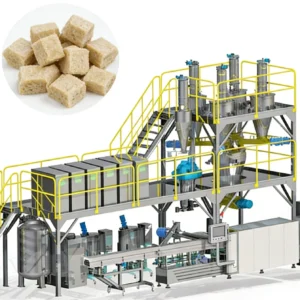
CE Certified Vegetarian Meat Processing Machine
¥9,500.00 Select options This product has multiple variants. The options may be chosen on the product page -
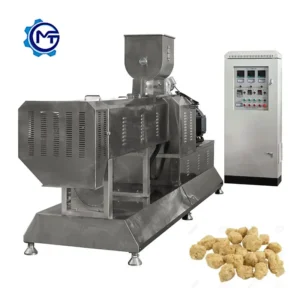
Soy Bean Meat Protein Production Line Machine Multi-functional Extruder for Soy Protein Food
¥8,650.00 Select options This product has multiple variants. The options may be chosen on the product page -
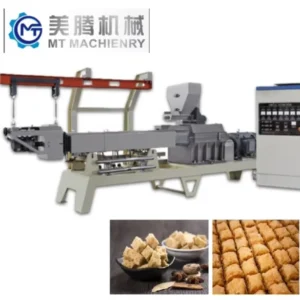
Vegetarian Beef Substitute Making Machine with Twin Screw Extruder
¥9,500.00 Select options This product has multiple variants. The options may be chosen on the product page -
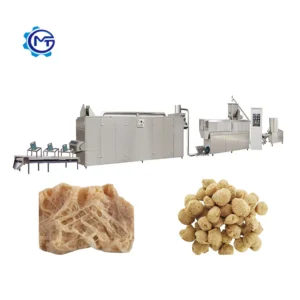
New High Efficiency Protein Production Line Plant Protein Equipment for Artificial Vegetarian Meat Processing Food Grade
¥65.00 Select options This product has multiple variants. The options may be chosen on the product page