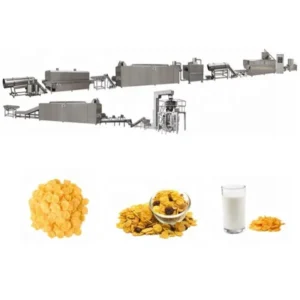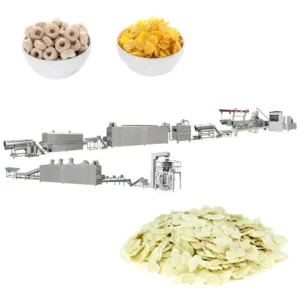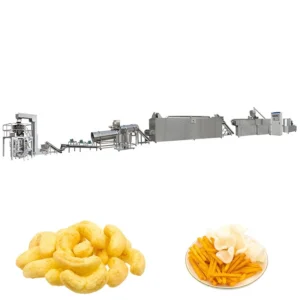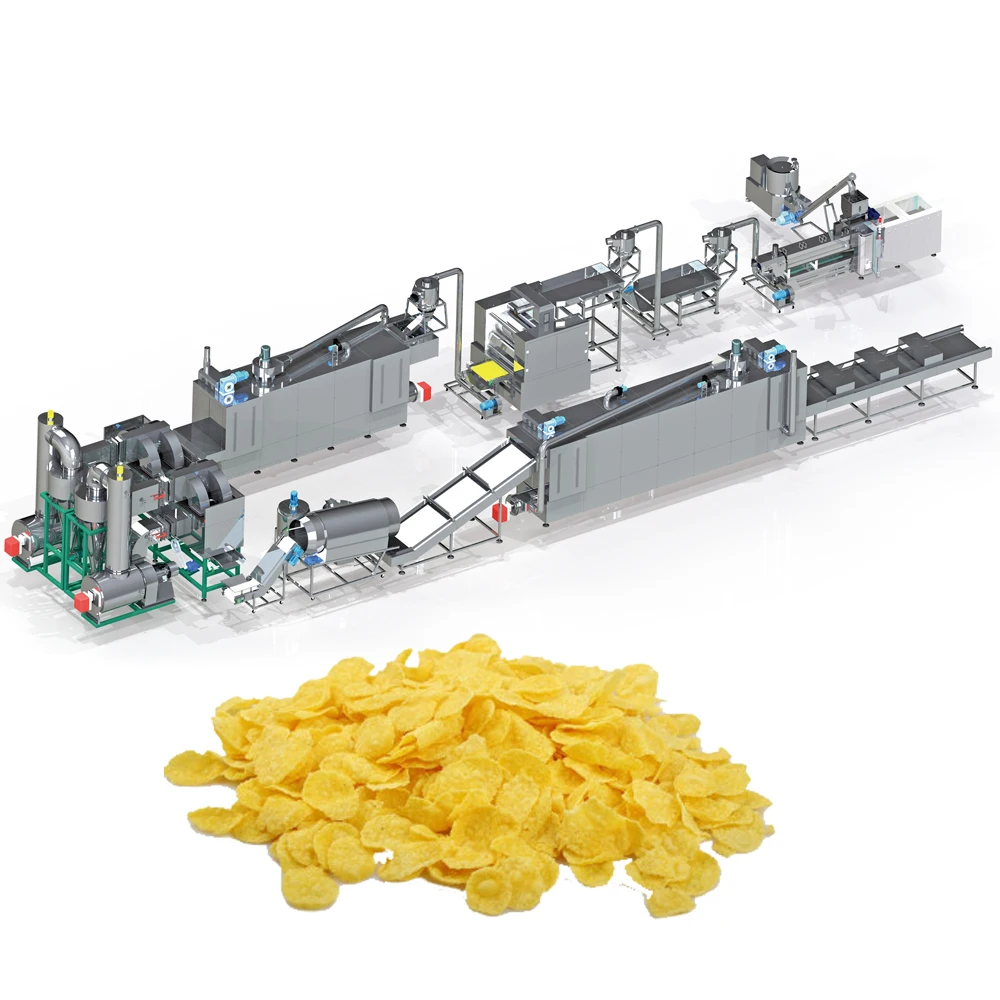
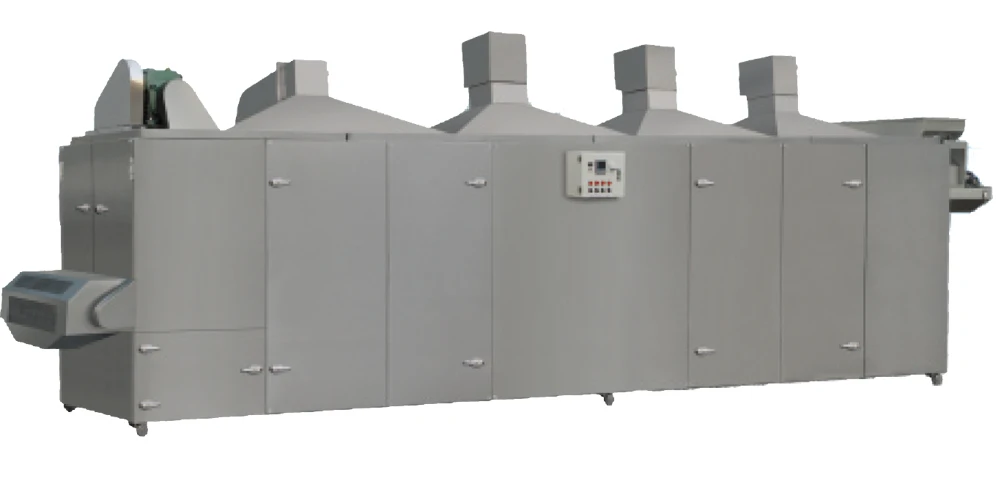
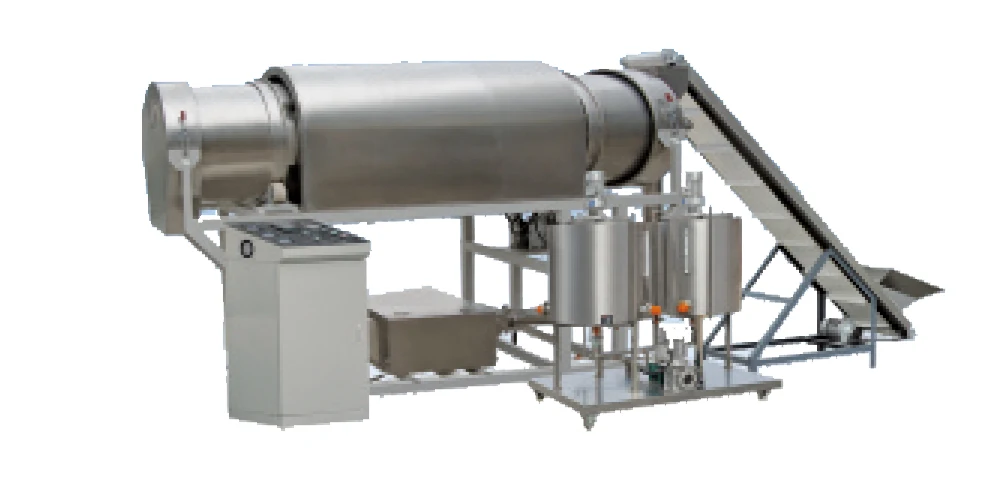
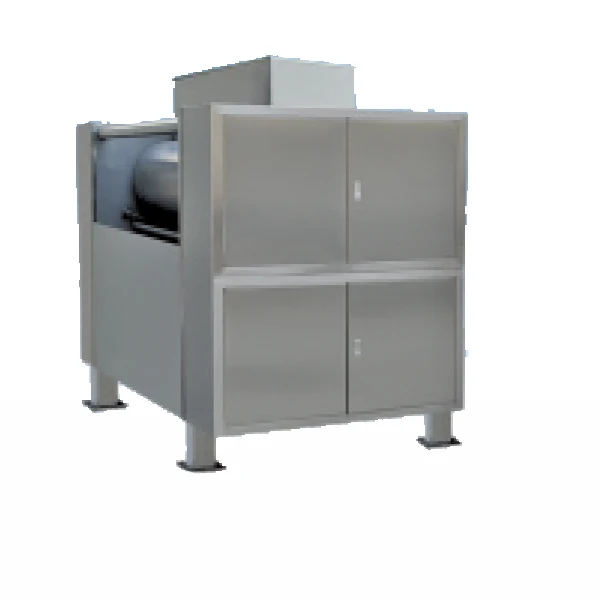


MT70 / MT85 / MT75 Corn Flakes Production Line, Twin-Screw Extrusion, PLC Control — engineered as a complete turnkey project from mixing through extrusion, flaking, roasting, coating and packing. Twin-screw configuration and die design are matched to your raw material and target flake density, with every station throughput-balanced to prevent bottlenecks. Line layout, capacity calculation and electrical specifications are confirmed before production, with trial runs on your raw material conducted in-house before shipment.
- Throughput-matched turnkey line validated by in-house testing workshop before delivery
- On-site installation, commissioning and operator training included
- Ongoing wear parts supply and maintenance support throughout equipment lifecycle1
Description
Throughput-Engineered Line Integration — every station from mixing to packing is capacity-balanced under one supplier, so the flaker, dryer and roaster never bottleneck the extruder on your actual corn blend.
Technical Specifications
| Parameter | Value |
|---|---|
| Product Type | Corn Flakes Production Line |
| Model Options | MT70 / MT85 / MT75 |
| Extruder Type | Twin Screw (MT-75 specified) |
| Installed Power | 160 kW (MT70) / 190 kW (MT85) / 210 kW (MT75) |
| Power Consumption | 120 kW (MT70) / 140 kW (MT85) / 150 kW (MT75) |
| Output Capacity | 150–200 kg/h (MT70), 300–400 kg/h (MT85), 300–500 kg/h (MT75) (basis not stated in source — confirm raw material, moisture content, and flake thickness) |
| Overall Dimensions | 41 × 1.5 × 2.2 m (MT70) / 43 × 1.5 × 3.2 m (MT85) / 45 × 1.5 × 3.5 m (MT75) |
| Screw Feature | Wear-resistant treatment, automatic lubricating and cooling |
| Flaking Machinery | Hydraulic double-roller system, dual-motor independent drive, infrared sensor temperature control |
| Dryer Heating Source | Gas or Electric |
| Roasting Oven | Hot air roasting with conciliation burner, dual circulating fans, cyclone dust removal, vibrating pan |
| Coating System | Double tumble sugar melting, elevator, coating drum, spraying nozzle |
| Control System | PLC control (flaking station), MCC available for full line |
| Die Configuration | Adjustable mould for ball, tube, stick, ring, fruit loop, star, wheel, flower, heart shapes |
| Voltage & Frequency | Customized to local supply (confirm before order) |
| Certifications | CE (since 2014), ISO |
Application Suitability
| Application | Material or Output |
|---|---|
| Natural corn flakes | Corn, rice, wheat, oat, barley powder |
| Sugar-coated breakfast cereals | Corn grits with sugar or honey glaze |
| Fortified cereal formats | Blends with added vitamin and mineral premix |
| Variety-shaped cereals | Ball, tube, ring, fruit loop, star, flower shapes via interchangeable dies |
| Granola-style clusters | Multi-grain mixtures with binding syrup coating |
What "Nominal Capacity" Means When Stations Are Mismatched
A corn flakes production line turnkey is only as fast as its slowest downstream station.
I once configured a flaking line where the buyer took the extruder’s rated output and assumed the dryer and coating drum would simply keep pace. The flaker discharged faster than the roaster could handle, and product piled up on the conveyor, cooling unevenly and losing surface crispness before it reached the oven. That bottleneck cost them hours of rework per shift until we re-matched the dryer length and fan capacity to the actual throughput [NEED_CITE: throughput matching principles in cereal processing lines]. When evaluating a corn flakes production line turnkey, the critical question is not what the extruder can push, but whether every downstream station — flaker, dryer, roaster, coating drum — has been calculated against the same raw material and target flake density.
Line Throughput Balance Across Every Station
A corn flakes production line turnkey requires that each station’s residence time and transfer rate align with the extruder’s actual output on your specific flour blend. The hydraulic double-roller flaking system here uses independent dual motors so roller speed can be tuned to match extruder discharge rate without tearing the dough sheet. Infrared sensors across the roller surface maintain uniform temperature, preventing cold spots that cause uneven sheet thickness and downstream breakage during roasting.
Roasting and Coating Precision for Market-Grade Flakes
The hot air roasting oven uses a conciliation burner with two separate circulating fans, which allows temperature profiling across the roasting chamber to achieve consistent surface blistering. Cyclone dust removal pulls fines out of the air stream so they do not settle back onto the flakes and create burnt specks [NEED_CITE: hot air circulation requirements for breakfast cereal roasting]. The double tumble coating system melts sugar in a dedicated vessel before spraying it through nozzles onto flakes in the rotating drum, giving uniform coverage that single-pass coating drums typically cannot match.
Reading the Specs That Actually Matter
The twin-screw extruder configuration is central to corn flake quality because it determines how completely the starch gelatinises before the dough reaches the flaker. Wear-resistant screw treatment extends the interval between rebuilds, which matters when running abrasive corn grits day after day. The installed power range across the MT70, MT85 and MT75 models reflects different barrel volumes and screw diameters — a larger barrel holds more material in the cooking zone, giving longer residence time for starch conversion at a given throughput. Automatic lubricating and cooling functions on the screw shaft prevent bearing seizure during extended runs, a failure mode that typically appears only after several months of continuous operation. PLC control at the flaking station allows operators to store roller gap and speed presets for each product format, reducing changeover time between different flake thicknesses. Voltage and frequency must be confirmed before production begins because motor winding ratios and PLC power supplies differ by market, and a wrong configuration can damage control boards on first startup [NEED_CITE: voltage and frequency standards by export market].
The Cost of Skipping Pre-Shipment Validation
When an extruder arrives with a generic screw configuration that was never tested on the buyer’s actual corn blend, the result is often a flake that is either too dense for the target market or too fragile to survive the coating drum. Density outside specification means the flakes sink in milk rather than floating, which is a quality rejection in most retail channels. Without a trial run before shipment, all product development happens on the factory floor during commissioning, consuming raw material, delaying production start and straining the relationship between buyer and installer [NEED_CITE: risks of skipping factory acceptance tests in food processing equipment].
Why Source the Full Line From One Integration Point
Every station — mixing, extruding, flaking, drying, roasting, coating, cooling, packing — is engineered under one supplier, so throughput calculations use the same basis across the entire layout rather than relying on independent vendors to coordinate capacity. The in-house testing workshop runs your specific corn blend before the line ships, generating a trial report that documents screw configuration, die selection and flake density against your target specification. Screw and die configuration is recorded and filed so that reorder wear parts match the original build exactly. Electrical schematics include confirmed voltage, frequency and control language for your facility, preventing commissioning delays caused by mismatched power supplies. The CE declaration and ISO certification cover the complete line, simplifying customs clearance and local regulatory registration in markets that require conformity documentation.
Documentation & Verification
- Line layout and capacity calculation showing throughput balance across extruder, flaker, dryer, roaster and coating stations
- Trial run report on your corn blend documenting screw configuration, flake thickness and density results
- Screw and die configuration record specifying exact build matched to your raw material and target shape
- Electrical schematic with voltage, frequency and control language confirmed for your facility before production
- Factory test record with photographs and operating parameters logged before crating
- Operation and maintenance manual with wear parts list and first replacement schedule
Installation, Commissioning & Support
- Foundation plan based on the 41–45 m line length and station-specific load points
- Dedicated circuit sizing for the 120–150 kW operating draw with voltage and frequency verification on arrival
- Phased assembly schedule coordinating extruder, flaker, dryer and roaster installation sequence
- First-run parameter setting on your raw material with PLC recipe storage for each flake format
- Operator training covering hydraulic roller adjustment, roaster temperature profiling and sugar coating spray rate
- Wear parts supply covering screws, dies and roller surfaces with lead time aligned to your production calendar
What to Prepare Before Requesting a Quotation
Share your raw material specification including corn variety, particle size distribution and target moisture content at the extruder inlet. Specify your intended flake dimensions, whether the end product is natural or sugar-coated, and your daily output target so the line configuration can be sized accordingly. Confirm your facility voltage, frequency and preferred control language, along with available floor space and ceiling height to ensure the layout fits without structural modification.
Frequently Asked Questions
Q: How is line throughput verified on my specific raw material before shipment?
A: Your corn blend is run through the extruder and flaker in the in-house testing workshop before the line ships. A trial report documents the screw configuration, die selection, flake thickness and density achieved, so you can confirm the line meets your specification before it leaves the factory.
Q: How are extruder, dryer and roasting capacities matched to prevent bottlenecks?
A: Each station’s capacity is calculated against the same raw material and target output. Dryer length, roasting chamber volume and coating drum speed are all specified to handle the extruder’s actual discharge rate on your flour blend, not just a nominal catalogue figure.
Q: What voltage, frequency and control language options are confirmed before production?
A: Your facility’s power supply specification is collected during the design phase. Motor windings, PLC power supplies and control interface language are all configured and documented in the electrical schematic before manufacturing begins, preventing on-site rework.
Q: What does on-site installation and commissioning include?
A: The process covers phased mechanical assembly, electrical connection, first-run parameter tuning on your raw material, and operator training on recipe storage, roller gap adjustment and roaster temperature control. A commissioning protocol is signed off before the engineering team departs.
Q: How are spare wear parts supplied and when is the first replacement due?
A: A wear parts list is included with the documentation, specifying screws, dies and roller surfaces with part numbers matching your original configuration. First replacement intervals depend on your raw material abrasiveness and operating hours, and are documented during commissioning.
Related products
-
Whole Grain Choco Hoop Crunchy Wheat Cereal Ring Fruit Loops Snacks Extruder Machine /breakfast Cereals Corn Flakes Production
¥48,000.00 Select options This product has multiple variants. The options may be chosen on the product page -
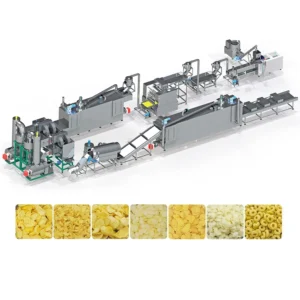
Automatic Commercial Breakfast Wheat Circle Corn Flake Production Line
¥65,000.00 Add to cart -
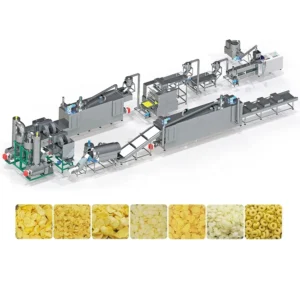
Hot Selling Automatic Corn Flakes Breakfast Cereal Production Line Making Machine
¥20,000.00 Select options This product has multiple variants. The options may be chosen on the product page -
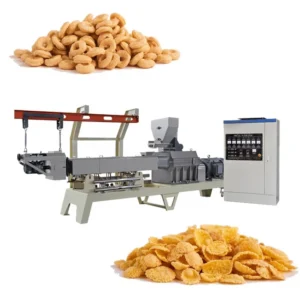
Corn Flakes Machine Breakfast Cereal Corn Flakes Production Line Cornflakes Making Machine
¥85,800.00 Select options This product has multiple variants. The options may be chosen on the product page