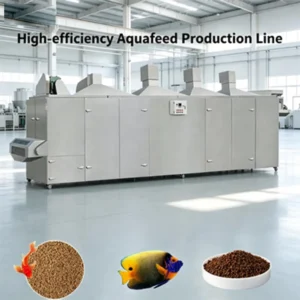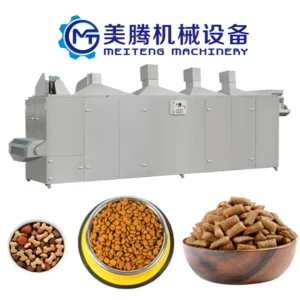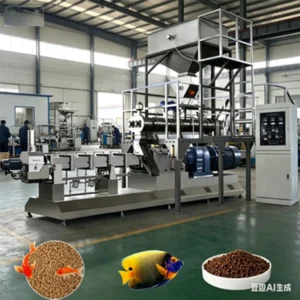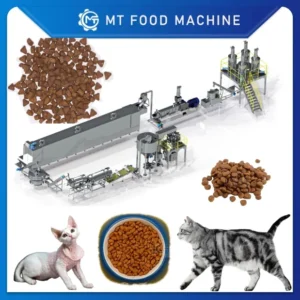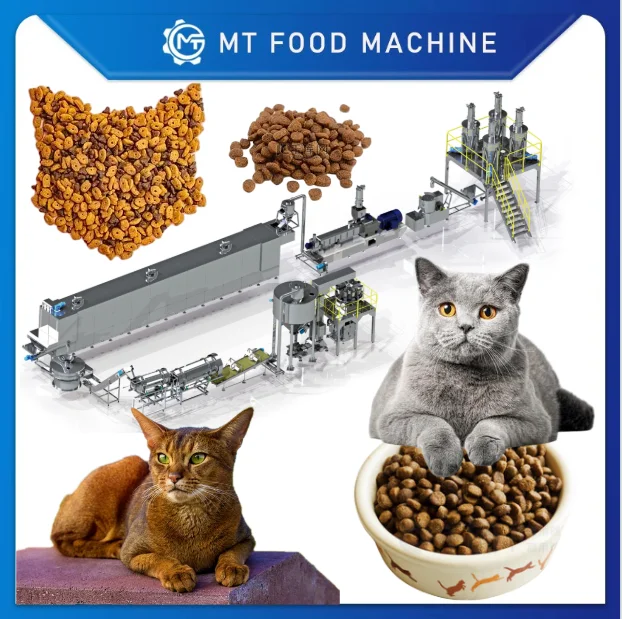


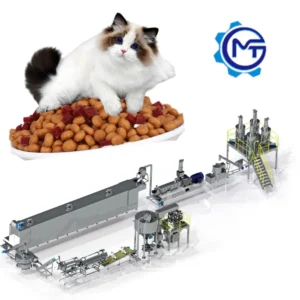
PLC Controlled Pet Food Processing Line, Twin-Screw Extrusion, Full Automation, 250-300 kg/h — engineered for dry kibble, semi-moist, and treat formats across multiple pet species.
- Complete turnkey layout from batching through extrusion, drying, coating, cooling to packing, with every station throughput-matched to prevent bottlenecks.
- PLC automation stores recipes and holds repeatable process parameters, while screw configuration and die design are specified to your raw material formulation and target kibble density.
Screw and die configuration records are provided alongside line layout and capacity calculation documents, so you receive a fully validated production system rather than a generic assembly.
Description
Matched Station Throughput — Every segment from batching to packing is calculated against the same 250-300 kg/h target so no single unit chokes the line.
Technical Specifications
| Parameter | Value |
|---|---|
| Product Type | Pet Food Extrusion Production Line |
| Output Capacity | 250-300 kg/h (basis not stated in source — confirm raw material formulation / moisture content / kibble size) |
| Extruder Type | Twin-screw |
| Control System | PLC Controlled |
| Automation Level | Full Automation |
| Product Formats | Dry kibble, semi-moist, treats |
| Line Stations | Batching, extrusion, drying, coating/flavouring, cooling, packing |
| Design Approach | Energy Saving & Eco-Friendly |
| Certification | CE, ISO |
Application Suitability
| Application | Material or Output |
|---|---|
| Dry cat kibble production | Corn, poultry meal, fish meal, vitamin premix blends |
| Multi-species dry pet food | Variable protein and starch ratios for canine and feline diets |
| Semi-moist pet food manufacturing | High-moisture dough formulations with humectants |
| Extruded pet treats | Dense doughs shaped through custom die plates |
What "250-300 kg/h" Leaves Out About a PLC Controlled Pet Food Processing Line Turnkey
Nominal throughput only matters when it holds on your actual recipe.
I watched a European pet food producer lose two full weeks of commissioning because the extruder was configured for a standard corn-based test formula, while their real production ran heavy on fresh chicken slurry. The screw profile had to be completely reworked on the factory floor. A PLC controlled pet food processing line turnkey project should never arrive at your site with unresolved process questions [NEED_CITE: screw configuration matching for high-moisture protein formulations]. That is why confirming capacity against your specific raw material blend, moisture level, and target kibble density must happen before the line ships, not after it is bolted to your floor.
Recipe Memory Across Kibble, Semi-Moist, and Treat Runs
A PLC control panel stores distinct process profiles for every SKU you produce. Barrel temperature zones, screw speed, feeder rates, and dryer dwell times are saved as repeatable recipes. When your operator switches from a salmon-based adult cat kibble to a poultry-based kitten formula, the system recalls the validated parameters instead of relying on manual adjustments that drift between shifts.
Throughput Matching From the Batching Hopper to the Packing Station
An extruder rated at 250-300 kg/h means nothing if the downstream dryer cannot handle that volume continuously. Each station in this line is sized so material flow stays balanced. The dryer bed area, coating drum volume, and cooler conveyor length are all calculated against the extruder’s confirmed output to prevent material pile-ups or idle equipment [NEED_CITE: throughput balancing methodology in extrusion line design].
Reading the Specs That Actually Shape Your Output
The twin-screw configuration is central to how this line handles diverse pet food formulations. Twin screws generate higher shear and better mixing than single-screw designs, which matters when you run recipes with significant fat, fresh meat, or fibre content. The screw elements and die aperture together determine kibble expansion ratio and final bulk density — a critical market specification that buyers check on receipt. Moisture content entering the preconditioner directly affects gelatinisation degree inside the barrel, so the line’s batching accuracy and preconditioner steam injection must be precise. The PLC system ties these variables together, logging deviations in real time so batch-to-batch consistency is documented, not assumed.
The Hidden Cost of a Mismatched Die and Dryer Pair
When an extruder pushes kibble at full rate into a dryer that lacks sufficient residence time, surface moisture drops but internal moisture stays high. The product bags well, passes initial inspection, then develops mould inside the sealed bag during ocean freight or warehouse storage. The claim does not surface for weeks, by which time the shipment has reached the retail shelf. This failure trace almost always leads back to a dryer that was never spec’d against the actual extruder output and product geometry [NEED_CITE: moisture migration failure in packaged kibble].
Why Procure This Line Here
Screw and die configurations are specified against your documented raw material formulation and target kibble density, not copied from a generic build. In-house testing on your actual recipe runs before shipment, so expansion behaviour and texture are confirmed early. Every station — batching, extrusion, drying, coating, cooling, packing — comes from a single source, eliminating finger-pointing between vendors when throughput drifts. Electrical schematics and control language are confirmed against your facility standard before production begins. Engineering support extends through layout design, installation supervision, commissioning, and operator training.
Documentation & Verification
- Line layout drawing showing throughput calculations at each station for your target output
- Screw and die configuration record matched to your specific kibble recipe
- Trial run report generated on your raw material in the testing workshop
- Electrical schematic with voltage, frequency, and PLC language confirmed for your market
- CE declaration of conformity and ISO certificate included with shipping documents
Installation, Commissioning & Support
- Foundation plan accounts for extruder and dryer footprints and dynamic loading
- Dedicated power circuits sized for the PLC panel and all drive motors
- Modular station delivery allows phased rigging through standard factory doors
- First-run commissioning validates PLC recipe profiles against your target kibble spec
- Operator training covers recipe recall, screw changes, and daily sanitation routines
- Wear parts list identifies screws, dies, and dryer belts with replacement intervals
What We Need to Configure Your Line
Before quoting, share your target kibble formats, the raw material formulations you plan to run, and your daily production target. Confirm the voltage and frequency standard at your facility and the preferred PLC interface language. If you can supply a sample batch of your actual dry mix or protein slurry, we will run a trial in our testing workshop and include the results with the proposal.
Frequently Asked Questions
Q: How is the 250-300 kg/h capacity verified against my specific raw material formulation?
A: We run your actual raw material blend through the extruder in our in-house testing workshop before shipment. The trial measures real output rate, kibble expansion, and bulk density under your recipe conditions. Results are documented in a trial run report, and screw or die adjustments are made at that stage — not at your facility after delivery.
Q: How do you match throughput between extrusion, drying, and coating stations?
A: Each downstream station is calculated against the extruder’s confirmed output on your formulation. Dryer bed area and residence time, coating drum volume, and cooler conveyor length are all sized so material flows without bottlenecks. The line layout document shows these throughput calculations for your review before production begins.
Q: What voltage, frequency, and control language options are available for my facility?
A: Electrical specifications are confirmed during the proposal stage to match your local grid standard. The PLC interface language is set to your operator preference before the panel is built. The electrical schematic and voltage confirmation document ship with the line so your local electricians have a complete reference for connection.
Q: Can I run a trial with my own raw material before the line ships?
A: Yes. We ask you to send a representative sample of your formulation to our testing workshop. We run it through the configured extruder and supporting stations, measure the product against your specifications, and adjust screw profiles or die geometry if needed. The trial run report is shared with you before the line is packed.
Q: What does the installation and commissioning schedule look like for a complete line?
A: Installation is phased so stations are positioned, connected, and tested in sequence. Our engineers supervise rigging, utility connection, and first-run commissioning on site. Operator training covers PLC recipe management, routine maintenance, and screw or die changeover procedures. The schedule is agreed in the project plan before equipment leaves the factory.
Related products
-
MT70 100-200kg/h Dog & Cat Pet Food Processing Line with 380V 50Hz Three Phase Power
¥35,000.00 Select options This product has multiple variants. The options may be chosen on the product page -
250-300kg/h Capacity PLC Controlled Multi-Species Cat Food Processing Line
¥35,000.00 Select options This product has multiple variants. The options may be chosen on the product page -
Full Automatic Pet Feed Production Line Large Twin Screw Grain Extrusion Machine
¥9,500.00 Select options This product has multiple variants. The options may be chosen on the product page -
MT70 200-250kg/h Dog Cat Pet Food Processing Line 380V 50HZ Three Phase 45KW
¥35,000.00 Select options This product has multiple variants. The options may be chosen on the product page