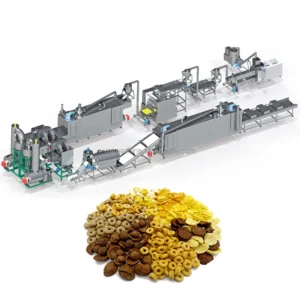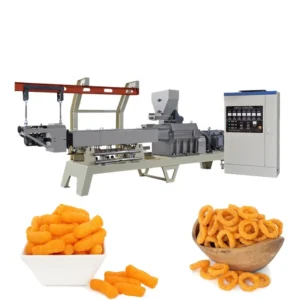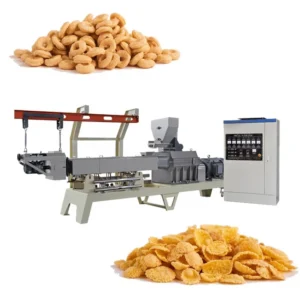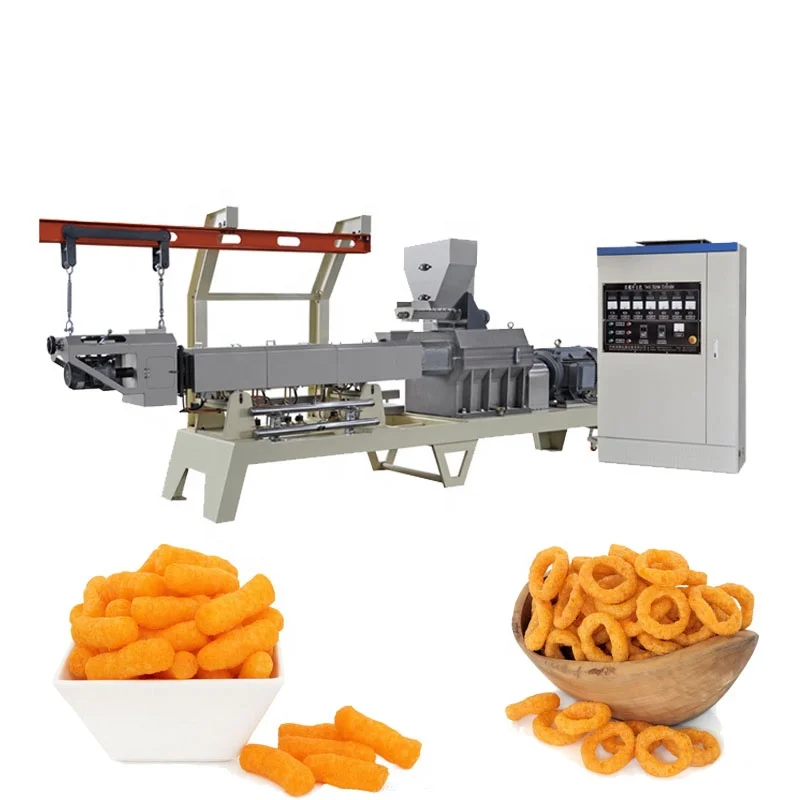
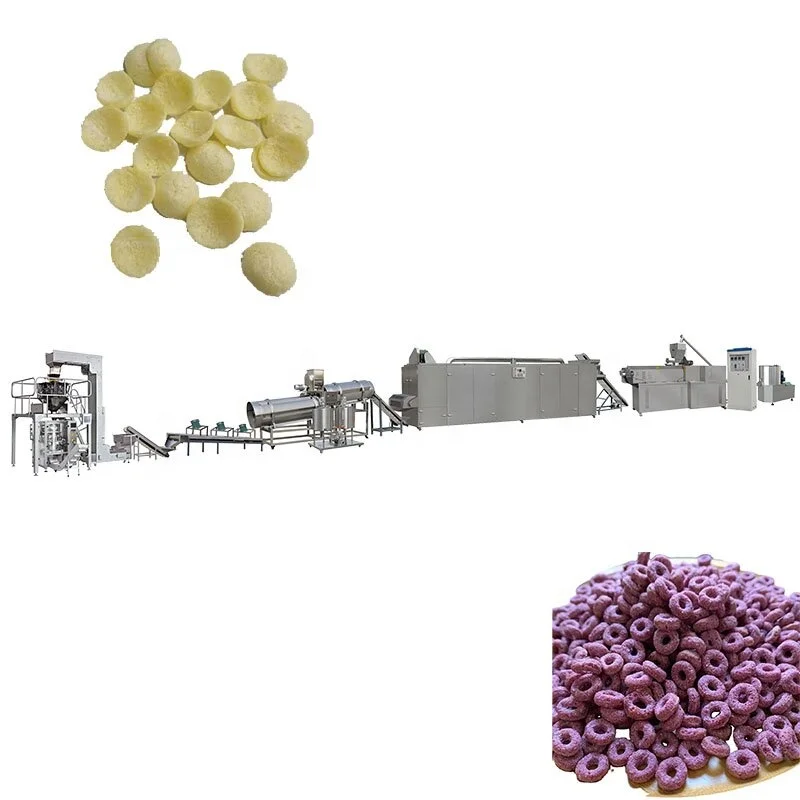
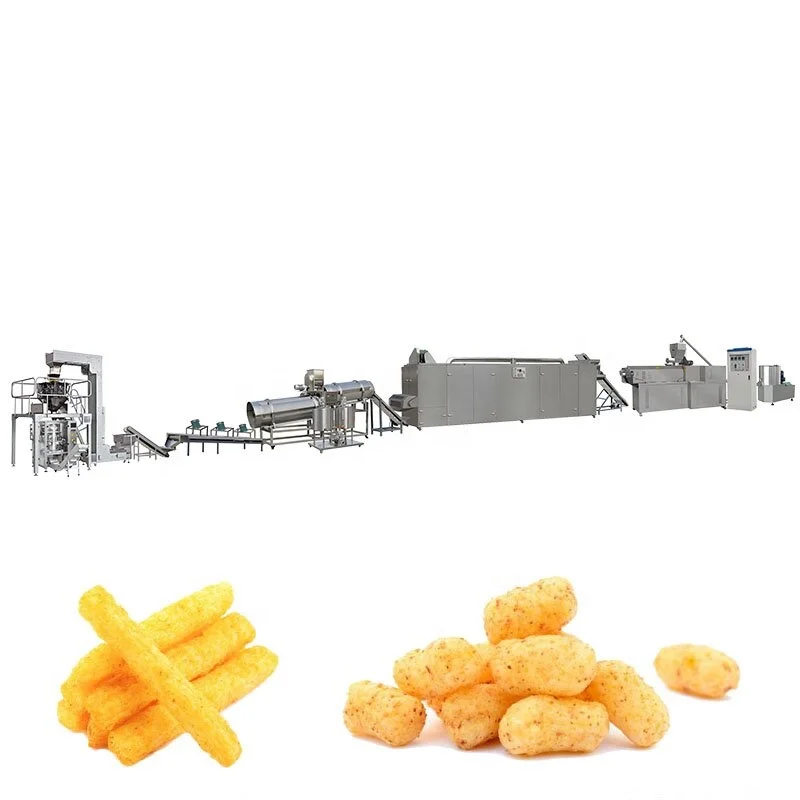
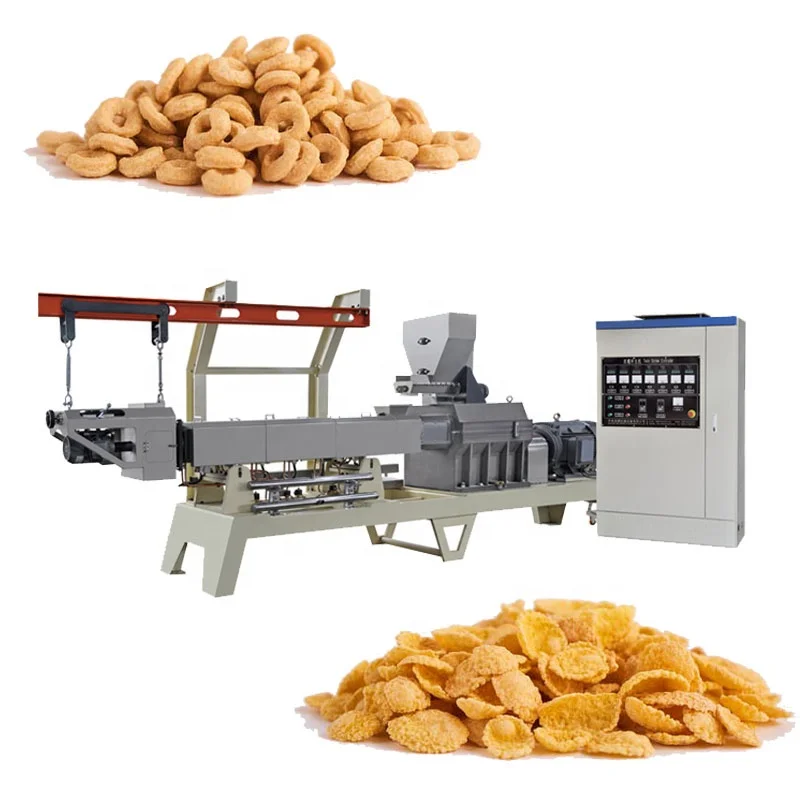
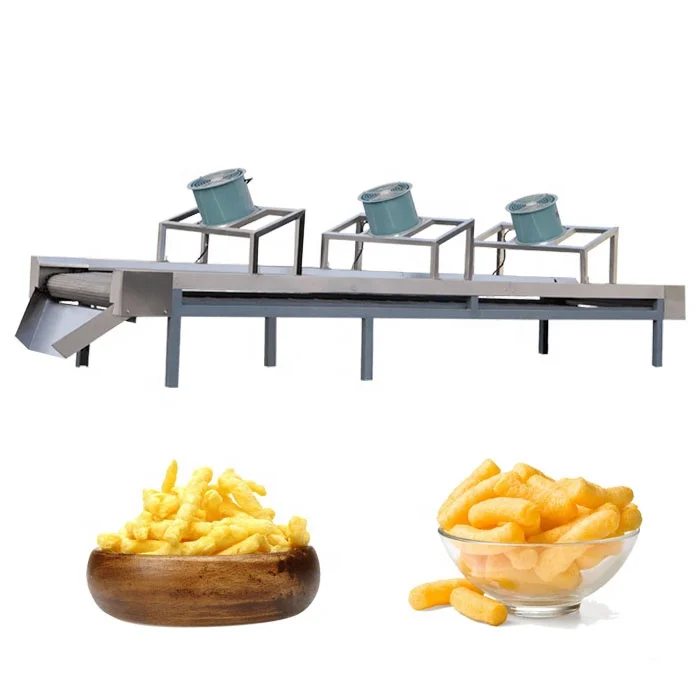
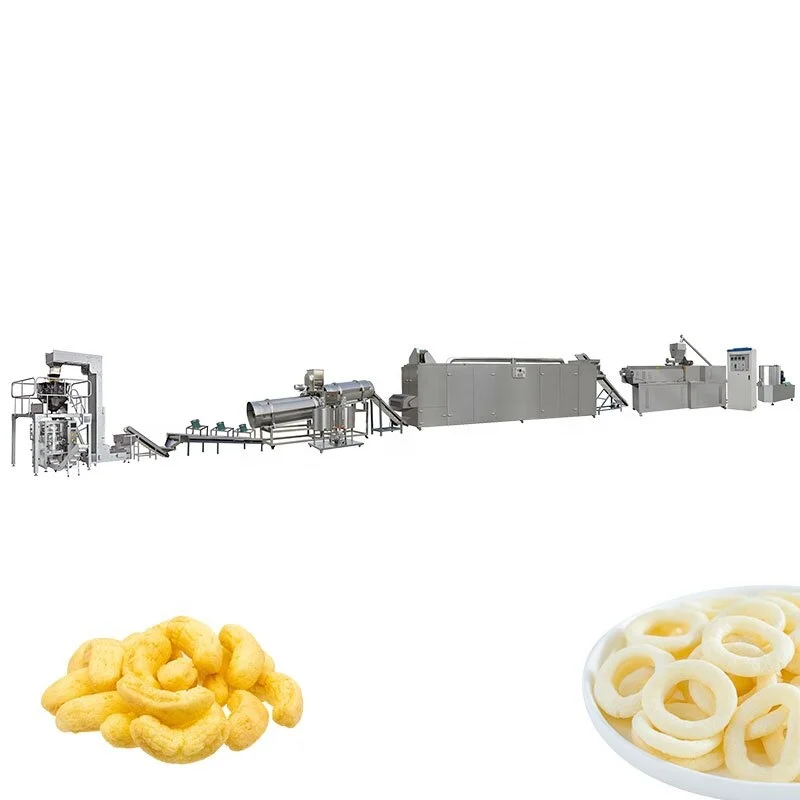
MT75 Corn Flakes Production Line, Twin-Screw, 300–500 kg/h — turnkey layout from mixing through extruding, flaking, roasting and coating, engineered as one project with throughput matched at every station.
- Screw configuration and die design specified to your raw material and target flake density
- Hydraulic flaking machinery with double-motor roller drive and infrared temperature control
Trusted by breakfast cereal manufacturers in 60+ countries for complete line delivery with in-house trial runs on customer raw material before shipment.
Description
Screw configuration matched to raw material — the MT75 twin-screw setup and die geometry are specified against your actual corn or multi-grain formula, not copied from a generic build.
Technical Specifications
| Parameter | Value |
|---|---|
| Model | MT75 |
| Product Type | Corn Flakes Production Line |
| Screw Type | Twin Screw |
| Installed Power | 210 kW |
| Power Consumption | 150 kW |
| Output Capacity | 300–500 kg/h (basis not stated in source — confirm raw material / moisture content) |
| Overall Dimensions | 45 × 1.5 × 3.5 m |
| Control System | PLC (flaking machinery); MCC/PLC (extruder) |
| Flaking Roller Drive | Double motors for separate roller driving |
| Flaking Roller Pressure | Hydraulic system for double rollers |
| Flaking Temperature Control | Infrared sensor |
| Dryer Heating Source | Gas / Electric |
| Roasting Oven | Hot air roasting with conciliation burner, two separate circulating fans, cyclone dust removal |
| Coating System | Double tumble for sugar melting, elevator, coating drum, spraying nozzle |
| Basic Raw Materials | Corn, rice, wheat, oat, barley powder |
| Certifications | CE, ISO |
Alternative models available: MT70 (160 kW installed, 150–200 kg/h capacity, 41 × 1.5 × 2.2 m) and MT85 (190 kW installed, 300–400 kg/h capacity, 43 × 1.5 × 3.2 m). Capacity figures require raw material and moisture confirmation.
Application Suitability
| Application | Material or Output |
|---|---|
| Natural corn flakes for retail packaging | Corn grits and corn flour |
| Sugar-coated breakfast cereals | Corn, rice, and wheat-based extrudate |
| Multi-grain flake production | Oat, barley, and blended cereal powders |
| Extruded cereal shapes (rings, balls, stars) | Corn and rice flour formulations |
| Food-service bulk cereal supply | Various grain-based raw material blends |
Why "Rated Capacity" Means Nothing Without the Rest of the Line
A corn flakes production line turnkey is only as fast as its slowest station — throughput must be balanced from the mixer to the packing scale.
I have watched operators feed an extruder at full screw speed while the downstream flaker choked on half-cooked pellets and the dryer backed up with product still carrying too much moisture. The extruder was technically capable of the nameplate figure, but the dryer and roaster were sized for a different duty. When you assemble a breakfast cereal line from separate vendors, each supplier guarantees their own machine in isolation. Nobody owns the gap between stations. The result is a line that runs below its paid-for output and generates waste at every transfer point [NEED_CITE: throughput mismatch in multi-vendor food processing lines]. A corn flakes production line turnkey designed as one project eliminates that gap because every station is calculated against the same mass flow.
Phased Layout and Utility Planning
A complete breakfast cereal facility requires more than machines placed in sequence. The MT75 line occupies roughly 45 meters in length, which means the floor plan must account for material flow direction, operator access corridors, and utility drops at each station. Gas supply for the dryer and roaster, electrical panels for the MCC and PLC cabinets, compressed air for the hydraulic flaking system, and dust extraction ducting for the cyclone separator all need coordinated routing before the first foundation bolt is set. We provide a line layout and capacity calculation document that maps every utility connection to your factory floor plan, so the civil and electrical contractors can work from a single reference drawing rather than resolving conflicts during installation.
Throughput Matching Across Every Station
The extruder, flaker, dryer, roaster, and coating drum each have a natural throughput curve. If the flaker runs slower than the extruder, cooked pellets pile up in the intermediate hopper, cool down, and lose the plasticity needed for clean sheeting. If the roaster cannot handle the volume coming off the dryer, flakes sit in the conveyor and absorb ambient humidity, compromising the final crispness. On this corn flakes production line turnkey, we size the hydraulic flaking rollers, the dryer belt length, the roasting oven chamber volume, and the double-tumble coating drum against the same hourly mass flow derived from your raw material recipe. The corn flakes production line turnkey approach means no station waits and no station starves.
Reading the Specs That Actually Matter
Twin-screw extrusion gives operators independent control over screw speed and feed rate, which is critical when switching between corn, wheat, and oat formulations that gelatinize at different moisture levels and temperatures. The hydraulic flaking system with infrared temperature monitoring maintains consistent roller gap pressure and surface heat, producing uniform flake thickness across the full belt width rather than thin edges and thick centers. The hot air roasting oven uses two separate circulating fans and a conciliation burner to manage the temperature profile in two zones — this prevents the common failure mode where flakes emerge over-toasted on the outside but still soft inside. The PLC control on the flaking machinery and MCC/PLC panel on the extruder allow recipe parameters to be saved and recalled, so a shift change does not mean starting the tuning process from scratch [NEED_CITE: PLC recipe management in cereal extrusion lines].
The Hidden Cost of Skipping the Trial Run
I spent more nights on project sites in the Middle East than in our Jinan workshop. Early on, we shipped a corn flake line configured for white corn grits. The buyer switched to a high-fiber whole-wheat blend on day one without telling us, kept the roller gap from the lab trial, and produced three days of uneven, shattering sheet that had to be reprocessed. Since then, we run every corn flakes production line turnkey project on the buyer’s actual raw material in our testing workshop before the machines leave the factory. The trial run reveals whether the screw configuration generates enough shear for that specific starch profile, whether the die geometry produces the right pellet size for clean flaking, and whether the moisture window is wide enough for the operator to hold consistently [NEED_CITE: importance of pre-shipment raw material trials in extrusion projects]. Skipping this step means your commissioning engineer discovers the problems on your floor, on your schedule, at your cost.
What Single-Supplier Responsibility Looks Like
Every station on this line — mixing, extruding, flaking, drying, roasting, sugar coating, cooling, and packing — comes from one engineering team that sized them against each other, not against catalog defaults. Screw and die configurations are specified to your raw material and target flake density, recorded in a configuration document you can reference for every future production run. The in-house testing workshop allows us to validate your formula before shipment, so commissioning starts with known-good parameters instead of guesswork. Electrical schematics arrive with voltage, frequency, and control language confirmed for your market, preventing the delays that happen when a 50 Hz motor lands on a 60 Hz site. Pre-sales consultation continues through installation, operator training, and ongoing wear part supply — the same team that designed the line answers the phone when a replacement screw barrel is needed six months in.
Documentation & Verification
- Line layout and capacity calculation matched to your factory footprint and utility plan
- Screw and die configuration record specific to your corn or multi-grain formula
- Trial run report on your actual raw material conducted before shipment
- Electrical schematic with voltage, frequency, and control language confirmed for your market
- CE declaration of conformity and ISO certificate for customs and regulatory clearance
- Operation and maintenance manual with wear parts list and recommended replacement intervals
Installation, Commissioning & Support
- Floor space requirement of approximately 45 × 1.5 meters with clearance for operator access and maintenance
- Dedicated electrical circuit sized for 210 kW installed power with MCC panel and PLC cabinet
- Hydraulic system for the flaking rollers requires compressed air supply and hydraulic oil fill on site
- Gas line connection for dryer and roaster or electric heating alternative based on site utility availability
- First-run parameter setting using trial run report data to minimize commissioning time and raw material waste
- Operator training covering PLC recipe recall, hydraulic pressure adjustment, and infrared sensor calibration
- Wear parts inventory including twin-screw elements, die plates, and flaking roller surfaces with replacement schedule
Preparing Your Project Inquiry
To move from inquiry to line configuration, we need your target raw material blend and moisture content, your daily production target in kilograms, and the voltage and frequency standard at your facility. Share your factory floor dimensions and ceiling height so we can draft the layout before quoting. Let us know whether your operators work in English, Arabic, or another language for the PLC interface. If you have existing upstream mixers or downstream packing equipment you want to integrate, provide their throughput ratings so we can match the new stations accordingly.
Frequently Asked Questions
Q: How is line throughput matched across the extruder, flaker, dryer, and coater to prevent bottlenecks?
A: Each station is sized against the same hourly mass flow derived from your raw material recipe and target flake moisture. The extruder output, flaker belt speed, dryer length, roasting oven chamber volume, and coating drum capacity are all calculated together, so no single machine limits the rest. This is confirmed during the line layout phase before production begins.
Q: What voltage, frequency, and control language options are confirmed before the line enters production?
A: We confirm your site voltage, frequency, and preferred PLC interface language during the specification review stage. The electrical schematic is issued for your approval before any motor or panel is ordered. This prevents the common delay of rewiring or replacing components after the equipment arrives on site.
Q: Can a trial run be performed on our raw material before the line ships?
A: Yes. Our in-house testing workshop runs your actual corn, wheat, or multi-grain formula through the twin-screw extruder and flaking station. The trial run report documents screw configuration, die selection, moisture settings, and flake thickness results. This data becomes the baseline for on-site commissioning.
Q: What is the phased installation and commissioning schedule for a complete line?
A: Installation follows a sequence from the mixer forward through extrusion, flaking, drying, roasting, coating, and packing. Mechanical assembly and utility connections are completed first, then each station is tested individually before the full line runs continuously. Operator training runs in parallel with the final commissioning phase using your raw material.
Q: How are screw and die configurations selected for our target flake texture and density?
A: Screw element arrangement and die geometry are chosen based on your raw material starch content, protein level, and the flake density your market expects. The configuration is validated during the pre-shipment trial run and recorded in a document that lets you reproduce the same product across every future batch.
Related products
-

MT Cocoa Flour Puffed Breakfast Cereal Production Line-High Large Capacity Multi-Fuel (Steam/Gas/Electric) New Shandong Origin
¥8,000.00 Select options This product has multiple variants. The options may be chosen on the product page -
Complete Corn Flakes Production Line Breakfast Cereal Processing Machine Core Motor Component Cornflakes Processing Equipment
¥19,000.00 Select options This product has multiple variants. The options may be chosen on the product page -
New High Efficiency Electric Corn Flakes Production & Manufacturing Machine
¥7,500.00 Select options This product has multiple variants. The options may be chosen on the product page -
Sweet Corn Flakes Maize Breakfast Cereal Full-automatic Food Grade Stainless Steel Heat Exchanger Mixer Fryer Processing Line
¥8,000.00 Add to cart