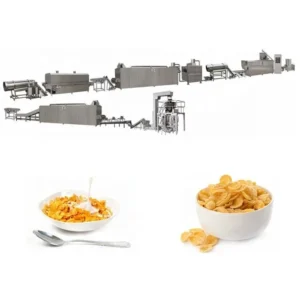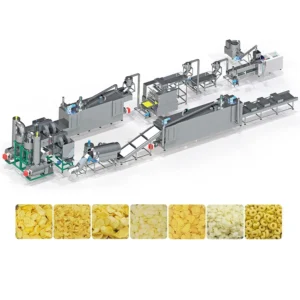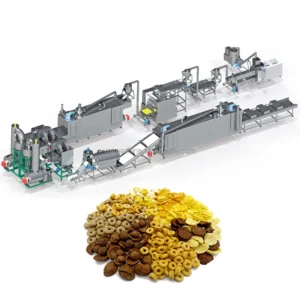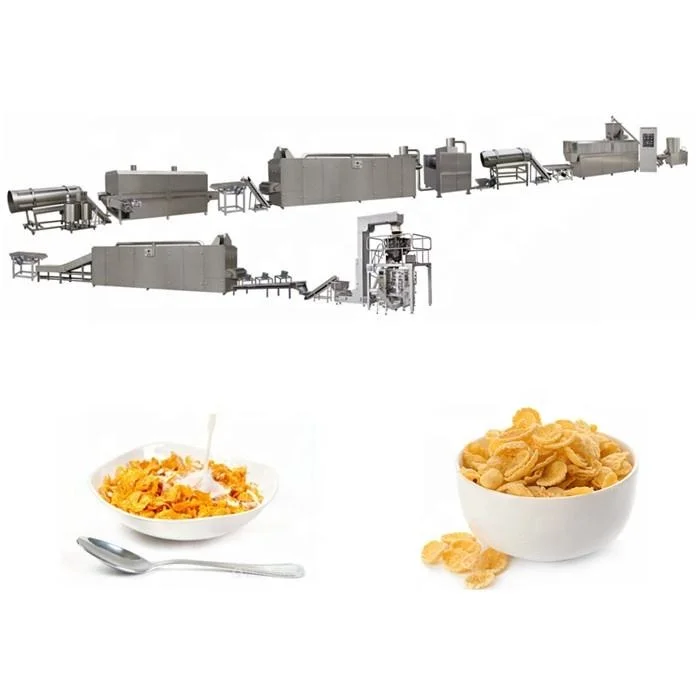
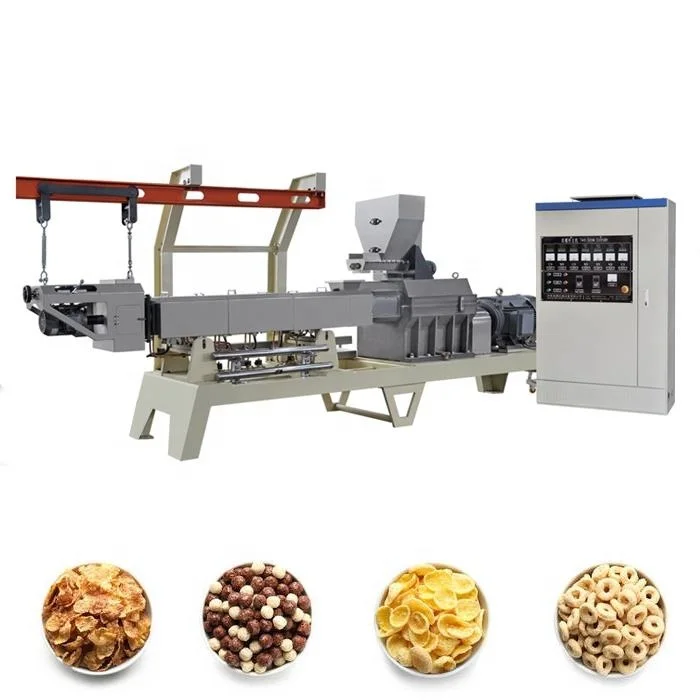
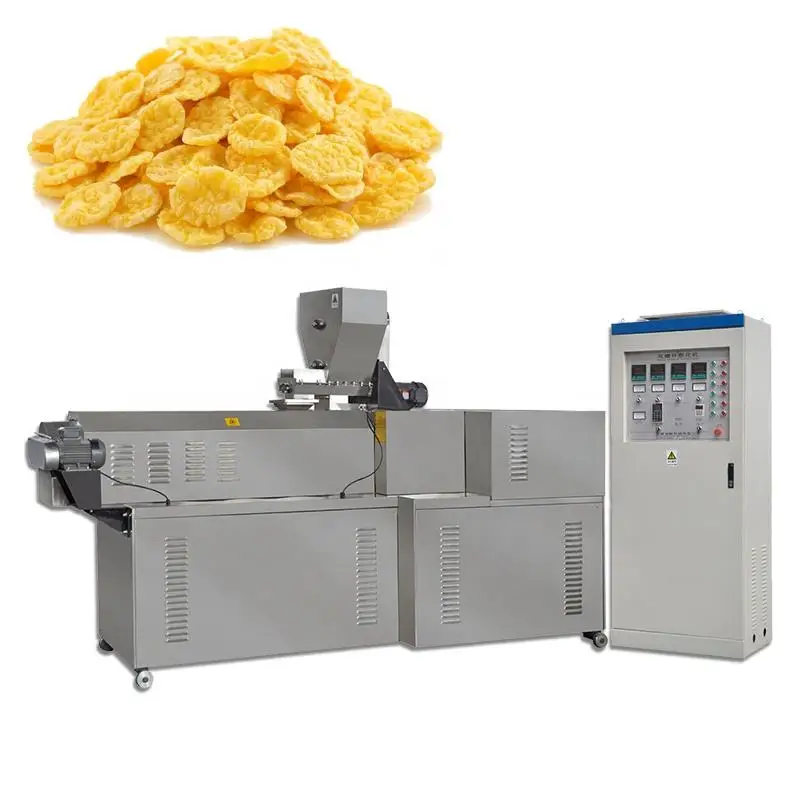
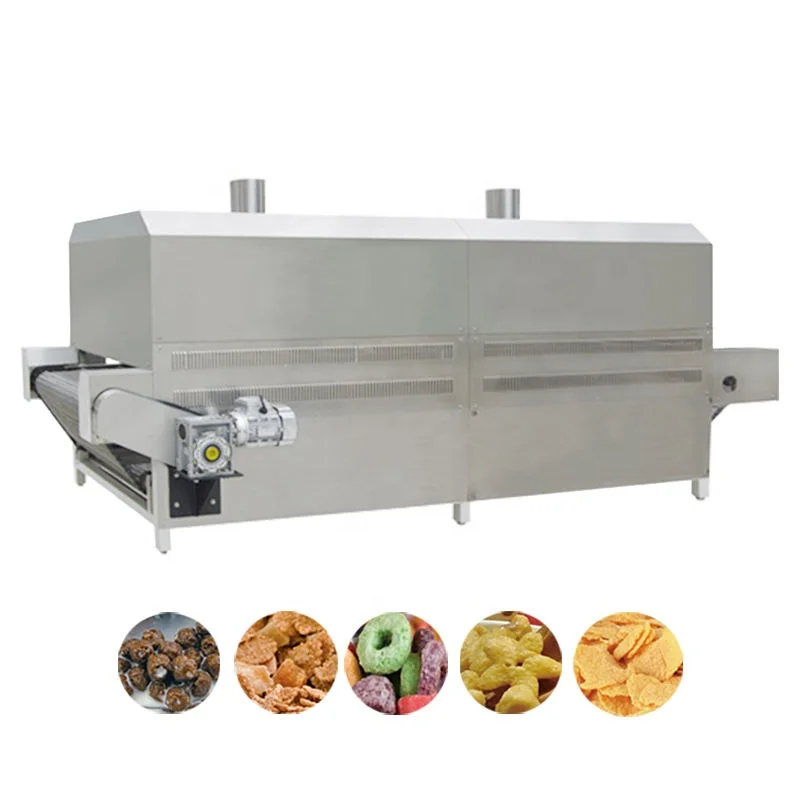
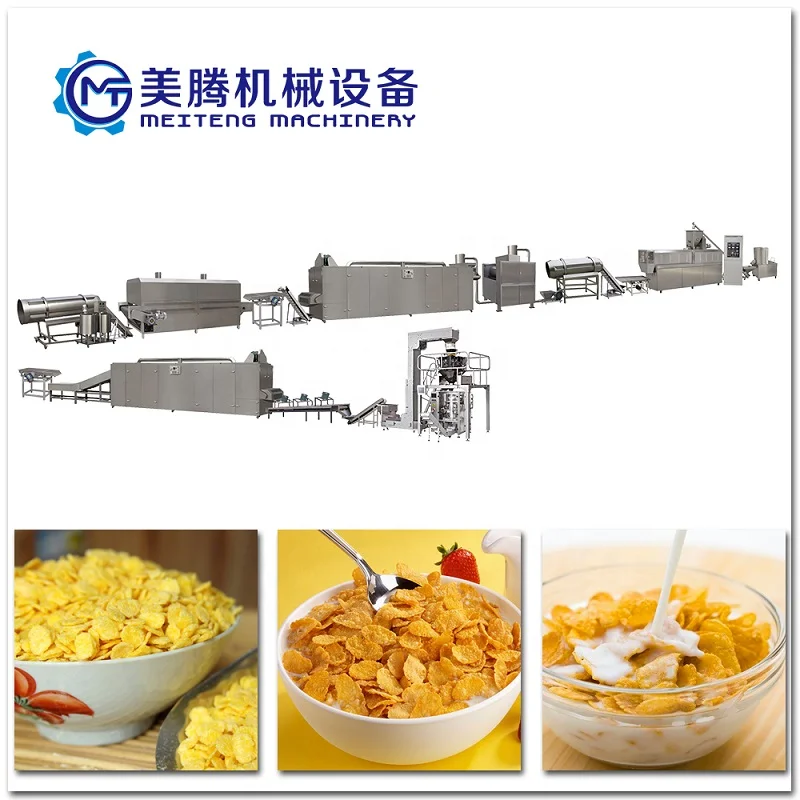
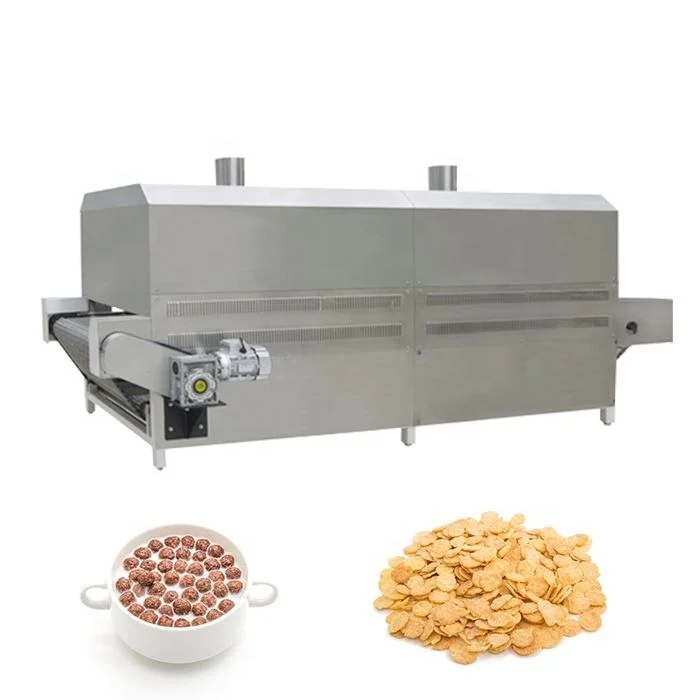
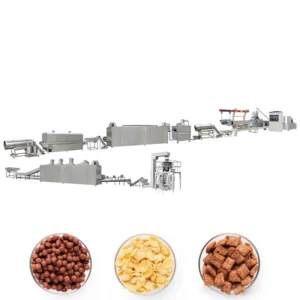
MT75 Corn Flakes Production Line, Twin-Screw, PLC & MCC Control — a complete turnkey layout from mixing to packing where extruder output, flaker throughput, dryer capacity and roaster cycle are balanced to eliminate bottlenecks.
- Die configuration and screw profile matched to your grain blend and target flake density
- Hydraulic double-roller flaker with infrared temperature control for uniform sheet thickness
Every station is specified under one supplier, so layout, throughput calculation and trial run on your raw material are documented before shipment.
Description
Integrated Throughput Matching — every station from extrusion to packing is sized against the same raw material and target output, so no single machine bottlenecks your corn flakes line.
Technical Specifications
| Parameter | Value |
|---|---|
| Model | MT75 |
| Product Type | Corn Flakes Production Line |
| Screw Type | Twin Screw |
| Installed Power | 210 kW |
| Power Consumption | 150 kW |
| Output Capacity | 300–500 kg/hr (basis not stated in source — confirm raw material type and moisture content) |
| Control System | PLC and MCC |
| Overall Dimensions | 45 × 1.5 × 3.5 m |
| Heating Source | Gas or Electric (dryer and roasting oven) |
| Line Stations | Mixing → Extruding → Flaking → Drying → Hot Air Roasting → Sugar Coating → Cooling → Packing |
| Raw Material Compatibility | Corn, rice, wheat, oat, barley powder |
| Final Product Types | Natural corn flakes, sugar-coated corn flakes, shaped breakfast cereals |
| Die Shapes Available | Ring, ball, tube, stick, star, wheel, flower, heart |
| Standards | CE, ISO |
Application Suitability
| Application | Material or Output |
|---|---|
| Natural corn flakes production | Corn grits and corn flour at controlled moisture |
| Sugar-coated cereal manufacturing | Corn, rice, or wheat base with syrup coating |
| Multi-grain breakfast cereals | Blended oat, barley, wheat, and rice powders |
| Shaped cereal formats | Oatmeal rings, wheat stars, fruit loops via interchangeable dies |
| Commercial-scale cereal plants | Continuous output across matched extruder, flaker, and roaster stations |
What "300 to 500 kg per Hour" Actually Depends On
Rated capacity holds only when grain blend, moisture content, and flake thickness stay within the extruder and flaker design envelope.
I once watched a cereal line in the Middle East stall at barely half its nameplate output. The buyer had specified corn, but the local grain supply ran high-moisture oat blends that gummed up the flaking rolls. Throughput numbers printed on a proposal mean nothing until someone runs your actual flour mix through the twin-screw extruder and measures what the flaking machine can handle downstream. A corn flakes production line turnkey package only delivers its promise when every station — mixer, extruder, flaker, dryer, roaster, coater — is balanced to the same material profile [NEED_CITE: grain moisture variability and extrusion throughput].
Station-by-Station Throughput Alignment
A corn flakes production line turnkey configuration starts with the batching and mixing stage, where flour blend uniformity determines everything that follows. The MT75 twin-screw extruder then gelatinises starch at controlled moisture and shear, producing a cooked dough sheet ready for flaking. If the flaking rolls cannot keep pace with extruder output, dough accumulates and cools unevenly, ruining sheet consistency.
Flaking Precision and Surface Quality
The flaking machine uses a hydraulic double-roller system with separate motor drives for each roll, allowing independent speed fine-tuning. An infrared sensor monitors roll temperature continuously, preventing the dough from sticking when processing high-viscosity grains like oat or barley. Uniform sheet thickness here directly controls how evenly flakes blister during roasting — an under-flaked sheet produces dense, hard pieces, while an over-compressed sheet tears before reaching the dryer [NEED_CITE: flaking roll pressure and cereal texture outcomes].
Reading the Spec Sheet Like a Process Engineer
Installed power of 210 kW and running consumption of 150 kW tell you the extruder has thermal and mechanical headroom for high-moisture grain blends without tripping breakers during start-up surges. The 45-metre line footprint means you need a clear longitudinal bay with overhead clearance of at least 3.5 metres, plus utility drops for gas or electric heating at the dryer and roasting oven. PLC and MCC control coordinates motor start-up sequence across all stations, so the flaker never runs dry and the coating drum never overfills — a detail that matters when operators are still learning the line. Die interchangeability across eight shapes lets you switch from traditional corn flakes to ring or star cereals without changing the extruder barrel, only the die plate and downstream conveyor guides.
The Cost of Mismatched Stations
Buyers who source extruders and dryers from separate vendors frequently discover that the dryer cannot evaporate moisture fast enough to match extruder output, creating a wet bottleneck that forces the entire line to slow down. The roasting oven then receives flakes at inconsistent moisture, producing some pieces that are scorched and others that remain chewy. Coating drums sized for a lower throughput leave sugar syrup pooling instead of distributing evenly. These problems do not show up in a factory acceptance test running clean corn grits — they surface weeks after commissioning when the buyer switches to their actual multi-grain recipe [NEED_CITE: equipment bottlenecking in multi-vendor food lines].
Why Source the Full Line from One Supplier
Every station on this line — from the twin-screw extruder through the vibrating roasting pan to the double-tumble coating drum — is throughput-matched during the layout phase, so capacity calculations reflect your specific grain blend and target flake density. The in-house testing workshop runs your raw material before shipment, generating a trial report that documents screw configuration, die selection, and actual output. Electrical schematics arrive with voltage and frequency already confirmed for your local grid, eliminating on-site rewiring delays. CE and ISO documentation ships with the line, supporting import compliance and insurance requirements in your market.
Documentation & Verification
- Line layout drawing with station spacing matched to your factory bay dimensions
- Capacity calculation sheet referencing your grain blend moisture and target flake weight
- Screw and die configuration record for each cereal shape in your product plan
- Trial run report on your raw material from the in-house testing workshop
- Electrical schematic with confirmed voltage, frequency, and control language
- Packing photographs showing crate blocking and moisture protection before dispatch
Installation, Commissioning & Support
- Foundation plan referencing the 45 × 1.5 × 3.5 m footprint and utility drop locations
- Dedicated circuit schedule for the 210 kW installed power and gas or electric heating connections
- Phased assembly sequence starting with extruder barrel alignment and flaker roll calibration
- First-run parameter logging across PLC for screw speed, barrel temperature, and roll pressure
- Operator training covering die changeover, flaker gap adjustment, and coating drum spray timing
- Wear parts list identifying screws, dies, and flaker roll surfaces with replacement intervals
What to Include in Your Inquiry
Tell us the grain types and blends you plan to run, the moisture range of your incoming flour, and the flake thickness your market expects. Share your available floor space, ceiling height, and local voltage and frequency so the layout and electrical package match your facility. If you need both natural and sugar-coated formats on the same line, specify your coating recipe and target sugar pick-up percentage so the coating drum and spray system are sized accordingly.
Frequently Asked Questions
Q: How is line throughput verified across all stations before shipment?
A: Each station — extruder, flaker, dryer, roaster, coater — is tested together in our workshop using your raw material blend. The trial run report documents actual output, screw speed, barrel temperatures, and flake thickness, so you see real numbers against your target before the line is crated for dispatch.
Q: Can the same extruder produce both natural and sugar-coated corn flakes?
A: Yes. The twin-screw extruder and die configuration remain unchanged between natural and coated formats. The difference lies downstream: sugar-coated product passes through the double-tumble coating drum with heated spray nozzles, while natural flakes skip directly from the roasting oven to cooling.
Q: What happens during the trial run on customer raw material?
A: We run your exact flour blend through the extruder and flaker, adjusting screw configuration, barrel temperature profile, and roll gap until flake density and surface quality meet your specification. Results are recorded in a trial report that travels with the shipment.
Q: How are electrical specifications confirmed for different export markets?
A: Before production begins, we confirm your local voltage, frequency, and preferred control language. The PLC program, MCC panel, and motor nameplates are all built to that specification, so commissioning does not stall on electrical mismatches.
Q: What does phased installation look like for a complete cereal line?
A: The 45-metre line is installed in stages: extruder and flaker first, then dryer and roasting oven, followed by coating and packing stations. Each stage is commissioned and verified before the next begins, keeping the schedule predictable and allowing operator training to run in parallel.
Related products
-
Best Price Corn Flakes Making Machine Breakfast Cereals Processing Line with Motor As Core Component
¥19,000.00 Select options This product has multiple variants. The options may be chosen on the product page -
Corn Flakes Breakfast Cereal Production Line Making Machine Automatic
¥8,000.00 Select options This product has multiple variants. The options may be chosen on the product page -
Corn Flakes Machine Breakfast Cereal Corn Flakes Production Line Cornflakes Making Machine
¥85,800.00 Select options This product has multiple variants. The options may be chosen on the product page -
Kelloggs Corn Flakes Breakfast Cereal Normal Making Machine Breakfast Cereal Extruder Production Line
¥30,000.00 Select options This product has multiple variants. The options may be chosen on the product page