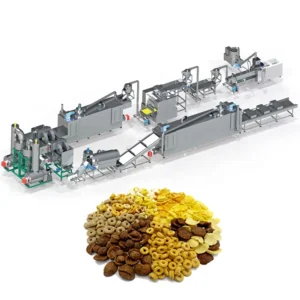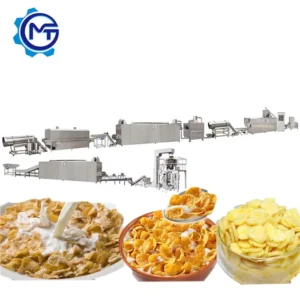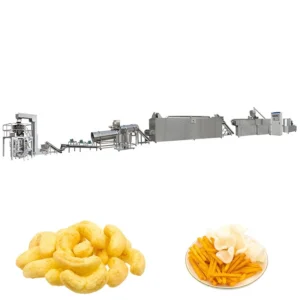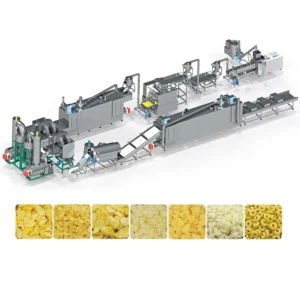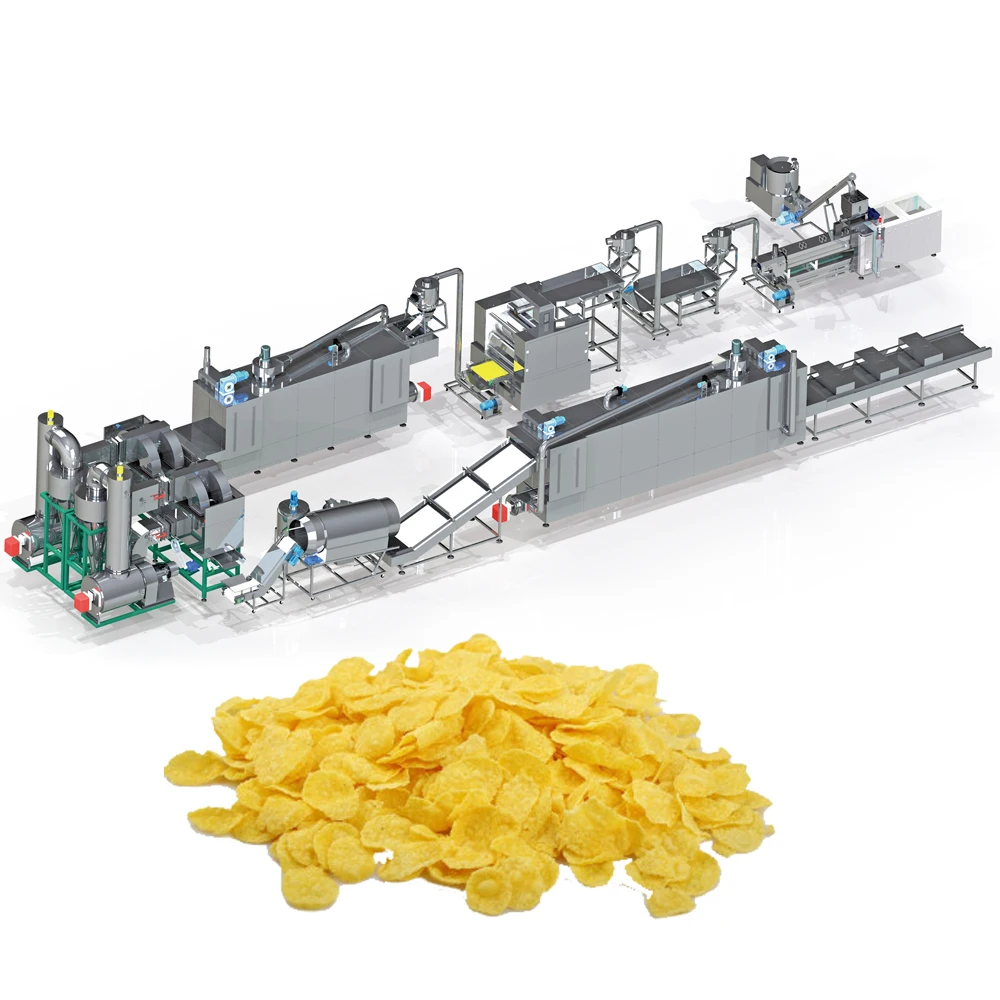


MT70 / MT85 / MT75 Corn Flakes Production Line, Twin Screw, PLC Control, Gas/Electric Heating — engineered as a complete turnkey system where throughput is matched from extrusion through flaking, drying, roasting and coating to your grain type and target flake density.
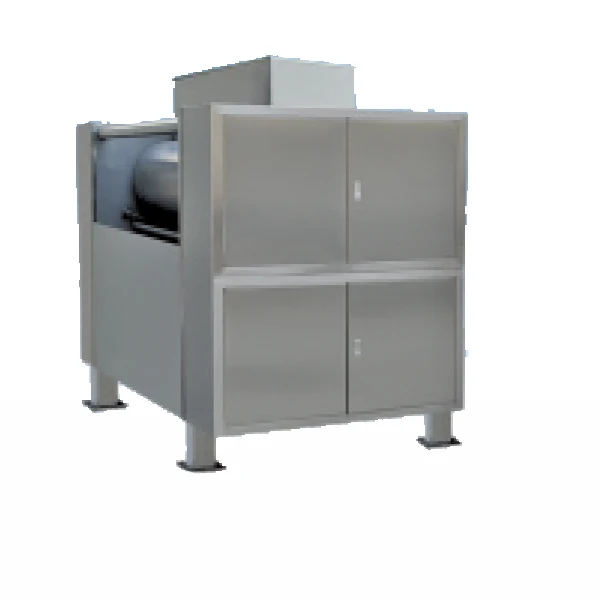
- Hydraulic flaking with double-motor roller drive and infrared temperature control
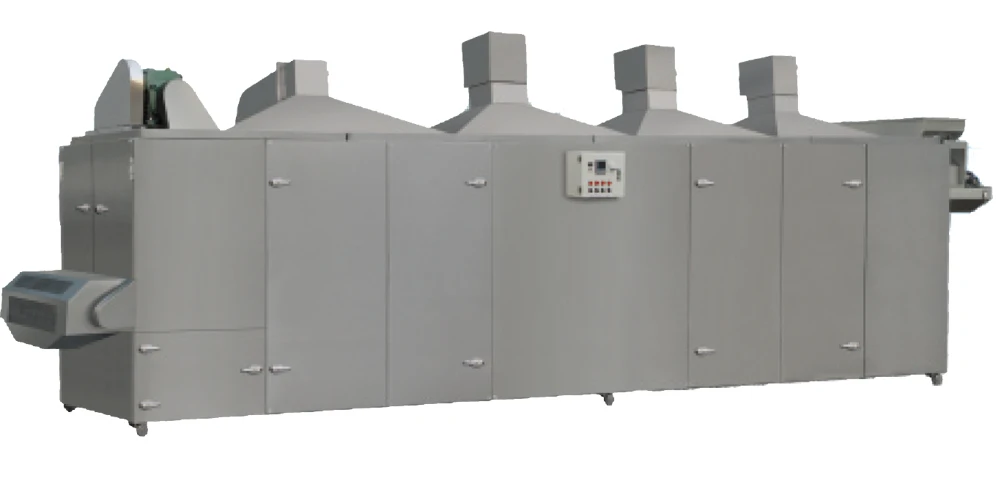
- Hot air roasting oven with dual circulating fans for uniform blistering
- Line layout and capacity calculation provided before order confirmation
- Trial run on your actual raw material in our testing workshop before shipment
- Screw configuration and die design specified to your cereal formulation
Description
Complete Line Engineering — throughput matched from batching to packing under one supplier, so the extruder, flaking rolls and roasting oven run as a synchronized system rather than a collection of mismatched stations.
Technical Specifications
| Parameter | Value |
|---|---|
| Product Type | Corn Flakes Production Line |
| Model | MT70 / MT85 / MT75 |
| Installed Power | 160 kW (MT70) / 190 kW (MT85) / 210 kW (MT75) |
| Power Consumption | 120 kW (MT70) / 140 kW (MT85) / 150 kW (MT75) |
| Output Capacity | 150–200 kg/h (MT70) / 300–400 kg/h (MT85) / 300–500 kg/h (MT75) (basis not stated in source — confirm raw material, moisture content and product format) |
| Extruder Type | Twin Screw |
| Control System | PLC |
| Flaking Machinery | Hydraulic double rollers, double motors for separate roller driving, infrared sensor temperature control |
| Dryer Heating Source | Gas / Electric |
| Roasting Oven | Hot air roasting with vibrating pan, high temperature spraying tubes, conciliation burner, dual circulating fans, cyclone dust removal |
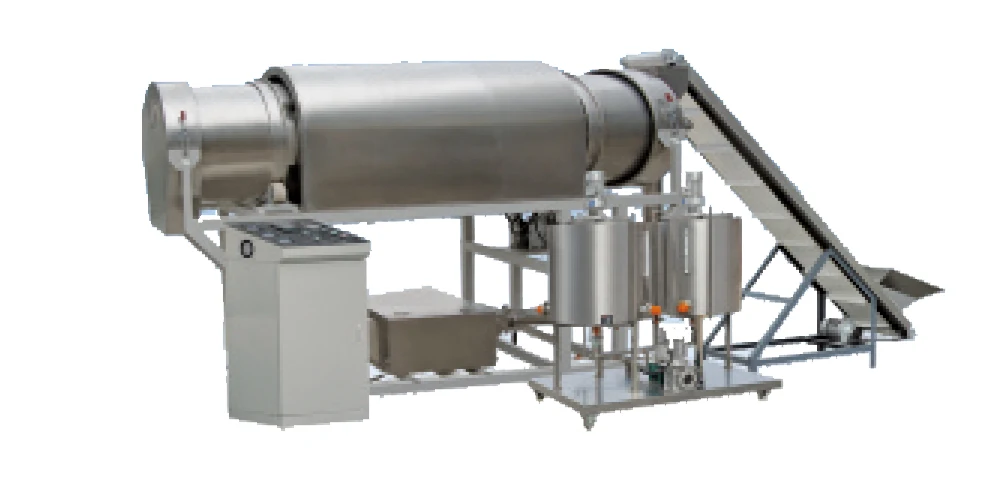
| Coating System | Double tumble for sugar melting, elevator, coating drum, spraying nozzle |
| Overall Dimensions | 41 × 1.5 × 2.2 m (MT70) / 43 × 1.5 × 3.2 m (MT85) / 45 × 1.5 × 3.5 m (MT75) |
| Standards | CE, ISO |
Application Suitability
| Application | Material or Output |
|---|---|
| Natural corn flakes for breakfast cereal packaging | Corn, rice, wheat, oat, barley powder |
| Sugar-coated corn flakes with glaze finish | Corn grits with sugar coating via double tumble drum |
| Shaped breakfast cereals | Ball, tube, stick, ring, fruit loop, star, wheel, flower, heart formats from the same extrusion platform |
| Fortified breakfast cereals for nutrition programmes | Grain blends with added vitamin and mineral premix |
Why Your Extruder Quote Should Never Arrive Without a Voltage Question
Confirming the buyer’s site voltage and frequency before the electrical cabinet is built prevents a three-week delay on the factory floor.
I once helped a US customer install a breakfast cereal line where the press and oven timing had been carefully balanced. The line sat idle for three weeks because the electrical cabinet was built for 380V/50Hz while the plant ran 480V/60Hz. The entire cabinet had to be reworked on site, and commissioning stalled while replacement components were shipped overseas. [NEED_CITE: voltage and frequency standards by export market] When sourcing a corn flakes production line turnkey, the single most overlooked specification is the one that determines whether the machine can be powered on at all.
Station Matching Across the Extrusion, Flaking and Roasting Sequence
A corn flakes production line turnkey is only as reliable as its slowest station. If the twin-screw extruder delivers cooked grain at a rate the flaking rolls cannot press, material backs up and moisture redistributes unevenly through the dough mass. If the hydraulic flaking unit presses faster than the hot air roasting oven can blister and crisp the flakes, product piles up on the conveyor and loses the surface texture the market expects. Every station on this line is sized against the others so that material flows continuously from mixing through extrusion, flaking, drying, roasting and optional sugar coating without intermediate buffering.
How Screw Configuration and Die Design Shape the Final Flake
The twin-screw extruder at the heart of this line is configured after the buyer’s grain type and target flake density are confirmed. Different cereal raw materials — corn, wheat, oat, barley — gelatinize at different temperatures and moisture levels, and the screw profile determines both the shear applied and the residence time inside the barrel. Die geometry then controls how the cooked dough is shaped before it reaches the flaking rolls. A die opening that is too large produces a thick pellet that flakes into a dense, hard chip rather than the light, blistered flake breakfast cereal consumers expect. [NEED_CITE: starch gelatinisation temperature ranges by grain type] The screw configuration and die design are documented for every project so that the same flake quality can be reproduced across production runs and replicated when the line is scaled.
Reading the Specification Sheet Beyond Installed Power
Installed power figures — 160 kW for the MT70, 190 kW for the MT85, 210 kW for the MT75 — tell only part of the story. Power consumption under load drops to 120 kW, 140 kW and 150 kW respectively, which is the figure that determines operating cost and the transformer capacity the buyer must provide. The hydraulic flaking unit uses double motors for separate roller driving, which allows each roller to be adjusted independently for consistent flake thickness across the full web width. Infrared sensor temperature control on the flaking machinery keeps the dough at the correct plasticity so that flakes emerge at uniform density rather than cracking at the edges. The roasting oven uses a conciliation burner with two separate circulating fans and a cyclone dust removal device, which together control both the blistering pattern on the flake surface and the particulate load in the exhaust air — a factor that matters for both product appearance and workshop air quality.
The Hidden Cost of Skipping the Trial Run
When an extruder arrives at the buyer’s facility without a prior trial run on the actual raw material, product development begins only after installation. Screw profiles that were selected from a generic build may produce the wrong flake density, forcing weeks of adjustment while raw material is consumed and production schedules slip. Flaking rolls set to a default gap may crack the pellet rather than pressing it into a smooth sheet, and the roasting oven temperature profile may need repeated revision to achieve the target blistering. All of this happens while the buyer’s customer base is waiting for first delivery. [NEED_CITE: twin-screw extrusion process development best practices] Running the buyer’s grain blend in the testing workshop before shipment compresses this learning curve into days rather than weeks.
Why Source This Line From a Single Supplier
The complete corn flakes production line turnkey is engineered under one supplier, which means the extruder output, flaking capacity, dryer throughput and roasting oven residence time are calculated as a single system rather than assembled from independent quotations. Screw configuration and die design are specified to the buyer’s cereal raw material and target flake density, not copied from a generic catalogue build. An in-house testing workshop allows trial runs on the buyer’s actual grain blend before the line ships, producing a documented report that becomes the baseline for commissioning. Pre-sales engineering covers line layout and capacity calculation, and the same team handles on-site installation, commissioning and operator training. PLC control with MCC integration gives the buyer’s maintenance staff a single point of access for every station on the line.
Documentation & Verification
- Line layout and capacity calculation showing throughput matching from extruder through roasting oven and coater
- Screw and die configuration record specified to the buyer’s cereal grain type and target flake density
- Trial run report on the buyer’s raw material conducted in the testing workshop before shipment
- Electrical schematic with voltage, frequency and control language confirmed for the destination market
- CE declaration of conformity and ISO certificate for the complete line
- Operation and maintenance manual with wear parts list for extruder screws, flaking rollers and roasting oven components
Installation, Commissioning & Support
- Line footprint of 41 to 45 metres in length requires a clear workshop span with level concrete flooring and anchor points for the flaking unit and roasting oven
- Power supply must match the confirmed voltage and frequency; the PLC cabinet requires a dedicated circuit separate from the roasting oven gas or electric heating supply
- Equipment ships in sectioned modules; the hydraulic flaking machinery and roasting oven are assembled and aligned on site by the installation team
- First commissioning run uses the trial run parameters as the baseline, with adjustments made to screw speed, flaking gap and oven temperature until target flake density is achieved
- Operator training covers PLC navigation, flaking roll gap adjustment and roasting oven burner calibration for different cereal formats
- Wear parts inventory includes extruder screws and barrel liners, flaking roller surfaces and roasting oven spraying tubes with recommended replacement intervals
What to Prepare Before Requesting a Quotation
To size a corn flakes production line turnkey accurately, share the cereal grain type or blend you plan to run, the target flake density and whether sugar coating is required. Confirm your workshop dimensions, ceiling height and the local voltage and frequency at the installation site. If you have existing upstream milling or downstream packing equipment, provide the model and throughput so the line can be matched at both ends. Let us know your preferred PLC control language and whether a trial run on your raw material is required before shipment.
Frequently Asked Questions
Q: How is line capacity verified on the buyer’s actual cereal raw material and moisture content?
A: The buyer sends a sample of the intended grain blend to the testing workshop, where a trial run is conducted on the twin-screw extruder with the proposed screw configuration and die design. The trial run report documents actual throughput, flake density and roasting oven settings at the buyer’s specified moisture content, forming the baseline for commissioning.
Q: How are screw configuration and die design selected for different grain types and flake densities?
A: Each grain — corn, wheat, oat, barley — gelatinizes at a different temperature and requires a specific shear profile inside the barrel. The screw elements are arranged to match the residence time and shear needed, and the die opening is sized to produce a pellet that flakes to the target thickness without cracking or producing excessive fines.
Q: What voltage, frequency and control language options are confirmed before production?
A: The electrical schematic is reviewed with the buyer before the cabinet is built. Voltage, frequency, phase and PLC interface language are all confirmed in writing. This step prevents the situation where a cabinet built for one market standard arrives at a site running a different supply, avoiding costly on-site rework.
Q: How is throughput matched between the extruder, flaking unit, roaster and coater to prevent bottlenecks?
A: Each station is sized during the line layout phase so that the mass flow from the extruder matches the pressing capacity of the hydraulic flaking rolls, the drying rate of the dryer, the residence time in the roasting oven and the drum capacity of the coating system. No single station is allowed to run faster or slower than the others.
Q: Is a trial run performed on the buyer’s raw material before shipment?
A: Yes, the in-house testing workshop runs the buyer’s grain blend through the extruder, flaking unit and a bench-scale roasting cycle. The resulting report covers screw speed, barrel temperature profile, flake gap setting and roasting temperature, giving the buyer documented process parameters before the line arrives on site.
Related products
-
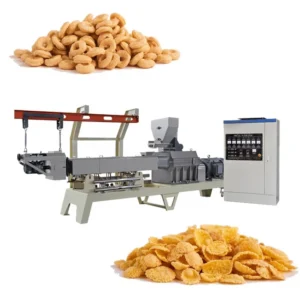
Corn Flakes Machine Breakfast Cereal Corn Flakes Production Line Cornflakes Making Machine
¥85,800.00 Select options This product has multiple variants. The options may be chosen on the product page -
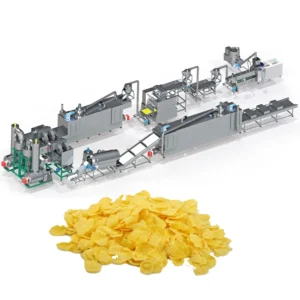
New High Efficiency Electric Corn Flakes Production & Manufacturing Machine
¥7,500.00 Select options This product has multiple variants. The options may be chosen on the product page -
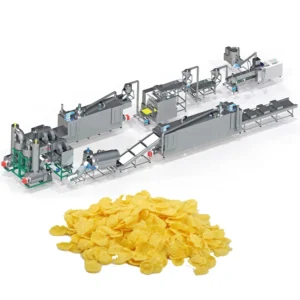
Complete Corn Flakes Production Line Breakfast Cereal Processing Machine Core Motor Component Cornflakes Processing Equipment
¥19,000.00 Select options This product has multiple variants. The options may be chosen on the product page -
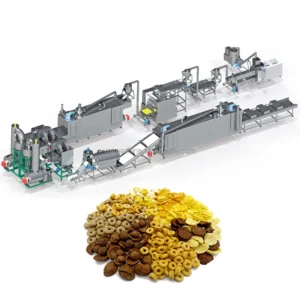
Stainless Steel Honey Small Corn Flake Breakfast Cereal Flakes Maker Making Machine Production Plant
¥30,000.00 Add to cart