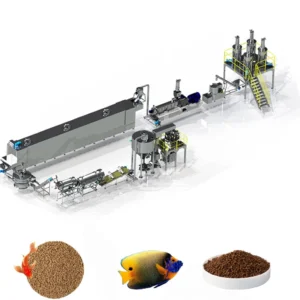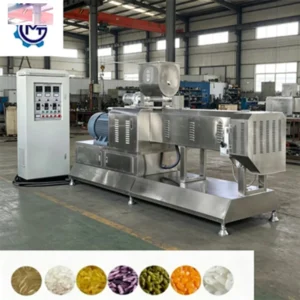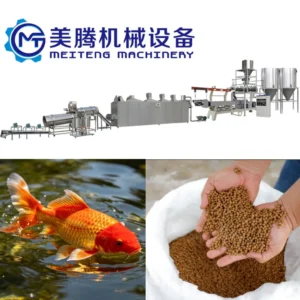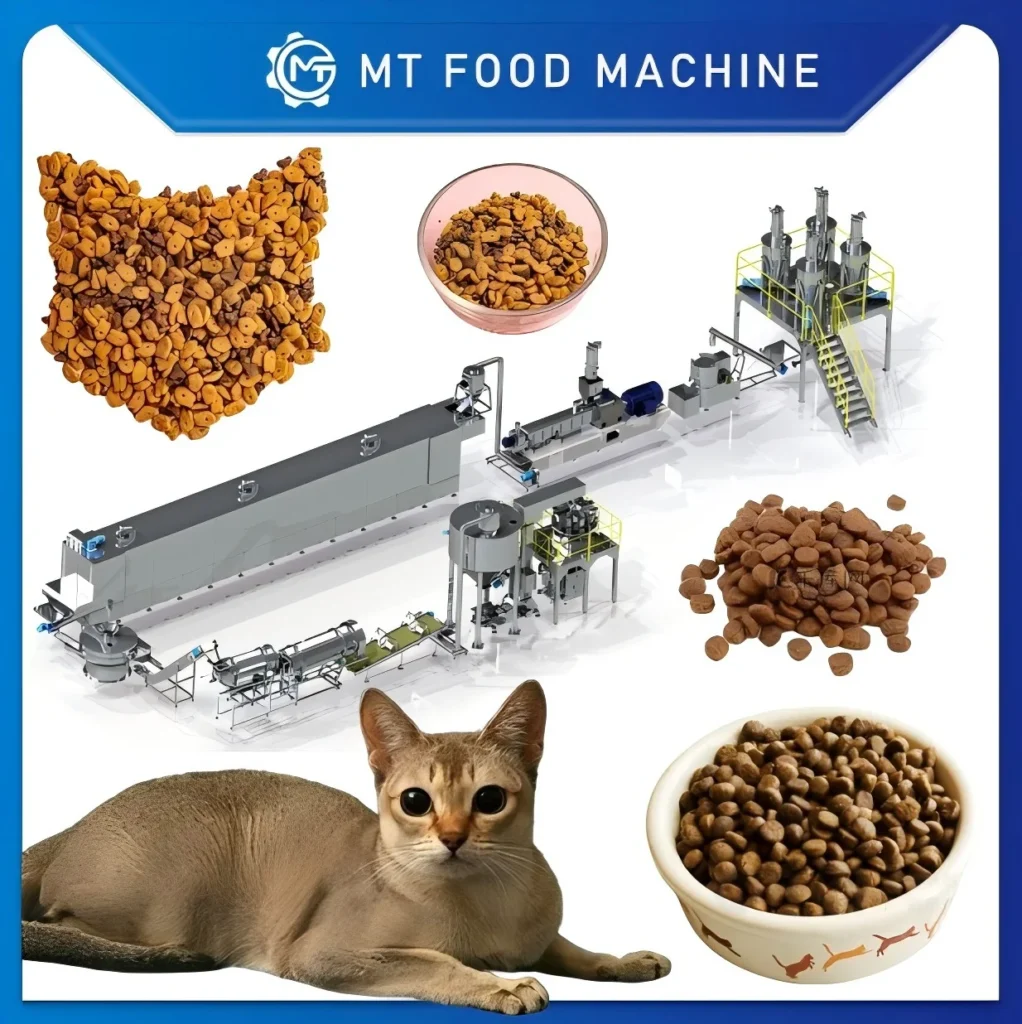


MT-70 Multi-Species Pet Food Processing Line, PLC Control, Twin-Screw Extrusion — configured for dry dog, cat and fish feed production with synchronized station throughput from batching through packing.
- Line layout, utility plan and commissioning schedule provided as one integrated turnkey project
- Screw configuration and die design matched to your raw material formulation and target kibble density
In-house trial runs on your actual formulation validate capacity before shipment, so the line performs as specified from day one.
Description
Screw Configuration Matched to Formulation — the MT-70 twin-screw setup is validated on your actual raw material in our testing workshop before any line component ships.
Technical Specifications
| Parameter | Value |
|---|---|
| Model | MT-70 |
| Product Type | Multi-Species Pet Food Processing Line |
| Output Capacity | 200-250 kg/h (basis not stated in source — confirm raw material formulation / moisture content / kibble size) |
| Control System | PLC Controlled |
| Screw Type | Twin-screw |
| Line Stations | Batching, extrusion, drying, coating, cooling, packing |
| Applications Covered | Dog food, cat food, fish feed |
| Process Documentation | Fish feed process drawing included |
| Warranty | 1-year |
| Standards | CE, ISO |
Application Suitability
| Application | Material or Output |
|---|---|
| Dry dog kibble production | Corn, poultry meal, bone meal, vitamin premix blends |
| Dry cat kibble production | Fish meal, meat meal, starch binders, taurine premix |
| Floating fish feed pellets | Soybean meal, wheat flour, fish meal, mineral additives |
| Sinking aquaculture feed | High-starch formulations with controlled gelatinisation |
Why Nominal Line Capacity Rarely Survives First Contact with Your Raw Material
A pet food production line turnkey quoted at 250 kg/h on corn grits will behave differently when your formulation shifts to high-protein meat meal or sorghum-based blends.
I learned this the hard way on a project in the Middle East. The client ran trials successfully on a corn-dominant recipe, so we shipped the line configured for that profile. When they switched to a locally sourced sorghum formulation on their first production week, expansion dropped sharply and actual output fell well below the rated band. The extruder was not at fault — the screw profile, moisture conditioning window, and die land length simply did not match the starch behaviour of that grain. Since then, every pet food production line turnkey we configure goes through a trial run on the buyer’s exact formulation before dispatch. The extruder, dryer residence time, and coating drum cycle are all verified together, not spec’d in isolation [NEED_CITE: raw material variability in extrusion processing].
Throughput Synchronisation Across Every Station
A pet food production line turnkey is only as fast as its slowest station. When the extruder pushes product at a rate the dryer cannot absorb, moisture stays trapped in the kibble core and shelf life collapses. The MT-70 line is laid out so that each downstream station — dryer belt length, coating drum volume, cooler conveyor speed — is calculated against the extruder’s verified output on your specific recipe, not a generic reference material.
Utility Planning Before Civil Work Begins
The electrical load, steam requirement, compressed air volume, and water connection points for a complete line must be mapped before the buyer pours concrete. We provide a full utility plan showing connection positions, cable routing, and load per circuit so your facility contractor can prepare the building to receive the line without rework after delivery.
Spec Reading for Extrusion Line Buyers
The twin-screw configuration on the MT-70 matters because it handles high-fat and high-protein formulations that single-screw designs struggle to convey uniformly. PLC control allows operators to store recipe parameters — barrel zone temperatures, screw speed, feeder rate — so that batch-to-batch consistency is maintained even across shift changes. The line stations from batching through packing mean that no intermediate manual transfer is required, which reduces contamination risk and product breakage. When evaluating a pet food production line turnkey package, the screw configuration record and die specification are more telling than the motor nameplate alone, because they determine whether your kibble will hit the target density the market expects [NEED_CITE: twin-screw extrusion die design principles].
The Hidden Cost of Mismatched Station Capacity
Buyers often discover the bottleneck only after commissioning. The extruder reaches its rated output, but the dryer cannot reduce moisture to the required level within the available belt length, forcing a line speed reduction. The coating drum then receives product at a lower rate than designed, leading to uneven flavour distribution. These mismatches do not appear on individual machine spec sheets — they only surface when the line runs as a connected system, which is why station-by-station throughput confirmation should be part of the purchase documentation, not an afterthought [NEED_CITE: extrusion line bottleneck analysis].
Why Source This Line from One Supplier
The MT-70 line is built, tested, and commissioned under a single chain of responsibility. Every station from the batching system to the packing conveyor is specified in-house, so throughput matching is calculated before fabrication rather than negotiated between separate vendors after delivery. The testing workshop runs your raw material through the extruder before shipment, producing a trial run report that travels with the machine. Screw and die configuration is documented per your formulation, and the electrical schematic is confirmed against your site voltage before production begins. Installation follows a phased schedule with operator training included, and wear parts such as screws, die inserts, and dryer belt sections are listed and available from the same source that built the line.
Documentation & Verification
- Line layout drawing showing station positions and floor space allocation for the MT-70 configuration
- Capacity calculation sheet with throughput per station confirmed against your formulation
- Screw and die configuration record specific to your raw material and target kibble density
- Electrical schematic with voltage, frequency, and control language confirmed for your market
- Trial run report produced on your raw material in our testing workshop before dispatch
- CE declaration of conformity and ISO certificate included with shipment documentation
Installation, Commissioning & Support
- Foundation plan showing load points and anchor positions for the MT-70 extruder and dryer assembly
- Dedicated electrical circuit requirements based on confirmed PLC load and motor ratings
- Phased assembly schedule covering station placement, belt alignment, and utility connection sequence
- First-run parameter setting on your formulation with barrel temperature and screw speed optimisation
- Operator training covering PLC recipe storage, daily cleaning, and screw wear inspection
- Wear parts list specifying screw elements, die plates, and dryer belt sections for reorder
What We Need to Configure Your Line
Send us your target kibble size range, the primary protein and starch sources in your formulation, and the moisture content you typically work with. We also need your site voltage and frequency, available floor space with ceiling height, and whether you plan to run both pet food and aquatic feed on the same line or dedicate it to one category.
Frequently Asked Questions
Q: How is line throughput verified against my actual raw material formulation?
A: Before shipment, we run your exact formulation through the MT-70 extruder in our testing workshop. The trial covers extrusion stability, kibble expansion, and density. We then confirm that the dryer, coater, and cooler can handle the verified output rate. The results are documented in a trial run report that ships with the line.
Q: What utility connections and floor space does the complete MT-70 line require?
A: The full line needs electrical supply at your confirmed voltage and frequency, steam or thermal oil for the dryer, compressed air for pneumatic gates, and water for barrel cooling. We provide a utility plan with connection points and load per circuit, along with a layout drawing showing the floor space and ceiling height required for the complete station sequence.
Q: How are upstream and downstream stations matched to extruder output?
A: Each station is sized against the extruder’s verified throughput on your formulation, not a generic benchmark. The dryer belt length is calculated for the required moisture reduction at that output rate. The coating drum volume and cooler conveyor speed are then matched accordingly, so no single station becomes a bottleneck during continuous production.
Q: What does the phased installation and commissioning schedule look like?
A: Installation follows a sequence: station positioning, mechanical assembly, utility connection, electrical termination, then dry run. Commissioning begins with the extruder running on your raw material, followed by integrated line runs through drying, coating, and packing. The schedule accounts for civil work readiness and utility availability at your site.
Q: What operator training and spare parts support is included after handover?
A: Training covers PLC operation, recipe parameter storage, screw speed and temperature adjustment, daily cleaning procedures, and screw wear inspection. A wear parts list is provided with the line, identifying screw elements, die inserts, and dryer belt sections. Replacement parts are available from the same facility that built and tested the MT-70 line.
Related products
-
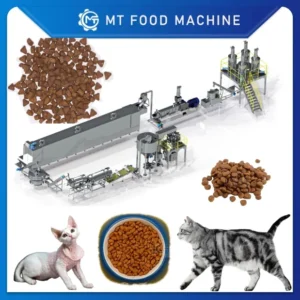
MT100 Brand 1.5-2.0t/h PLC Controlled Multi-Species Cat Food Processing Line
¥45,000.00 Select options This product has multiple variants. The options may be chosen on the product page -
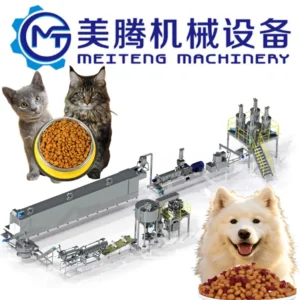
MT High Capacity Pet Food Extrusion Production Line for Dogs Cats Birds Fish Cattle and More (150kg/h-3T/h)
¥35,000.00 Select options This product has multiple variants. The options may be chosen on the product page -
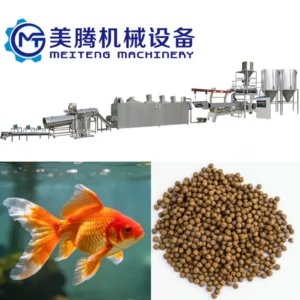
300-600kg/h Capacity Multi-Species Fish Feed Processing Line to Produce Fish Food
¥45,000.00 Select options This product has multiple variants. The options may be chosen on the product page -
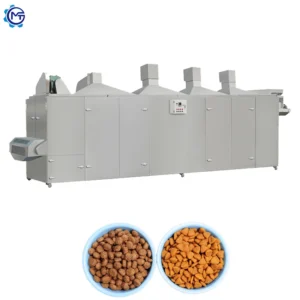
Premium Pet Food Processing Equipment Dog Cat Feed Making Machine
¥9,500.00 Select options This product has multiple variants. The options may be chosen on the product page