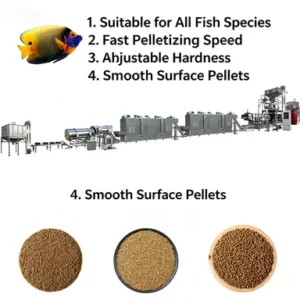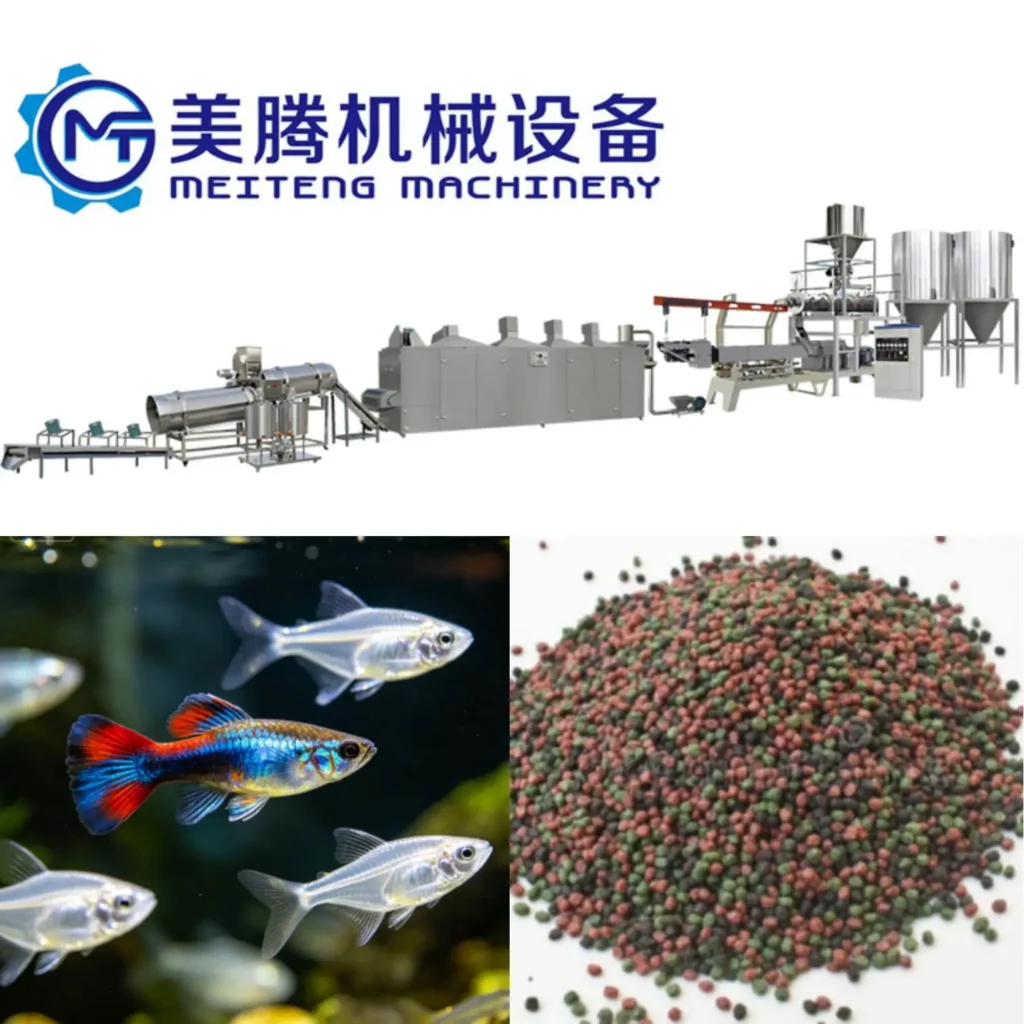


Fish Feed Processing Line, Twin-Screw Extruder, 304 Stainless Steel — engineered for floating and sinking aquaculture pellet production across trout, salmon, and catfish.
- Screw configuration and die design specified to your raw material formulation and target pellet density, controlling expansion and water stability through precise barrel temperature and moisture profiles.
- Complete line integration from batching through extrusion, drying, coating, and packing under single-supplier accountability, with throughput matched at every station to prevent bottlenecks.
Every station sized to the same output target, backed by in-house trial runs on your raw material before shipment and full line layout documentation for installation planning.
Description
Throughput matching at every station — each segment of the fish feed processing line is sized so drying and coating never limit extruder output.
Technical Specifications
| Parameter | Value |
|---|---|
| Product Type | Fish Feed Processing Line |
| Output Capacity | 200-300 kg/h (basis not stated in source — confirm raw material / moisture / pellet size) |
| Extruder Type | Twin-screw |
| Construction Material | 304 stainless steel (food-contact parts) |
| Target Species | Trout, salmon, catfish |
| Control System | Available with PLC or MCC control |
| Voltage & Frequency | Configurable to target market (basis to be confirmed) |
| Screw Configuration | Matched to raw material and target pellet density |
| Certifications | CE, ISO (documentation available) |
Application Suitability
| Application | Material or Output |
|---|---|
| Floating aquaculture feed | Trout and salmon pellets requiring high expansion and low bulk density |
| Sinking aquaculture feed | Catfish and bottom-feeder pellets requiring controlled density and water stability |
| Multi-species production runs | Variable raw material blends including fish meal, soy, and local protein sources |
Why Extruder Capacity Alone Misleads Feed Producers
A fish feed processing line turnkey project fails when the extruder is rated for 300 kg/h but the dryer can only handle 200 kg/h of wet pellet load.
I have watched producers in the Middle East lose weeks because the line was assembled from mismatched stations. The extruder pushes maximum output, pellets pile up before the dryer, moisture stays too high, and sinking rate tests fail batch after batch. Buyers focus on the extruder nameplate and assume downstream equipment keeps pace. It rarely does unless every station was calculated against the same throughput target and raw material profile [NEED_CITE: throughput matching principles in multi-station feed lines].
Matching Dryer Residence Time to Pellet Moisture Load
When extruded pellets leave the die, moisture content is often high enough that insufficient drying leads to mold within days of bagging. A fish feed processing line turnkey configuration must calculate dryer belt length and air temperature against the actual moisture differential, not a generic figure. Trout feed pellets are typically smaller and denser than tilapia feed, which changes the drying curve entirely. If the dryer was selected based on a different pellet geometry, the line will either run below capacity or ship product that spoils in storage.
Screw Configuration Determines Sinking Rate Before the Line Even Starts
Floating versus sinking behavior is decided inside the barrel, not at the dryer or cooler. The screw profile, compression ratio, and die land length control how much starch gelatinizes and how much air remains trapped in the pellet matrix. A configuration copied from a standard fish meal formula will not produce correct sinking feed if the buyer switches to local cottonseed meal or sunflower cake. That mismatch is something I have seen halt commissioning on more than one site, forcing a complete screw rebuild while the line sits idle.
Die Geometry, Barrel Zones, and What They Mean for Pellet Integrity
The die hole diameter and land length directly govern pellet size and surface finish, which in turn affect feed conversion ratios in the water. Barrel temperature zones — typically three to five independently heated sections — control where gelatinization peaks along the screw. If the rear zones run too cool on a high-soy formulation, the material never reaches the shear threshold needed for proper expansion. Twin-screw geometry allows operators to adjust screw element sequencing without replacing hardware, giving the line flexibility across species targets. Food-grade 304 stainless steel on contact surfaces prevents corrosion from the salts and oils common in aquatic feed formulations, extending the interval between barrel relines [NEED_CITE: stainless steel corrosion resistance in high-salt feed environments].
The Cost of Skipping a Raw Material Trial Run
Producers who accept factory tests run on standard reference materials inherit every assumption baked into that test. When the line arrives and local protein sources behave differently under shear and heat, the screw combination may produce pellets that crumble in water or float when they should sink. I spent two weeks on-site in one facility reconfiguring screws after the client’s local rapeseed meal behaved nothing like the fish meal used during the factory test. A pre-shipment trial on the buyer’s actual formulation removes that risk entirely [NEED_CITE: variability of regional protein meals in extrusion processing].
Why Procurement Consolidation Matters for Line Accountability
Sourcing the extruder from one vendor, the dryer from another, and the coating drum from a third means no single party owns the throughput guarantee. When a bottleneck appears, each supplier points to the next station. Under a single-supplier fish feed processing line turnkey arrangement, the layout and capacity calculation are produced as one document, and every station is contractually tied to the same output target. The screw configuration record, the trial run report, and the electrical schematic all reference the same raw material profile and target pellet specification. PLC and MCC control options are confirmed against the buyer’s site voltage and frequency before production begins, so the control panels do not arrive with the wrong language or incompatible power supply. Documentation includes line layout drawings, machine specification sheets, and a factory test record that traces back to the buyer’s formulation, not a generic benchmark.
Documentation & Verification
- Line layout showing matched throughput calculation from mixer through packing station
- Screw and die configuration record tied to buyer’s raw material and target species
- Factory trial run report produced on customer-supplied formulation before dispatch
- Electrical schematic confirming voltage, frequency, and control language for destination market
- CE declaration of conformity and ISO certificate included with shipping documentation
- Wear parts list with screw element and die specifications for reorder planning
Installation, Commissioning & Support
- Foundation plan provided based on full line footprint including dryer and cooler stations
- Dedicated power circuit requirements documented for twin-screw extruder motor and heating zones
- Equipment ships in modular sections for container loading and on-site reassembly
- Commissioning includes screw profile adjustment against actual production raw material
- Operator training covers PLC or MCC interface navigation in confirmed local language
- Spare screw elements and die plates shipped with initial order to cover first replacement cycle
What to Prepare Before Requesting a Quote
To size a fish feed processing line turnkey project correctly, we need your target species list, the raw material formulation you plan to run (including any local protein substitutes), and the pellet diameter range for each species. Share your site voltage, frequency, and preferred control language so the electrical package is built correctly from the start. If you have existing upstream milling or downstream packing equipment, provide the interface specifications so the line integrates without rework.
Frequently Asked Questions
Q: How is the 200-300 kg/h capacity verified, and on which raw material and pellet size?
A: That capacity range was documented without a specific raw material or pellet diameter stated in the source. Before quotation, we run a trial on your actual formulation in the testing workshop and record the achievable throughput at your target pellet size. The confirmed output is written into the specification sheet so there is no ambiguity at commissioning.
Q: How do you match dryer and coating capacity to the extruder so the line does not bottleneck?
A: Every station is calculated against the same throughput target and moisture load. The dryer belt length, air volume, and coating drum diameter are all derived from the extruder output on your specific raw material. The line layout document shows the matched capacity at each station, so no single unit constrains the others.
Q: Can the line produce both floating and sinking feed for different species on the same extruder?
A: Yes, by changing the screw element sequence and die configuration between runs. Floating feed requires higher expansion with a specific compression profile, while sinking feed demands denser pellet structure. The twin-screw design allows these adjustments without replacing the barrel, giving multi-species flexibility on a single extrusion platform.
Q: Is a trial run on our raw material performed before dispatch, and what does the report include?
A: Yes, the testing workshop runs your formulation before the line ships. The report documents screw configuration, barrel temperature profile, pellet density, water stability, and achieved throughput. You review these results and approve the configuration before production proceeds, so commissioning on-site starts from a known baseline rather than untested assumptions.
Related products
-
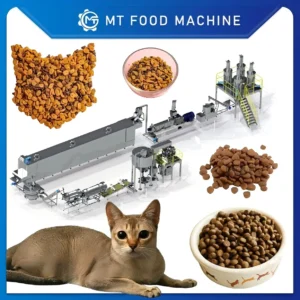
100-200kg/h Capacity PLC Controlled Multi-Species Cat Food Processing Line
¥34,000.00 Select options This product has multiple variants. The options may be chosen on the product page -
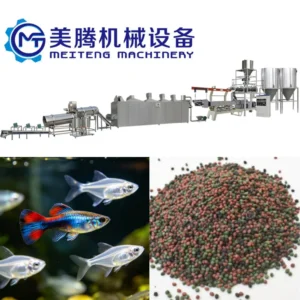
200-300kg/h Capacity Multi-Species Fish Feed Processing Line to Produce Fish Food
¥34,000.00 Select options This product has multiple variants. The options may be chosen on the product page -
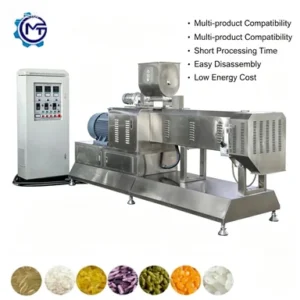
Durable Stainless Steel Twin Screw Extruder Floating Sinking Aquatic Fish Feed Processing Production Equipment
¥65.00 Select options This product has multiple variants. The options may be chosen on the product page -
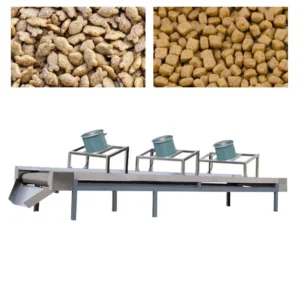
Full Automatic Pet Feed Production Line Large Twin Screw Grain Extrusion Machine
¥9,500.00 Select options This product has multiple variants. The options may be chosen on the product page