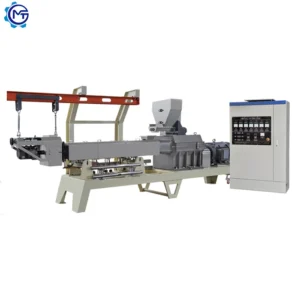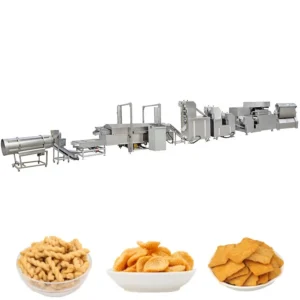
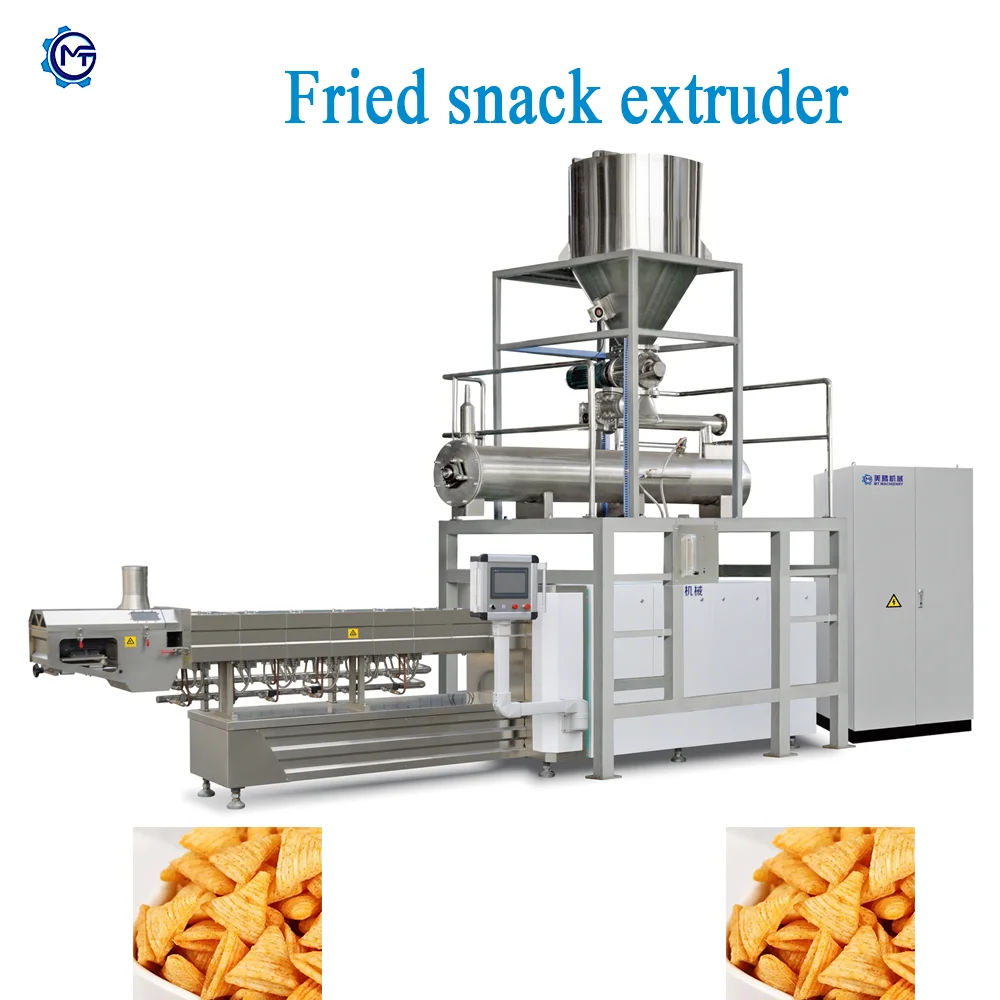
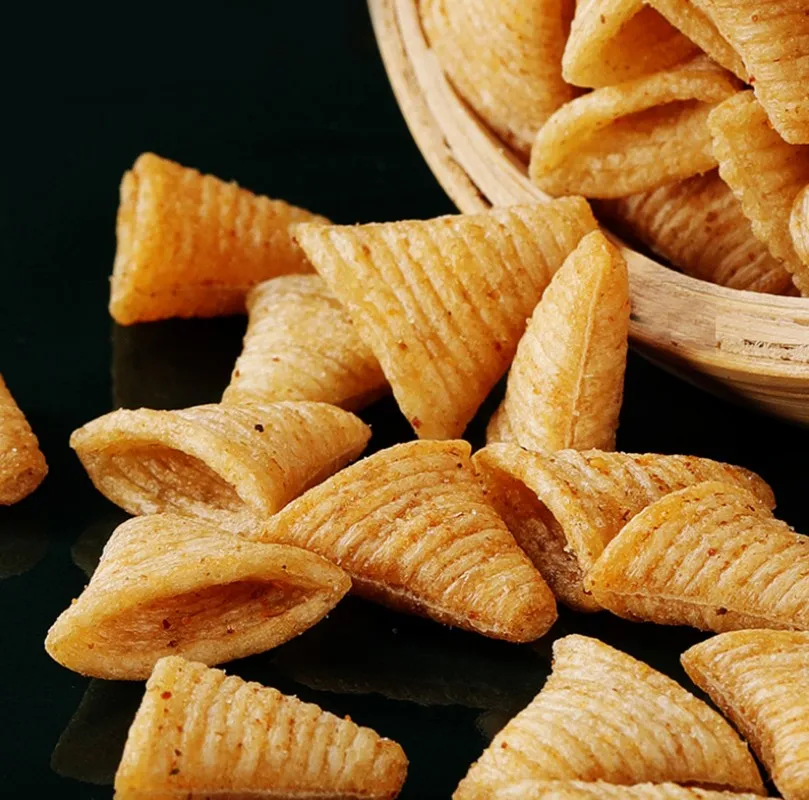
MT65 / MT70 / MT70c / MT75 Twin Screw Extruder Puffed Snack Production Line, Siemens Motor, 38CrMoAl Screws, Double-Drum Flavoring — configured as a complete turnkey project from extrusion through frying to flavoring, with every station balanced to your target throughput.
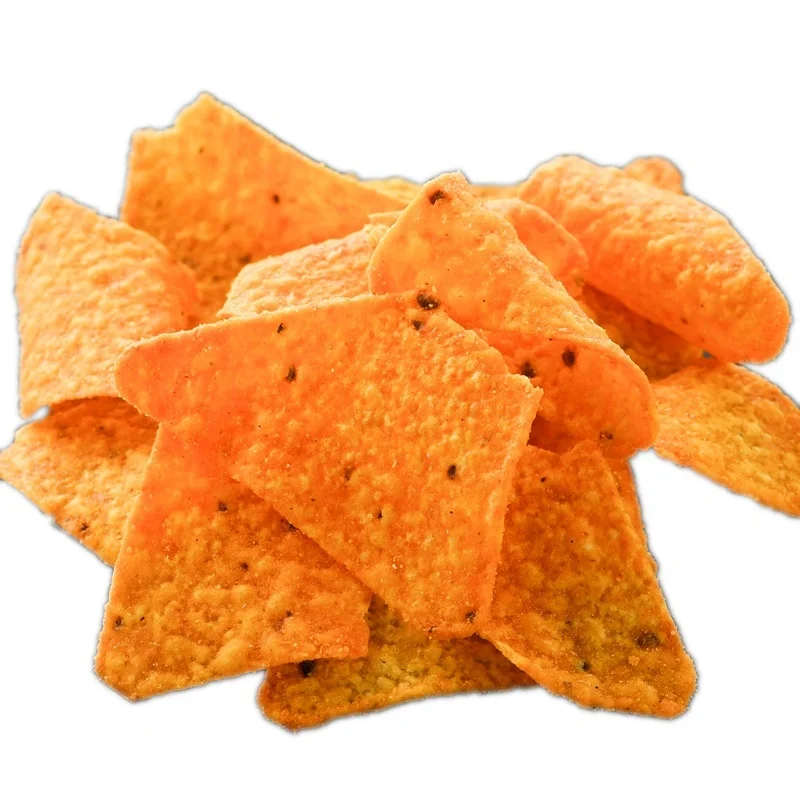
Screw and die setup is specified to your corn flour formulation, controlling moisture, shear and expansion for consistent Nacho, Tortilla or Doritos-style chip texture.
Line capacity is verified on your actual raw material in our in-house testing workshop before shipment, with full layout and electrical documentation confirmed for your site.
Description
Throughput matching across every station — The MT70c extrusion, frying, and flavoring capacities are calculated together so no single machine bottlenecks your Nacho chip output.
Technical Specifications
| Parameter | Value |
|---|---|
| Model | MT65 / MT70 / MT70c / MT75 |
| Product Type | Twin Screw Extruder Puffed Snack Production Line |
| Extrusion Architecture | Twin screw |
| Main Motor Brand | Siemens |
| Main Power | MT65: 22 kW; MT70: 30 kW; MT70c: 45 kW; MT75: 55 kW |
| Real Power Consumption | MT65: 22 kW; MT70: 30 kW; MT70c: 55 kW; MT75: 55 kW |
| Output Capacity | MT65: 100–150 kg/h (basis to be confirmed); MT70: 150–200 kg/h (basis to be confirmed); MT70c: 200–250 kg/h (basis to be confirmed); MT75: 200–300 kg/h (basis to be confirmed) |
| Overall Dimensions (L×W×H) | MT65: 22000×1200×2200 mm; MT70: 25000×1500×2200 mm; MT70c: 30000×3500×4300 mm; MT75: 33000×3500×4300 mm |
| Screw Material | 38CrMoAl alloy, nitriding process |
| Feeding System | Food-grade stainless steel twin screw feeder with speed-adjusted converter |
| Cutting System | Rotary cutting knife fixed on die head seat, V-belt drive |
| Gearbox | Automatic lubrication function |
| Cooling | Increased radiator on driving part for forced cooling |
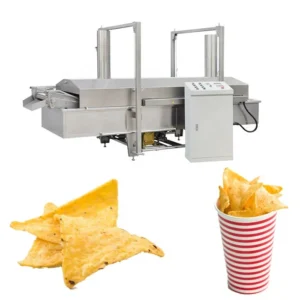
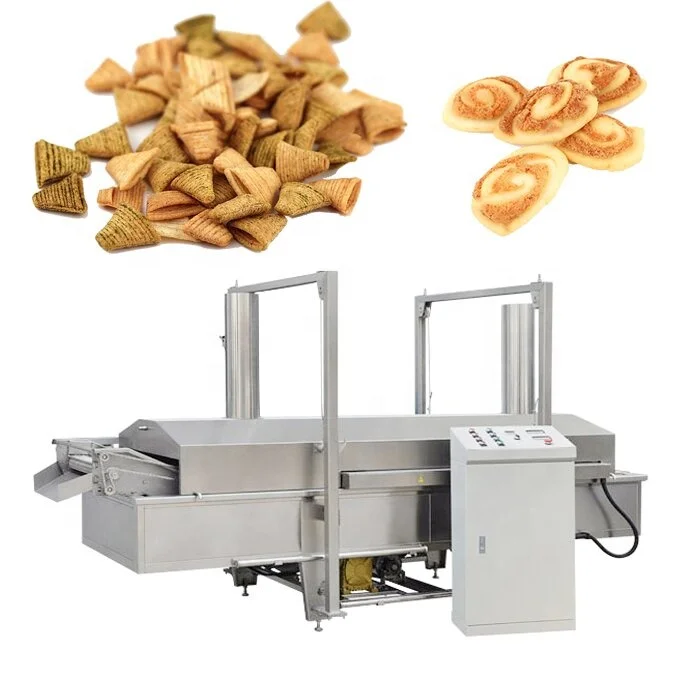
| Fryer Energy Options | Electric / diesel / gas |
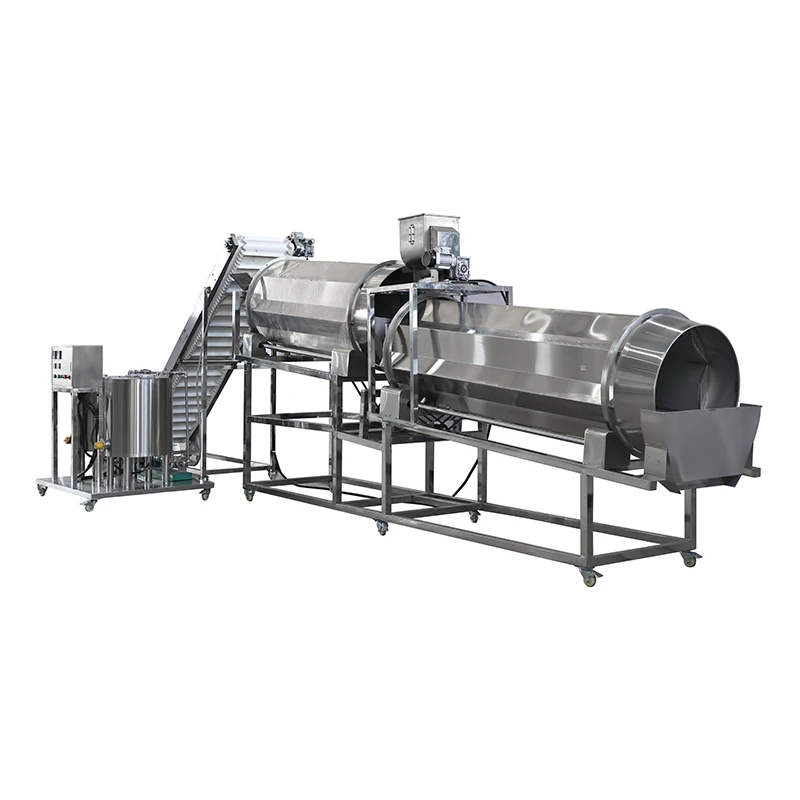
| Flavoring System | Double drums with powder hopper, conveyor, and sprayer; automatic flavoring |
| Control System | Speed-adjusted converter on feeding, extrusion, and cutting systems |
| Assembly State | Complete production line (extruder, fryer, flavoring system) |
| Warranty | 1 year from equipment arrival at customer site |
Application Suitability
| Application | Material or Output |
|---|---|
| Nacho and Tortilla Chip Production | Corn flour and wheat flour blends |
| Doritos-style Savory Snack Extrusion | Corn powder with seasoning adhesion requirements |
| Puffed Corn Snack Manufacturing | Refined corn grits and starch bases |
| 2D and 3D Pellet Snack Shaping | Multi-grain flour blends for fry-expanded formats |
Why "Nominal Output" Fails When Your Corn Blend Changes
A puffed snack production line turnkey rated at 250 kg/h on standard corn flour will stall at 160 kg/h if your formulation includes 15% soy or bean powder.
I learned this the hard way in the Pearl River Delta export sector. We shipped a line to a Middle Eastern client based on a standard corn flour test run, but their actual recipe contained bean powder to boost protein. The screw configuration was completely wrong for that starch-to-protein ratio, the expansion dropped severely on site, and the entire line was held up at commissioning. Now, I never finalize a proposal without locking down the exact raw material formulation and running a trial in our workshop first [NEED_CITE: starch gelatinisation behavior on non-standard flour blends].
From Batching to Packing as One Engineered Flow
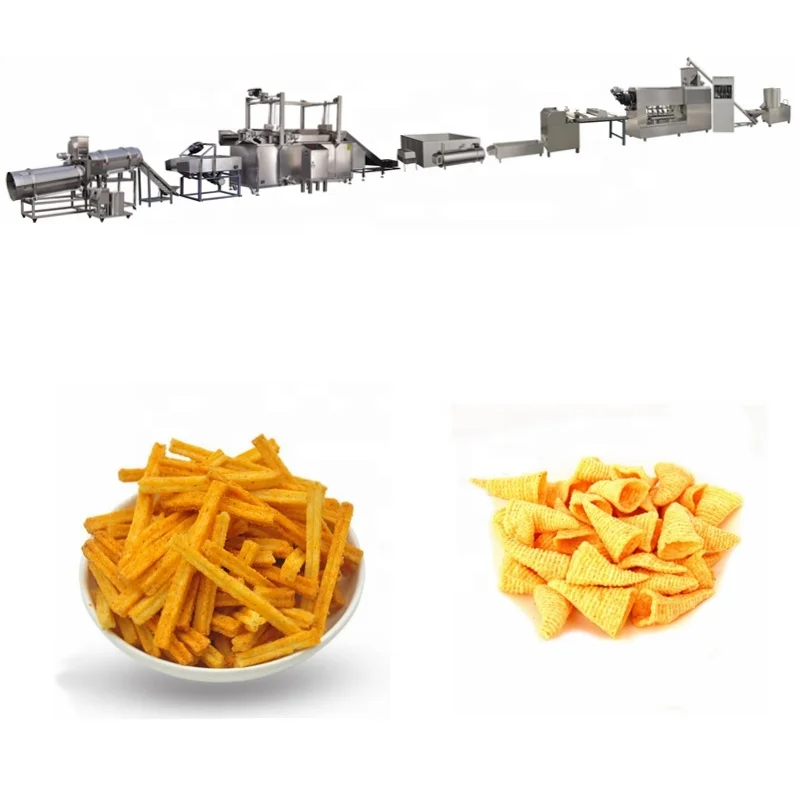
This puffed snack production line turnkey is not an extruder with a separate fryer and flavoring drum added later. The throughput at every station — mixing, extrusion, shaping, frying, double-drum seasoning, and cooling — is calculated against the same target output from the first layout draft. The MT70c, for instance, pairs its 45 kW main motor with a continuous fryer and dual flavoring drums sized so that material flow never queues or starves at any handoff point.
Matching Screw Geometry to Chip Density Targets
Twin screw extrusion relies on shear, moisture, and barrel temperature profiles to control starch gelatinisation and final product density. A Nacho chip requires a different expansion index than a thin Tortilla chip. We configure the screw elements — conveying, kneading, and reverse-shear sections — along with the die orifice geometry specifically for your target texture. This is not a generic screw build copied from a catalog; it is a configuration record documented before the machine is assembled [NEED_CITE: twin screw element configuration for varying expansion indices].
Reading the Specs That Actually Dictate Line Behavior
The screw material, 38CrMoAl alloy with a nitriding process, determines wear resistance and self-cleaning capability. In snack production where you may switch between corn-based and wheat-based recipes, this reduces changeover downtime significantly because residue does not bake onto the screw flights. The Siemens main motor delivers consistent torque under varying load conditions, which matters when raw material moisture fluctuates during a shift. The automatic gearbox lubrication prevents bearing failures that typically cause unplanned stops on extruders running 24-hour cycles. The forced cooling radiator on the driving section keeps gearbox oil temperature stable, which directly affects screw speed consistency and therefore product uniformity across a production run.
What Happens When Stations Are Mismatched
An extruder running at full output feeding into an undersized fryer creates a backlog of cut but unfried product. That wet, cut dough oxidizes, loses moisture unevenly, and produces chips with inconsistent color and texture. On the flavoring end, a single drum cannot achieve even seasoning coverage at high throughput — you either over-apply powder and waste cost, or under-apply and ship product that fails market taste panels. These are not theoretical failures; they are the most common reasons snack lines get rejected at buyer inspection [NEED_CITE: snack production line rejection causes at commissioning].
Why Buyers Source This Line as a Single Project
The line layout document you receive shows throughput matching at every station, not just an extruder data sheet. Screw and die configurations are specified to your raw material before production begins, not guessed from a generic template. We run your actual formulation in our in-house testing workshop and provide a trial run report before the line ships. Electrical schematics confirm voltage, frequency, and control language for your destination country before any panel is wired. The CE declaration and ISO certification cover the complete assembly, not just individual machines.
Documentation & Verification
- Line layout showing throughput calculation across extruder, fryer, and flavoring stations
- Screw and die configuration record matched to your corn flour formulation
- Trial run report on your raw material conducted in our testing workshop before dispatch
- Electrical schematic with voltage and frequency confirmed for your destination market
- CE declaration of conformity covering the complete assembled line
- Wear parts list specifying screw elements, die plates, and cutting blades for reorder
Installation, Commissioning & Support
- Foundation requirements calculated for the MT75’s 33-meter footprint and operating weight
- Dedicated power circuit sizing based on confirmed main motor kW and fryer energy source
- Assembly sequence planned for stations arriving in modular sections for site installation
- Parameter setting on extruder barrel zones and fryer temperature during first production run
- Operator training covering screw configuration changes between Nacho and Tortilla formats
- Spare screw elements and die plates identified for first reorder cycle based on your production hours
What We Need to Quote Accurately
To configure a puffed snack production line turnkey that holds capacity on your actual recipe, send your target chip format, raw material composition with percentages, and daily output target. Include your workshop dimensions, local voltage and frequency, and whether you need PLC or MCC control architecture. If you have existing upstream mixing or downstream packing equipment, specify the interface points so we can match throughput at the boundaries.
Frequently Asked Questions
Q: How is line capacity verified against my specific corn flour formulation?
A: We require your exact raw material recipe including moisture content and any protein additives. Our testing workshop runs a trial on your formulation using the configured screw and die setup, and we provide a documented trial run report before shipment. This confirms expansion index and output rate on your actual material, not on a generic corn flour standard.
Q: What does the turnkey layout include to prevent station bottlenecks?
A: The layout covers batching, extrusion, shaping, frying, double-drum flavoring, cooling, and packing. Each station’s throughput is calculated against your target output, so the fryer capacity, flavoring drum volume, and conveyor speeds are all matched to the extruder’s verified output on your formulation.
Q: What electrical and control details are confirmed before production begins?
A: Voltage, frequency, and control panel language are confirmed in writing for your destination country. The electrical schematic is reviewed with your team before panel wiring starts. This prevents commissioning delays caused by incompatible power supply or unreadable HMI screens on site.
Q: What installation and training is included after the line arrives?
A: On-site installation covers station assembly, utility connection, and first-run parameter setting. Operator training includes screw configuration changes for different chip formats, fryer temperature management, and routine maintenance schedules. Wear parts lists are provided so you can plan first reorder before production hours consume the original components.
Related products
-
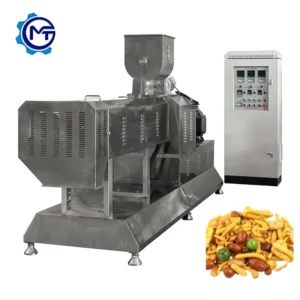
New Automatic Traditional Fried Nimko Making Machine High Productivity Large Capacity Stainless Steel Production Line
¥8,575.00 Select options This product has multiple variants. The options may be chosen on the product page -
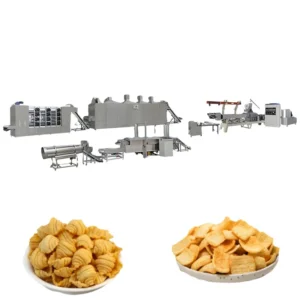
Automatic Fried Crispy Bugles Snacks Food Making Machines Wheat Flour Sala Food Extruder
¥100.00 Select options This product has multiple variants. The options may be chosen on the product page -
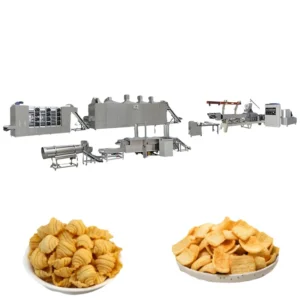
New Doritos Chips Frying Equipment Machine Automatic Tortilla Corn Chips Making Line Portable High Productivity
¥100.00 Select options This product has multiple variants. The options may be chosen on the product page -
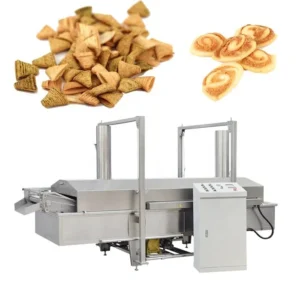
Double Screw Extruder Corn Flour Puffs Snack Nacho Chips Tortilla Doritos Making Machine Savory Snack Production Line
¥50.00 Select options This product has multiple variants. The options may be chosen on the product page