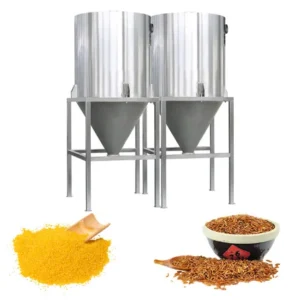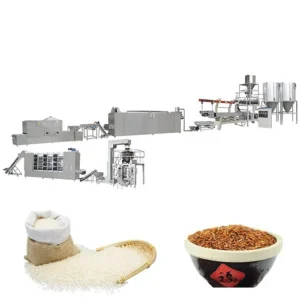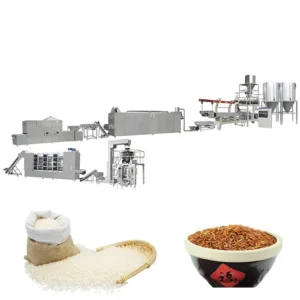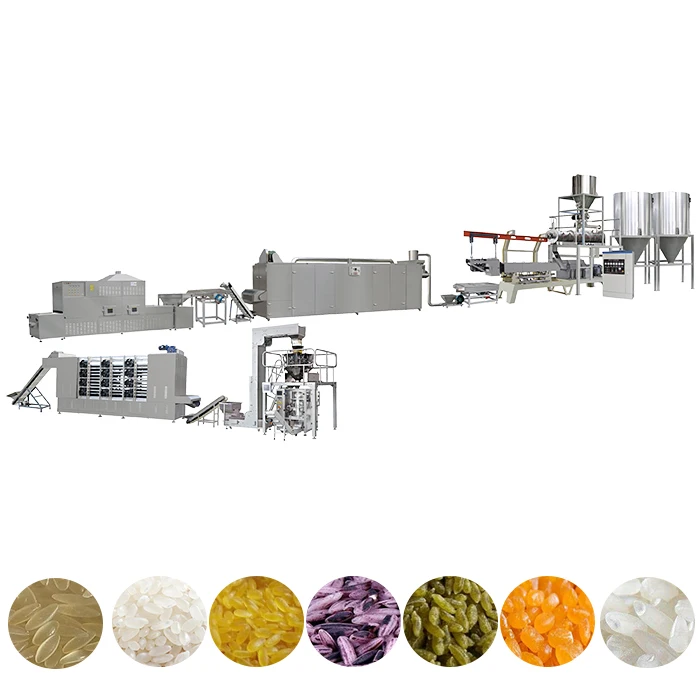
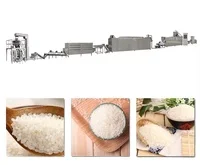
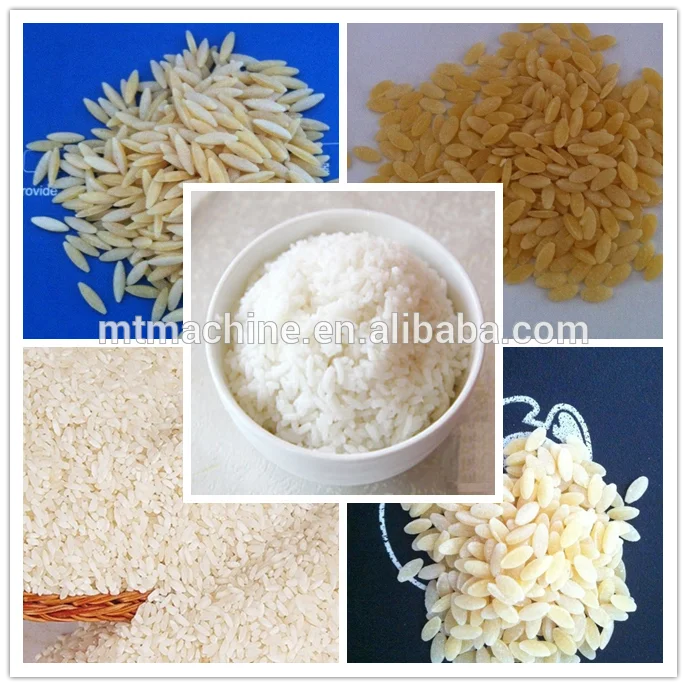

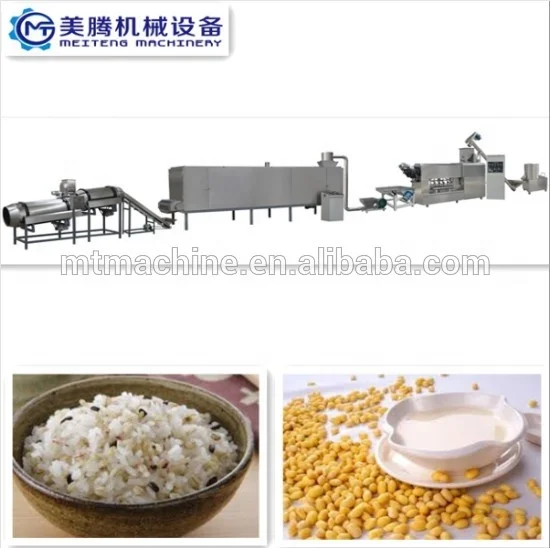
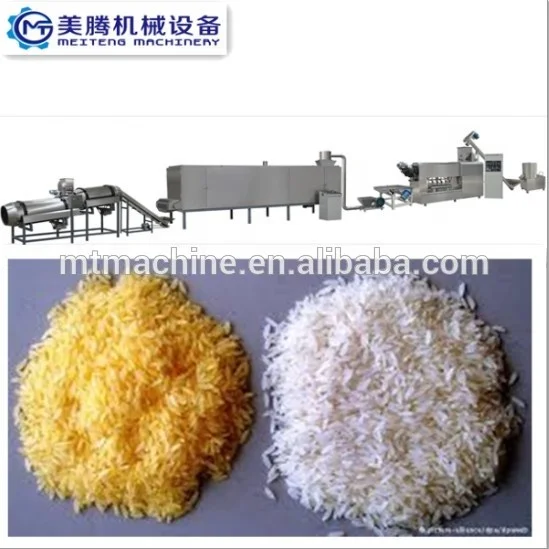
MT-70 Artificial Fortified Rice Making Machine, Single-Screw Extruder, SS304 Construction — engineered for consistent grain density through controlled moisture and barrel temperature profiling. Screw configuration and die design are matched to your raw material blend and target rice grain shape, ensuring uniform expansion across every batch. Backed by in-house trial runs on your actual raw material before shipment, with full throughput balancing from mixing through drying under one supplier.
- Model: MT-70, single-screw extrusion
- Screw length: 1510 mm
- Material: SS201 & SS304, food-grade contact surfaces
- Line stations: mixer, screw conveyor, extrusion
- CE and ISO certified
Description
Precision throughput calibration — every station on the artificial fortified rice production line is sized to your raw material blend so rated output holds during continuous operation.
Technical Specifications
| Parameter | Value |
|---|---|
| Model | MT-70 |
| Product Type | Artificial Fortified Rice Making Machine |
| Extruder Type | Single-screw |
| Output Capacity | 100-500 kg/h (basis not stated in source — confirm raw material / moisture content / product format) |
| Screw Length | 1510 mm |
| Barrel Material | Stainless Steel (SS201 & SS304) |
| Mixer Main Motor | 4.0 kW |
| Mixer Batch Output | 3.0-4.0 kg/batch |
| Mixer Dimensions | 1.2 × 0.9 × 1.4 m |
| Screw Conveyor Motor | 1.1 kW |
| Screw Conveyor Throughput | 0-150 kg/h |
| Screw Conveyor Dimensions | 2.5 × 0.6 × 2.3 m |
| Line Stations | Mixer, Screw Conveyor, Extrusion |
| Certifications | CE, ISO |
| Warranty | 1 year from equipment arrival at site |
Application Suitability
| Application | Material or Output |
|---|---|
| Artificial rice manufacturing | Rice powder, corn powder with vitamin and mineral premix |
| Fortified rice production | Broken rice flour blended with micronutrient additives |
| Puffed rice grain processing | Cereal flour blends for reconstituted grain formats |
| Institutional nutrition supply | Extruded rice kernels for government or NGO distribution |
Why "Rated Capacity" Fails on Fortified Rice Blends
A capacity figure without the raw material recipe and moisture level attached is a number without meaning.
I once watched a Southeast Asian nutrition plant lose nearly half its shift output because the mixer discharge rate and the extruder intake were never reconciled on their specific flour blend. The material bridged in the hopper and compacted in the feed zone. When an artificial fortified rice production line turnkey is quoted on a generic capacity number, that mismatch hides until commissioning day. The density of rice flour with vitamin premix behaves differently from plain corn grits, and screw pitch that feeds one will starve on the other. [NEED_CITE: raw material bulk density and feed screw matching in extrusion]
Screw Geometry Built Around Your Flour Blend
The single-screw assembly on this line is configured after the raw material recipe is locked, not before. Screw pitch, compression ratio, and barrel zone temperatures are set to match the starch gelatinisation point of your specific rice-to-additive blend. That sequencing means the artificial fortified rice production line turnkey is validated on paper before metal is cut, reducing the chance of density drift during sustained runs.
Balancing the Mixer Cycle Against Extruder Intake
A 3.0-4.0 kg batch from the mixer must reach the screw conveyor at a rate the extruder can absorb without surging. The conveyor motor at 1.1 kW and variable throughput up to 150 kg/h provides the throttle point between the batch cycle and continuous extrusion. [NEED_CITE: batch-to-continuous feed synchronization in food extrusion systems] If the conveyor outpaces the screw intake, material compacts; if it lags, the die pressure fluctuates and grain shape degrades.
Reading the Screw Length and Motor Data Correctly
The 1510 mm screw length determines residence time inside the barrel, which controls how completely the starch in rice flour gelatinises before reaching the die. Shorter residence risks under-cooked grains that crack during drying; longer residence can over-shear the micronutrient premix and degrade heat-sensitive vitamins. The 4.0 kW mixer motor is sized for low-shear blending of fine flour and premix, preventing nutrient segregation before the material ever enters the extruder. These parameters together shape grain density, surface finish, and the ability of the final product to hold its form during packaging and transport.
The Cost of Skipping Line-Wide Throughput Calculation
When a buyer sources the extruder from one vendor and the dryer from another, nobody owns the throughput balance. Material piles up at handoff points, moisture levels drift outside the drying window, and grain cracking rates climb. [NEED_CITE: throughput mismatch consequences in multi-vendor food processing lines] On a fortified rice project where every batch is lab-tested for micronutrient content, rework is not an option — the entire lot may fail spec and require disposal.
Why Procurement Through One Line Builder Changes the Outcome
Line layout and capacity calculation start from your raw material certificate of analysis, not a catalogue default. Screw configuration and die design are recorded per project, so reorder parts match the grain shape originally approved. The in-house testing workshop runs your actual flour blend before the line ships, producing a trial report that fixes the process parameters. Electrical schematics are drawn for your destination voltage and frequency, confirmed in writing before assembly begins. CE and ISO documentation ships with the equipment, supporting customs clearance and local regulatory registration without delay.
Documentation & Verification
- Line layout and capacity calculation matched to your rice flour blend and target grain shape
- Screw and die configuration record specific to the artificial fortified rice production line turnkey
- Trial run report on your raw material from the in-house testing workshop
- Electrical schematic with voltage and frequency confirmed for destination market
- CE declaration of conformity and ISO certificate for customs and regulatory filing
- Wear parts list with part numbers for screws, dies, and barrel liners
Installation, Commissioning & Support
- Floor plan showing mixer, conveyor, and extruder footprint with utility drop points for the 4.0 kW and 1.1 kW circuits
- Voltage and frequency verification before wiring, matching the motor nameplates to local supply
- Barrel and screw assembly on site with runout checked before first powered start
- Die selection and moisture calibration during commissioning to reach target grain density
- Operator training covering batch cycle timing, conveyor feed rate adjustment, and screw wear inspection
- Spare screw and die set recommended at order for uninterrupted production through first replacement cycle
Before You Send the Inquiry
Share the raw material formulation including flour type, moisture content, and the specific vitamin or mineral premix you plan to add. Confirm the destination voltage, frequency, and the control language your operators need on the HMI. If you are integrating this artificial fortified rice production line turnkey with existing drying or packing equipment upstream or downstream, send the model and throughput data so the feed and discharge points can be reconciled before the layout is drawn.
Frequently Asked Questions
Q: How is line capacity verified against my specific raw material blend and moisture level?
A: Your raw material sample is processed in the testing workshop before the line is finalized. The trial run records actual throughput, grain density, and surface quality at the moisture content you specify. Those results form the basis of the capacity figure written into the proposal, so the number you contract against is tied to your material, not a generic benchmark.
Q: What utility requirements need to be confirmed before build?
A: Voltage and frequency at the installation site must be declared so motors and heaters are wound correctly. The mixer draws 4.0 kW and the conveyor 1.1 kW, each needing dedicated circuits. Water supply for barrel cooling and steam injection, if applicable, should be mapped on the floor plan before the equipment arrives to avoid rework during commissioning.
Q: How are screw configuration and die design selected for different rice grain shapes?
A: The screw pitch and compression ratio are chosen based on your flour blend’s starch content and the target grain density. Die openings are machined to produce the exact kernel length and cross-section your market expects. Configuration is recorded per project so future die replacements reproduce the same grain geometry without trial and error.
Q: Can a trial run be done on my raw material before shipment?
A: Yes. The testing workshop processes your flour blend through the extruder and records throughput, barrel temperature profile, die pressure, and grain appearance. The trial report is shared before dispatch so you can review process parameters and approve them or request adjustments while the line is still in the factory.
Related products
-

Industrial Automatic 500kg/h Baby Cereal Nutrition Powder Extruder Manufacturing Process Line
¥8,238.27 Add to cart -

High Quality Automatic PLC Controlled 500kg/h Twin Screw Extruder Machine for Baby Rice Nutrition Powder
¥8,238.27 Add to cart -
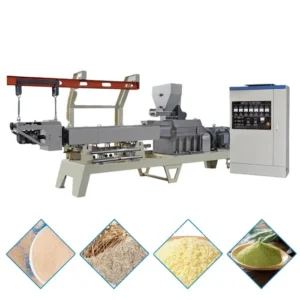
Industrial Instant Corn Paste Production Line Nutritional Powder Processing Equipment Meal Replacement Nutrition Powder Machine
¥65.00 Select options This product has multiple variants. The options may be chosen on the product page -
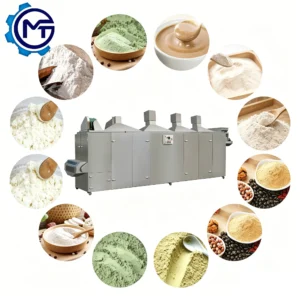
500kg/h Automatic PLC Controlled Nutrition Baby Food Extruder Machine for Rice Cereal Processing
¥9,500.00 Add to cart