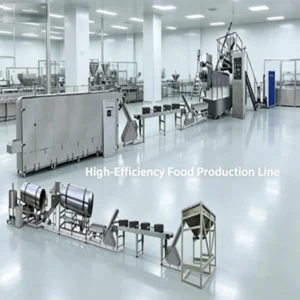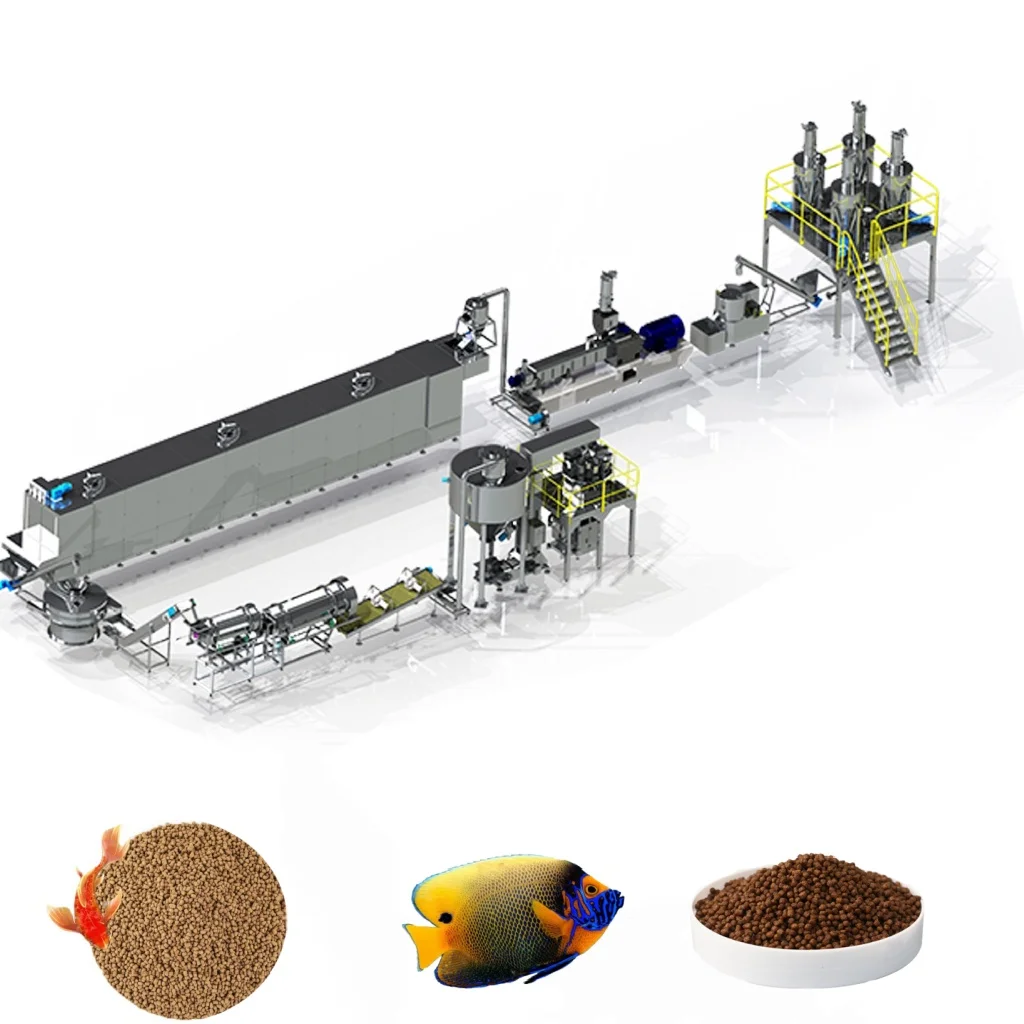



Automatic Fish Feed Production Line, Twin-Screw, Full-Automatic Control — configured as a complete extrusion platform for floating and sinking aqua feed pellets with stainless steel food-grade contact parts and energy-saving design.
- Screw configuration and die design matched to your raw material formulation, controlling starch gelatinisation and pellet density for consistent floating or sinking behaviour.
- Throughput balanced across mixing, extrusion, drying, coating and packing stations to eliminate bottlenecks in continuous operation.
Line layout, capacity calculation and trial run report on your actual raw material provided before shipment, with screw and die configuration recorded to your target pellet specification.
Description
Whole-line throughput matched at every station — Each segment from mixing through extrusion to drying and packing is sized against the actual formulation moisture and pellet density, so no single machine becomes the bottleneck that limits the entire fish feed production line turnkey project.
Technical Specifications
| Parameter | Value |
|---|---|
| Product Type | Twin-Screw Fish Feed Extrusion Production Line |
| Screw Configuration | Twin-screw, profile matched to formulation |
| Construction (Contact Parts) | Food-grade stainless steel |
| Control System | Full-automatic control, adjustable production settings |
| Electrical Supply | 380V (frequency and phase to be confirmed with destination market) |
| Assembly State | Complete line from batching to packing |
| Pellet Output Types | Floating and sinking aqua feed pellets |
| Energy Profile | Energy saving design across main drive and heating zones |
| Compliance | CE, ISO |
| Output Capacity | High capacity (basis not stated in source — confirm target pellet diameter, formulation and moisture content) |
Application Suitability
| Application Scenario | Typical Material or Output |
|---|---|
| Floating aqua feed for surface-feeding species | Catfish and tilapia pellets from soy meal, fish meal, and starch binders |
| Sinking aqua feed for bottom-feeding species | Shrimp and benthic fish pellets with higher protein and density targets |
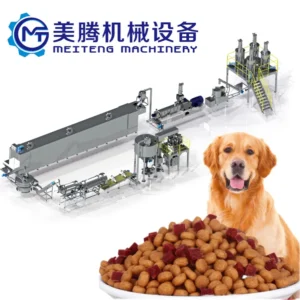
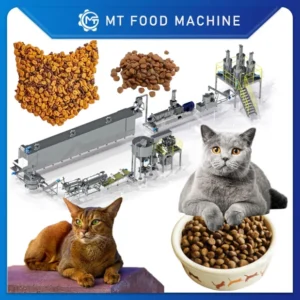
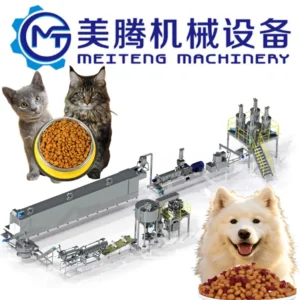
| Dry pet food expansion on the same platform | Kibble from corn, meat meal, and grain blends for dog and cat nutrition |
| Turnkey aquaculture feed projects | Complete plant layout with matched throughput from raw material intake to packed bag |
Why Floating Feed Sinks When the Line Is Underspecified
A fish feed production line turnkey project fails the moment pellet density drifts outside what the local market expects, and the root cause is almost always a screw and die setup that was never tuned to the buyer’s actual recipe.
I once reviewed a line in Southeast Asia where the extruder was pushing nominal tonnage, but the pellets hit the water and sank within seconds. The operator had been tweaking moisture by hand for months. After we pulled the screw elements and ran the customer’s exact soy-to-fish-meal ratio through our testing workshop, the problem traced back to a generic compression ratio that ignored the starch gelatinisation window of their local corn variety. Generic builds copy a die plate from a catalogue; a proper configuration starts with the raw material certificate and works backward to the screw profile [NEED_CITE: starch gelatinisation temperature ranges by grain type].
Screw Profile and Die Geometry Drive Pellet Buoyancy
Floating pellets require rapid expansion at the die face, which means the final screw elements must deliver high shear at a precise moisture level just before the material exits. Sinking pellets need the opposite: a denser melt with controlled expansion. On this twin-screw platform, the screw configuration and die design are specified to the buyer’s raw material and target pellet type before the machine enters production. A fish feed production line turnkey layout that skips this step will produce pellets that look correct on the conveyor but behave unpredictably in the pond.
Dryer and Coater Capacity Must Track Extruder Output
An extruder running at full output means nothing if the downstream dryer cannot pull moisture down to a stable shelf level before the pellets reach the coating drum. We have seen lines where the extruder was sized correctly but the dryer belt was too short, leaving pellets at a moisture point where mould develops inside sealed bags within days. Every station on this line is calculated against the others so that throughput remains balanced whether the target is floating catfish feed or sinking shrimp pellets [NEED_CITE: safe moisture thresholds for packed aqua feed].
Reading the Core Parameters That Actually Matter
Twin-screw extrusion gives processors a wider operating window than single-screw designs because the intermeshing screw elements create a self-wiping action that handles sticky, high-protein formulations without surging. The length-to-diameter ratio of the barrel determines residence time: a longer barrel allows more gradual starch gelatinisation, which is critical when working with high-fibre ingredients that need extended heat exposure. Die plate thickness and orifice diameter together control the pressure drop at the exit, directly influencing whether the pellet expands enough to float or stays dense enough to sink. Food-grade stainless steel across all contact parts prevents corrosion from the salt and mineral premixes common in aqua feed formulations, while the full-automatic control system with adjustable settings lets operators switch between floating and sinking recipes without manual recalibration of every heating zone.
What Happens When Throughput Matching Is Skipped
The most common failure on a poorly configured line is not the extruder itself but the station immediately after it. A coating drum that cannot keep pace forces the extruder to idle, wasting energy and degrading the melt consistency. A cooling conveyor that is too short sends warm pellets into the packing station, where residual heat creates condensation inside the bag. These mismatches rarely show up during a factory test with clean, generic raw material; they surface weeks after installation when the buyer switches to their actual local supply [NEED_CITE: post-installation line balancing audits].
Why Source the Entire Line From One Supplier
Sourcing every station from a single supplier means the extruder, dryer, coater, and packing segment are designed as one system rather than assembled from independent vendors who each guarantee only their own machine. The screw and die configuration is recorded against the buyer’s specific formulation, so replacement wear parts arrive with the correct geometry rather than a generic substitute. An in-house testing workshop runs the buyer’s actual raw material before shipment, producing a trial run report that confirms pellet density, expansion ratio, and moisture at every station. Electrical schematics are confirmed for the destination market’s voltage and frequency before the control cabinet is wired, eliminating the commissioning delays that happen when a 50 Hz motor is shipped to a 60 Hz facility. Documentation travels with the machine, so the operator manual, wear parts list, and maintenance schedule all reference the exact configuration installed on the factory floor.
Documentation & Verification
- Line layout showing matched throughput at each station from batching to packing
- Screw and die configuration record tied to your specific formulation and pellet density target
- Trial run report from our in-house testing workshop using your raw material before dispatch
- Electrical schematic with voltage and frequency confirmed for your destination market
- Operation and maintenance manual written for the installed configuration, not a generic template
- Wear parts list with reorder codes specific to your screw profile and die plate geometry
Installation, Commissioning & Support
- Foundation plan accounts for the full line footprint including dryer belt length and cooling conveyor run
- Dedicated electrical circuit sized for the extruder main drive and all heating zones combined
- Assembly sequence documented so the twin-screw barrel sections align before the die plate is torqued
- First production run supervised on-site with parameters logged against the trial run report baseline
- Operator training covers recipe changeover between floating and sinking pellets using the full-automatic control interface
- Wear parts inventory recommended based on your formulation’s abrasiveness and daily run hours
What We Need From You to Build an Accurate Proposal
To configure a line that holds its rated output on your actual formulation, we need your raw material specification sheet including protein, fat, and starch percentages, the target pellet diameter range for both floating and sinking products, your local electrical supply voltage and frequency, and the available floor space with ceiling height for the dryer and cooling conveyor. If you have an existing upstream mixer or downstream packing system, share the make and throughput so we can match the interface points.
Frequently Asked Questions
Q: How is line capacity verified and what is it based on?
A: Capacity is verified during a trial run in our testing workshop using your actual raw material, target pellet diameter, and moisture specification. The resulting report documents output at each station, so the quoted figure reflects your formulation rather than a generic benchmark run on clean starch.
Q: How are screw and die configurations matched to floating versus sinking feed?
A: Floating pellets require high expansion at the die face, so the final screw elements and die orifice are profiled for maximum shear at a specific moisture point. Sinking pellets use a denser compression ratio and thicker die plate to limit expansion and produce a pellet that holds its weight below the water surface.
Q: What voltage and frequency options are confirmed before shipment?
A: We confirm the destination facility’s voltage, frequency, and phase before the electrical cabinet is wired. The control language on the full-automatic interface is also set during this stage so operators can navigate recipe screens without translation delays on the first day of commissioning.
Q: Can a trial run on my raw material be done before the line ships?
A: Yes. We run your supplied raw material through the configured extruder and downstream stations in our testing workshop. The trial run report documents pellet density, expansion, moisture at the dryer exit, and throughput at each station, giving you a verified baseline before the equipment leaves our floor.
Q: How is throughput balanced between extruder, dryer, and coating stations?
A: Each station is sized against the extruder’s output at your specific formulation moisture and pellet density. The dryer belt length, coating drum volume, and cooling conveyor speed are all calculated so that no single segment forces the others to idle or surge during continuous production.
Related products
-
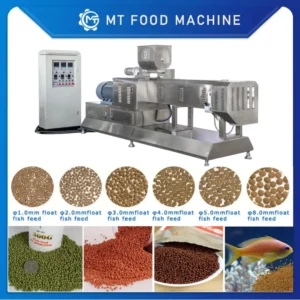
4-5t/h High Capacity Multi-Species Fish Feed Processing Line to Produce Fish Food
¥65,000.00 Select options This product has multiple variants. The options may be chosen on the product page -
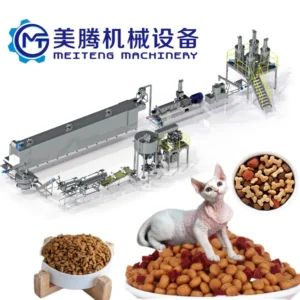
MT70 100-200kg/h Dog & Cat Pet Food Processing Line with 380V 50Hz Three Phase Power
¥35,000.00 Select options This product has multiple variants. The options may be chosen on the product page -
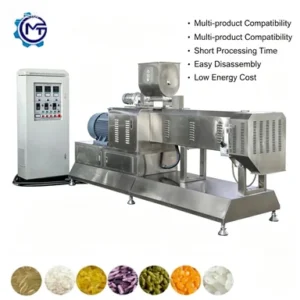
Durable Stainless Steel Twin Screw Extruder Floating Sinking Aquatic Fish Feed Processing Production Equipment
¥65.00 Select options This product has multiple variants. The options may be chosen on the product page -
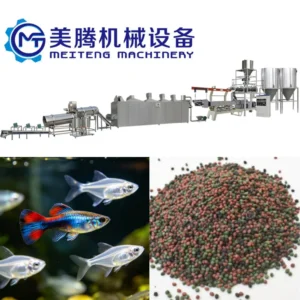
200-300kg/h Capacity Multi-Species Fish Feed Processing Line to Produce Fish Food
¥34,000.00 Select options This product has multiple variants. The options may be chosen on the product page