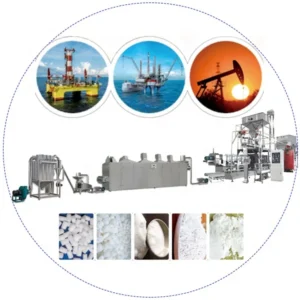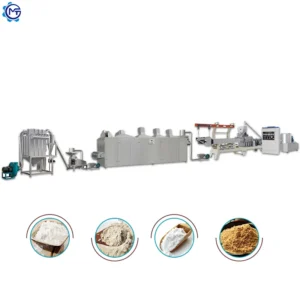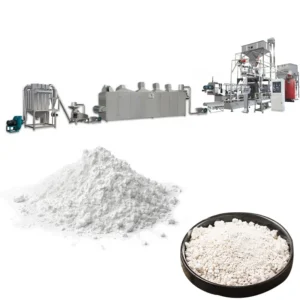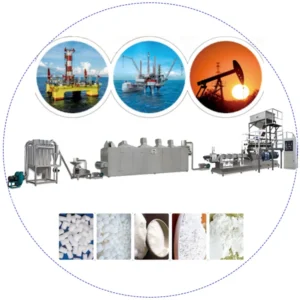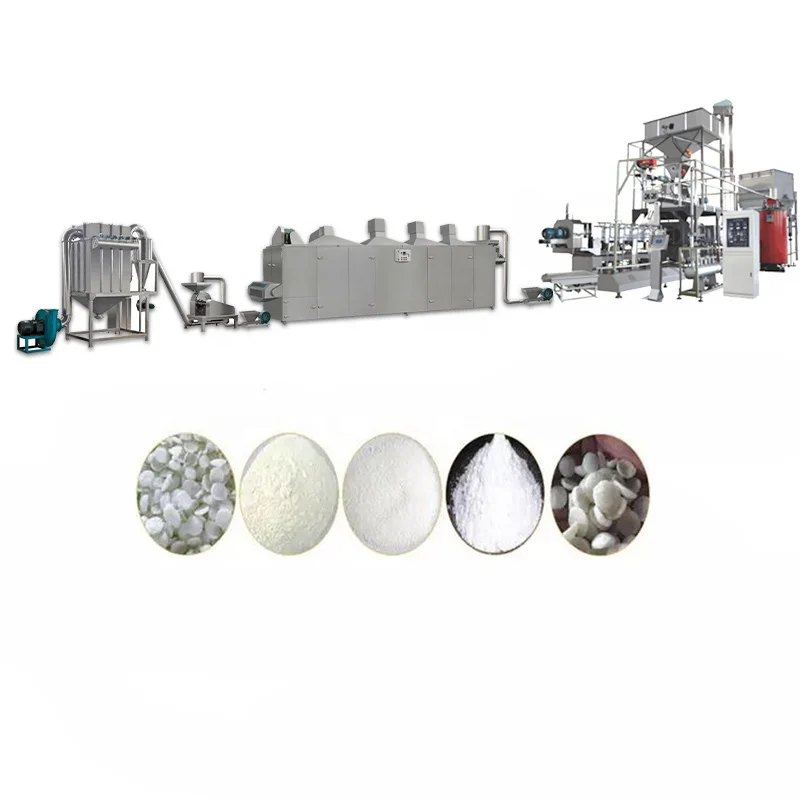


Modified Starch Processing Line, Twin-Screw Extruder, Pre-Gelatinization Process — engineered for continuous denaturation of corn, tapioca and potato starch with frequency speed control, automatic lubrication and cooling system, and configurable dryer heating source.
Screw and barrel configuration is matched to the specific starch type and target gelatinization degree, ensuring precise control over thermal viscosity, gel strength and freeze-thaw stability throughout the extrusion process.
Delivered as a turnkey project with throughput balanced from blending through drying, grinding and packing, backed by in-house trial runs on your raw material before shipment.
Description
Precision-Matched Turnkey Integration — Every station from blending through grinding is throughput-balanced to the buyer’s specific starch source and gelatinization target, not assembled from catalog defaults.
Technical Specifications
| Parameter | Value |
|---|---|
| Product Type | Modified Starch Processing Line |
| Screw Type | Twin-screw |
| Compatible Raw Materials | Corn starch, tapioca starch, potato starch |
| Process Method | Pre-gelatinization via high temperature, high pressure and shear force |
| Line Stations | Materials preparation → Material blending → Mixing → Extruding → Drying → Grinding → Packing |
| Extruder Speed Control | Frequency speed controlling system |
| Lubrication & Cooling | Automatic lubricating and cooling system |
| Dryer Heating Source | Electric, steam, or gas (configurable) |
| Grinding Discharge | Bottom butterfly valve |
| Grinding Particle Fineness | Less than 10 mm |
| Grinding Contact Material | Stainless steel 304 |
| MT85 Installed Power / Real Consumption | 90 kW / 63 kW (basis to be confirmed) |
| MT85 Capacity | 100–200 kg/h (basis not stated in source) |
| MT100 Installed Power / Real Consumption | 180 kW / 120 kW (basis to be confirmed) |
| MT100 Capacity | 500–600 kg/h (basis not stated in source) |
| MT110 Installed Power / Real Consumption | 200 kW / 150 kW (basis to be confirmed) |
| MT110 Capacity | 500–600 kg/h (basis not stated in source) |
| MT135 Installed Power / Real Consumption | 240 kW / 165 kW (basis to be confirmed) |
| MT135 Capacity | 1000–1500 kg/h (basis not stated in source) |
| Warranty | 1 year |
| Assembly State | Complete turnkey line from material grinding to final packing |
| Certification | CE, ISO |
Application Suitability
| Application | Material or Output |
|---|---|
| Pre-gelatinized starch for food ingredient blending | Corn starch, tapioca starch, potato starch |
| Modified starch for textile sizing and warp preparation | Corn starch, potato starch |
| Denatured starch for oil drilling fluid additives | Corn starch, tapioca starch |
| Modified starch for paper coating and corrugated adhesives | Corn starch, potato starch |
| Pre-gelatinized starch for construction gypsum and mortar additives | Corn starch, tapioca starch |
Why "Nominal Capacity" Can Derail a Modified Starch Processing Line Turnkey
Quoted throughput means nothing when the screw configuration was never matched to your actual starch source.
I once stood next to a twin-screw extruder running tapioca starch where the barrel temperature profile had been set for corn. The gelatinization window shifted by over ten degrees, viscosity readings were nowhere near spec, and four days of on-site rework followed before expansion ratio and transparency met the buyer’s requirements. A modified starch processing line turnkey built on generic parameters will reproduce that scenario every time [NEED_CITE: starch gelatinization temperature ranges by botanical source]. The extruder, dryer and grinding station must each be sized against the real moisture content, amylose ratio and target degree of pre-gelatinization of the starch you actually feed into the hopper.
Matching Barrel Profile to Botanical Starch Source
Corn, tapioca and potato starches each carry distinct amylose-to-amylopectin ratios, which directly determine the shear and thermal energy required inside the barrel. A modified starch processing line turnkey configured without this distinction will either under-gelatinize the product or scorch the barrel sleeves. Frequency speed control on the twin-screw extruder allows operators to adjust residence time without stopping production, keeping thermal viscosity and gel strength within the narrow bands that food, textile and paper buyers specify.
Dryer and Grinding Station Throughput Balancing
An extruder pushing pre-gelatinized starch at its upper throughput limit can easily overwhelm an undersized dryer, leaving residual moisture that causes clumping at the grinding stage. The grinding station here uses a bottom butterfly valve and stainless steel 304 contact surfaces, producing particles below 10 mm. When dryer capacity and grinding discharge rate are calculated together with extruder output — rather than sourced as independent units — the line holds continuous operation without material backlog [NEED_CITE: industrial starch drying moisture equilibrium requirements].
Reading the Power and Consumption Figures
Installed power and real consumption differ meaningfully across the MT85 through MT135 range. The gap between installed and consumed kilowatts reflects motor loading under actual starch viscosity conditions, not nameplate ratings. Buyers comparing extruder models should request consumption data recorded during a trial run on their specific raw material, since potato starch at higher moisture will draw more real power than the same machine running dry corn starch. Automatic lubrication and cooling systems reduce barrel wear during these high-shear pre-gelatinization runs, extending intervals between screw and sleeve replacements.
What Happens When Screw and Die Configuration Is Wrong
A generic screw arrangement designed for snack pellets will not generate the shear profile needed for complete starch gelatinization. The result is a product with uneven transparency, inconsistent cold-water solubility and poor freeze-thaw stability — defects that only appear after the starch reaches the end customer’s mixing tank. Dies cut for the wrong expansion ratio produce particles that either shatter during grinding or resist size reduction altogether [NEED_CITE: twin-screw die geometry and starch expansion behavior]. Reworking these parameters on-site costs days of lost production and raw material waste.
Why This Line Is Built as One Project
Every station — blending, mixing, extruding, drying, grinding, packing — is specified under a single layout calculation so throughput is balanced rather than bottlenecked. Screw configuration and die design are matched to the buyer’s starch source and target application before production begins. The dryer heating source is selected against local utility availability, whether electric, steam or gas. An in-house testing workshop runs the buyer’s actual raw material before shipment, generating a trial run report that confirms gelatinization degree and output. Electrical schematics, voltage confirmation and control language are verified before the line enters fabrication, not after it arrives at the port.
Documentation & Verification
- Line layout and throughput calculation across blending, extruding, drying and grinding stations
- Screw and die configuration record matched to your starch source and gelatinization target
- Trial run report on your raw material covering expansion ratio, viscosity and moisture
- Electrical schematic with confirmed voltage, frequency and control language
- CE declaration of conformity and ISO certificate for customs and site inspection
- Wear parts list with screw and die replacement intervals
Installation, Commissioning & Support
- Foundation plan sized to extruder weight and frequency drive vibration load
- Dedicated power circuit matching confirmed voltage and installed kilowatt rating
- Dryer heating source connected to site utility — electric, steam or gas — per layout drawing
- First-run parameter setting for barrel temperature, screw speed and moisture feed rate
- Operator training on frequency speed control and automatic lubrication monitoring
- Spare screws, dies and barrel sleeves shipped with initial order for first replacement cycle
What We Need to Configure Your Line
Share the specific starch source you plan to process — corn, tapioca or potato — along with typical moisture content and the end-use application your customers require. Confirm the local voltage and frequency at the installation site, and indicate which dryer heating source your facility supports. If you need a trial run on your raw material before committing to production, provide a sample batch so the testing workshop can record gelatinization behavior and throughput data.
Frequently Asked Questions
Q: How is line capacity verified on my specific starch raw material?
A: Capacity figures in the specification table are reference values that must be confirmed against your actual starch type and moisture content. A trial run on your raw material in the testing workshop records real throughput, gelatinization degree and power consumption before the line enters production.
Q: How is screw and barrel configuration specified to my starch type?
A: Corn, tapioca and potato starches require different shear profiles and barrel temperature zones for proper pre-gelatinization. The screw arrangement and die geometry are designed to your starch source and target application, then documented in the configuration record shipped with the line.
Q: Can a trial run be performed on my raw material before shipment?
A: Yes. The in-house testing workshop runs your starch sample through the configured extruder and records expansion ratio, thermal viscosity, transparency and moisture content. The trial run report is provided before dispatch so you can verify product specifications match your market requirements.
Q: How is the dryer heating source selected for the complete line?
A: The dryer is available with electric, steam or gas heating. Selection depends on your facility’s existing utility infrastructure and local energy costs. The line layout includes utility connection points and consumption estimates for whichever heating source you confirm.
Q: What documentation accompanies the modified starch processing line turnkey?
A: Documentation includes line layout with capacity calculation, screw and die configuration record, electrical schematic with voltage confirmation, trial run report, CE declaration of conformity, ISO certificate, operation and maintenance manual, and a wear parts list with replacement schedules.
Related products
-
Modified and Pregelatinized Starch Processing Equipment – Pregelatinized Corn Cassava Modified Starch Puffing Machine
¥65.00 Select options This product has multiple variants. The options may be chosen on the product page -
Pregelatinized Low-Cost Modified Starch Line – High-Efficiency Automated Starch Processing Machine
¥65.00 Select options This product has multiple variants. The options may be chosen on the product page -
Automatic Modified Tapioca Starch Production Line 304 Stainless Steel Flour Mill and Bakery Machine
¥30.00 Select options This product has multiple variants. The options may be chosen on the product page -
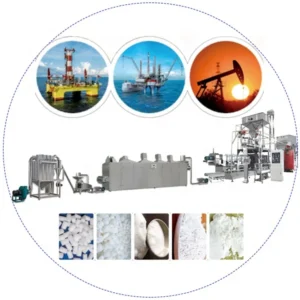
Pre-gelatinized Starch Production Line – Modified Starch Integrated Puffing Equipment
¥65.00 Select options This product has multiple variants. The options may be chosen on the product page