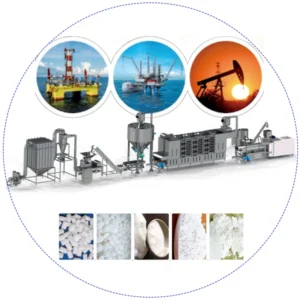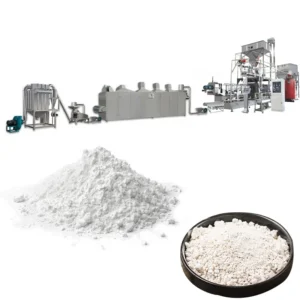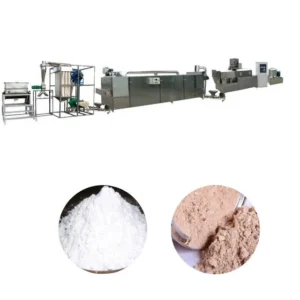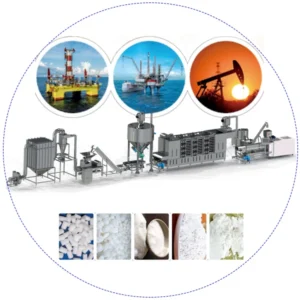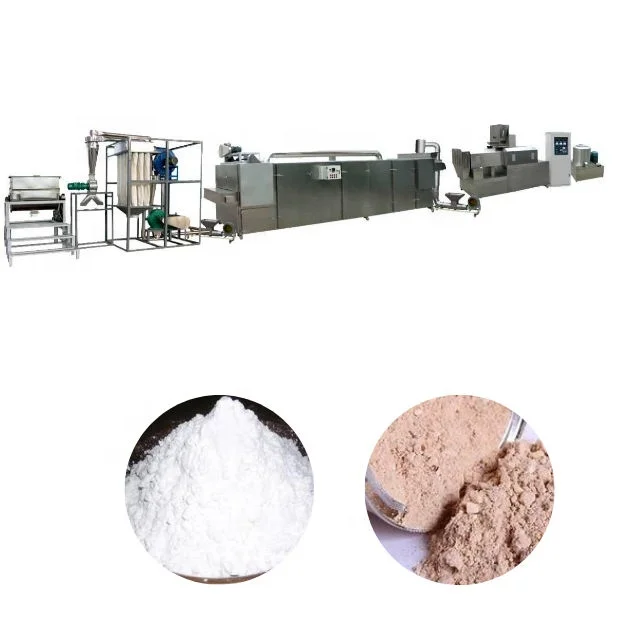


Modified Starch Processing Line, Twin-Screw Extrusion, PLC & MCC Control — engineered as a complete turnkey project from batching through extrusion, drying, grinding, and packaging. Throughput is balanced across every station so no single unit bottlenecks the line, with adjustable temperature, screw speed, and pressure to produce pregelatinized, oxidized, or cross-linked starch from cassava, corn, and potato raw materials.
- In-house trial runs on your actual raw material validate output before shipment
- Screw configuration and die design specified to your starch modification target
- Line layout, capacity calculation, and utility planning delivered as one coordinated project
Description
Integrated throughput balance — Every station from mixing to packaging is engineered as one coordinated Modified Starch Processing Line turnkey project, preventing the dryer or grinder bottleneck that stalls extruders running at full capacity.
Technical Specifications
| Parameter | Value |
|---|---|
| Product Type | Modified Starch Processing Line |
| Extruder Type | Heavy-duty twin-screw extruder |
| Line Stations | Mixing, extrusion, drying, grinding, packaging |
| Control System | PLC and MCC automated control |
| Contact Materials | Food-grade stainless steel |
| Process Parameters | Adjustable temperature, screw speed, and pressure |
| Output Capacity | High yield continuous operation (basis to be confirmed based on raw material type, moisture content, and target starch specification) |
| Starch Modification Types | Pregelatinized, oxidized, cross-linked |
| Raw Material Compatibility | Cassava, corn, potato, and other grain starches |
| Assembly State | Complete integrated production line |
| Certification | CE (since 2014), ISO |
Application Suitability
| Application | Material or Output |
|---|---|
| Food-grade thickener production | Pregelatinized cassava or corn starch for sauces and bakery fillings |
| Industrial adhesive formulation | Oxidized potato or corn starch for paper and corrugated board bonding |
| Textile warp sizing | Cross-linked starch derivatives for yarn coating and fabric finishing |
| Construction material additives | Modified cassava starch for gypsum board and dry-mix mortar viscosity control |
| Instant food ingredient processing | Pregelatinized corn starch for instant soup and porridge bases |
Why the Dryer Capacity Question Matters More Than Extruder Output
An extruder that outpaces its dryer creates a wet-starch bottleneck, not a high-capacity line.
I used to troubleshoot Modified Starch Processing Line turnkey installations where the extruder was rated for a specific hourly tonnage, yet the drying station could only handle a fraction of that wet output. The result was a backlog of high-moisture material sitting in intermediate bins, fermenting or clumping before it ever reached the grinder. The buyer ends up throttling the extruder down to match the dryer, running below the capacity they paid for [NEED_CITE: throughput matching principles in starch extrusion lines]. This is why the line layout must calculate moisture removal rates at the dryer against gelatinisation moisture addition at the extruder, not simply quote each station independently.
Coordinated Throughput Across Every Station
The Modified Starch Processing Line turnkey approach means mixing, extrusion, drying, grinding, and packaging are specified against a single throughput target rather than sourced as independent machines. When the extruder adds moisture and shear energy to gelatinise the starch, the downstream dryer must be sized to remove that exact moisture load within the residence time the starch chemistry requires. Oversized extruders paired with undersized dryers are a recurring source of commissioning disputes [NEED_CITE: common commissioning failures in starch modification plants].
Screw Configuration Matched to Modification Chemistry
Different starch modifications demand different shear profiles. Pregelatinisation relies on thermal and mechanical energy to rupture granule structure, requiring a screw arrangement with extended high-shear zones. Oxidized starch benefits from more controlled residence times with moderate shear to prevent over-degradation of the polymer chains. Cross-linked formulations introduce reagent distribution requirements that influence screw pitch and kneading block placement. Specifying one generic screw set for all three modification types leads to inconsistent viscosity and fineness in the finished powder.
Reading the Specifications for Real-World Impact
The heavy-duty twin-screw extruder at the core of this line generates the shear and thermal energy necessary for starch granule disruption. Twin-screw geometry allows independent control over residence time and shear intensity through screw element rearrangement, which is critical when switching between pregelatinized and cross-linked production runs. Adjustable temperature profiles across barrel zones let operators fine-tune the gelatinisation window — too low and granules remain partially intact, too high and dextrinisation degrades the functional properties. The PLC and MCC automated control system stores these parameter sets so changeovers between starch types are repeatable rather than dependent on operator memory. Food-grade stainless steel contact materials prevent iron contamination that would discolour starch intended for food or pharmaceutical markets [NEED_CITE: food contact material requirements for starch processing equipment].
The Hidden Cost of Uncoordinated Station Sizing
When stations are assembled from separate vendors, no single supplier owns the throughput gap between them. A grinder specified for dry granular feed will choke on material that still carries excess moisture from an overloaded dryer. Packaging scales calibrated for a target bulk density will misfill bags if the grinding fineness drifts because the material entered the mill too warm or too moist. These cascading mismatches surface weeks after commissioning, when the line is supposed to be ramping up to commercial output, and resolving them means replacing equipment rather than adjusting parameters [NEED_CITE: equipment mismatch consequences in integrated processing lines].
Engineering Accountability Under One Project Scope
The line layout and capacity calculation is produced before any machine is built, so every station’s throughput is verified against the same raw material and moisture assumptions. The in-house testing workshop runs trial batches on the buyer’s actual cassava, corn, or potato starch before shipment, catching screw and die configuration issues that would otherwise appear during on-site commissioning. Screw configuration and die design are recorded against the buyer’s target modification type, not copied from a generic starch build. Electrical schematics confirm voltage, frequency, and control language for the destination market before production begins, avoiding the rewiring delays that push back first production runs. Pre-sales consultation through installation, commissioning, and ongoing maintenance keeps engineering accountability within a single project team rather than split across multiple equipment vendors.
Documentation & Verification
- Line layout showing throughput balance across mixing, extrusion, drying, grinding, and packaging stations
- Trial run report on buyer’s cassava, corn, or potato starch conducted before dispatch
- Screw configuration and die design record matched to target starch modification type
- Electrical schematic with voltage, frequency, and PLC language confirmed for destination market
- CE declaration of conformity and ISO certificate included with shipment documentation
- Wear parts list specifying screw elements, dies, and seals with replacement intervals
Installation, Commissioning & Support
- Foundation and utility plan specifying power circuit requirements for the PLC and MCC control cabinet
- Station-by-station assembly sequence coordinating extruder, dryer, and grinder positioning to belt conveyor routing
- First-run parameter logging for temperature zones, screw speed, and pressure against target starch viscosity
- Operator training covering screw configuration changeover procedures for switching between pregelatinized and oxidized runs
- Initial spare parts package including high-wear screw elements and die plates sized to the installed configuration
- Scheduled maintenance checklist covering food-grade stainless steel contact surface inspection and bearing lubrication cycles
What We Need to Configure Your Line
To prepare a layout and capacity proposal, provide the specific starch source — cassava, corn, or potato — along with the target modification type and any viscosity or fineness specifications your end market requires. Include your destination voltage and frequency, available workshop floor area and ceiling height, and whether existing upstream mixing or downstream packaging equipment needs to be integrated. If you have raw material samples available, we can schedule a trial run in the testing workshop before finalising the screw and die configuration.
Frequently Asked Questions
Q: How is line capacity verified before delivery?
A: Capacity depends on raw material type, incoming moisture content, and the target modification chemistry. We run trial batches on your actual cassava, corn, or potato starch in the testing workshop and document throughput, moisture reduction at the dryer, and grinding fineness. This report ships with the line so commissioning starts from verified baselines rather than generic estimates.
Q: How do you match throughput between extrusion, drying, and grinding?
A: The line layout calculation models moisture addition at the extruder against removal rate at the dryer and feed rate at the grinder. Each station is specified so its rated handling capacity exceeds the upstream output under the worst-case moisture condition, preventing wet-material bottlenecks that force the extruder to run below its designed output.
Q: What is the installation and commissioning timeline?
A: Phased installation begins with station positioning and utility connections, followed by individual motor and heater testing, then integrated dry runs before introducing raw material. Commissioning duration varies with line complexity and site readiness, but the schedule is defined during the layout proposal stage so it aligns with your building completion and operator availability.
Q: Can the line switch between different starch modifications?
A: Yes. The twin-screw extruder accepts different screw element arrangements for pregelatinized, oxidized, and cross-linked production. The PLC stores separate parameter sets for each modification type, recording temperature profiles, screw speeds, and pressure targets so changeovers are repeatable. Die configurations are also swapped and logged for each product specification.
Q: What maintenance support follows commissioning?
A: The wear parts list identifies screw elements, dies, and seals with expected replacement intervals based on your starch type and operating hours. Operator training covers routine inspection procedures for the food-grade contact surfaces. Ongoing technical support is available for parameter adjustments as your raw material supply or product specifications evolve over subsequent production cycles.
Related products
-
2025 New Design Modified Starch Big Capacity Industrial Use Food Additives Core Components Motor Bearing
¥50.00 Select options This product has multiple variants. The options may be chosen on the product page -
Big Capacity Modified Starch Industrial Use and Food Additives
¥50.00 Select options This product has multiple variants. The options may be chosen on the product page -

Automatic Modified Tapioca Starch Production Line 304 Stainless Steel Flour Mill and Bakery Machine
¥30.00 Select options This product has multiple variants. The options may be chosen on the product page -
Automatic Modified Starch Making Machine Oil Drilling Starch Processing Production Line
¥30.00 Select options This product has multiple variants. The options may be chosen on the product page