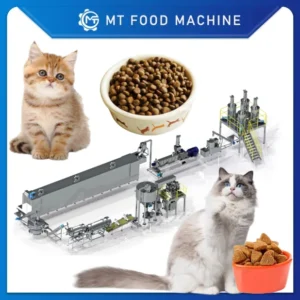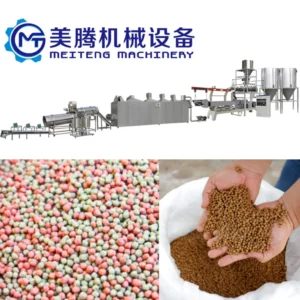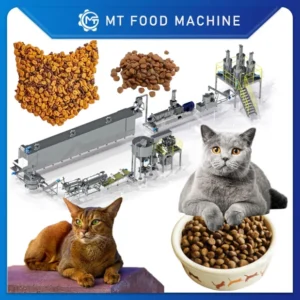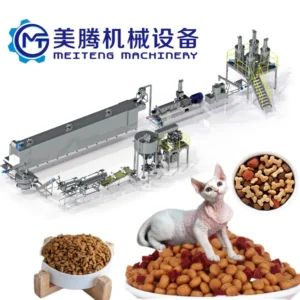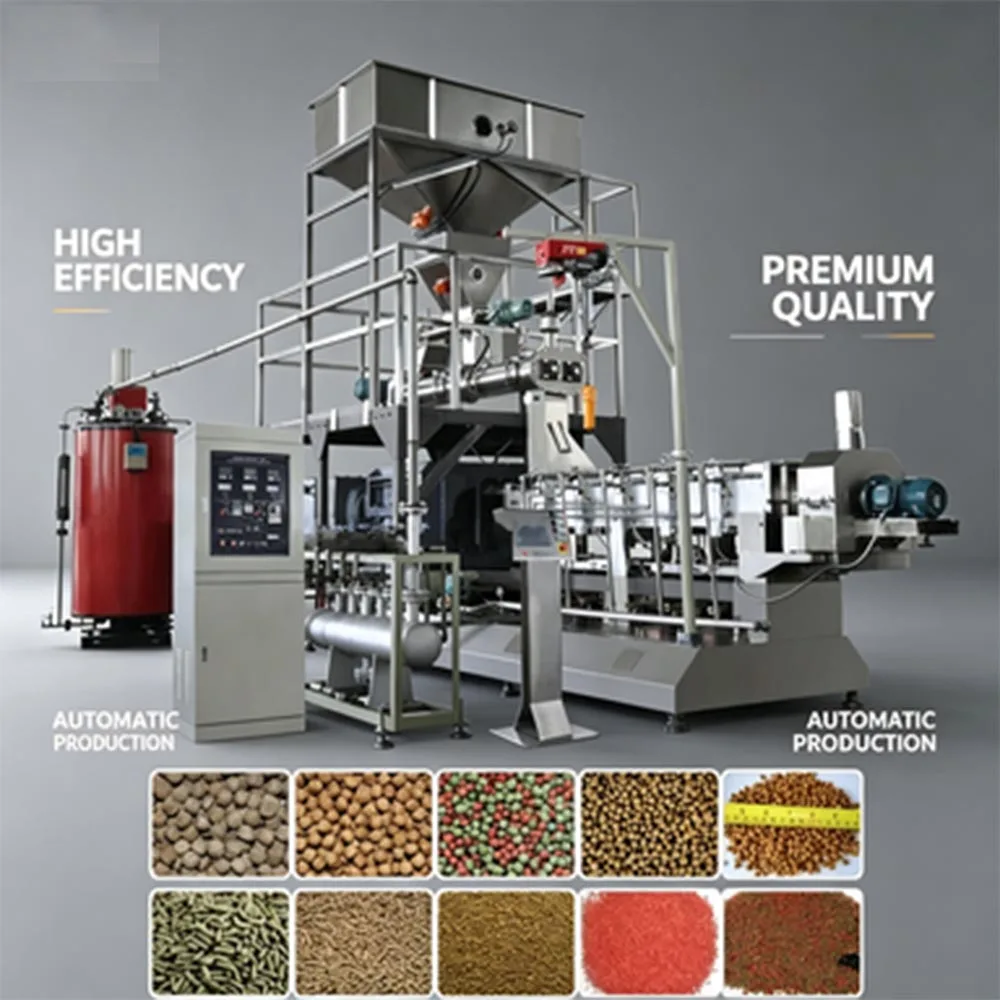

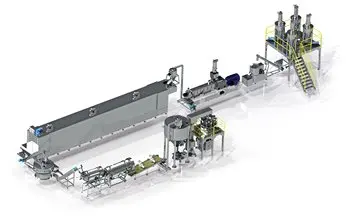

Complete Aquatic Feed Production Line, Twin Screw, 0.5–12 mm Pellet Range — engineered as a single turnkey project where feeding, mixing, extruding and pelletizing stations are throughput-matched to eliminate bottlenecks common in multi-vendor setups.
- Screw configuration and die design specified to buyer’s raw material formulation, ensuring target pellet density and floatability are met before shipment
- In-house trial runs on customer-supplied ingredients validate actual output and product quality prior to dispatch, not after installation
Description
Integrated Throughput Matching — every station from feeding to pelletizing is calculated against your actual raw material formulation, not assembled from standalone units with mismatched capacities.
Technical Specifications
| Parameter | Value |
|---|---|
| Product Type | Twin Screw Floating Fish Feed Extruder Production Line |
| Output Capacity | 500 kg/h (basis not stated in source — confirm raw material formulation, moisture content, pellet diameter) |
| Screw Type | Twin Screw |
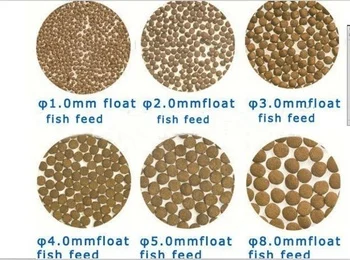
| Pellet Diameter Range | 0.5 mm – 12 mm |
| Control System | Simple control panel (PLC/MCC availability to be confirmed) |
| Line Stations | Feeding, mixing, extruding, pelletizing |
| Assembly State | Integrated line (compact layout) |
| Material of Construction | Stainless steel (main parts) |
| Operation Mode | Fully automatic, continuous production |
Application Suitability
| Application | Material or Output |
|---|---|
| Floating fish feed for fry and fingerling stages | 0.5 mm – 3 mm micro-pellets from fish meal, soy protein and starch blends |
| Grow-out feed for tilapia and catfish | 4 mm – 8 mm pellets from grain, oilseed and aquatic protein mixes |
| Broodstock and specialty aquatic feed | 8 mm – 12 mm large pellets with higher lipid and protein inclusion |
| Diversified small and medium-scale aquaculture plants | Multiple pellet sizes across species and growth phases on a single line |
Why "500 kg/h" Means Nothing Without Your Raw Material
A rated capacity figure is only valid when tied to the exact formulation, moisture content and pellet diameter you intend to produce.
I have walked into aquaculture plants where the extruder nameplate promised a certain throughput, yet the actual output fell short because the buyer’s fish meal protein ratio was higher than the standard test recipe. The material behaved differently under shear and heat, expansion dropped, and the downstream dryer could not keep up. Before any Twin Screw Floating Fish Feed Extruder Production Line turnkey proposal reaches the quotation stage, the raw material must run through a physical trial to lock process parameters. [NEED_CITE: typical variation in extrusion output across different protein and starch ratios]
Station-by-Station Throughput Alignment
A floating fish feed line is only as fast as its slowest station. When the mixer batch cycle does not match the extruder’s continuous feed rate, operators end up waiting or overfeeding, both of which destabilize pellet density. On this Twin Screw Floating Fish Feed Extruder Production Line turnkey configuration, feeding, mixing, extruding and pelletizing are sized against a single throughput target so that material flow remains uninterrupted from raw ingredient intake to finished pellet output.
Screw Configuration and Floatability Control
Whether a pellet floats or sinks depends on the interplay between starch gelatinisation degree, melt temperature at the die face and the expansion ratio as the strand exits into ambient pressure. Twin screw geometry allows operators to adjust the shear profile section by section along the barrel, giving finer control over these variables than a single screw design. The screw elements and die orifice are selected after the trial run confirms how the buyer’s specific protein and starch blend responds to heat and moisture input. [NEED_CITE: relationship between starch gelatinisation and pellet buoyancy in aquatic feed extrusion]
Reading the Specification Sheet Beyond Headline Numbers
The pellet diameter range of 0.5 mm to 12 mm covers most commercial aquaculture species from first-feeding fry through to large grow-out stock. Achieving the lower end of that range requires a die plate with numerous small orifices and a cutter speed precisely synchronized to strand exit velocity; if the cutter runs too slow, micro-pellets clump together before cooling. Stainless steel construction on the main contact parts prevents corrosion from the saline and lipid-rich environment typical of fish meal processing. The continuous, fully automatic operation mode reduces the need for constant manual adjustment, though the level of automation in the control panel should be confirmed against the buyer’s preference for PLC or MCC architecture. Voltage and frequency must align with the destination market’s grid standard to avoid motor overheating or control board failure on first startup. [NEED_CITE: voltage and frequency standards by export market]
The Hidden Cost of Skipping the Trial Run
When an extruder ships without a prior test on the buyer’s actual formulation, the first week of production becomes an expensive experiment. Pellets may sink instead of float, crumble during drying or vary in diameter beyond the market’s tolerance. Feed mills then blame the machine, but the root cause is often a screw configuration that was copied from a generic build rather than matched to a specific protein-to-starch ratio. Rectifying this after installation means flying in an engineer, reordering screw elements and losing production days that erode the project’s financial model. [NEED_CITE: common post-installation extrusion issues linked to unverified screw configurations]
Why Source This Line as One Project Package
Sourcing each station from a different vendor shifts the integration risk onto the buyer. When throughput is matched across feeding, mixing, extruding and pelletizing under a single project scope, the responsibility for line balance stays with one engineering team. Screw and die configurations are documented against the buyer’s target pellet density rather than left to default settings. The in-house testing workshop allows the buyer’s raw material to run before the equipment leaves the factory, producing a trial report that becomes the baseline for commissioning. Electrical schematics and voltage specifications are confirmed against the destination country’s grid before the control panel is wired. Wear parts lists are prepared alongside the shipment so that the first replacement set of screws and dies arrives with the machine, not weeks later.
Documentation & Verification
- Line layout and capacity calculation referencing your raw material formulation and target pellet size
- Trial run report generated from your actual ingredients before equipment leaves the factory
- Screw and die configuration record tied to the floatability and density your market requires
- Electrical schematic and voltage confirmation aligned to your destination grid standard
- Factory test record documenting continuous run stability across all line stations
Installation, Commissioning & Support
- Foundation and floor space plan reflecting the integrated compact layout of all four stations
- Dedicated power circuit sizing based on confirmed rated power and local voltage frequency
- Assembly sequence for the stainless steel contact components and barrel sections upon arrival
- First-run parameter setting using the trial report as the baseline for pellet diameter and density
- Operator training covering screw element changes and die plate swaps across the 0.5 mm to 12 mm range
- Wear parts supply plan ensuring replacement screws and dies are available before the first changeover
What to Include in Your Inquiry
Provide your raw material formulation, including the protein source, starch percentage and target moisture content at the extruder inlet. Specify the pellet diameter range and daily output your market demands so that each station can be sized accordingly. Confirm the local voltage, frequency and the control language your operators will need on the panel.
Frequently Asked Questions
Q: How is the 500 kg/h capacity validated for my specific formulation?
A: The capacity figure depends on raw material composition, moisture level and pellet diameter. We run your actual ingredients in the testing workshop, measure stable output over a continuous period and document the result in a trial report. That report becomes the contractual capacity reference, replacing any generic rating.
Q: How do you adjust screw and die design for floating versus sinking pellets?
A: Floating pellets require a higher degree of starch gelatinisation and controlled expansion at the die face. We select screw element spacing and die orifice diameter based on your formulation’s protein-to-starch ratio, verified during the pre-shipment trial to achieve the target buoyancy your market expects.
Q: What happens if the mixer batch cycle does not match extruder feed rate?
A: Mismatched cycles cause either material starvation or overflow, both destabilizing pellet quality. On this integrated line, mixer batch size and cycle time are calculated against the extruder’s continuous throughput so that material flow remains constant through every station.
Q: How are voltage and control language confirmed before shipment?
A: We request your site’s voltage, frequency and preferred panel language during the specification review. The electrical schematic is then drawn to those parameters, and the control panel is wired and labeled accordingly before the factory test, avoiding rewiring delays during commissioning.
Q: What does on-site commissioning cover for a turnkey aquatic feed line?
A: Commissioning includes mechanical alignment of all stations, electrical connection verification, parameter tuning using your raw material and operator training on screw changes, die swaps and routine maintenance. The trial report from the factory test serves as the starting baseline, shortening the time to stable production.
Related products
-
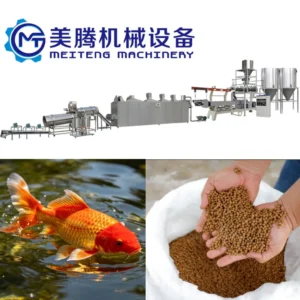
1.0-1.5t/h High Capacity Multi-Species Fish Feed Processing Line to Produce Fish Food
¥45,000.00 Select options This product has multiple variants. The options may be chosen on the product page -
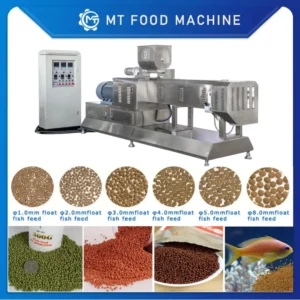
4-5t/h High Capacity Multi-Species Fish Feed Processing Line to Produce Fish Food
¥65,000.00 Select options This product has multiple variants. The options may be chosen on the product page -
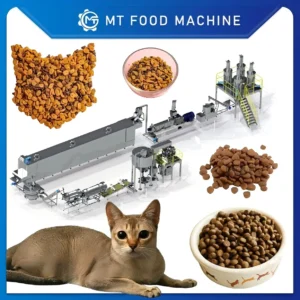
100-200kg/h Capacity PLC Controlled Multi-Species Cat Food Processing Line
¥34,000.00 Select options This product has multiple variants. The options may be chosen on the product page -
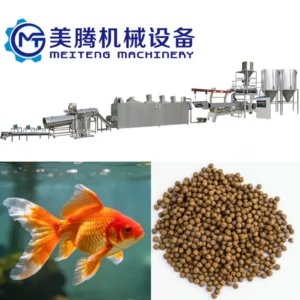
300-600kg/h Capacity Multi-Species Fish Feed Processing Line to Produce Fish Food
¥45,000.00 Select options This product has multiple variants. The options may be chosen on the product page