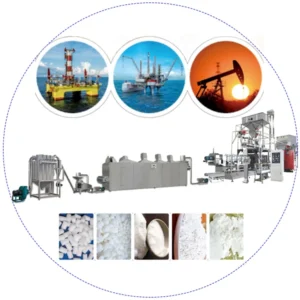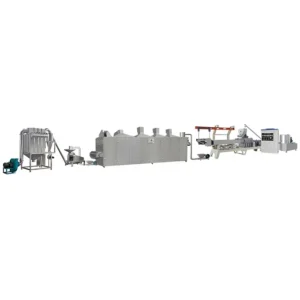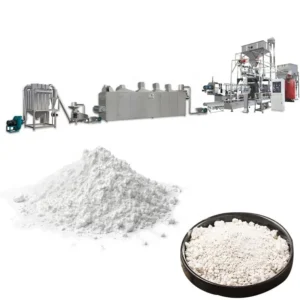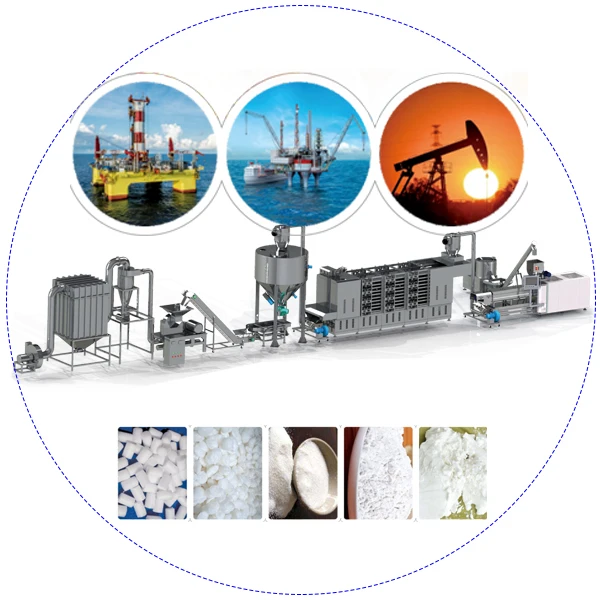


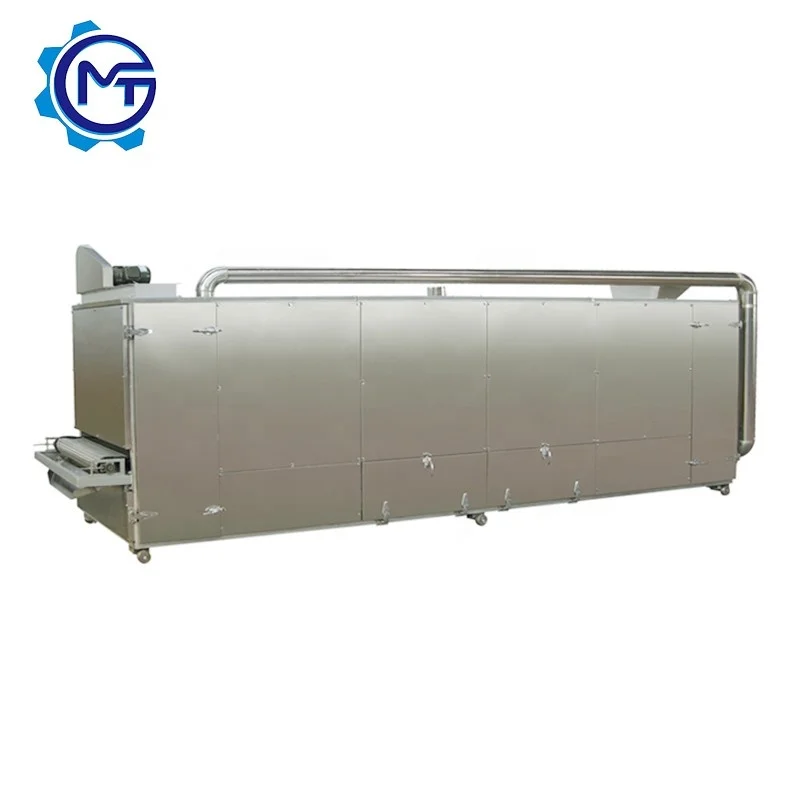


Modified Starch Production Line, Twin-Screw, PLC & MCC Control — engineered for turnkey starch processing from corn, cassava, potato, or wheat raw materials.
- Complete line spans batching, extrusion, cooling, and pulse grinding with cyclone discharge
- Screw configuration and die design matched to specific starch variant and gelatinisation behaviour
- Throughput balanced across every station to prevent bottlenecks
Trial runs on your raw material in our testing workshop validate capacity and product spec before shipment.
Description
Throughput-matched turnkey starch line — every station from batching to grinding is capacity-calculated on the buyer’s specific flour type, eliminating the bottleneck risk that arises when extruders and downstream coolers are sourced separately.
Technical Specifications
| Parameter | Value |
|---|---|
| Product Type | Modified Starch Twin-Screw Extrusion Production Line |
| Screw Type | Twin-screw |
| Motor Power | 45–200 kW (dependent on line capacity and raw material) |
| Throughput Range | 100–1500 kg/h (basis not stated in source — confirm raw material type, moisture content, and specific modified starch variant) |
| Voltage Configuration | 220–440 V, tri-phase (50/60 Hz to be confirmed per destination market) |
| Control System | PLC and MCC available |
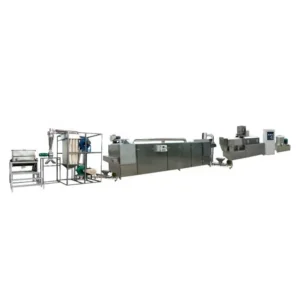
| Line Stations | Mixing/batching, twin-screw extruder, cooling conveyor, pulse grinder with cyclone discharge and dust collector |
| Contact Material | Food-grade stainless steel; PVC for select conveyor sections |
| Fuel Options | Gas, diesel, electricity, or steam (to be specified at quotation) |
| Assembly State | Factory-assembled modular line |
| Standards | CE (since 2014), ISO certified |
Application Suitability
| Application | Material or Output |
|---|---|
| Pregelatinised starch for food processing | Corn starch, potato starch, cassava flour |
| Modified starch for industrial use | Wheat flour, corn starch (oil drilling, paper making grades) |
| Functional starch ingredients | Rice flour, soybean flour for nutrition and fortified food programmes |
| Instant starch thickeners | Blends of cereal and tuber starches requiring specific gelatinisation profiles |
What a Nominal Capacity Figure Leaves Out on a Modified Starch Production Line Turnkey
Starch gelatinisation behaviour changes with every flour source, and a line that runs 800 kg/h on corn starch may stall at 450 on cassava.
A capacity number on paper rarely survives first contact with the buyer’s actual raw material. Moisture content, amylose-to-amylopectin ratio, and particle size all shift how starch responds inside the barrel. When the extruder is specified to a generic throughput target without a trial run, downstream stations — the cooling conveyor, the pulse grinder — end up either starved or overwhelmed. I once spent four days at a Southeast Asian plant rewiring PLC timing sequences because the buffer hopper between the mixer and the twin-screw was bridging; the nominal capacity was correct, but the material flow rhythm was not. [NEED_CITE: starch gelatinisation temperature ranges by raw material source]
Barrel Temperature Profile and Screw Geometry for Starch Modification
The twin-screw extruder at the heart of this modified starch production line turnkey project allows independent control of shear and residence time. Screw element sequencing — forward-conveying, kneading, reverse-pitch — is configured against the specific starch source. Cassava requires gentler shear and a longer conditioning zone than corn starch, which tolerates higher mechanical energy input before the granule structure collapses. Getting this configuration wrong produces either under-gelatinised powder that fails solubility tests or over-degraded starch with lost functional viscosity.
Matching Downstream Throughput to the Extruder Output
The pulse grinder with cyclone discharge and dust collector is sized to handle the full output of the extruder without creating a bottleneck, while the cooling conveyor uses low-power wind-knife air drying to bring the extrudate to a safe grinding temperature without degrading colour or functionality. If the cooler is underspecified, starch enters the grinder warm and clumps on the hammer screens, reducing recovery rates. Throughput matching across these stations is calculated before the line ships, not adjusted on the factory floor after installation. [NEED_CITE: starch powder recovery rates in cyclone discharge grinding]
Reading the Specs That Actually Matter
The motor power range of 45 to 200 kW reflects the difference between a 100 kg/h pilot line producing specialised pregelatinised starch and a 1500 kg/h volume line for industrial-grade modified starch. Higher kW is not simply "more power" — it provides the torque needed to maintain screw speed under the viscosity load of dense starch melts. The PLC and MCC control system maintains repeatable barrel temperature profiles and feed rates across shifts and operators, which is where batch-to-batch consistency in starch modification actually gets won or lost. Food-grade stainless steel contact surfaces prevent iron contamination that would discolour light starches, particularly potato and rice flour grades. The fuel option for the dryer — gas, diesel, electricity, or steam — is specified during quotation because each market has different utility costs and availability, and the wrong choice locks the buyer into years of elevated operating expense.
The Hidden Cost of Skipping the Trial Run
When a starch line ships without a factory trial on the buyer’s own raw material, the first weeks of commissioning become product development. Screw configurations are guessed, barrel temperatures are adjusted by trial and error, and the grinder screen mesh is changed repeatedly until the particle size distribution stabilises. Every day of this is lost production. The buyer pays for raw material that runs through the line as waste, and the on-site engineer — if one is present — is doing work that should have been completed before the machines left the factory. [NEED_CITE: typical commissioning delays from unvalidated starch line configurations]
Why Source the Full Line from One Supplier
The line layout and capacity calculation document shows every station — batching, extrusion, cooling, grinding — sized to the same throughput target, so no single unit constrains the others. Screw configuration and die design are specified to the buyer’s raw material and target starch modification, not copied from a generic build. An in-house testing workshop runs the buyer’s actual flour before shipment, producing a trial run report that locks in the screw arrangement and barrel profile. Electrical schematics are prepared with voltage, frequency, and control language confirmed for the destination country, avoiding the commissioning delays that arise when a panel arrives wired for the wrong standard. Pre-sales engineering consultation, on-site installation, and ongoing maintenance support are handled by the same team that built the line.
Documentation & Verification
- Line layout and capacity calculation showing throughput matched across all stations
- Trial run report on buyer’s raw material from in-house testing workshop
- Screw and die configuration record locked to target starch modification
- Electrical schematic with confirmed voltage, frequency, and control language
- CE declaration of conformity and ISO certificate
- Wear parts list including replacement screw elements and grinder screens
Installation, Commissioning & Support
- Foundation and floor space plan provided based on the full line footprint including the pulse grinder cyclone and dust collector
- Power supply requirements specified per the 220–440 V, tri-phase configuration with dedicated circuit for the twin-screw motor
- Factory-assembled modules shipped in sequence for phased installation and reduced on-site assembly time
- First-run parameter setting on the PLC to lock barrel temperature profiles and feed rate for the buyer’s starch variant
- Operator training covering screw element replacement, grinder screen changes, and daily cleaning of food-grade contact surfaces
- Spare screw elements, die plates, and grinder screens identified and available for first replacement cycle
Before You Send an Inquiry
To configure a modified starch production line turnkey project accurately, specify the starch source (corn, cassava, potato, wheat, rice, or a blend), the target modification type, and the intended hourly or daily output on that material. Include the destination market’s voltage standard and frequency, the preferred control language for the PLC interface, and whether steam, gas, diesel, or electric heating is available on site. If a trial run on your raw material is needed before shipment, provide a sample quantity and your product specification sheet.
Frequently Asked Questions
Q: How is line capacity verified on my specific starch raw material before shipment?
A: A sample of your flour is run through the twin-screw extruder in the in-house testing workshop. The trial run report documents the actual throughput achieved, the screw configuration used, and the barrel temperature profile — so the capacity figure you receive is based on your material, not a generic starch benchmark.
Q: How do you match throughput between the extruder, cooler, and grinder stations?
A: Each station is sized during the line layout and capacity calculation phase. The cooling conveyor length and wind-knife capacity are matched to the extruder output rate, and the pulse grinder with cyclone discharge is selected to process the full cooled volume without creating a backlog or running partially empty.
Q: What voltage, frequency, and control language options are confirmed before production?
A: The electrical schematic is finalised after confirming the destination market’s tri-phase voltage (within the 220–440 V range) and frequency (50 or 60 Hz). The PLC interface language is set to the operator’s working language. This confirmation happens before the MCC cabinet is wired.
Q: Can the screw configuration be changed later if I add a new starch variant?
A: Yes. The twin-screw extruder uses modular screw elements that can be rearranged on the shaft. The original screw and die configuration record is kept on file, so reverting to the previous setup — or building a new one for a different flour source — is a mechanical change, not a machine replacement.
Q: What is the phased installation and commissioning schedule for a full turnkey starch line?
A: Factory-assembled modules are shipped in installation sequence. The batching and extruder stations are set and aligned first, followed by the cooling conveyor and pulse grinder. Commissioning proceeds station by station, with PLC parameters locked and operator training completed at each stage before moving to the next.
Related products
-
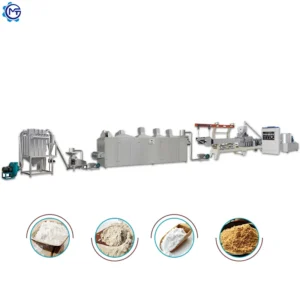
Twin-Screw Extrusion Line for Modified Starch. Producing Pregelatinized Adhesive & Food Grade Powder
¥65.00 Select options This product has multiple variants. The options may be chosen on the product page -
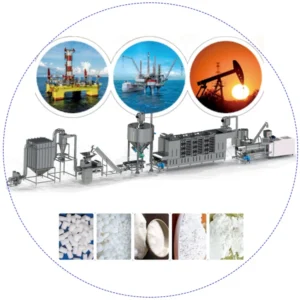
Automatic 304 Stainless Steel Modified Corn Starch Making Machine TWIN SCREW 500kg/h Capacity Starch Processing Production Line
¥50.00 Select options This product has multiple variants. The options may be chosen on the product page -
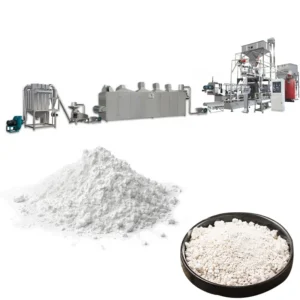
High-Efficiency Customizable Modified Starch Production Line – Automatic Corn Pellet Adhesive Making Equipment
¥65.00 Select options This product has multiple variants. The options may be chosen on the product page -
Automatic Modified Corn Starch Making Machine 304 Stainless Steel Gearbox High Efficiency Starch Processing Production Line
¥30.00 Select options This product has multiple variants. The options may be chosen on the product page