

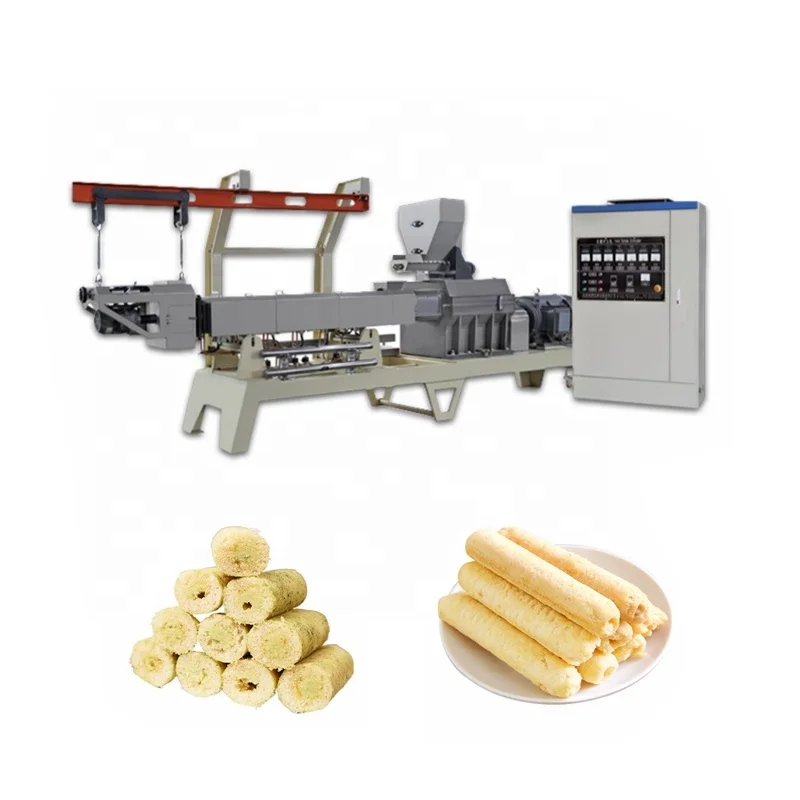
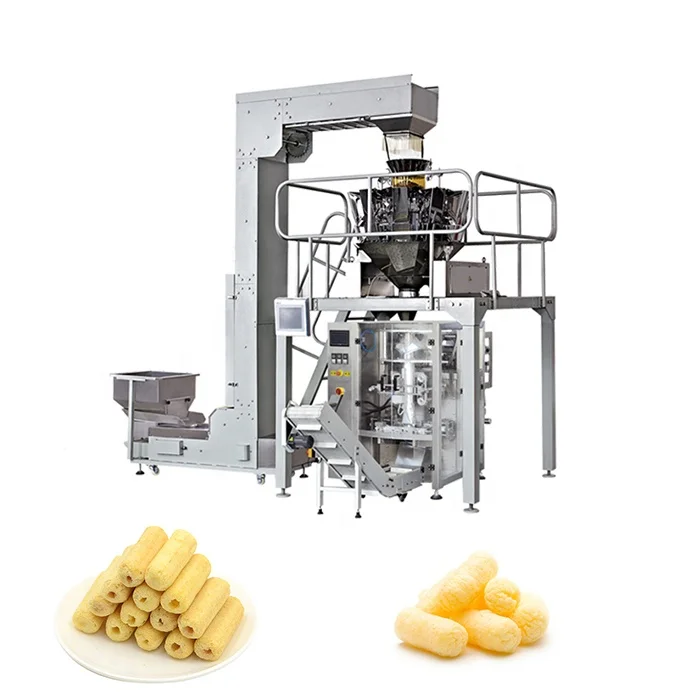
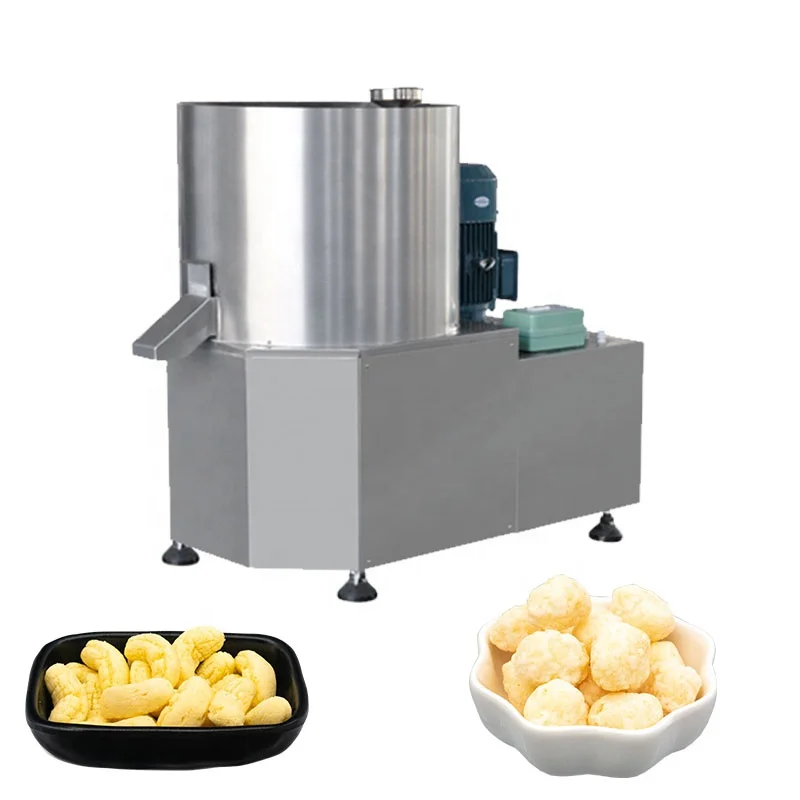
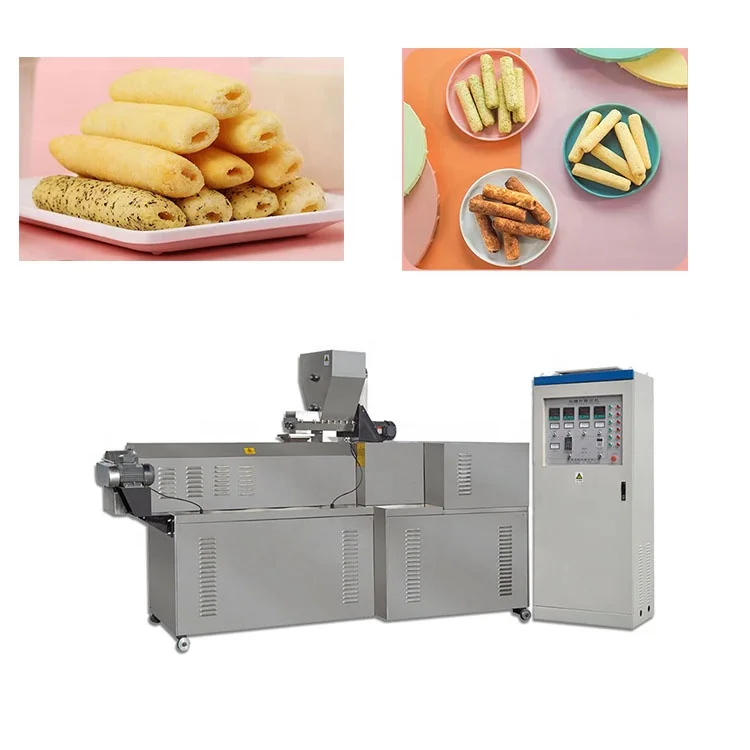
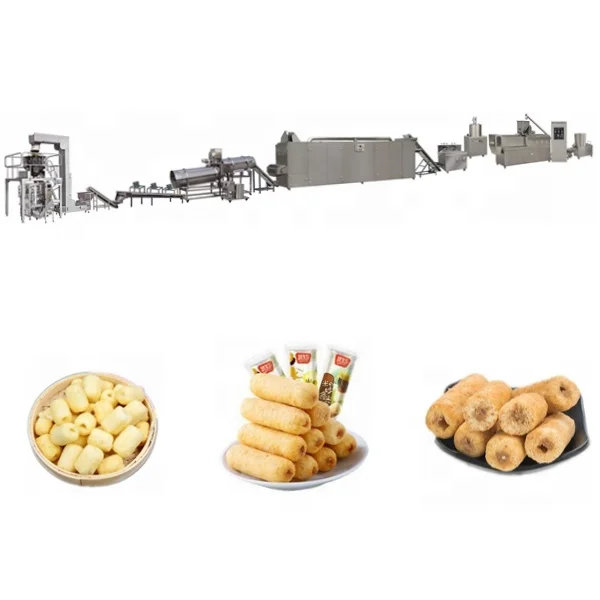
Core-Filled Snack Food Extrusion Line, Twin-Screw, PLC Control — engineered for chocolate and cream center-filled snack formats including pillows and bars.
- Screw configuration and die design specified to buyer’s raw material formulation, ensuring target texture and density
- Complete turnkey layout with matched throughput across mixing, extrusion, center filling, conveying and seasoning stations
In-house trial runs on your raw material verify real-world output before shipment, supported by full line layout documentation and on-site commissioning.
Description
Screw and die configuration specified to buyer’s raw material — our in-house testing workshop runs trials on your exact formulation before the core-filled snack food extrusion line ships, verifying texture and density against your market target.
Technical Specifications
| Parameter | Value |
|---|---|
| Product Type | Core-Filled Snack Food Extrusion Line |
| Line Stations | Mixer → Screw Conveyor → Twin-Screw Extruder → Center Filling Machine → Air Conveyor → Seasoning Drum |
| Screw Type | Twin-screw (MT-II) |
| Model Options | MT65 / MT70 / MT85 |
| MT65 Output Capacity | 120–150 kg/h (basis not stated in source — confirm raw material, moisture content, product format) |
| MT65 Total Power | 59 kW |
| MT65 Overall Dimensions | 21000 × 1200 × 2200 mm |
| MT70 Output Capacity | 200–250 kg/h (basis not stated in source — confirm raw material, moisture content, product format) |
| MT70 Total Power | 92 kW |
| MT70 Overall Dimensions | 23000 × 1500 × 2200 mm |
| MT85 Output Capacity | 300–400 kg/h (basis not stated in source — confirm raw material, moisture content, product format) |
| MT85 Total Power | 167 kW |
| MT85 Overall Dimensions | 28000 × 3500 × 4300 mm |
| Extruder (MT-II) Power | 36 kW |
| Mixer Power / Output | 4 kW / 70–100 kg/h (basis not stated — confirm batch cycle time and formulation) |
| Center Filling Machine Power | 4 kW |
| Seasoning Drum Diameter | 700 mm |
| Control System | PLC and MCC |
| Standards | CE (since 2014), ISO certified |
| Trial Run | In-house on customer raw material before shipment |
| Spare Parts | Free wearing parts supplied; additional spares recommended for 2–3 years of operation |
Application Suitability
| Application | Material or Output |
|---|---|
| Chocolate-filled extruded bars | Wheat flour, corn, rice starch base with chocolate center |
| Cream-filled pillow snacks | Corn and rice formulations with cream or jam filling |
| Corrugated core-filling corn puffs | Corn grits and starch blends with sweet or savory center |
| Cereal bars and sheet snacks | Multi-grain flour blends with varied filling viscosities |
| Rice cakes with center filling | Rice flour formulations requiring controlled gelatinisation |
What "Nominal Capacity" Means When Your Recipe Hits the Barrel
A rated throughput figure only matters if it holds on your specific raw material at your target moisture and product density.
I have watched lines perform well on the factory test floor with standard corn grits, then lose rhythm the moment a buyer switches to a high-fat, high-sugar recipe that behaves differently under shear and heat. The extruder may push volume, but if the center filling machine or the air conveyor cannot keep pace, product piles up at transfer points and deforms before reaching the seasoning drum. That mismatch is where most disputes start. The core-filled snack food extrusion line turnkey scope must account for every station working at the same real-world rate, not just the extruder running at its brochure number [NEED_CITE: throughput matching across extrusion line stations].
Matching Every Station from Mixer to Seasoning Drum
The core-filled snack food extrusion line turnkey approach treats the mixer, twin-screw extruder, center filling machine, air conveyor, and seasoning drum as one system rather than independent purchases. Each station’s throughput is calculated against the same raw material and recipe so that no single point constrains the rest. When the mixer delivers 70–100 kg per batch cycle and the extruder is sized accordingly, the center filling unit and downstream seasoning drum follow the same rhythm without material backlog or idle gaps.
Why Screw Configuration Decides Your Product Texture
Twin-screw geometry, barrel temperature profile, and die opening shape together determine whether the extruded shell is crisp, airy, or dense enough to hold a liquid center without collapsing. A chocolate-filled bar requires a different screw pitch and residence time than a cream-filled pillow because the shell wall thickness and expansion ratio must match the filling viscosity and injection pressure. Specifying these elements to your raw material before production starts avoids the costly cycle of adjusting dies and reformulating recipes on the shop floor [NEED_CITE: twin-screw extrusion parameters for filled snack formats].
Reading the Numbers That Actually Matter on Line
The MT65 at 59 kW total line power suits smaller production runs where floor space is limited to roughly 21 meters in length, while the MT85 at 167 kW and 28 meters demands a dedicated utility circuit and significant hall clearance. The 36 kW extruder motor must deliver consistent torque across varying starch loads, and the 4 kW center filling machine must maintain filling temperature without scorching heat-sensitive ingredients like cocoa butter. The 700 mm seasoning drum diameter accommodates continuous tumbling at line speed, ensuring even oil and powder coating before packing.
The Hidden Cost of Undersized Downstream Equipment
When the cooling or conveying stage cannot match extruder output, partially set filling material leaks from the shell, and product rejection rates climb without any fault in the extruder itself. Buyers who focus only on extruder capacity often discover weeks after commissioning that the air conveyor height or seasoning drum cycle time is the real bottleneck, forcing the entire line to run below its nameplate rating [NEED_CITE: common bottlenecks in center-filled snack production lines].
Why Procurement Here Reduces Integration Risk
Complete line stations from batching through packing under one supplier means throughput calculations are unified, not assembled from separate vendor quotations that each assume ideal conditions. Screw and die configuration records are generated specifically for your raw material rather than copied from a generic build. The in-house testing workshop runs your formulation before dispatch, producing a trial report that documents real output and product quality. Electrical schematics confirm voltage, frequency, and control language for your target market before the line leaves the factory, eliminating commissioning delays. Pre-sales consultation carries through to on-site installation, operator training, and ongoing maintenance support.
Documentation & Verification
- Line layout and capacity calculation confirming matched throughput at every station
- Screw and die configuration record specific to your raw material formulation
- Trial run report on customer raw material performed before shipment
- Electrical schematic with voltage and frequency confirmation for target market
- CE declaration of conformity and ISO certificate for import compliance
- Operation and maintenance manual with wear parts list
Installation, Commissioning & Support
- Floor space planning for line lengths up to 28 meters with utility corridor clearance
- Dedicated power circuit sized for total line load up to 167 kW at confirmed voltage
- Phased station assembly with extruder and center filling machine alignment verification
- First-run parameter setting including barrel temperature profile and filling injection pressure
- Operator training on PLC and MCC interface for recipe changeover and fault response
- Wear parts list covering screws, dies, and filling nozzles with recommended reorder intervals
Preparing Your Project Inquiry
To size the line accurately, share your raw material formulation including flour type, fat content, and target moisture at the extruder inlet. Specify the filling material — chocolate, cream, jam — along with its viscosity range and desired filling-to-shell ratio. Confirm local voltage and frequency standards, preferred control language, available workshop dimensions, and whether you need a trial run on your own raw material before the equipment ships.
Frequently Asked Questions
Q: How is line capacity verified against my specific raw material and recipe?
A: The in-house testing workshop runs your exact formulation through the twin-screw extruder and center filling machine before shipment. A trial run report documents actual throughput, product texture, shell wall thickness, and filling integrity so that capacity figures reflect your recipe rather than a generic test material.
Q: What does the turnkey scope cover beyond the machines themselves?
A: The scope includes line layout design, throughput matching calculations across all stations, utility planning for power and compressed air, phased installation scheduling, on-site commissioning, and operator training on the PLC and MCC control system. Electrical schematics are confirmed to your local voltage and frequency before production begins.
Q: How are screw and die configurations chosen for filled versus non-filled formats?
A: Core-filled snacks require thicker shell walls and controlled expansion ratios to contain liquid centers without rupture. Screw pitch, barrel temperature zones, and die geometry are specified to achieve that balance, while non-filled puffed formats use higher expansion settings. Both configurations are documented in the screw and die record provided with each line.
Q: What electrical and control options are available for different export markets?
A: Voltage and frequency are confirmed during the specification stage to match your local supply standards. The PLC and MCC control system supports configurable interface languages, and the electrical schematic is reviewed with you before production to prevent commissioning delays caused by mismatched components.
Q: How are spare wear parts supplied and when should I reorder?
A: Free wearing parts ship with the line, and a detailed wear parts list identifies screws, dies, and filling nozzles by part number. Based on typical production schedules, ordering additional spares within the first year of operation ensures availability when the first replacement cycle is due, avoiding unplanned downtime.
Related products
-

New Puffed Snack Food Machine Production Line Corn Flake Puff Corn Making Machine Twin Screw Extruder 100-500kg/h Capacity Food
¥8,500.00 Select options This product has multiple variants. The options may be chosen on the product page -

Puffed Snack Food Machine Snack Food Machine Puffed Snack Machine
¥11,050.00 Select options This product has multiple variants. The options may be chosen on the product page -

Puffed Snacks Seasoning Flavor Machine Twin Screw Corn Puffing Food Making Extruder Equipment
¥8,355.00 Select options This product has multiple variants. The options may be chosen on the product page -

Crunchy Puffed Snack Breakfast Cereal Corn Flakes Making Machine
¥1,000.00 Select options This product has multiple variants. The options may be chosen on the product page


