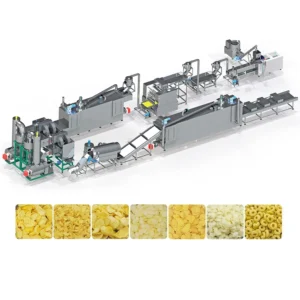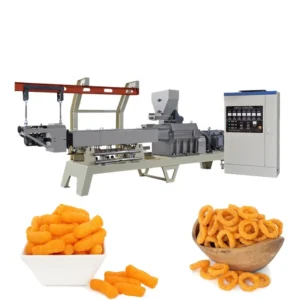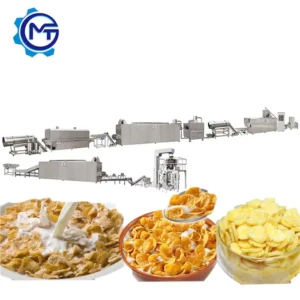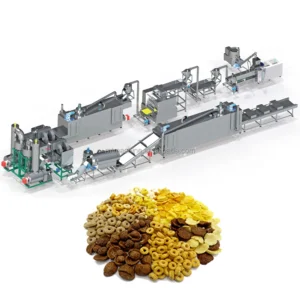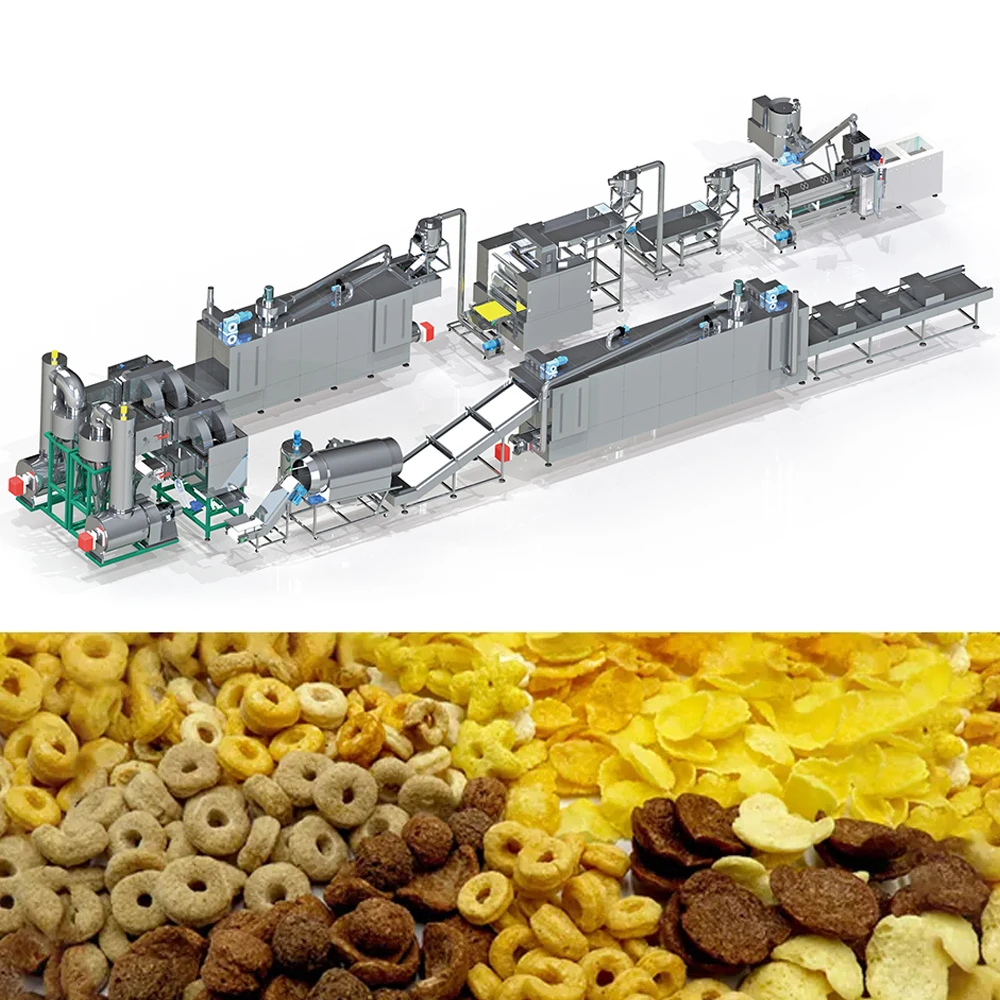


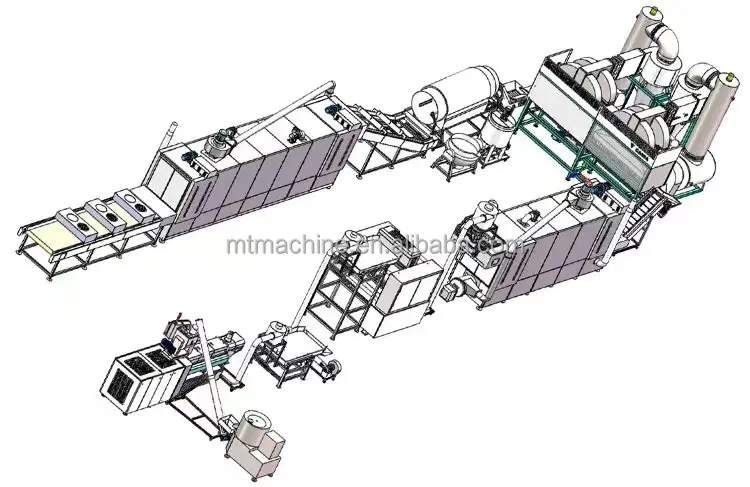
MT70 Corn Flakes Breakfast Cereal Production Line, Twin-Screw Extrusion, PLC Control — configured as a turnkey layout from mixing through extrusion, flaking, roasting and coating. Screw configuration and die design are matched to the buyer’s grain blend and target flake density, with throughput balanced across every station to prevent bottlenecks. Line capacity is verified against the buyer’s actual raw material in our testing workshop before shipment, with full documentation including layout, electrical schematic and trial run report.
Description
Throughput Matched Across Every Station — A complete corn flakes breakfast cereal production line configured from batching to packing so no single machine bottlenecks the output, with capacity verified against your actual grain formulation.
Technical Specifications
| Parameter | Value |
|---|---|
| Product Type | Corn Flakes Breakfast Cereal Production Line |
| Model Options | MT70 / MT85 / MT75 |
| Installed Power | 160 kW (MT70); 190 kW (MT85); 210 kW (MT75) |
| Power Consumption | 120 kW (MT70); 140 kW (MT85); 150 kW (MT75) |
| Output Capacity | 150–200 kg/h (MT70); 300–400 kg/h (MT85); 300–500 kg/h (MT75) (basis to be confirmed) |
| Extruder Type | Twin Screw |
| Control System | PLC (Flaking Machinery); MCC available for line integration |
| Overall Dimensions | 41 × 1.5 × 2.2 m (MT70); 43 × 1.5 × 3.2 m (MT85); 45 × 1.5 × 3.5 m (MT75) |
| Flaking System | Hydraulic double-roller with infrared sensor temperature control |
| Roasting Oven | Hot air, dual circulating fans, cyclone dust removal |
| Coating System | Double tumble sugar melting with spray nozzle |
| Dryer Heating Source | Gas / Electric (configurable) |
| Screw Material | Wear-resistant alloy |
| Lubrication | Automatic lubricating and cooling |
| Warranty | 24 Months |
Application Suitability
| Application | Material or Output |
|---|---|
| Retail Breakfast Cereal | Corn grits, maize flour, oat blends (sugar-coated or plain flakes) |
| Fortified Nutrition Programs | Vitamin-mineral premix blended with grain bases for consistent density |
| Chocolate Cereal Variants | Extruded and toasted grain pellets for chocolate coating (Chocapic-type) |
| Multi-Format Snack Lines | Puffed cereal shapes and 2D/3D pellet formats on twin-screw platform |
Why Nominal Capacity Figures Fail in Cereal Projects
Every capacity figure we quote is tied to raw material and moisture conditions verified in our testing workshop.
A corn flakes production line turnkey project often stalls when the extruder is rated for one output on a standard starch base, but the buyer’s actual recipe includes high-fiber bran or protein concentrates that alter expansion and dwell time [NEED_CITE: impact of fiber content on extrusion dwell time and throughput]. I once spent two weeks on-site recalibrating a line where the roasting oven could not keep pace because the buyer’s high-fiber formula resulted in lower expansion than our initial trial, causing moisture to remain trapped in the flake. Matching the extruder output to the dryer and roasting capacity requires physical trial runs on your specific formulation before the line is finalized.
Twin-Screw Configuration for Grain Density Control
The MT-series platform uses a twin-screw extruder where the screw configuration and die design are specified to the buyer’s grain blend and target flake density. This allows precise control over shear and moisture, which dictates whether the final flake will have the dense bite expected in traditional corn flakes or a lighter, crispier texture for children’s cereals.
Automated Flaking and Roasting Consistency
Our PLC-controlled flaking machinery utilizes a hydraulic double-roller system with infrared sensor temperature regulation to maintain consistent flake thickness. The hot air roasting oven features dual circulating fans and a cyclone dust removal device to ensure even surface blistering and crispness across the entire batch [NEED_CITE: thermal dynamics in cereal roasting ovens].
Interpreting Extruder Power and Footprint
The difference between the 160 kW installed power of the MT70 and the 210 kW of the MT75 reflects the motor torque required for higher throughput and harder grain formulations. The twin-screw design provides the necessary shear for gelatinization without overworking the motor, while the 45-meter length of the MT75 line accounts for the extended cooling and roasting zones needed for larger volume stabilization. The choice between gas and electric heating sources for the dryer significantly affects the utility planning and operating cost, which must be confirmed during the layout phase.
The Hidden Cost of Mismatched Line Stations
If the flaking mill is undersized relative to the extruder, the line experiences surges that lead to uneven flake thickness and increased breakage. Similarly, a roasting oven with insufficient airflow will fail to achieve the characteristic blistering on the flake surface, resulting in a dense, unappealing product that fails retail quality checks [NEED_CITE: common causes of cereal line bottlenecking].
Project Verification and Engineering Strengths
Our engineering team provides a complete line layout and capacity calculation document showing throughput matching across every station before production begins. We conduct a trial run on your actual raw material in our in-house testing workshop to verify screw configuration and temperature curves [NEED_CITE: importance of pre-shipment material trials]. The electrical schematic includes voltage, frequency, and control language confirmation to prevent commissioning delays.
Documentation & Verification
- Line layout and capacity calculation showing throughput matching across every station.
- Screw and die configuration record specified to buyer’s raw material and target product.
- Trial run report on customer’s actual raw material conducted in the testing workshop.
- Electrical schematic with voltage, frequency, and control language confirmed prior to production.
- Operation and maintenance manual with wear parts list and packing photographs.
Installation, Commissioning & Support
- Foundation planning based on the 45-meter footprint and specific utility requirements of the MT75.
- Power circuit sizing for 210 kW installed load and separate gas/electric feeds for the dryer.
- Phased installation of the hydraulic flaking mill and roasting oven to ensure level alignment.
- On-site commissioning of PLC parameters for specific grain recipes and target moisture levels.
- Operator training focused on screw wear inspection and hydraulic pressure adjustment.
- Provision of spare twin-screw elements and die plates for initial production runs.
Preparing Your Project Inquiry
To initiate a layout proposal, provide the specific grain formulation, target flake density, and required hourly output based on your raw material moisture. Include your workshop dimensions and local voltage standards to ensure the MCC and PLC systems are correctly specified.
Frequently Asked Questions
Q: How is line capacity verified against my specific grain formulation?
A: We perform a physical trial run using your raw material in our testing workshop. This allows us to measure actual throughput and adjust the screw configuration and die design to match your specific recipe and target moisture content before the line is shipped.
Q: How do you ensure throughput matching between the extruder and roasting oven?
A: We calculate the mass flow and moisture reduction required at each stage. The roasting oven is sized with sufficient airflow and belt length to handle the maximum output of the twin-screw extruder, preventing material backlog and ensuring consistent crispness.
Q: What does the phased installation schedule look like?
A: The project typically begins with utility rough-ins for the 160–210 kW power load, followed by the positioning of the main extruder and flaking mill. The roasting oven and coating systems are installed last to allow for final belt tensioning and sensor calibration.
Q: Can the same line produce both sugar-coated and plain corn flakes?
A: Yes, the line includes a double tumble coating system with sugar melting and spray nozzles. This station can be bypassed for plain flakes or used for various sugar and vitamin slurries without requiring a separate line or major reconfiguration.
Related products
-
1000 Lbs Automatic Corn Flakes Production Line Mixer Breakfast Cereal Corn Flakes Production Line
¥45,000.00 Select options This product has multiple variants. The options may be chosen on the product page -
Small Scale Breakfast Cereal Manufacturing Machine for Corn Flakes Process Line
¥45,000.00 Select options This product has multiple variants. The options may be chosen on the product page -
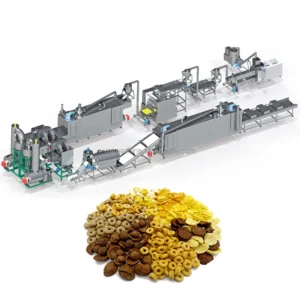
Stainless Steel Honey Small Corn Flake Breakfast Cereal Flakes Maker Making Machine Production Plant
¥30,000.00 Add to cart -
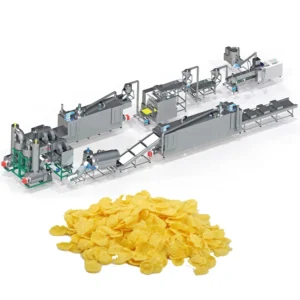
Complete Corn Flakes Production Line Breakfast Cereal Processing Machine Core Motor Component Cornflakes Processing Equipment
¥19,000.00 Select options This product has multiple variants. The options may be chosen on the product page