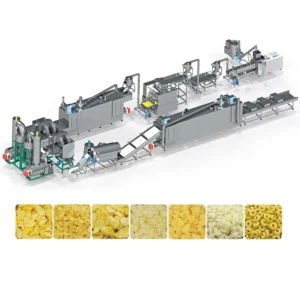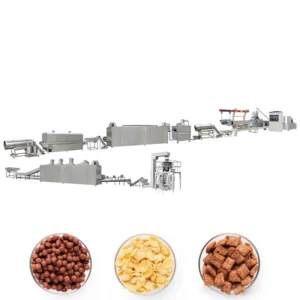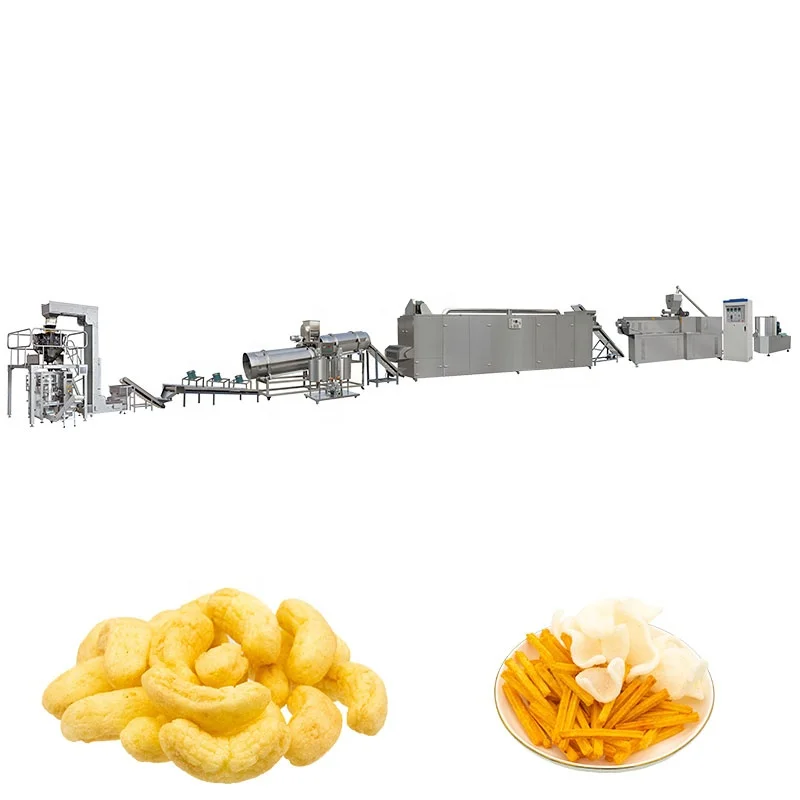
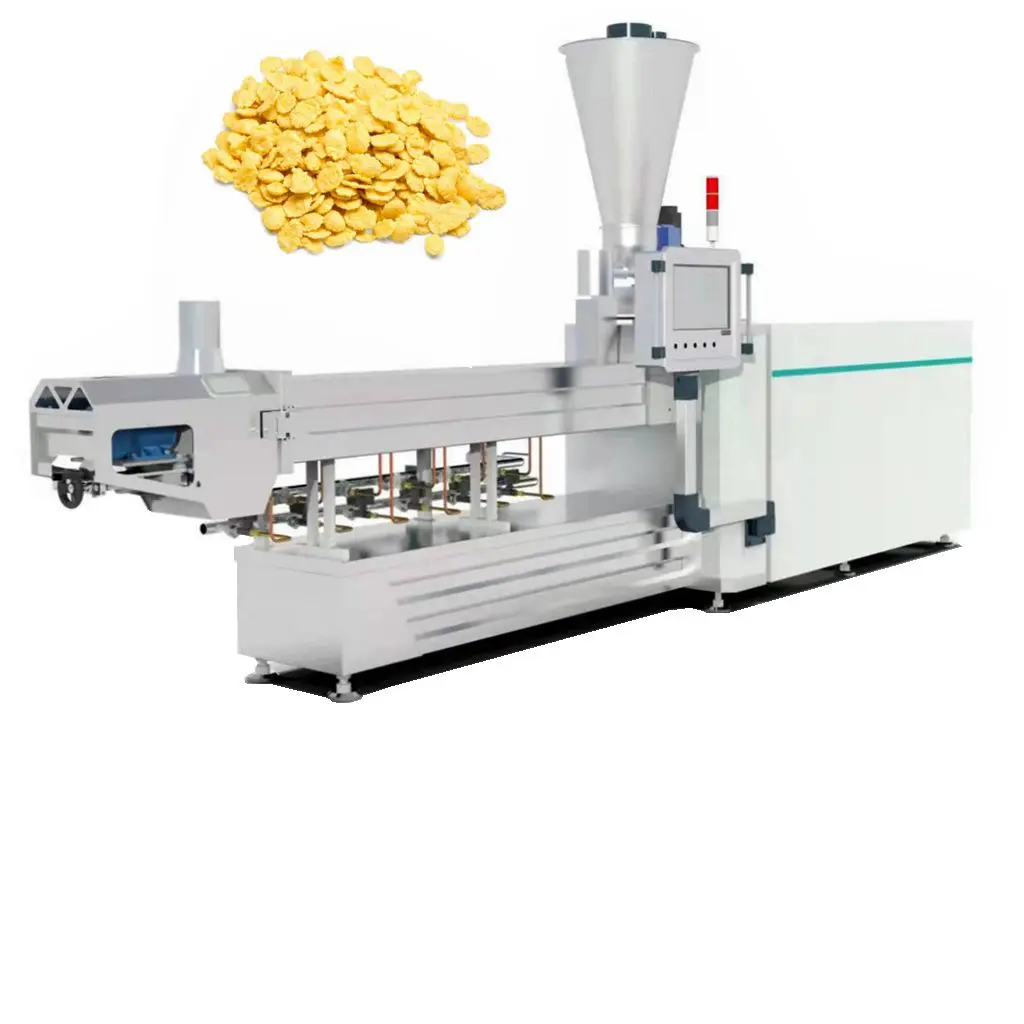
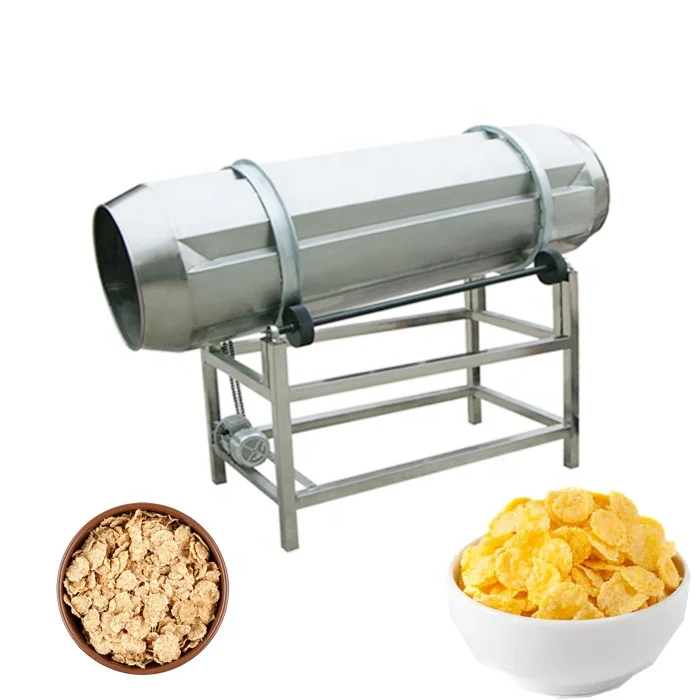
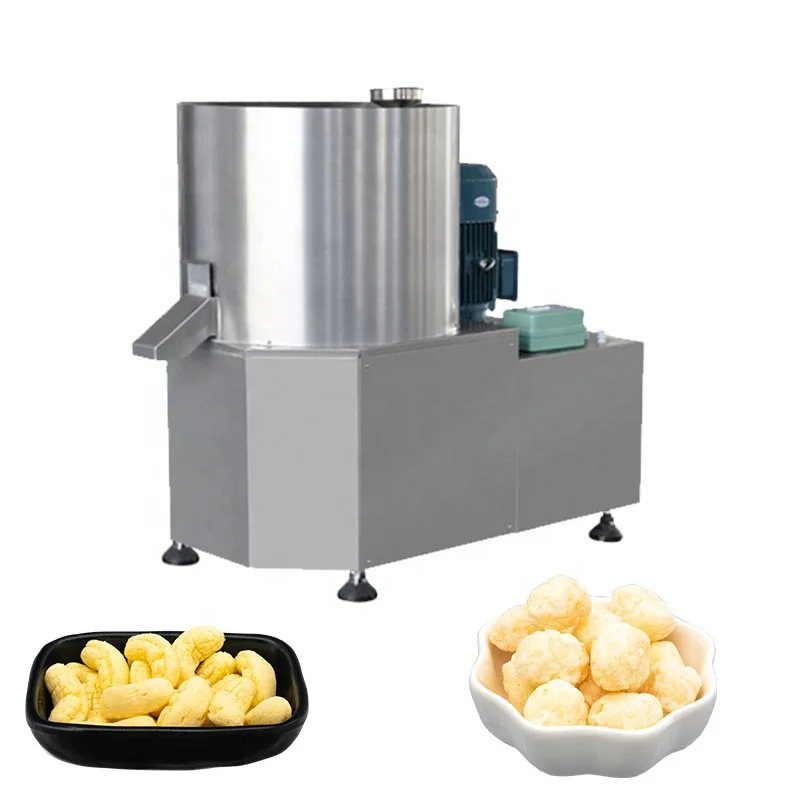

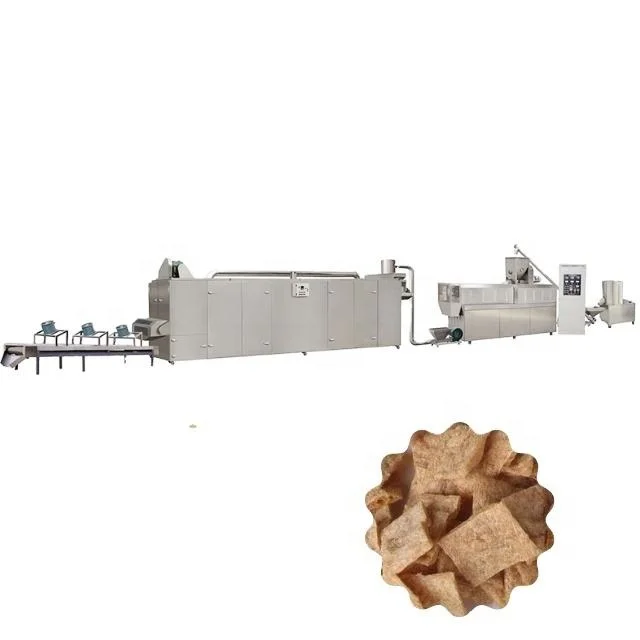
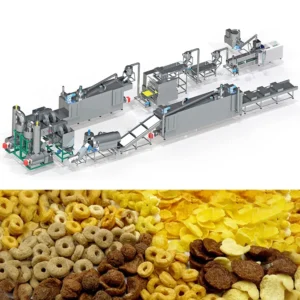
MT75 Corn Flakes Production Line, Twin-Screw Extruder, 300-500KG/HR Capacity, PLC Control — configured as a complete turnkey project from batching through extrusion, flaking, roasting, coating and packing.
- Screw configuration and die design specified to your grain formulation and target flake density
- Hydraulic flaking machinery with double-motor roller drive and infrared temperature control
- Hot air roasting oven with dual circulating fans and cyclone dust removal for even blistering
Every station throughput-matched under one supplier, with in-house trial runs on your raw material before shipment and on-site commissioning included.
Description
Throughput-Matched Line Engineering — Every station on the MT75 corn flakes production line, from batching through roasting and coating, is sized against the extruder’s real output on your grain formulation rather than assembled from separate vendors.
Technical Specifications
| Parameter | Value |
|---|---|
| Product Type | Corn Flakes Production Line |
| Model | MT75 (line also references MT70, MT85) |
| Extruder Type | Twin Screw |
| Installed Power | 210 KW (MT75) / 160 KW (MT70) / 190 KW (MT85) |
| Power Consumption | 150 KW (MT75) / 120 KW (MT70) / 140 KW (MT85) |
| Capacity | 300-500 KG/HR (MT75) (basis not stated in source — confirm raw material formulation and moisture content) |
| Overall Dimensions | 45 x 1.5 x 3.5m (MT75) / 41 x 1.5 x 2.2m (MT70) / 43 x 1.5 x 3.2m (MT85) |
| Basic Material | Powder of corn, rice, wheat, oat, barley |
| Control System | PLC control system |
| Flaking Machinery Drive | Double Motors for separate roller driving; Hydraulic system for double rollers |
| Flaking Machinery Temperature Control | Infrared sensor |
| Dryer Heating Source | Gas, Electric |
| Roasting Oven | Hot air roasting with conciliation burner, two separate circulating fans, cyclone dust removal device |
| Coating System | Double tumble for sugar melting, elevator, coating drum, spraying nozzle |
| Screw Feature | Automatic lubricating, cooling function |
| Production Procedure | Mixing → Extruding → Flaking → Drying → Hot air roasting → Sugar coating (optional) → Cooling → Packing |
| Final Products | Natural corn flakes, sugar-coated corn flakes, variety shapes (ball, tube, stick, ring, fruit loop, star, wheel, flower, heart) |
| Assembly State | Complete turnkey line |
| Standards | CE, ISO |
Application Suitability
| Application | Material or Output |
|---|---|
| Natural corn flakes for breakfast cereal market | Corn powder or corn grits |
| Sugar-coated corn flakes with honey or syrup glaze | Corn, rice, wheat blends with sugar coating |
| Multi-grain extruded cereal shapes (rings, balls, stars) | Blends of oat, barley, wheat, rice |
| Fortified breakfast cereal for nutrition programmes | Grain powder with added vitamin and mineral premix |
What "300 kg/h" Actually Means on Your Grain Blend
Line capacity is only valid when measured against your specific raw material formulation, moisture content, and target flake density.
An extruder rated at a nominal throughput on standard corn grits may lose meaningful output when switching to an oat-heavy blend or a formulation with higher fiber content. I have watched lines stall because the dryer was specified for the extruder’s catalog number rather than the actual moisture load leaving the flaking rollers. When the grain formulation changes and the downstream equipment was never recalculated, the bottleneck shows up on day one of production [NEED_CITE: extrusion throughput dependency on raw material moisture and composition]. A corn flakes production line turnkey project only performs when every station is matched to the real material running through it.
Station Sizing That Holds Up Beyond the Brochure
The twin-screw extruder on this corn flakes production line turnkey system is configured with screw elements and die geometry selected for the buyer’s grain blend. Barrel temperature profiling and moisture addition at the preconditioner determine starch gelatinisation degree, which directly controls how the dough behaves when it hits the flaking rollers.
Why Flaker and Roaster Capacity Must Track the Extruder
Hydraulic flaking machinery with double-motor independent roller drive and infrared temperature control maintains consistent flake thickness across the full belt width. If the roasting oven cannot match the extruder output, wet flakes pile up ahead of the hot air section, and surface blistering becomes uneven [NEED_CITE: cereal flake roasting uniformity and moisture migration]. The conciliation burner and dual circulating fans in this roaster are specified to handle the moisture load that the upstream dryer and flaker deliver at sustained production rates.
Reading the Specs That Matter for Flake Quality
The twin-screw design provides longer residence time and higher shear compared to single-screw extruders of similar barrel diameter, which matters when processing whole-grain blends containing oat or barley where incomplete gelatinisation leads to hard centres in the finished flake. Hydraulic roller pressure on the flaking machinery controls the gap between rollers, and the infrared sensor monitors roller surface temperature to prevent dough sticking or uneven sheet release. A gap that drifts by a fraction of a millimetre changes flake thickness, which then changes how the flake toasts in the roasting oven — too thin and it burns at the edges before the centre crisps; too thick and it stays chewy. The PLC control system ties extruder barrel zones, flaker gap, and roaster temperature into coordinated setpoints so that recipe changes are repeatable across shifts and operators. Automatic screw lubrication and cooling extend run time between maintenance stops, reducing unplanned downtime during long production campaigns on abrasive grain blends.
When the Line Was Never Meant for Your Material
I spent years installing cereal lines across Latin America, and the most expensive failures share one pattern: the trial run was done on the supplier’s standard corn flour at controlled moisture, then the machine shipped without ever seeing the buyer’s actual grain shipment. One installation in Mexico ran a test batch at twelve percent moisture, but the customer’s incoming corn arrived at fifteen percent. Nobody recalibrated the roller gap. The flakes came out thicker than specification, and after roasting the entire batch had a hard, dense bite that the market rejected. That is the hidden cost of skipping a pre-shipment trial on your raw material — you discover the problem only after the line is bolted to your factory floor and your launch date is already past [NEED_CITE: raw material variability impact on extruded cereal quality].
Why Procurement Decisions Land Here
The entire corn flakes line from mixing through packing is engineered under one supplier, so throughput is calculated across every station rather than patched together from separate equipment vendors. Screw configuration and die design are specified to your grain blend and target flake density, not copied from a generic reference build. An in-house testing workshop runs your raw material before shipment, locking in roller gap, barrel temperatures, and roaster profiles so commissioning starts from a known baseline rather than a guess. Twin-screw expertise covers the full range of breakfast cereal grains — corn, rice, wheat, oat, barley — including fortified blends with vitamin premix. Pre-sales engineering covers line layout and phased installation planning, with on-site commissioning and operator training included in the project scope.
Documentation & Verification
- Line layout and capacity calculation showing throughput match across every station against your grain blend
- Screw and die configuration record specified to your formulation and target flake density
- Trial run report on your raw material completed in the testing workshop before shipment
- Electrical schematic with voltage and frequency confirmed for your local grid
- CE declaration of conformity and ISO certificate included with shipping documentation
- Operation and maintenance manual with wear parts list for screws, dies, and roller surfaces
Installation, Commissioning & Support
- Foundation plan sized to the 45 x 1.5 x 3.5m MT75 line footprint with utility connection points
- Power supply requirement confirmed at 210 KW installed capacity with dedicated circuit for PLC control system
- Flaking machinery hydraulic system filled and roller gap calibrated on-site against your grain formulation
- Hot air roasting oven burner commissioned and cyclone dust removal connected to facility extraction
- Operator training covers PLC setpoint management for barrel zones, flaker gap, and roaster temperature profiles
- Wear parts inventory includes replacement screw elements, die inserts, and flaking roller surface segments
Before You Send an Inquiry
To scope a corn flakes production line turnkey project accurately, the conversation needs to start with your grain formulation, expected moisture range of incoming raw material, and target daily output in finished product weight. Share your factory floor dimensions and ceiling height so the line layout can be drafted before quotation. Confirm your local voltage, frequency, and preferred control language so electrical schematics and PLC interface are built correctly from the start.
Frequently Asked Questions
Q: How is line capacity verified against my specific grain blend and moisture content before shipment?
A: Your raw material is shipped to the in-house testing workshop where a trial run is conducted on the twin-screw extruder and downstream stations. Barrel temperatures, screw speed, flaker gap, and roaster profiles are adjusted until the flake meets your density and thickness specification. A full trial run report documents every parameter before the line is approved for dispatch.
Q: How do you ensure throughput is matched between the extruder, flaker, dryer and roaster so no station bottlenecks?
A: Capacity calculations start from your grain formulation and target moisture at each stage, not from catalog ratings. The dryer and roaster are sized to handle the moisture load that the flaker delivers at the extruder’s sustained output on your material. The layout document shows throughput at every station so mismatches are visible before production begins.
Q: What is the phased installation and commissioning schedule for a complete cereal line?
A: Installation follows a sequence from mixing and extrusion through flaking, drying, roasting, coating, and packing. Each station is mechanically fixed, electrically connected, and individually tested before the full line runs together. Commissioning includes parameter tuning on your grain blend and operator training on the PLC control system before handover.
Q: How are voltage, frequency and control language confirmed before production begins?
A: Your local grid specification and preferred operator language are collected during the inquiry stage and written into the electrical schematic and PLC configuration. The control panel is built and tested at the factory with your confirmed voltage and frequency before shipment, eliminating rewiring or reprogramming delays during on-site commissioning.
Related products
-

Best Price Corn Flakes Making Machine Breakfast Cereals Processing Line with Motor As Core Component
¥19,000.00 Select options This product has multiple variants. The options may be chosen on the product page -
Corn Flakes Machine Breakfast Cereal Corn Flakes Production Line Cornflakes Making Machine
¥85,800.00 Select options This product has multiple variants. The options may be chosen on the product page -

Small Scale Breakfast Cereal Manufacturing Machine for Corn Flakes Process Line
¥45,000.00 Select options This product has multiple variants. The options may be chosen on the product page -
Automatic Instant Breakfast Cereals Snack Food Making Machine
¥10,000.00 Select options This product has multiple variants. The options may be chosen on the product page