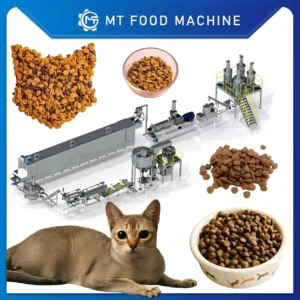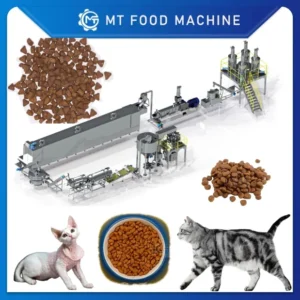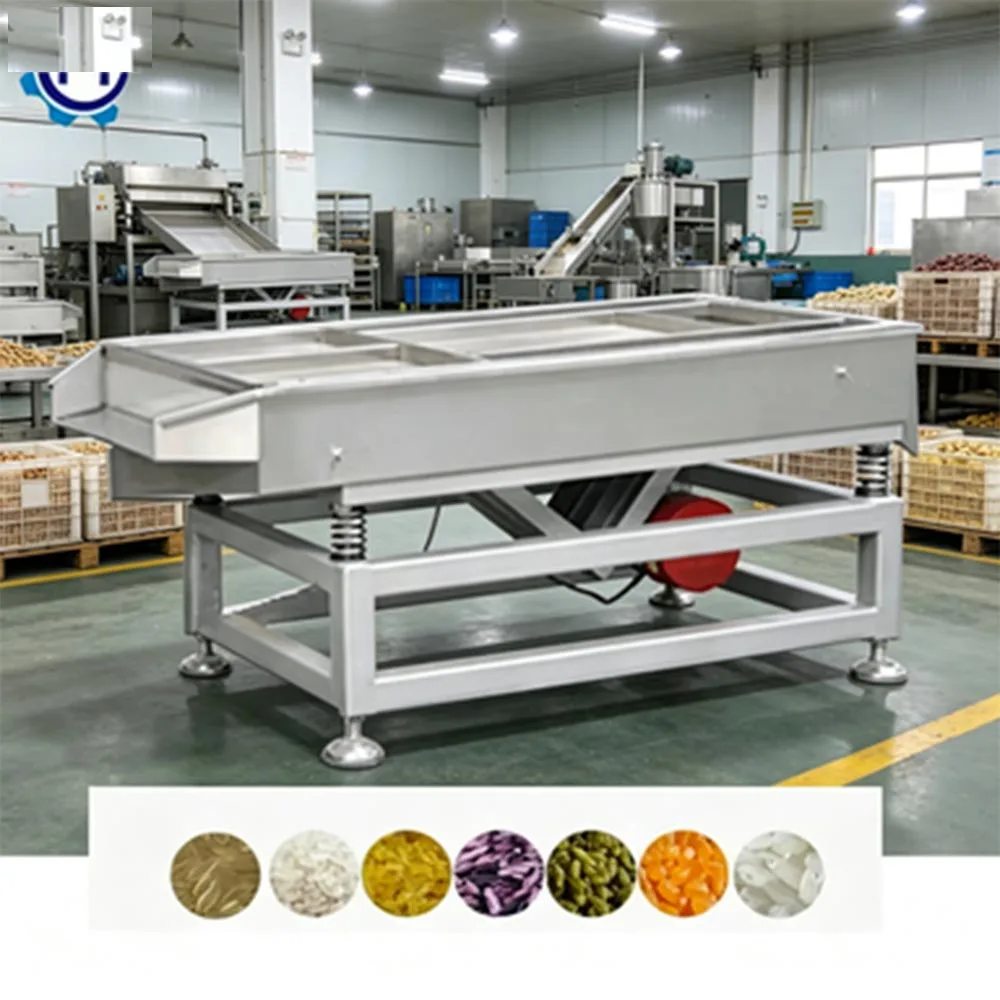


Floating Fish Feed Production Line, Twin Screw, PLC Control, 304 Stainless Steel — configured for continuous aquatic feed processing from mixing through extrusion, drying, seasoning and screening. Every station throughput is matched under one turnkey layout to eliminate bottlenecks. Screw configuration and die design are specified to the buyer’s raw material formulation and target pellet buoyancy for precise floating or sinking control.
- Full line layout, capacity calculation and trial run report provided before shipment
Description
Integrated Line Throughput Matching — Every station from mixer to discharge conveyor is sized to a single capacity target under one supplier, eliminating the bottlenecks that occur when extruders and dryers are sourced separately.
Technical Specifications
| Parameter | Value |
|---|---|
| Product Type | Floating Fish Feed Production Line |
| Extruder Type | Twin Screw |
| Control System | PLC Automatic Control |
| Contact Material | Food Grade 304 Stainless Steel |
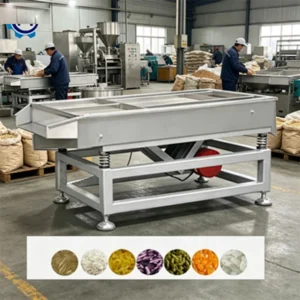
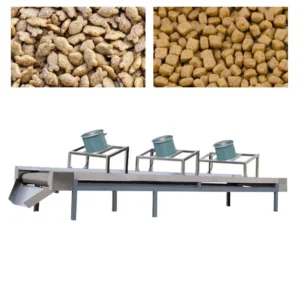
| Line Stations | Raw Material Mixer / Extruder / Dryer / Seasoning Coating Machine / Vibrating Sieve / Conveyor Equipment |
| Pellet Adjustment | Size / Hardness / Buoyancy adjustable |
| Product Formats | Floating and Sinking Fish Feed Pellets |
| Output Capacity | Large stable processing capacity for medium-large scale industrial production (basis not stated in source) |
| Automation Level | Full Continuous Automatic Production |
| Transmission | Optimized energy saving transmission structure |
| Maintenance Design | Humanized operation interface, quick replacement of vulnerable parts |
| Standards | CE, ISO |
Application Suitability
| Application | Material or Output |
|---|---|
| Koi and goldfish feed production | Fish meal, soybean meal, corn powder, compound additives |
| Tropical fish pellet manufacturing | Protein-rich blends with starch binders |
| Freshwater aquaculture feed | Soybean meal, fish meal, vitamin premixes |
| Commercial fish farming operations | Floating pellets for surface-feeding species |
| Hatchery and nursery feed | Small-diameter sinking pellets with controlled density |
What the Nameplate Capacity Hides About Your Floating Fish Feed Production Line Turnkey
A line is only as fast as its slowest station, and most bottlenecks are invisible until commissioning day.
I spent years in assembly bays in Shandong before I ever talked to an overseas buyer. The pattern was always the same: an extruder would run fine on the factory floor with standard starch-heavy material, then arrive at a customer’s facility where the actual formula carried higher protein or fat. The screw configuration could not handle it. Output dropped. The dryer sat half-empty. The whole floating fish feed production line turnkey investment stalled while engineers scrambled to reconfigure. Those early experiences shaped how I approach every line proposal now — capacity means nothing unless it is verified against the buyer’s actual formulation and pellet specification [NEED_CITE: twin-screw extrusion behavior across varying protein and starch ratios].
Screw Configuration Dictates What Your Formula Can Actually Become
The twin-screw extruder sits at the heart of this line, but the screw elements and die plate are not universal components. Floating pellets demand a specific compression ratio and residence time inside the barrel to achieve the starch gelatinisation that traps air pockets for buoyancy. Sinking pellets require a different shear profile — less expansion, denser structure. The screw configuration must be selected against the buyer’s raw material blend and the target pellet behaviour, not copied from a generic build.
Matching Dryer and Coating Capacity to Real Extruder Output
A floating fish feed production line turnkey project fails the moment the dryer cannot keep pace with the extruder. If the extruder discharges continuously but the dryer batch cycle is longer, wet pellets pile up, stick together, and spoil. This line addresses that risk by sizing every station — mixer, extruder, dryer, seasoning drum, vibrating sieve, and conveyor — to the same throughput target from the outset. The PLC automatic control coordinates the full chain so operators manage one continuous process rather than babysitting individual machines [NEED_CITE: throughput synchronization in continuous aquatic feed processing].
Reading the Specs That Actually Matter on the Floor
The twin-screw extrusion mechanism provides the shear and mixing intensity needed for aquatic feed formulas that carry significant fish meal and fat content. Single-screw designs struggle with these blends because they lack the positive conveying action that forces material forward regardless of stickiness. Food grade 304 stainless steel on all contact surfaces is not a cosmetic choice — fish meal residues are corrosive, and carbon steel contact parts degrade quickly in humid aquaculture environments. The PLC automatic control system enables recipe storage and repeatable parameter recall, so a batch of 3 mm floating pellets for tilapia runs identically every time the operator loads that program, reducing variation across shifts.
The Cost of Guessing on Die and Screw Selection
I have seen lines arrive on site with a die plate designed for a pellet diameter the buyer never asked for. The market wanted 4 mm koi pellets; the machine produced 6 mm. Reworking the die after installation means downtime, wasted raw material, and a frustrated production team. When screw element sequencing does not match the formula’s fat content, the barrel wears prematurely and pellet density drifts outside the specification the market expects. These problems compound — wrong buoyancy means fish do not feed properly, farmers complain to the feed producer, and the producer blames the equipment supplier [NEED_CITE: pellet buoyancy and aquaculture feed acceptance standards].
Why Sourcing the Full Chain From One Supplier Changes the Commissioning Conversation
Every station on this line — mixing, extrusion, drying, seasoning, screening, conveying — is configured under a single supplier, so throughput is matched across the chain rather than assembled from independent vendors with incompatible capacities. The screw configuration and die design are specified to the buyer’s actual raw material formulation and target pellet buoyancy before production begins. An in-house testing workshop runs the buyer’s own material before shipment, producing a trial run report rather than leaving product development for the installation phase. Pre-sales consultation carries through engineer design, on-site installation, commissioning, and ongoing maintenance support. The CE and ISO certifications apply to the complete line, not just the extruder in isolation.
Documentation & Verification
- Line layout and capacity calculation showing matched throughput at every station
- Screw and die configuration record specified to your raw material and pellet target
- Trial run report on your formulation in the testing workshop before dispatch
- Electrical schematic with voltage and frequency confirmed for your market
- Operation and maintenance manual covering all line stations
- Wear parts list with reorder specifications for screws, dies, and dryer belts
Installation, Commissioning & Support
- Foundation and floor plan provided based on full line station footprint and conveyor routing
- Electrical supply verified against PLC panel voltage, frequency, and control language before wiring
- Modular station delivery allowing phased assembly from mixer through extruder to packing
- First-run commissioning with screw speed, barrel temperature, and die pressure set to your formula
- Operator training covering recipe recall, pellet buoyancy adjustment, and daily cleaning procedures
- Vulnerable parts replacement procedures for screw elements, die plates, and dryer screen panels
Before You Request a Quote
To configure a floating fish feed production line turnkey project that actually runs on your material, we need to understand the formulation you plan to use — specifically the protein, fat, and starch proportions — along with the pellet diameters and whether you need floating, sinking, or both formats. Share your local voltage and frequency standard so the PLC panel and motor drives are specified correctly before manufacturing begins. If you have existing upstream or downstream equipment that this line must connect to, providing those interface details early prevents integration delays during commissioning.
Frequently Asked Questions
Q: How is line capacity verified against specific raw material formulations and pellet size targets?
A: Capacity is not confirmed from a nameplate figure alone. The buyer’s raw material formulation — including protein, starch, and moisture content — is tested in the in-house workshop using the proposed screw and die configuration. A trial run report documents the actual throughput achieved on that specific formula and pellet diameter, giving the buyer a verified baseline before the line ships.
Q: How are dryer and coating station capacities matched to the extruder output to prevent bottlenecks?
A: Each station’s processing rate is calculated against the extruder’s verified output on the buyer’s material. The dryer residence time, seasoning drum rotation speed, and conveyor transfer rates are all specified to handle the same continuous flow. The PLC automatic control coordinates start-up and shut-down sequencing so no station accumulates material from the one before it.
Q: What screw and die configurations are selected for floating versus sinking pellet production?
A: Floating pellets require screw elements that generate sufficient shear and barrel pressure to fully gelatinise starch, trapping steam pockets that create buoyancy. Sinking pellets use a different element sequence with lower expansion. The die plate hole diameter and land length are matched to the target pellet size. Both configurations are recorded and provided to the buyer.
Q: Is a trial run on customer raw material conducted before shipment, and what does the report cover?
A: Yes. The buyer sends a sample of their actual raw material blend to the testing workshop. The trial run uses the specified screw and die setup, and the resulting report documents throughput rate, pellet density, buoyancy behaviour, surface quality, and any adjustments made during the test. The buyer reviews this before authorizing shipment.
Q: How are voltage, frequency and PLC control language confirmed before commissioning at the installation site?
A: The buyer’s local electrical standard and preferred control language are confirmed during the specification phase, before manufacturing begins. The electrical schematic reflects these choices, and the PLC panel is wired accordingly. This prevents the commissioning delays that occur when voltage or language mismatches are discovered only after the line arrives on site.
Related products
-
High Capacity Pet Food Extrusion Production Line Suitable for Dog. Cat. Bird. Fish and Cattle Feed
¥9,500.00 Select options This product has multiple variants. The options may be chosen on the product page -
MT85 500kg/h Multi-Purpose Pet Food Processing Line for Dogs Cats Birds Fish & More-380V 50Hz Three Phase 45KW
¥65,000.00 Select options This product has multiple variants. The options may be chosen on the product page -
300-600kg/h Capacity Multi-Species Fish Feed Processing Line to Produce Fish Food
¥45,000.00 Select options This product has multiple variants. The options may be chosen on the product page -
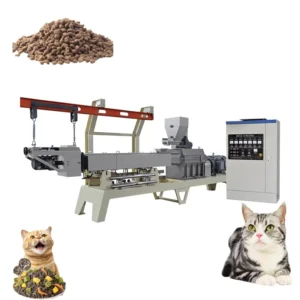
Premium Pet Food Processing Equipment Dog Cat Feed Making Machine
¥9,500.00 Select options This product has multiple variants. The options may be chosen on the product page