6281
Description
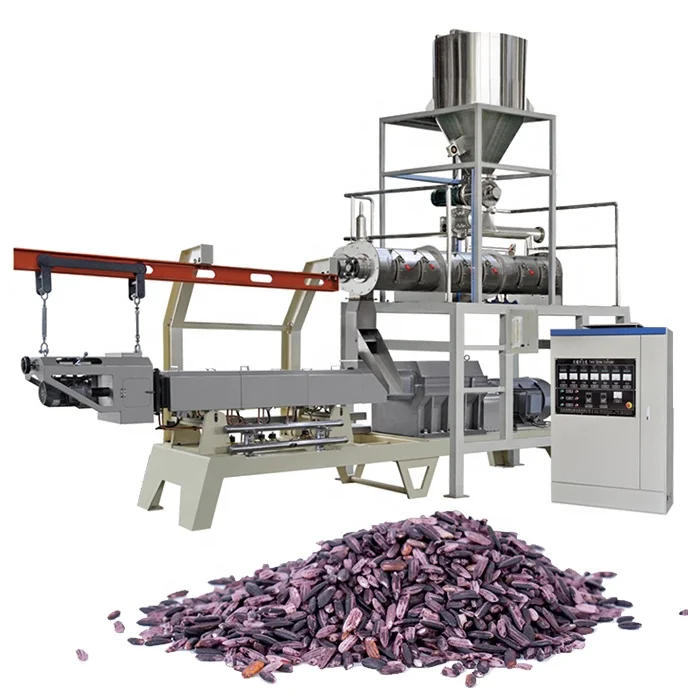
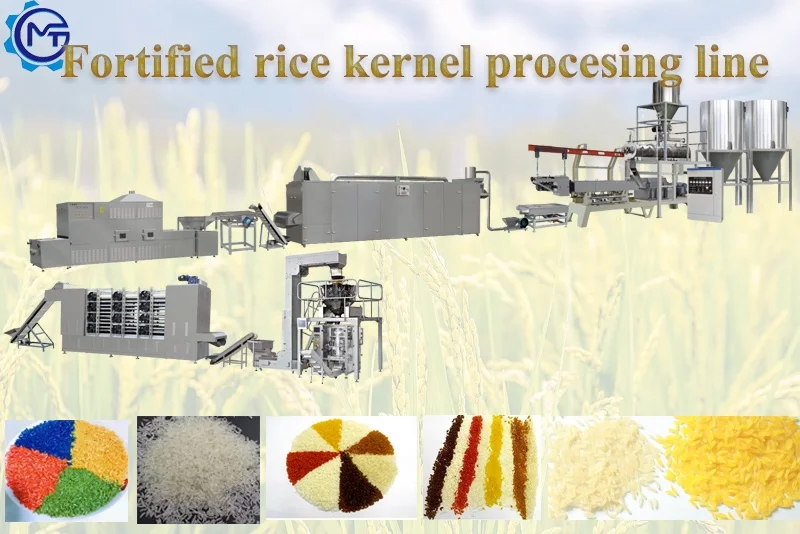
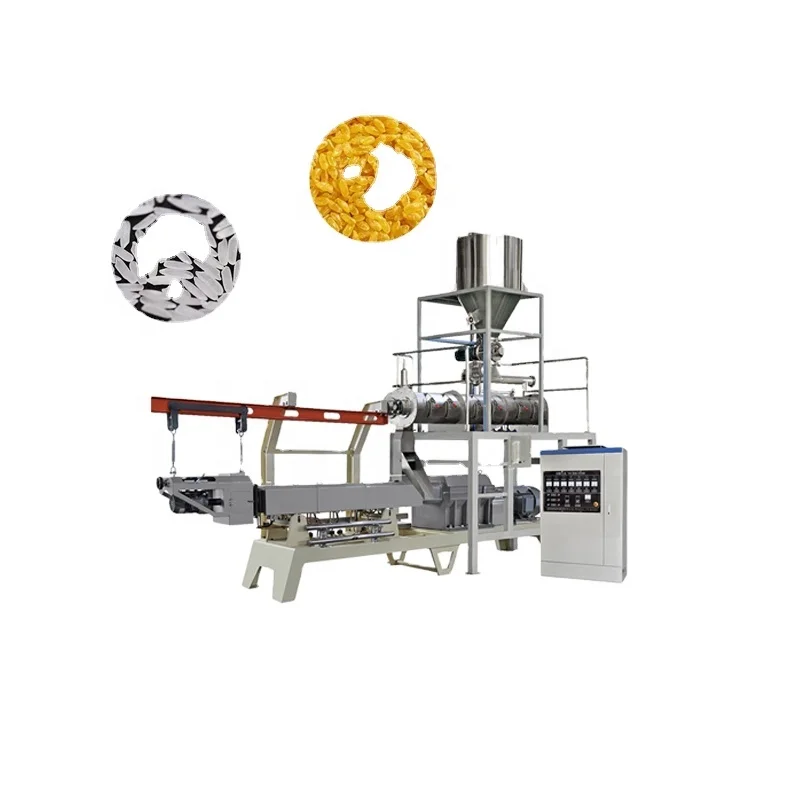
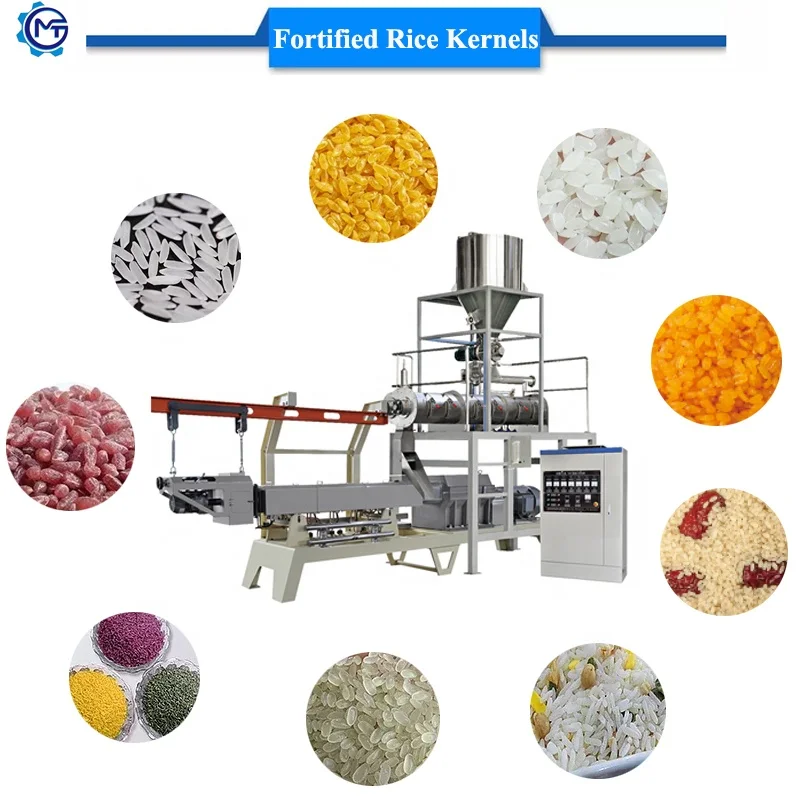
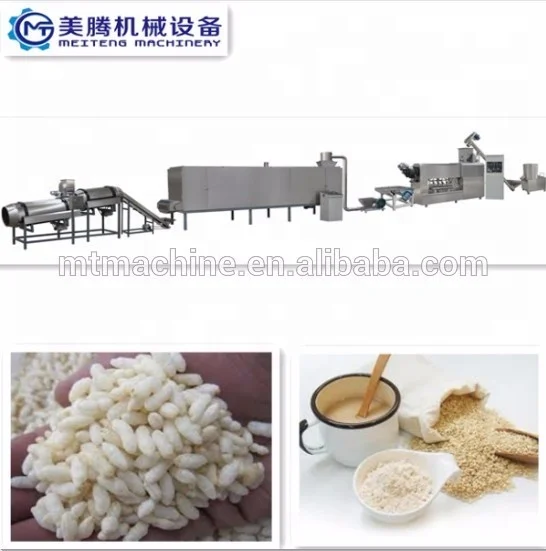
Integrated Line Engineering — Every station from mixing through packing is throughput-matched in one supplier scope, preventing dryer or roaster bottlenecks that stall extruder output on fortified rice kernel projects.
Technical Specifications
| Parameter | Value |
|---|---|
| Model | MT65 / MT70 / MT85 / MT75 / MT95 |
| Product Type | Artificial Rice & Fortified Rice Kernel Extrusion Line |
| Installed Power | MT65 85 kW; MT70 120 kW; MT85 235 kW; MT75 180 kW; MT95 260 kW |
| Power Consumption | MT65 60 kW; MT70 85 kW; MT85 165 kW; MT75 135 kW; MT95 195 kW |
| Output Capacity | MT65 80–100 kg/h; MT70 100–120 kg/h; MT85 200–300 kg/h; MT75 300–500 kg/h; MT95 800–1000 kg/h (basis to be confirmed — depends on raw material blend, moisture content, kernel size) |
| Overall Dimensions (L×W×H) | MT65 28×1.2×2.2 m; MT70 30×1.5×2.2 m; MT85 34×3.5×4.3 m; MT75 32×3.5×4.3 m; MT95 36×3.5×4.3 m |
| Screw Type | Twin-screw |
| Control System | Frequency speed control, high automation |
| Lubrication | Automatic lubricating and cooling system |
| Drying Oven Heating Source | Electric or gas |
| Drying Oven Feature | Circulation drying process, frequency motor controls mesh belt speed |
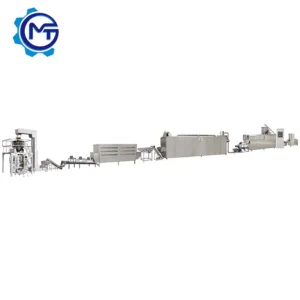
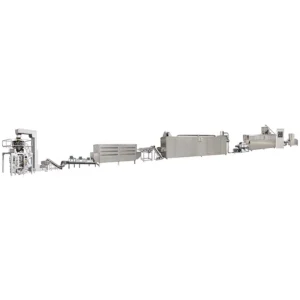
| Line Stations | Mixing → Extruding → Vibrating → Low temperature drying → Cooling → High temperature roasting → Cooling → Packing |
Application Suitability
| Application | Material or Output |
|---|---|
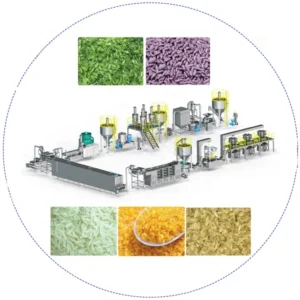
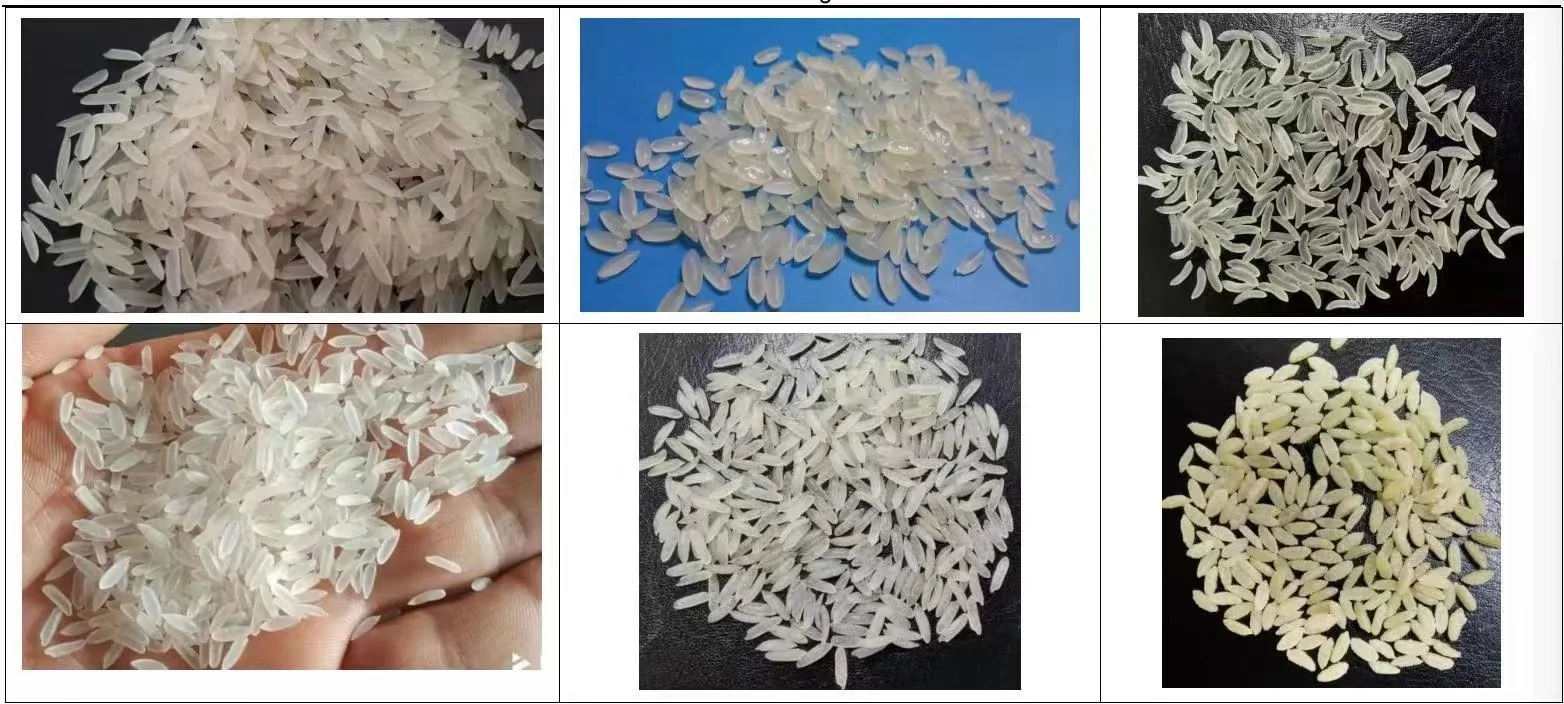
| Fortified rice kernel production for nutrition programmes | Broken rice and rice flour blended with vitamin and mineral premix |
| Artificial rice kernel reprocessing | Broken rice, corn, millet, wheat, oats, buckwheat, bean, starch as base ingredient |
| High-nutrition grain kernel extrusion | Rice bran and grain by-products reprocessed into consumer-grade kernels with added micronutrients |
What "800 kg/h" Leaves Out About Fortified Rice Kernel Lines
A quoted extruder capacity means nothing if the dryer cannot remove moisture fast enough to keep the line moving.
I worked on a turnkey project where the extruder was sized correctly, but the drying oven had insufficient belt length for the actual moisture load coming out of the die. The line ran at a fraction of its nameplate output because kernels piled up waiting for drying. On a Fortified Rice Kernel Extrusion Line turnkey project, the extruder, dryer, roaster, and packing station must each be calculated against the same raw material formulation and target kernel density — not quoted as standalone machines pulled from a catalogue [NEED_CITE: industrial line throughput matching principles]. When one station is undersized, every station upstream slows down to match it.
How Layout and Station Sequencing Shape the Whole Line
A Fortified Rice Kernel Extrusion Line turnkey project begins with the physical sequence of operations. Raw grain and premix enter the mixing station, move through the twin-screw extruder where starch gelatinisation and kernel shaping happen simultaneously at the die, then pass through vibrating separation before entering the low-temperature drying stage. After cooling, kernels move to high-temperature roasting for surface hardening and shelf stability, cool again, and proceed to packing. Each transition point — the drop from extruder to vibrating screen, the transfer into the drying oven, the belt speed into the roaster — must be designed so that product flow remains continuous without accumulation or starvation at any station.
Matching Dryer Capacity to Extruder Moisture Load
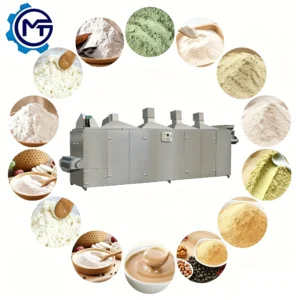
The drying oven on this line uses a circulation drying process with a frequency motor controlling mesh belt speed, which allows operators to adjust residence time based on the moisture content exiting the extruder. Different grain blends carry different moisture loads into the dryer — a formulation heavy in broken rice behaves differently from one using starch-dominant materials. The heating source is configurable between electric and gas, which affects both operating cost and the thermal profile available for consistent kernel drying [NEED_CITE: industrial drying oven thermal profile requirements for food extrusion]. If the oven is too short or the belt speed too fast, kernels exit with residual moisture that causes spoilage or clumping in storage.
Reading the Specifications That Matter for Kernel Quality
The twin-screw configuration across all five models (MT65 through MT95) provides the shear and mixing intensity needed to fully gelatinise starch from diverse grain bases — broken rice, corn, millet, buckwheat — while incorporating vitamin and mineral premix uniformly throughout the dough matrix. The installed power range from 85 kW on the MT65 to 260 kW on the MT95 reflects the barrel length and screw diameter required to process increasing volumes while maintaining adequate shear energy per kilogram of material. The automatic lubricating and cooling system supports continuous operation by managing barrel and bearing temperatures, which directly affects screw wear and kernel dimensional consistency over long production runs. Frequency speed control across the line means operators can adjust extruder screw speed and dryer belt speed independently, giving them a practical way to fine-tune kernel density and moisture content without stopping the line.
The Cost of Skipping the Trial Run
I have seen projects where the line was shipped without a trial run on the buyer’s actual grain blend, and the first production attempt revealed that the premix fat content caused the extruder to slip, dropping output well below what was quoted. Correcting this after installation means new screw elements must be manufactured, shipped internationally, and installed while the line sits idle. On a turnkey project, a trial run on the buyer’s raw material in the testing workshop before shipment catches formulation issues early — wrong viscosity at the die, unexpected expansion ratio, or kernel fracture during drying [NEED_CITE: twin-screw extrusion raw material variability in fortified food production]. Skipping this step turns the buyer’s factory into the development lab, with commercial production delayed until the screw configuration is finally dialled in.
Why This Line Is Engineered as One Project
The line is supplied as a complete sequence from batching to packing under one engineering scope, so throughput calculations at each station are based on the same raw material data and target kernel specification rather than assembled from independent vendor quotes. The screw configuration and die design are specified to the buyer’s grain blend and target kernel shape, not copied from a generic build. An in-house testing workshop allows trial runs on the buyer’s actual raw material before the line ships, so screw adjustments and drying parameters are resolved before installation begins. Twin-screw expertise across grain-based and nutrition-fortified applications means the extruder configuration accounts for how vitamin premixes and varying starch contents behave under shear and heat. The project scope covers pre-sales layout engineering through on-site installation, commissioning, and operator training, so one team owns the line from first drawing to steady-state production.
Documentation & Verification
- Line layout and capacity calculation showing throughput matched between every station
- Screw and die configuration record specified to your grain blend and target kernel shape
- Trial run report on your raw material conducted in the testing workshop before shipment
- Electrical schematic with voltage and frequency confirmed to your site utility supply
- Factory test record documenting line performance before dispatch
Installation, Commissioning & Support
- Floor plan and utility routing provided for the full line footprint, from the MT65’s 28 m length up to the MT95’s 36 m length
- Electrical schematic confirms voltage and frequency match your facility supply before the line ships
- Line arrives in modular station assemblies for sequenced installation from mixing through packing
- Commissioning includes extruder screw speed tuning and dryer belt speed calibration on your grain formulation
- Operator training covers frequency speed control interface, automatic lubrication system checks, and roaster temperature management
- Wear parts list covers screws, dies, and dryer belt segments with recommended replacement intervals
Planning Your Line Configuration
To scope a Fortified Rice Kernel Extrusion Line turnkey project accurately, share your target grain formulation — including the ratio of base grain to vitamin and mineral premix — along with the kernel shape and density specification your market requires. Confirm your facility’s voltage, frequency, and whether gas supply is available for the drying oven, as these determine the heating source configuration. If you have existing upstream milling or downstream packing equipment, provide those specifications so the line interfaces can be engineered to match.
Frequently Asked Questions
Q: How is line throughput verified across all stations to prevent bottlenecks?
A: Each station — mixing, extruding, drying, roasting, cooling, packing — is calculated against the same raw material blend and target kernel output. The capacity calculation document shows mass flow at every transition point so that the dryer belt length and oven thermal capacity are matched to the moisture load from the extruder, and the packing station speed matches the roaster output.
Q: What screw and die configuration is matched to my grain blend?
A: The screw element arrangement and die orifice geometry are specified to your formulation’s starch content, fat level, and target kernel density. A trial run on your actual raw material in the testing workshop confirms the configuration produces the correct expansion ratio and kernel shape before the line ships.
Q: What utility planning is required for this line?
A: You need to confirm your site voltage and frequency, available amperage for the extruder motor, and whether gas supply is available for the drying oven. The electrical schematic is prepared based on your confirmed utility data, and the line layout accounts for the full station sequence footprint plus operator access space.
Q: What does the installation and commissioning schedule include?
A: The schedule covers phased station installation, electrical connection and control system startup, extruder screw speed and dryer belt speed calibration on your raw material, and operator training on the frequency speed control interface, automatic lubrication system, and roaster temperature management.
Q: Is a trial run conducted on my raw material before shipment?
A: Yes. Your raw material is processed in the testing workshop using the configured screw and die setup. The trial run report documents output rate, kernel density, moisture content after drying, and any screw configuration adjustments made, so you receive a line already tuned to your formulation.
Related products
-
CE Approved MT Brand Organic Baby Rice Nutrition Powder Extrusion Production Line with 500kg/h Capacity and Automatic Grade
¥9,500.00 Add to cart -
Small Scale MT Brand Automatic Baby Food Nutrition Powder Rice Flour Making Machine with 500kg/h Production Capacity PLC Control
¥9,500.00 Add to cart -
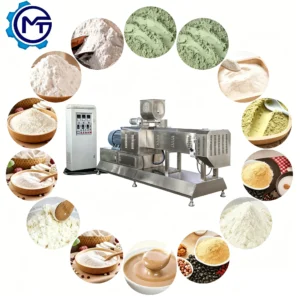
Fully Automatic Fortified Nutrition Powder Baby Food Production Line
¥8,238.27 Select options This product has multiple variants. The options may be chosen on the product page -
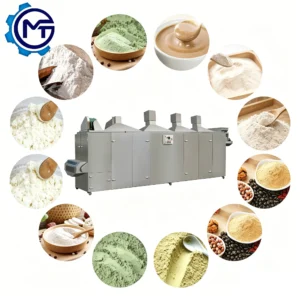
500kg/h Automatic PLC Controlled Nutrition Baby Food Extruder Machine for Rice Cereal Processing
¥9,500.00 Add to cart