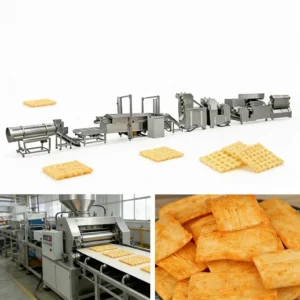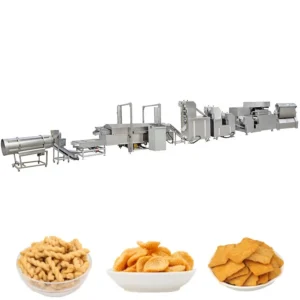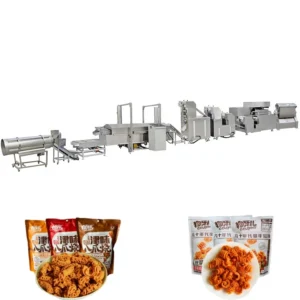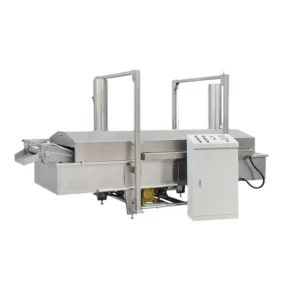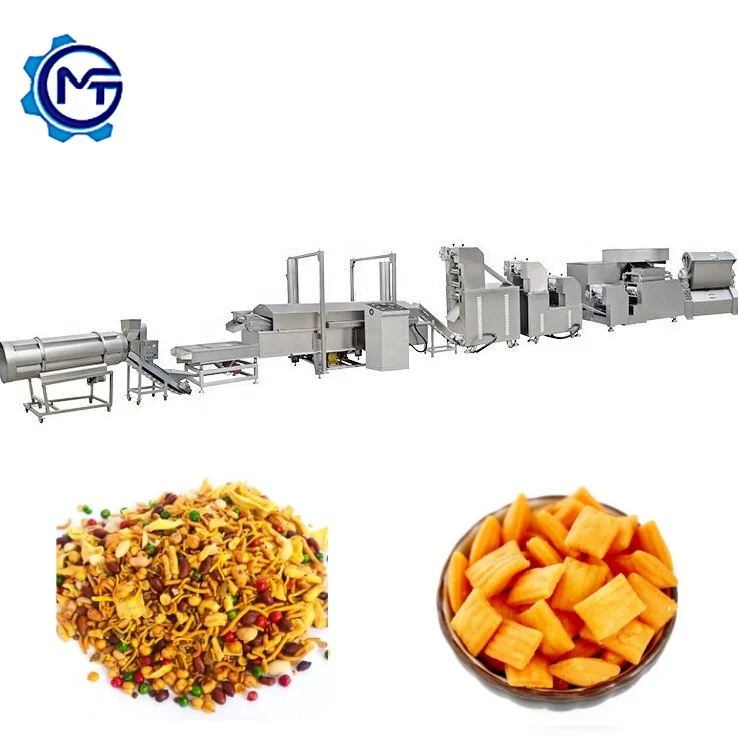
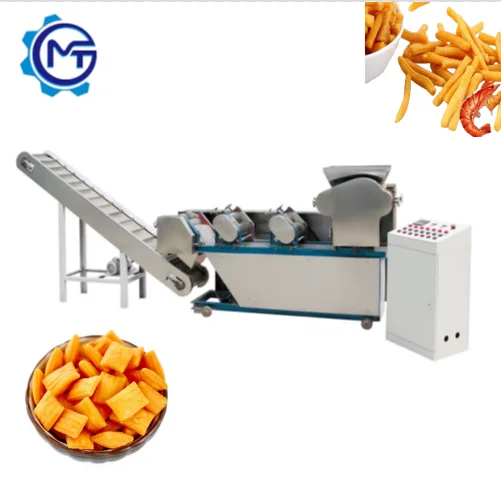
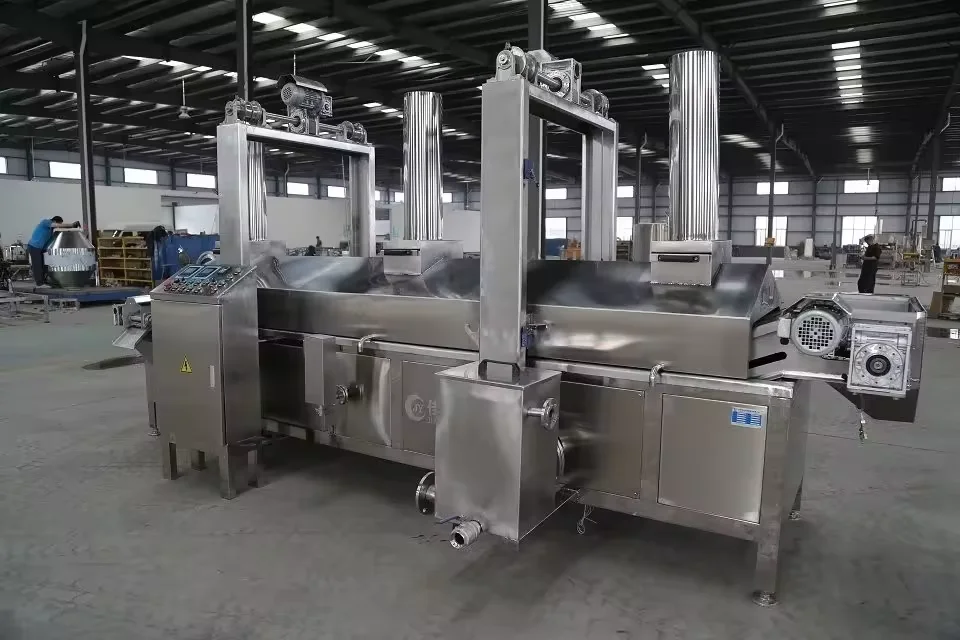
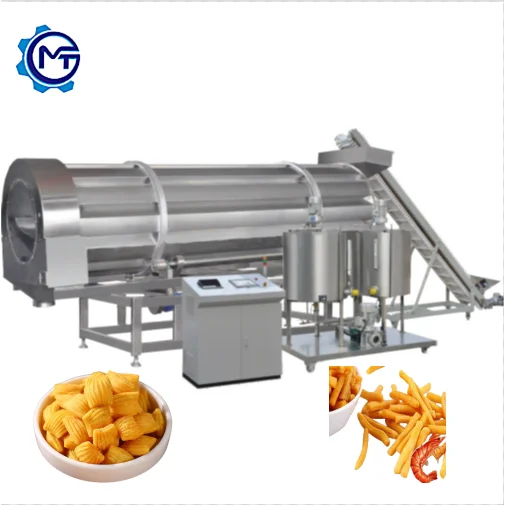
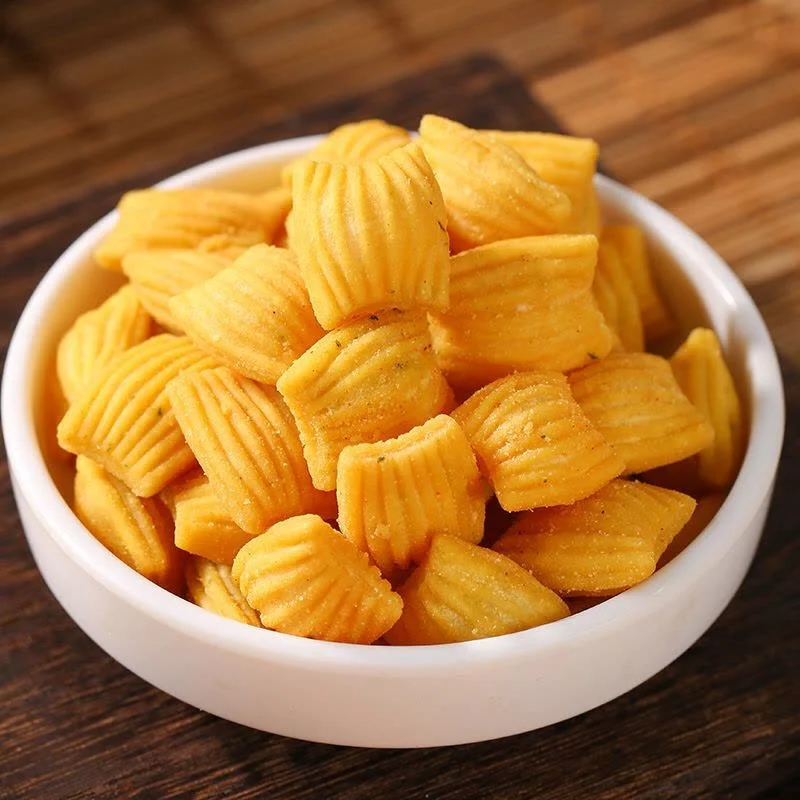
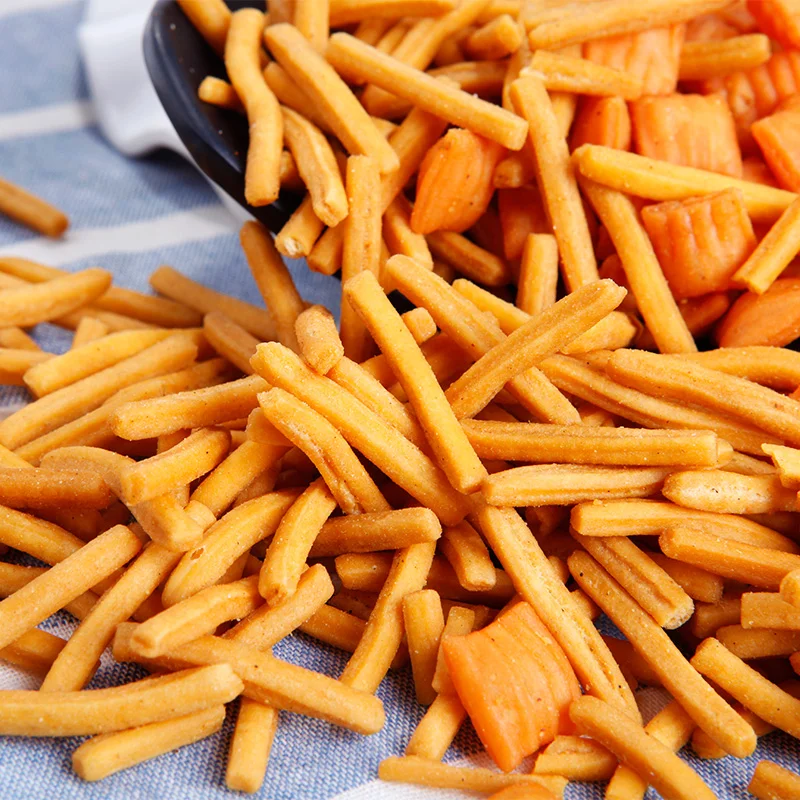
Continuous Deep Fryer, PLC Control, 320L Oil Capacity, 304 Stainless Steel — engineered as a turnkey fried snack production line with throughput balanced across extrusion, frying, de-oiling, and seasoning stations.
- Double-layer mesh belt clamps product during submersion to prevent floating, ensuring uniform fry color and texture across corn curls, fried sticks, and pellet-based snacks
- Continuous oil circulation filtration reduces acid value and extends oil service life, while frequency conversion stepless belt speed adjusts frying time to product density and moisture
- Automatic lifting system for upper hood and mesh belt enables rapid cleaning and maintenance access
Supported by in-house trial runs on your raw material before shipment, line layout and capacity calculation documentation, and on-site commissioning with operator training.
Description
Integrated Line Throughput — Every station from extrusion through frying to packing is calculated as one balanced system, eliminating the mismatch between standalone equipment purchases.
Technical Specifications
| Parameter | Value |
|---|---|
| Product Type | Continuous Deep Fryer / Fried Snack Production Line |
| Heating Method | Electricity / Gas |
| Rated Power | 2.6 kW (drive/control) + 60 kW (heating tube) |
| Voltage & Frequency | 380V / 50HZ |
| Control System | PLC |
| Oil Capacity | 320 L |
| Overall Dimensions (L×W×H) | 6700 × 2200 × 1200 mm |
| Net Weight | 2000 KG |
| Output Capacity | 100–1000 kg/h (basis not stated in source — confirm product type / moisture / frying time) |
| Conveyor Speed Regulation | Frequency conversion stepless speed control |
| Mesh Belt Type | Upper and lower double-layer |
| Oil Filtration | Continuous circulation filtration system |
| Slag Discharge | Bottom-mounted residue discharge system |
| Lifting System | Automatic lifting for upper hood and mesh belt |
| Construction Material | Food-grade 304 stainless steel |
| Warranty | 1 Year |
| Certification | CE, ISO |
Application Suitability
| Application | Material or Output |
|---|---|
| Corn curls and extruded fried snacks | Corn grits, rice flour, wheat flour blends |
| Fried stick snacks (Spix / Soba style) | Formed dough strands or pellet-based formats |
| Pellet chips and 2D/3D fried snacks | Starch-based pellets, potato or tapioca starch |
| Puffed snack formats requiring deep frying | Extruded or sheeted dough pieces across grain bases |
Why the Fryer Is Usually the Bottleneck Buyers Miss
A fried snack production line turnkey project fails not at the extruder but at the point where upstream output meets downstream capacity.
I have stood in workshops across West Africa and South Asia where the fryer was sourced separately from the extrusion system. The extruder pushes out product at a steady rate, but the standalone fryer cannot absorb it. Semi-fried pieces pile up on the conveyor, cool down, and harden before they ever reach the oil. The texture is ruined before the seasoning drum even starts. This is not a machine defect — it is a layout calculation that was never done. When a fried snack production line turnkey is engineered as one project, the fryer belt speed, oil volume, and residence time are matched to the extruder throughput from the first drawing [NEED_CITE: throughput matching principles in continuous food processing lines].
Throughput Matching Across Every Station
The fryer in this fried snack production line turnkey system is not selected from a catalog and dropped into a layout. Its oil capacity of 320 L, belt length, and heating power are calculated against the upstream extruder output and the downstream de-oiling and seasoning capacity. If the extruder produces at a rate that would overwhelm a smaller fryer, the belt speed and oil volume are scaled to absorb that flow without product backlog. This eliminates the most common failure mode in snack lines assembled from separate vendors.
Double-Layer Mesh Belt for Uniform Submersion
Extruded snack pieces vary in density. Some float immediately upon entering the oil, resulting in uneven color and incomplete frying on the top surface. The upper and lower double-layer mesh belt clamps the product during submersion, forcing every piece to remain fully immersed for the entire residence time. This is critical for pellet-based chips and lighter extruded formats where natural buoyancy would otherwise compromise fry consistency [NEED_CITE: mesh belt submersion design in continuous industrial frying].
Oil Quality Management Through Continuous Filtration
The continuous circulation filtration system runs throughout production, removing fine particulates and crumb residue before they carbonize in the oil. Carbonized particles accelerate oil degradation, raising the acid value and darkening the oil prematurely. The bottom-mounted slag discharge system works in tandem, collecting heavier sediment before it recirculates. Together, these systems extend edible oil service life and maintain consistent product color and flavor across long production runs without requiring mid-shift oil changes.
Reading the Specifications That Matter
The frequency conversion stepless speed control on the conveyor is the primary variable for adjusting fry time. A denser pellet chip requires a longer residence time at a lower belt speed, while a thin extruded stick may pass through rapidly at higher speed. The 60 kW heating tube capacity determines how quickly the oil recovers temperature after product enters — insufficient recovery power causes temperature drops that lead to oil absorption rather than surface crisping. The 380V / 50HZ electrical specification must be confirmed against the destination market before production begins, as voltage mismatch is among the most frequent causes of commissioning delays in export installations [NEED_CITE: voltage and frequency standards by export market]. The food-grade 304 stainless steel construction throughout the fryer body, hood, and belt assembly meets hygiene requirements for food processing environments and withstands the thermal cycling of continuous frying operation.
The Cost of Ignoring Line Integration
When the fryer is purchased as a standalone unit without throughput verification against the extruder, the consequences appear within the first week of production. Product accumulates on transfer conveyors, cooling and losing the moisture profile needed for proper oil interaction. Operators slow the extruder to match the fryer, reducing actual line output well below the nameplate rating. Oil degrades faster because inconsistent product flow causes temperature fluctuations. Seasoning adhesion suffers because surface oil distribution is uneven. These problems compound through every downstream station [NEED_CITE: equipment mismatch consequences in snack food manufacturing].
Why Procurement Here Reduces Project Risk
The in-house testing workshop allows trial runs on your actual raw material before the line ships, confirming fry color, texture, and throughput balance under real conditions. Screw configuration and die design for the upstream extruder are specified to your formulation, not copied from a generic build. Line layout and capacity calculation documents show throughput at every station, so no single machine becomes the constraint. Electrical schematics include voltage confirmation and PLC language options matched to your destination market. The complete system — from batching through extrusion, frying, de-oiling, seasoning, and packing — arrives under one supplier responsibility, eliminating finger-pointing between vendors when issues arise during commissioning.
Documentation & Verification
- Line layout drawing showing throughput balance between extruder, fryer, de-oiling, and seasoning stations
- Trial run report on your raw material conducted in the testing workshop before shipment
- Electrical schematic with voltage, frequency, and PLC language confirmed to destination market
- Screw and die configuration record matched to your target snack format and formulation
- CE declaration of conformity and ISO certificate for export compliance
- Factory test record documenting fryer temperature profile and belt speed settings
Installation, Commissioning & Support
- Foundation must support 2000 KG net weight plus oil load across the 6700 × 2200 mm footprint
- Dedicated electrical circuit required for 60 kW heating load plus 2.6 kW drive and control systems
- Automatic lifting system on upper hood and mesh belt enables rapid cleaning during initial commissioning
- PLC parameter setting includes belt speed calibration and temperature profile tuning to your product
- Operator training covers oil filtration maintenance, slag discharge scheduling, and mesh belt tension adjustment
- Wear parts list includes mesh belt sections, heating tubes, and filtration components with replacement intervals
What to Prepare Before Requesting a Quotation
Provide your target snack format — whether corn curls, fried sticks, or pellet-based chips — along with the raw material formulation you plan to run. Confirm the local voltage and frequency at your installation site, and specify the preferred PLC interface language. If you are replacing a standalone fryer in an existing line, share the upstream extruder output rate so the replacement unit can be throughput-matched. Indicate whether you require a trial run on your material before shipment.
Frequently Asked Questions
Q: How is fryer capacity matched to extruder output to prevent line bottlenecks?
A: The fryer oil volume, belt length, and heating power are calculated against your extruder throughput during the layout design phase. Belt speed is adjustable via frequency conversion, and the line capacity document confirms balanced flow at every station from extrusion through packing.
Q: Can a trial run be performed on my raw material and target product before shipment?
A: Yes. The in-house testing workshop conducts trial runs using your actual formulation and target snack format. The trial run report documents fry color, texture, oil temperature profile, and belt speed settings before the line is cleared for shipment.
Q: What voltage, frequency, and PLC language options are available for my destination market?
A: Electrical specifications are confirmed to your local grid standard before production. The PLC interface language is configured to your operator preference, and the electrical schematic documents all settings for your installation team.
Q: How is the complete line layout planned, including utility requirements and phased installation?
A: The layout drawing covers station placement, utility connection points, and material flow from batching to packing. The capacity calculation confirms throughput at each station, and installation proceeds according to a phased schedule with commissioning support on site.
Q: What operator training and commissioning support is included with the turnkey project?
A: On-site commissioning includes PLC parameter tuning, belt speed calibration, and oil temperature profiling for your product. Operators receive training on daily maintenance, oil filtration management, mesh belt cleaning, and wear part replacement procedures.
Related products
-
New Automatic 150-200kg/h Nimko Fried Pasta Snacks & Kurkure Making Machine Food Grade Stainless Steel High Productivity
¥8,585.00 Select options This product has multiple variants. The options may be chosen on the product page -
Frying Crispy 3D Corn Bugles Pellets Fried Chips Snacks Food Machine Production Line Bugles Making Extruder
¥100.00 Select options This product has multiple variants. The options may be chosen on the product page -
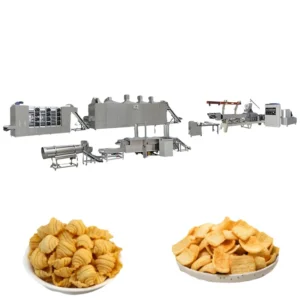
New Doritos Chips Frying Equipment Machine Automatic Tortilla Corn Chips Making Line Portable High Productivity
¥100.00 Select options This product has multiple variants. The options may be chosen on the product page -
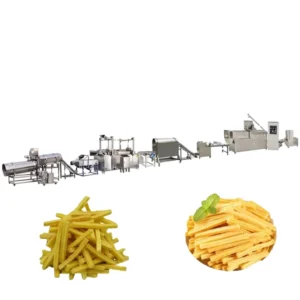
High-Yield Automated Fried Snack Production Line – Double Screw Salad Strips & Millet Crust Making Equipment
¥65.00 Select options This product has multiple variants. The options may be chosen on the product page