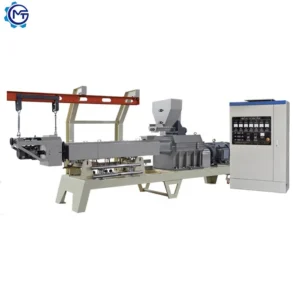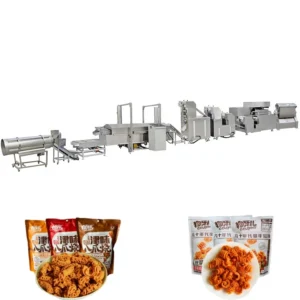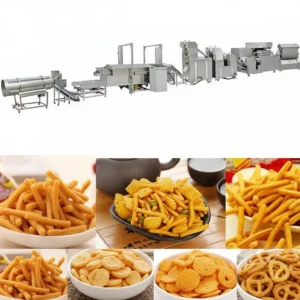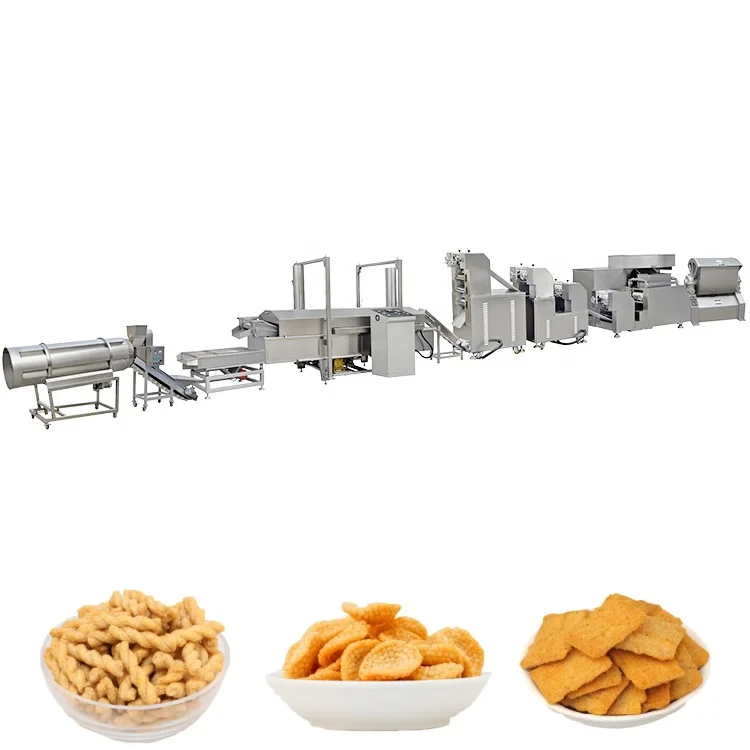


Frying Chips Making Machine, Twin-Screw Extrusion, Automated PLC Control — engineered as a complete turnkey line from batching through extrusion, cutting, frying to packing, with throughput balanced at every station.
- Screw configuration and interchangeable die system matched to your raw material for precise texture and density control
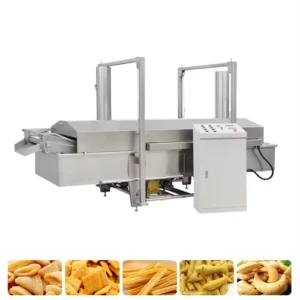
- Flexible gas, electric, or diesel heating options with 600mm stainless steel fryer belt
MT conducts in-house trial runs on your actual formulation before shipment, ensuring the line delivers consistent product quality from day one of commissioning.
Description
Balanced throughput across every station — each 3D Pellet Fried Chips Production Line is engineered as a coordinated system where the extruder, cutter, fryer, and dryer are matched to the buyer’s actual formulation rather than assembled from nominal ratings.
Technical Specifications
| Parameter | Value |
|---|---|
| Product Type | Frying Chips Making Machine |
| Screw Type | Twin screw, co-rotating, sectional modules |
| Rated Power | 100 kW (MT-65) / 130 kW (MT-70) / 180 kW (MT-85) / 185 kW (MT-75) / 280 kW (MT-95) |
| Output Capacity | 120–150 kg/h (MT-65) / 200–250 kg/h (MT-70) / 300–500 kg/h (MT-85) / 400–500 kg/h (MT-75) / 800–1000 kg/h (MT-95) (basis not stated in source — confirm raw material / moisture content / pellet type) |
| Voltage & Frequency | 3ph 380V 50Hz (customizable to 380V/415V/220V, 60Hz available) |
| Control System | Automated |
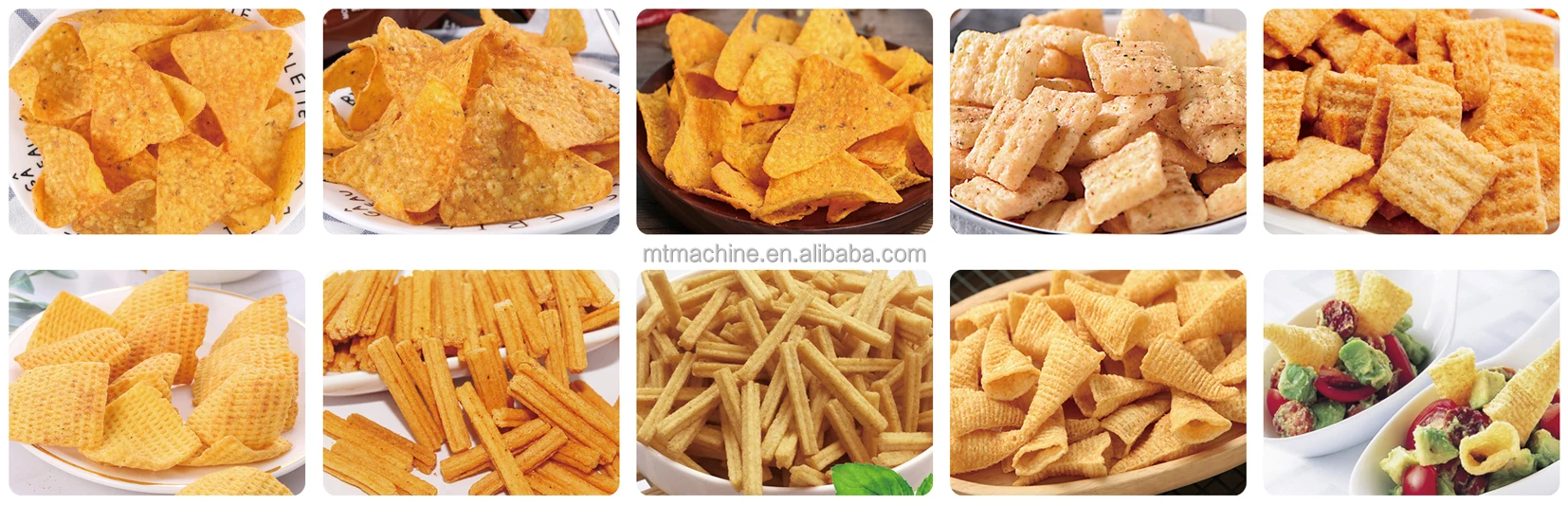
| Die Configuration | Interchangeable dies for multiple shapes including sticks, square sheet, rib chips, diamond chips, wavy chips, pillow shapes, bugles |
| Fryer Belt Width | 600 mm stainless steel |
| Drying / Heating Method | Gas / electric / diesel heating |
| Line Stations | Mixer → Twin Screw Extruder → Cutting Machine → Fryer |
| Cutting Machine Power | 1.47 kW |
| Cutting Machine Dimensions | 2500 × 600 × 1100 mm |
| Mixer Power | 4 kW / 7.5 kW / 15 kW (matched to line capacity) |
| Overall Dimensions (L×W×H) | 22000 × 1200 × 2200 mm (MT-65) / 24000 × 1500 × 2200 mm (MT-70) / 26000 × 1500 × 2200 mm (MT-85) / 26000 × 1500 × 2800 mm (MT-75) / 30000 × 1500 × 2800 mm (MT-95) |
| Standards | CE, ISO |
| Warranty | 1 year complete warranty, life-time maintenance service |
| Spare Parts | Free wearing parts included; 2–3 years additional spare parts recommended |
Application Suitability
| Application | Material or Output |
|---|---|
| 3D pellet fried chips | Corn powder, potato starch, wheat flour blends |
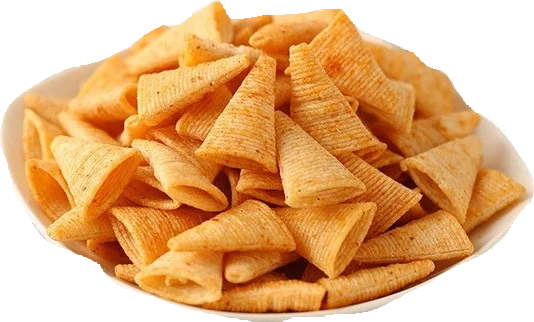
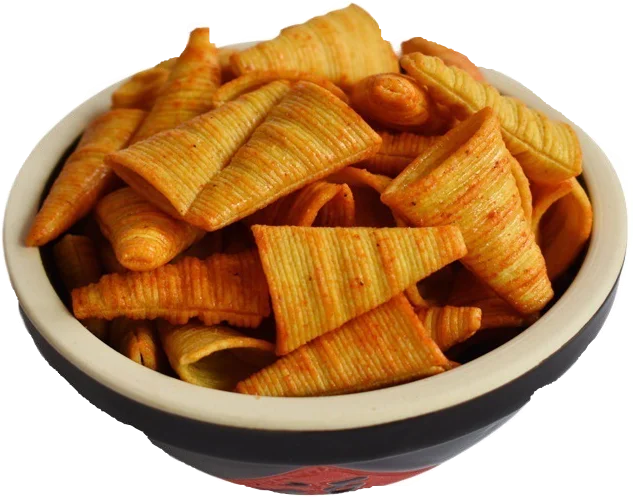
| Bugles corn snacks | Corn flour with moisture adjustment for horn-shape extrusion |
| Crispy pea and shell snacks | Pea flour, rice flour, corn starch mixtures |
| Wave, tube, and screw-shaped fried snacks | Potato powder and corn starch composite formulations |
| Pillow and diamond-shaped chips | Wheat flour and starch blends for sheet forming and cutting |
Why "Rated Capacity" Means Nothing Without Your Raw Material
A fried chips production line turnkey system only delivers its quoted output when the screw profile, die geometry, and fryer belt speed are all tuned to your specific formulation.
I spent years on factory floors in the Pearl River Delta commissioning snack lines, and the most common failure was not mechanical — it was a mismatch between the extruder’s tested capacity on standard corn grits and the buyer’s actual multi-grain blend. The expansion rate dropped, the Bugles lost their shape, and the fryer produced chips that were too hard. The packing line sat idle while operators adjusted parameters that should have been locked in before shipment [NEED_CITE: raw material variability effects on twin-screw extrusion output]. A 3D pellets snacks making machine quoted at a nominal throughput without a trial run on the buyer’s formulation is a liability, not an asset.
Screw Configuration Dictates Product Geometry
The co-rotating twin-screw design with sectional modules allows the screw elements to be rearranged for different shear and residence-time profiles. When producing 3D Pellets, the material must gelatinise fully inside the barrel before reaching the die — incomplete gelatinisation produces pellets that crack during frying rather than expanding uniformly. The die plate is matched to the target shape, whether that is a bugle horn, a wavy chip, or a tube, and each shape demands a different compression ratio at the die face.
Fryer Belt Speed and Thermal Uniformity
The 600 mm stainless steel fryer belt carries the cut pieces through the oil bath at an adjustable speed. Too fast and the surface browns before the interior moisture escapes, leaving a dense centre. Too slow and the chip absorbs excess oil, pushing the final fat content beyond the specification the market expects. The heating source — gas, electric, or diesel — must be selected based on local utility availability and cost structure, because thermal recovery rate directly affects whether the fryer can maintain temperature when cold product enters continuously [NEED_CITE: industrial fryer thermal recovery standards].
Reading the Specification Sheet Against Your Production Target
The rated power range spans from 100 kW to 280 kW across the model series, reflecting the motor load required to push different formulations through the barrel at varying throughput levels. A higher moisture dough such as potato-starch-based Bugles demands more torque than a dry corn-flour mix, so the same extruder frame may run a different effective capacity depending on material behaviour. The interchangeable die system means a single line can switch between pillow shapes and rib chips, but each changeover requires a corresponding adjustment to the cutting machine timing and fryer dwell time. Voltage and frequency must be confirmed against the target market’s grid — a 50 Hz machine shipped to a 60 Hz region will run the screw at a different RPM, altering shear input and product density.
The Hidden Cost of Mismatched Station Throughput
When the extruder produces pellets faster than the fryer can finish them,半成品 piles up on the conveyor, absorbing ambient moisture and degrading in texture. I have seen snack lines where the dryer capacity was undersized relative to the extruder output, forcing the operator to slow the entire line to match the bottleneck station. This is not a problem you discover in the brochure — it surfaces on the first day of production, when the line cannot hold the quoted rhythm and every downstream station is either starving or flooding [NEED_CITE: production line throughput balancing methodology].
Why Procurement Here Differs from Assembling Separate Vendors
The entire line from batching to packing is engineered under one supplier, so the mixer batch cycle, extruder feed rate, cutter speed, and fryer belt velocity are calculated as a single system. Screw configuration and die design are specified to the buyer’s raw material rather than copied from a generic build. An in-house testing workshop runs the buyer’s actual formulation before shipment, generating a trial run report that locks in parameters. Electrical schematics and voltage confirmation are co*ssioning delays that arise when a control cabinet arrives wired for the wrong grid standard [NEED_CITE: CE machinery directive requirements for industrial equipment]. Pre-sales consultation extends through on-site installation, commissioning, and operator training.
Documentation & Verification
- Line layout and capacity calculation document matched to your floor space and target output
- Trial run report on your specific raw material formulation before dispatch
- Screw and die configuration record tied to your product shape and density specification
- Electrical schematic with voltage and frequency confirmed for your local grid
- CE declaration of conformity and ISO certificate included with shipping documentation
- Operation and maintenance manual with wear parts list and replacement intervals
Installation, Commissioning & Support
- Floor plan and utility connection points provided based on the 22–30 metre line footprint depending on model selected
- Dedicated circuit sizing calculated from the 100–280 kW total rated power range for your chosen configuration
- Extruder barrel, fryer, and cutting machine shipped in modular sections for container loading and on-site assembly
- First-run parameter setting including screw speed, barrel temperature zones, and fryer belt speed calibrated to your material
- Operator training on die changeover procedures for switching between bugles, chips, and pellet shapes
- Wear parts list covering screw elements, die plates, and fryer belt sections with recommended stock levels for multi-year operation
What We Need From You to Configure the Line
Provide the primary raw material type and any secondary ingredients in your formulation, along with the target moisture content at the mixer stage. Specify the product shapes you intend to run — bugles, 3D pellets, wavy chips, or a combination — so the die and cutting roller set can be prepared. Confirm the local voltage, frequency, and preferred heating source for the fryer and dryer, as well as the control panel language your operators require.
Frequently Asked Questions
Q: How is the actual output capacity verified before the line ships?
A: The buyer sends a representative sample of their raw material to the in-house testing workshop. A trial run is conducted using the specified screw configuration and die, and a report is generated documenting throughput, product density, and expansion behaviour under controlled conditions. This report accompanies the shipment.
Q: Can one line produce both 3D pellets and bugle-shaped snacks?
A: Yes. The interchangeable die system and adjustable cutting machine allow shape changeover on the same extruder platform. Each shape requires its own die plate and cutting roller, and the fryer belt speed is adjusted to match the different expansion and oil-absorption characteristics of each product geometry.
Q: What happens if the local grid frequency differs from the machine standard?
A: Voltage and frequency are confirmed during the specification phase before production begins. Motor drives and control components are sourced to match the target market’s grid, whether 50 Hz or 60 Hz, and the electrical schematic reflects the confirmed configuration. This prevents commissioning delays caused by mismatched electrical standards [NEED_CITE: voltage and frequency standards by export market].
Q: How is throughput balanced between the extruder and the fryer?
A: Each station’s capacity is calculated as part of the line layout proposal. The fryer belt width, oil volume, and thermal recovery rate are sized to handle the extruder’s verified output on the buyer’s formulation, so no station becomes a bottleneck during continuous production.
Q: What documentation is provided for customs clearance and local compliance?
A: The shipment includes the CE declaration of conformity, ISO certificate, packing photographs, commercial invoice, and packing list. Electrical schematics and the factory test record are provided in English. Additional customs documentation support is available depending on the destination country’s import requirements.
Related products
-
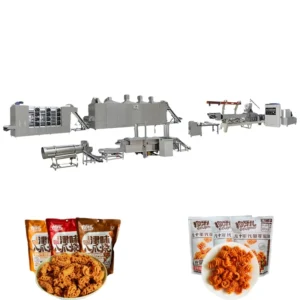
Fried Flour Corn Bugles Extruded Chips Pellets Doritos Snacks Food Machine Production Line Extruder
¥100.00 Select options This product has multiple variants. The options may be chosen on the product page -
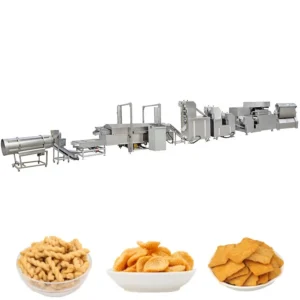
Frying Crispy 3D Corn Bugles Pellets Fried Chips Snacks Food Machine Production Line Bugles Making Extruder
¥100.00 Select options This product has multiple variants. The options may be chosen on the product page -
Frying Crispy 3D Corn Bugles Pellets Fried Chips Snacks Food Machine Production Line Bugles Making Extruder
¥100.00 Select options This product has multiple variants. The options may be chosen on the product page -
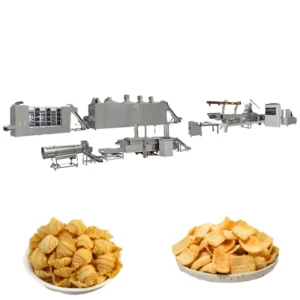
Hot Selling Puffed Ball Snacks Food Processing Line Fried Snacks Processing Line Corn Puff Snacks Machine
¥100.00 Select options This product has multiple variants. The options may be chosen on the product page