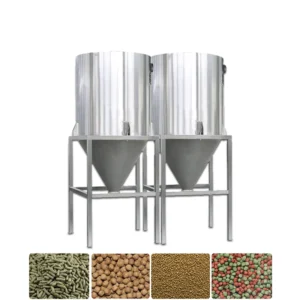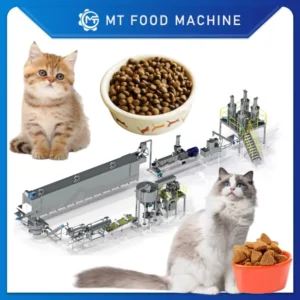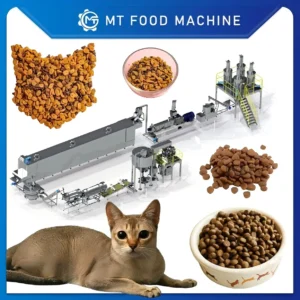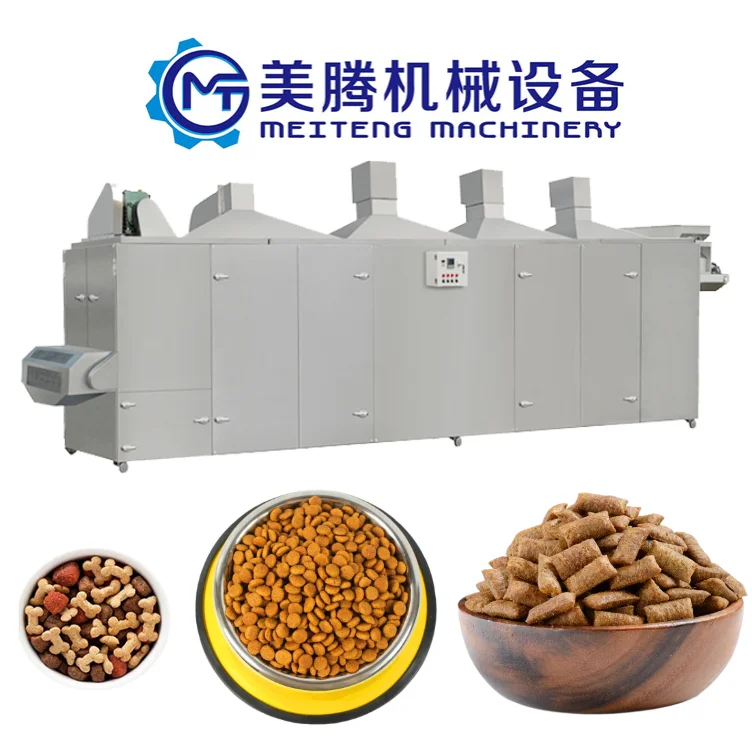


MT85 Multi-Purpose Pet Food Processing Line, 500 kg/h, 45KW, Twin-Screw Extrusion — engineered as a complete turnkey system where every station is throughput-matched to eliminate bottlenecks.
- Twin-screw configuration and die design specified to your raw material formula and target kibble density, with PLC and MCC control from batching through drying to packing.
- Pre-shipment trial runs conducted in our testing workshop on your actual raw material, ensuring the line delivers the texture, expansion and output your market requires before installation begins.
Backed by matched-throughput engineering across all stations, screw and die records tailored to your formula, and full documentation from layout plans to maintenance manuals for confident commissioning.
Description
Throughput-Matched Turnkey Line — every station from batching to packing is engineered as one system so the extruder never outpaces the dryer or the coater.
Technical Specifications
| Parameter | Value |
|---|---|
| Model | MT85 |
| Product Type | Multi-Purpose Pet Food Processing Line |
| Screw Type | Twin-screw |
| Output Capacity | 500 kg/h (basis not stated in source — confirm raw material, moisture, kibble size) |
| Rated Power | 45 kW |
| Voltage & Frequency | 380V 50Hz Three Phase |
| Control System | PLC and MCC |
| Automation Level | Fully automated from batching to packing |
| Line Stations | Mixing, extrusion, drying, packaging |
| Standards | CE, ISO |
Application Suitability
| Application | Material or Output |
|---|---|
| Dry kibble for dogs and cats | Corn, meat meal, fish meal, grain blends |
| Bird feed pellets | Millet, sorghum, sunflower meal, vitamin premix |
| Floating and sinking aquatic feed | Soybean meal, fish meal, starch binders |
| Semi-moist pet treats | High-moisture meat slurry with humectants |
| Training treats and small bites | Palatability enhancers, poultry digest |
Why "500 kg/h" Means Nothing Without the Formula
Capacity is a function of your raw material, not the motor nameplate.
A pet food line quoted on nominal output often fails to hold that figure once the buyer’s actual meat-meal ratio, fat content and moisture level meet the screw for the first time. I have seen lines stall at barely over half the promised rate because the formulation was never part of the conversation before the machine was built. High-fat recipes coat the barrel wall and reduce friction; high-fibre blends demand different compression ratios. The pet food processing line turnkey you order must be specified against your exact recipe, not a generic benchmark [NEED_CITE: raw material impact on extruder throughput and screw wear].
Matching Screw Geometry to Your Kibble Target
Twin-screw extrusion relies on intermeshing flights that convey, shear and cook the dough in a single continuous path. The pitch, flight depth and kneading block arrangement are chosen after reviewing your target kibble density, expansion ratio and ingredient list. A recipe heavy in animal protein requires a gentler shear profile than a starch-dominant mix, and the die plate orifice count controls the cross-section of each kibble. This pet food processing line turnkey ships with a screw configuration record that documents every element against your formula.
Drying and Coating Must Keep Pace
The extruder sets the pace, but the dryer and flavouring drum determine whether the line actually delivers finished bags. An undersized dryer forces a speed reduction upstream; an over-specified coating drum wastes floor space and energy. Each station in the MT85 system is sized so that moisture removal, cooling time and seasoning application align with the extruder output, preventing the bottleneck that typically appears when equipment is assembled from separate vendors [NEED_CITE: throughput matching in multi-station food processing lines].
Reading the Specs That Matter
The 45 kW main drive gives the screws enough torque to handle viscous, high-protein doughs without stalling, yet the power draw stays moderate enough for standard industrial tariff bands. Twin-screw construction means the material is continuously self-wiped between flights, which is critical when switching between recipes that contain different fat levels or allergen profiles. PLC and MCC control allows the operator to store temperature curves, screw speed ramps and feeder rates as saved recipes, so batch-to-batch consistency depends on a stored program rather than manual adjustment. Voltage at 380V 50Hz three-phase suits most industrial grids, but always confirm your facility supply before production begins — frequency mismatch can alter motor speed and throw off every downstream calculation [NEED_CITE: voltage and frequency standards by export market].
The Hidden Cost of a Generic Build
When screw elements and die plates are copied from a standard catalogue rather than matched to your formula, the kibble may expand too much or too little, missing the density your market expects. Floating feed sinks; sinking feed floats; kibble crumbles during bagging. Correcting these issues after installation means ordering new screw sets, waiting for international freight and losing weeks of production — a cost that never appears in the original quotation [NEED_CITE: twin-screw element replacement lead time and production downtime].
Why Source This Line from Jinan
The MT85 is designed and assembled in the same facility where the in-house testing workshop runs your raw material before the crate is nailed shut. Layout drawings and capacity calculations are prepared as one package, so throughput at every station is documented rather than assumed. Screw and die configurations are recorded against your specific recipe, and the trial run report travels with the shipment. Electrical schematics confirm voltage, frequency and control language so that commissioning starts with wiring, not with a language barrier. Ongoing maintenance is supported by a wear parts list that identifies every flight, barrel liner and die insert by part number, keeping reorder lead times predictable.
Documentation & Verification
- Line layout and capacity calculation showing matched throughput at each MT85 station
- Screw and die configuration record tied to your raw material and kibble target
- Trial run report performed on your formula before the line leaves the workshop
- Electrical schematic confirming 380V 50Hz supply and PLC language selection
- CE declaration of conformity and ISO certificate for customs and local inspection
- Wear parts list with part numbers for screws, dies and barrel liners
Installation, Commissioning & Support
- Foundation plan provided for the 45 kW extruder and all downstream stations
- Power distribution diagram confirms dedicated three-phase 380V circuit requirements
- Modular station design allows phased placement to match your workshop layout
- First-run parameter setting covers PLC recipe storage for temperature and screw speed
- Operator training includes HMI navigation and daily cleaning of twin-screw flights
- Wear parts shipment schedule aligned with your first planned maintenance window
What We Need to Configure Your Line
Share your target kibble size, primary protein source and fat percentage so that the screw profile can be specified before quotation. Confirm your facility voltage and frequency, along with the control language your operators will use. If you have existing mixing or packing equipment you plan to retain, provide its throughput rating so the MT85 stations can be balanced against it rather than sized in isolation.
Frequently Asked Questions
Q: How is the 500 kg/h capacity verified and what raw material conditions does it depend on?
A: The rated output is confirmed through a trial run on your actual formula inside our testing workshop. Variables such as meat-meal ratio, fat content, moisture level and target kibble diameter all influence throughput. We document the achieved rate in a trial run report that ships with the line, so you know exactly what to expect before installation.
Q: What screw configuration and die design is recommended for my specific kibble formula?
A: We select flight depth, kneading block angle and die orifice count after reviewing your ingredient list and target density. High-protein recipes typically need gentler shear, while starch-heavy blends tolerate more aggressive kneading. The final configuration record is included in your documentation package.
Q: How is throughput matched between extruder, dryer and coating stations to prevent bottlenecks?
A: Each station is sized during the layout phase so that drying capacity, cooling time and flavouring drum volume align with the extruder output. The capacity calculation document shows the matched figure at every point, preventing the speed reduction that occurs when one station limits the rest of the line.
Q: What pre-shipment trial runs are conducted and how do they inform final line configuration?
A: We run your raw material through the MT85 in our workshop, recording screw speed, barrel temperature profile, moisture loss and kibble density. If results deviate from your specification, screw elements or die plates are adjusted and the test is repeated before the line is cleared for packing.
Q: What documentation accompanies the line for installation, commissioning and ongoing maintenance?
A: You receive a line layout, capacity calculation, screw and die record, electrical schematic, trial run report, CE and ISO certificates, an operation manual and a numbered wear parts list. These documents support local inspection, guide first-run settings and simplify spare part reordering.
Related products
-
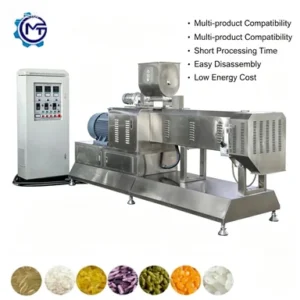
Durable Stainless Steel Twin Screw Extruder Floating Sinking Aquatic Fish Feed Processing Production Equipment
¥65.00 Select options This product has multiple variants. The options may be chosen on the product page -
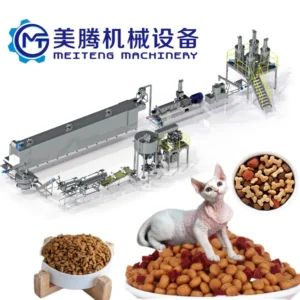
MT70 100-200kg/h Dog & Cat Pet Food Processing Line with 380V 50Hz Three Phase Power
¥35,000.00 Select options This product has multiple variants. The options may be chosen on the product page -
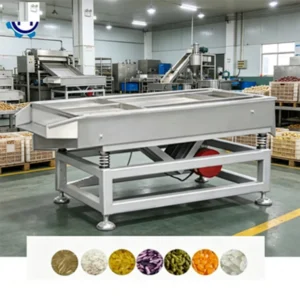
Energy Saving Automatic Twin Screw Extruder Floating Sinking Aquatic Fish Feed Industrial Production Processing Line
¥65.00 Select options This product has multiple variants. The options may be chosen on the product page -
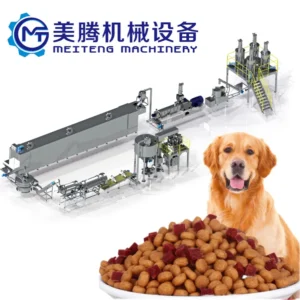
High Capacity Pet Food Extrusion Production Line Suitable for Dog. Cat. Bird. Fish and Cattle Feed
¥9,500.00 Select options This product has multiple variants. The options may be chosen on the product page