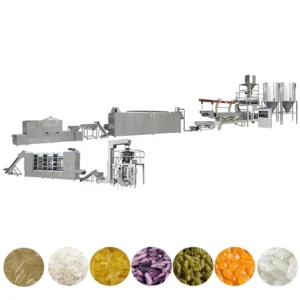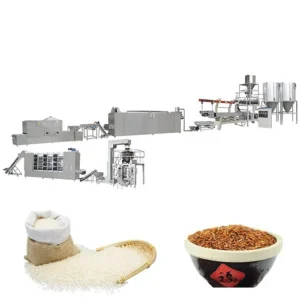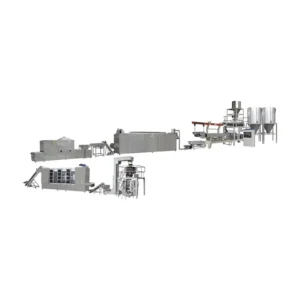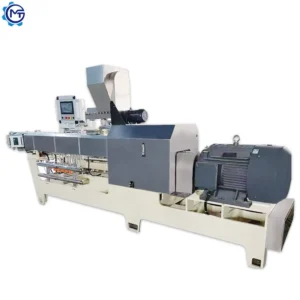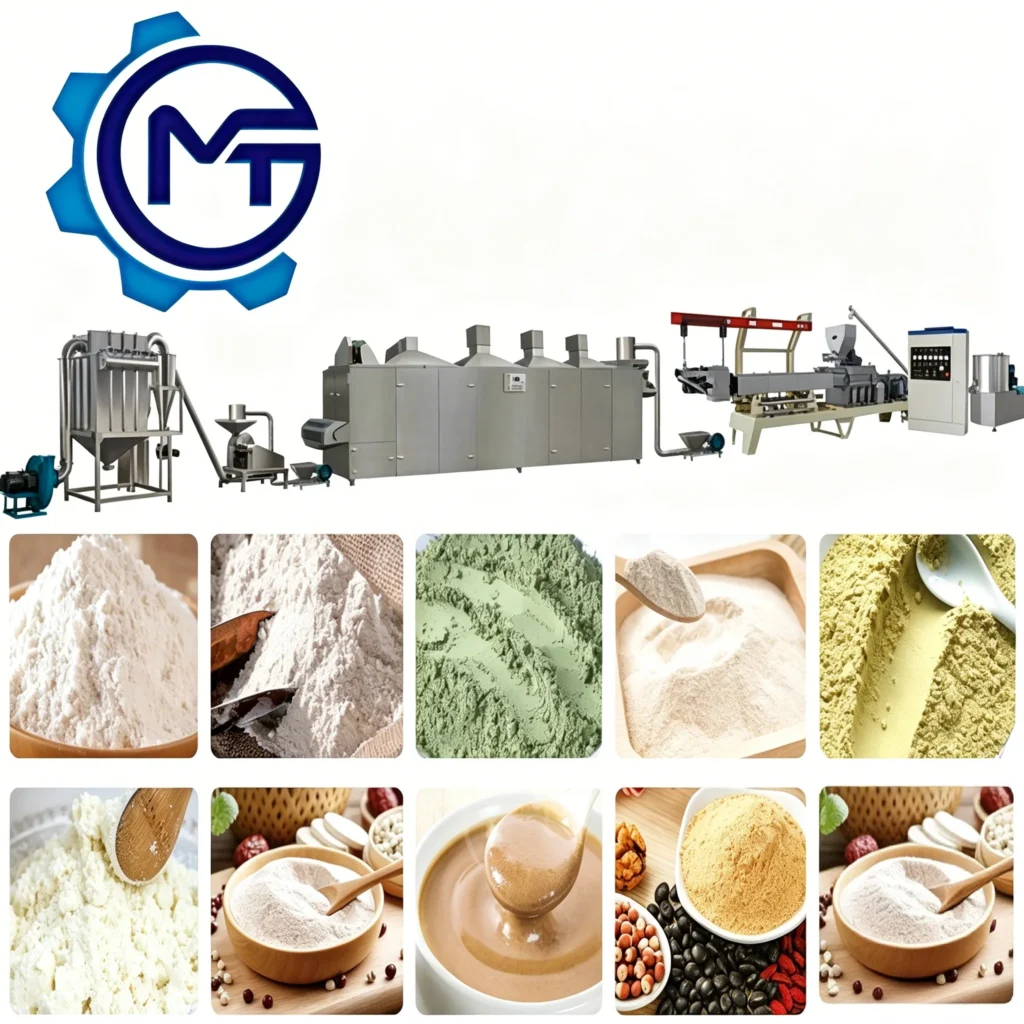
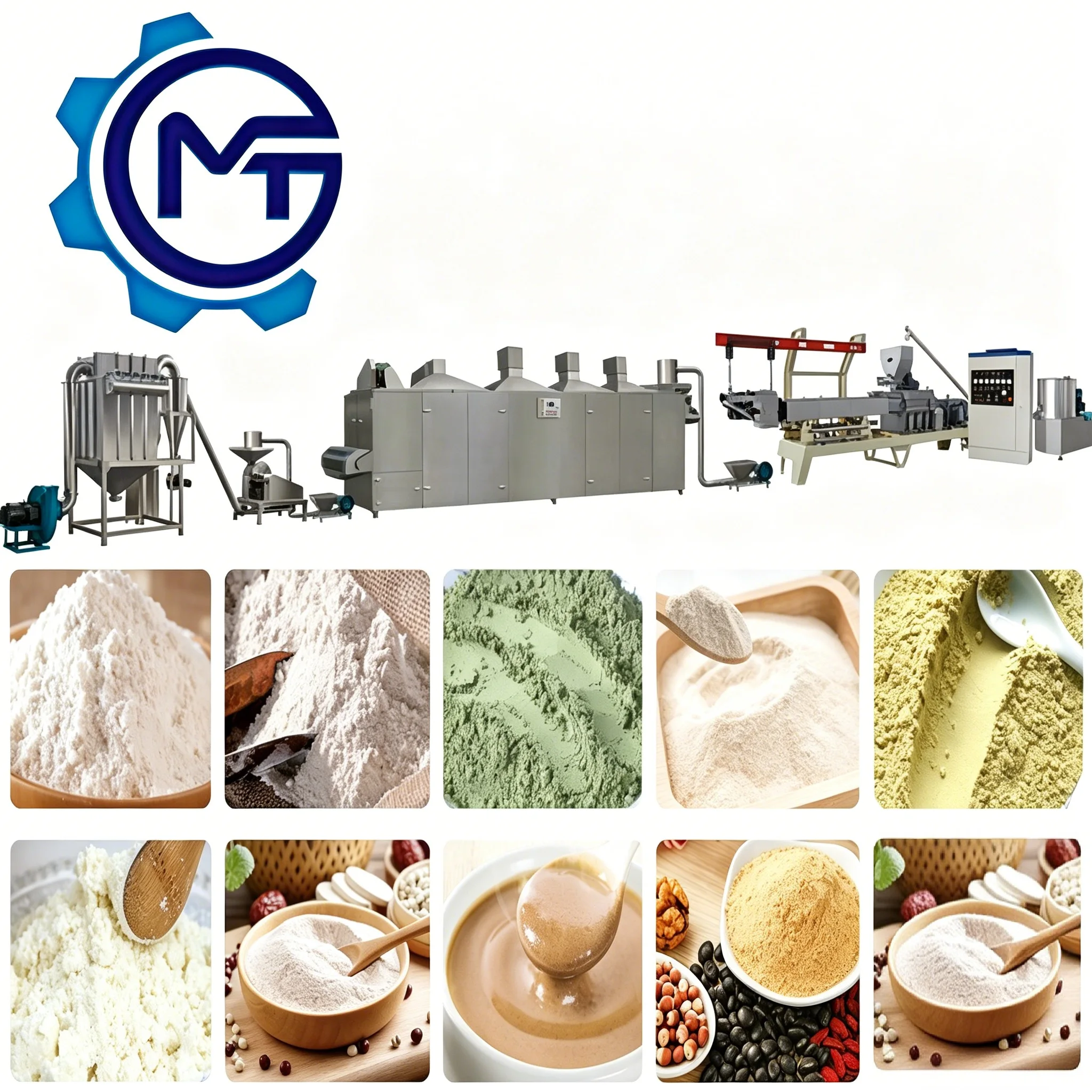
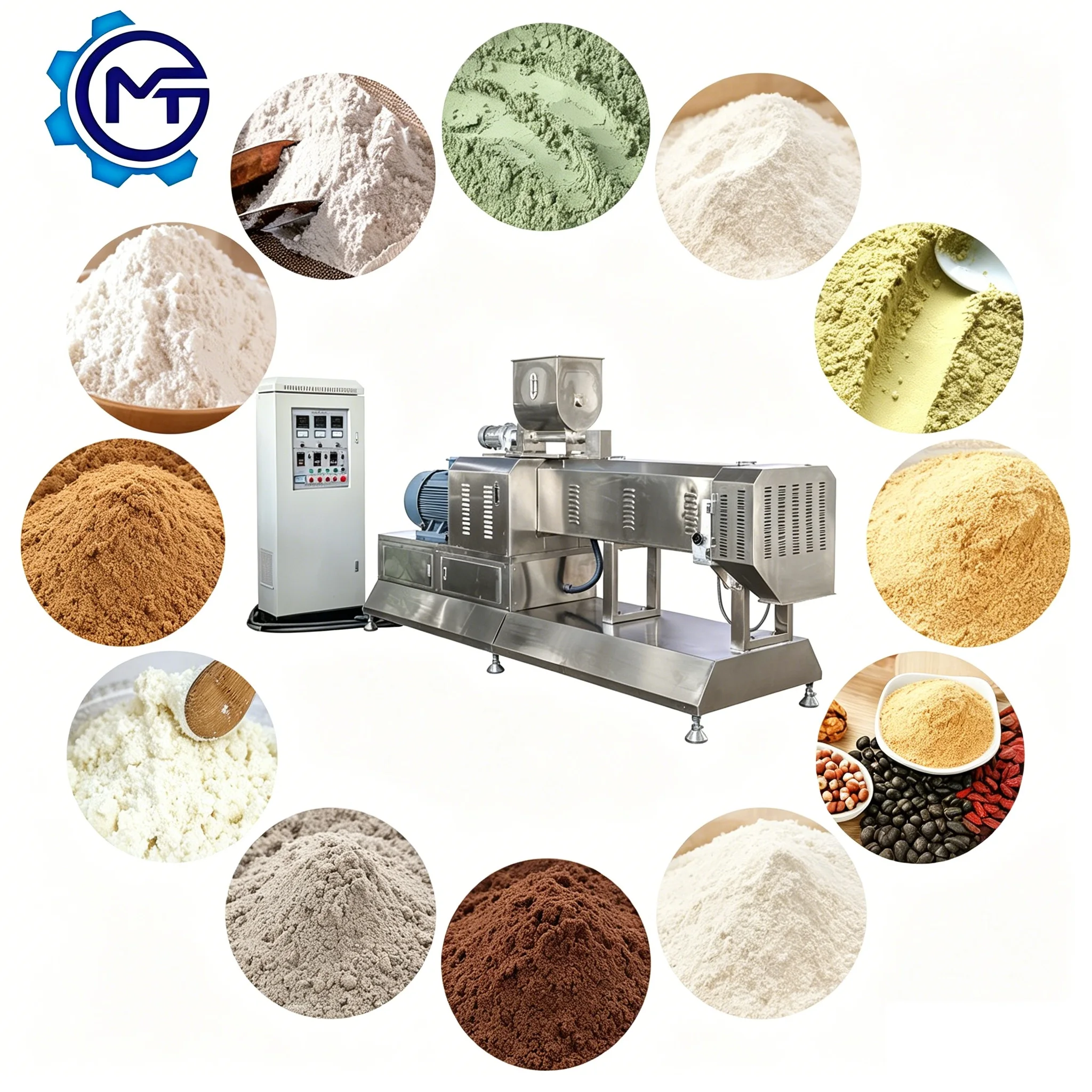
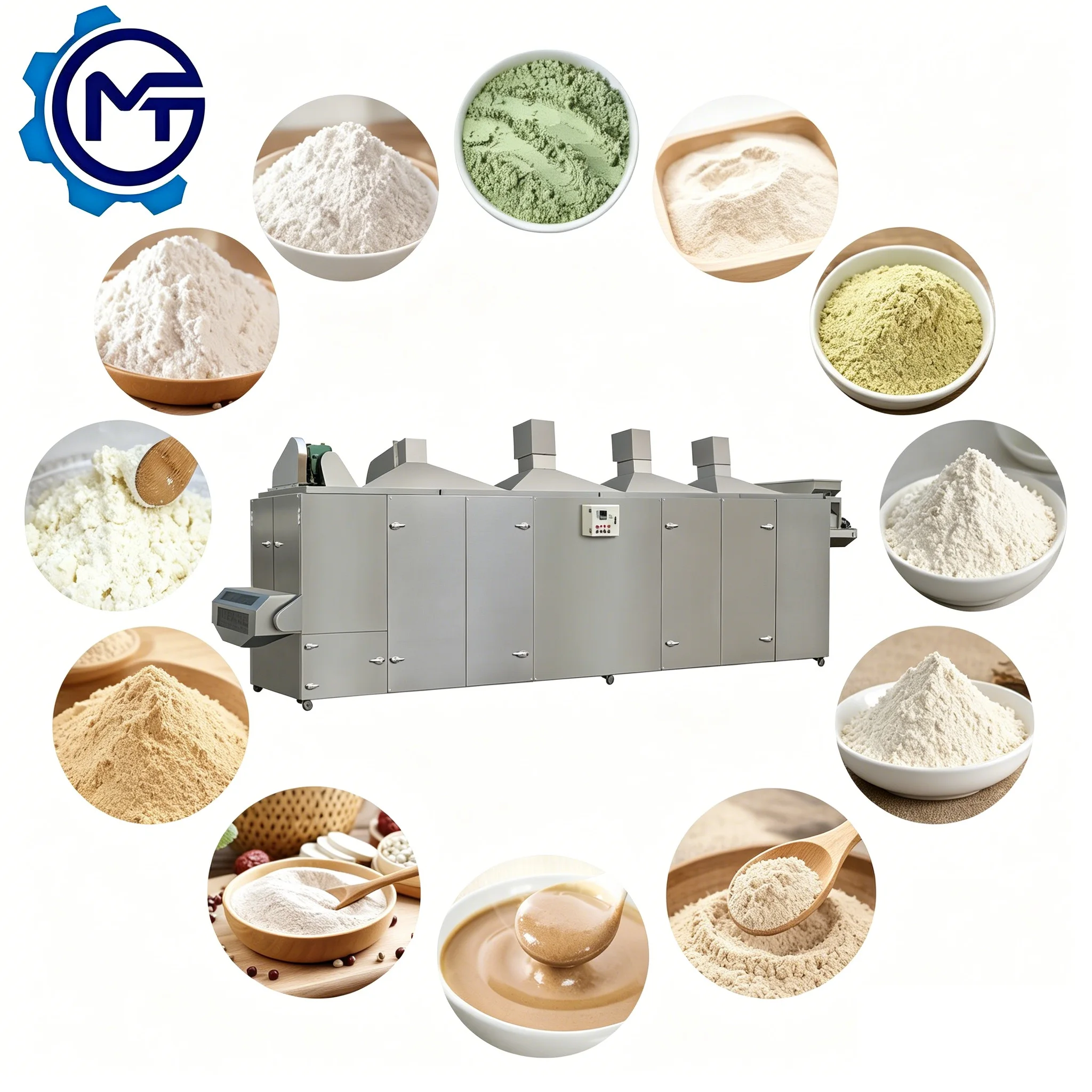

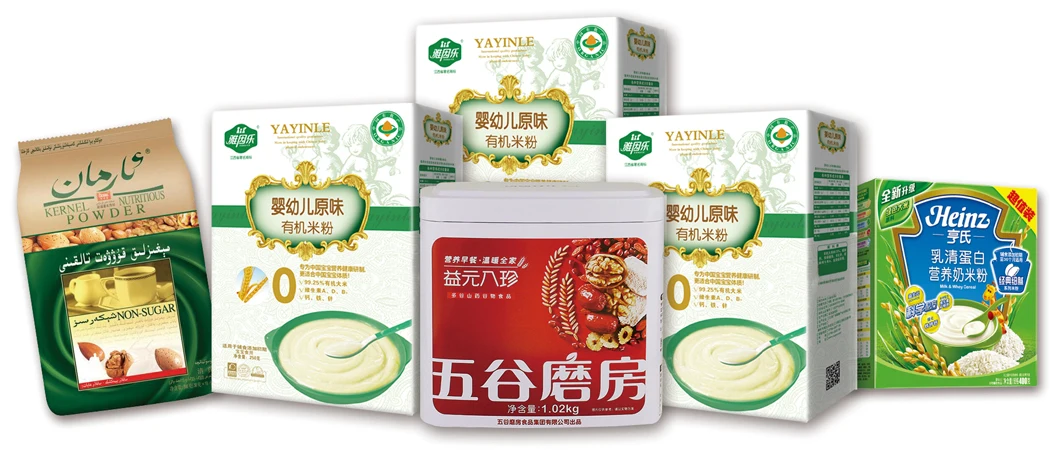
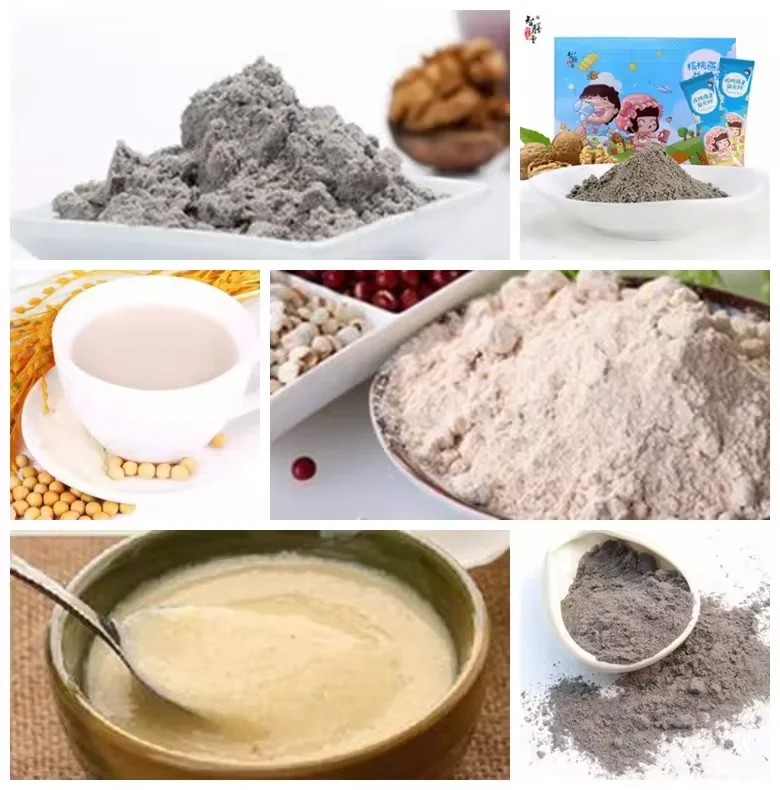
Nutrition Powder Processing Line, 200-500 kg/h, Food-Grade 304 SS, Touch Control Panel — configured for rice, corn, beans and grain-based baby food formulations with matched throughput across mixing, baking and packing stations.
Delivered as a complete turnkey project with line layout, capacity calculation and utility planning aligned to your factory infrastructure. Heat source options (electric, gas, steam) and control voltage confirmed to your site before production.
- In-house trial run on your raw material before shipment
- On-site installation, commissioning and operator training
- Full documentation set including electrical schematic and wear parts list
Description
Integrated Line Engineering — throughput verified across every station from batching to packing using the buyer’s actual grain formulation before shipment.
Technical Specifications
| Parameter | Value |
|---|---|
| Product Type | Nutrition Powder Processing Line |
| Processing Capacity | 200–500 kg/h (basis not stated in source — confirm raw material type, moisture content, formulation) |
| Construction Material | Food-grade 304 stainless steel contact surfaces |
| Raw Material Compatibility | Rice, corn, beans, and various grains |
| Heat Source Options | Electric, gas, or steam (configurable to factory utility) |
| Control System | Touch control panel with digital system |
| Assembly State | Complete production line with matched station throughput |
| Warranty | 1 year |
| After-Sales Service | Overseas engineer service available |
Application Suitability
| Application | Material or Output |
|---|---|
| Baby rice nutrition powder production | Milled rice flour, brown rice, pre-cooked rice starch |
| Infant multi-grain porridge powder | Blends of corn, oat, millet, and soy |
| Fortified weaning food manufacturing | Grain base with added vitamin and mineral premix |
| Nutritional breakfast cereal powder | Wheat, barley, or sorghum with legume protein |
Why "Rated Capacity" Misses the Point on Grain-Based Powders
A nutrition powder processing line turnkey solution only delivers its quoted output when the extrusion parameters match the buyer’s exact grain formulation and moisture profile.
I worked on a 500 kg/h infant rice powder line where the trial ran perfectly on standard white rice flour. The buyer switched to organic brown rice at their plant, and the gelatinization temperature shifted enough to cause clumping in the dryer feed. Three nights of parameter adjustment followed before the line stabilized. That gap between nominal capacity and real-world performance is where most projects stall [NEED_CITE: gelatinization temperature variation across grain types]. When the extruder screw speed, barrel temperature profile, and dryer retention time are all set to a generic grain rather than the buyer’s actual material, throughput drops and product consistency suffers. Buyers deserve a line that arrives already tuned, not one that requires weeks of on-site experimentation.
Station-to-Station Throughput Alignment
Every node on a nutrition powder processing line turnkey project must handle the same mass flow rate. If the mixer batches 500 kg but the extruder only processes 350 kg per hour, material queues up and moisture content drifts. This line is laid out so that batching, extrusion, drying, milling, and packing each operate at matched intervals, preventing the bottleneck effect that plagues lines assembled from separate vendors.
Raw Material Behavior Under Extrusion
Different grains respond to shear and heat in distinct ways. Rice starch gelatinizes at a lower temperature range than corn, and adding soy or bean flour shifts the dough viscosity inside the barrel. The screw configuration and barrel zone temperatures on this nutrition powder processing line turnkey system are specified after reviewing the buyer’s formulation, ensuring consistent expansion and moisture reduction at the die face [NEED_CITE: twin-screw extrusion behavior on multi-grain blends].
Reading the Specs That Actually Matter
The 200–500 kg/h capacity range covers pilot-scale launches through full production runs, but the achievable rate depends on the grain’s bulk density and moisture at the feed hopper. Food-grade 304 stainless steel contact surfaces are non-negotiable for infant food compliance, preventing metallic contamination across every station the product touches. The digital touch control panel stores recipes by formulation, so operators can recall exact screw speed, barrel temperature, and dryer settings for each product without manual guesswork. Flexible heat source options — electric, gas, or steam — allow the dryer to match the factory’s existing boiler or utility contract rather than forcing a costly infrastructure change. These choices determine whether the line runs smoothly on day one or requires weeks of utility retrofitting.
The Cost of Skipping the Trial Run
When a line ships without testing on the buyer’s real grain blend, the first production run becomes the trial. Screw configurations copied from a generic build produce powder with incorrect particle density, and dryer settings calibrated for corn may leave rice-based product above safe moisture thresholds. I have seen entire batches scrapped because the moisture target was off by a few percentage points — a gap that a pre-shipment trial run would have caught [NEED_CITE: moisture content standards for infant cereal products]. The downstream cost of rework, delayed market launch, and wasted raw material far outweighs the time invested in testing before the line leaves the factory.
Why Sourcing the Whole Line Here Makes Sense
Throughput calculations are documented across every station, so the mixer, extruder, dryer, and packing section are confirmed to operate at the same rate. The screw configuration and die selection are matched to the buyer’s grain formulation rather than pulled from a standard catalog. An in-house testing workshop runs the buyer’s actual raw material before dispatch, catching gelatinization and expansion issues early. Pre-sales layout engineering covers utility planning, phased installation scheduling, and operator training so the line integrates into the factory without surprises. Wear parts documentation ensures replacement screws and dies are available when the first changeover is due.
Documentation & Verification
- Line layout drawing with throughput calculation for each station from mixer to packing
- Trial run report on buyer’s grain blend confirming expansion and moisture targets
- Machine specification sheet with screw and die configuration recorded per formulation
- Electrical schematic with voltage and frequency confirmed to destination market
- Operation and maintenance manual with illustrated spare parts list
Installation, Commissioning & Support
- Foundation plan provided matching the extruder footprint and dryer length to the workshop floor
- Dedicated circuit sizing confirmed for the digital control panel and heat source selection
- Stations arrive pre-assembled with matching conveyor interfaces to reduce on-site welding
- First-run commissioning includes parameter tuning on the buyer’s grain formulation
- Operator training covers recipe recall on the touch panel and daily sanitation procedures
- Wear parts list with reorder intervals for screws, dies, and dryer seals
What to Include with Your Inquiry
Share the grain type or blend ratio, target moisture content in the finished powder, and daily production volume so the line capacity can be calculated against real material behavior. Confirm your factory voltage, frequency, and available heat source so the electrical and thermal systems are specified before build begins. Providing a sample of your raw material allows a pre-shipment trial run to validate extrusion and drying parameters.
Frequently Asked Questions
Q: How is line capacity verified on my specific raw material and formulation before delivery?
A: We run your actual grain blend through the extruder and dryer in our testing workshop, measuring expansion ratio, moisture content, and particle density at the target throughput. The trial run report documents all parameters so the line ships pre-tuned to your formulation rather than requiring on-site guesswork.
Q: How do you ensure throughput is matched between mixing, extrusion, drying, and packing stations?
A: Each station is sized using the same mass flow calculation based on your formulation’s bulk density and moisture profile. The layout document shows capacity at every node, confirming that no single station creates a bottleneck or material queue during continuous operation.
Q: What does the phased installation and commissioning schedule look like for a full turnkey line?
A: Stations are positioned per the approved layout, utilities connected, and each section tested individually before the full line runs together. Commissioning includes parameter adjustment on your grain blend and operator training on the digital control panel, typically completed within a planned multi-week window.
Q: Can the heat source and control voltage be configured to my factory’s existing utility setup?
A: The dryer supports electric, gas, or steam heating based on your available infrastructure. Voltage and frequency are confirmed during the specification stage, and the electrical schematic is drawn to match your local supply standards before the control panel is wired.
Related products
-

New Automatic Nutritional Powder Making Machine for Baby Food Production Line
¥20.00 Select options This product has multiple variants. The options may be chosen on the product page -
Automatic Iron Fortified Baby Rice Cereal Nutrition Powder Making Machine 500kg/h PLC Controlled
¥8,238.27 Add to cart -
CE cerelac Instant Baby Food Porridge Making Machine Production Line
¥35,000.00 Select options This product has multiple variants. The options may be chosen on the product page -

High Quality Automatic PLC Controlled 500kg/h Twin Screw Extruder Machine for Baby Rice Nutrition Powder
¥8,238.27 Add to cart