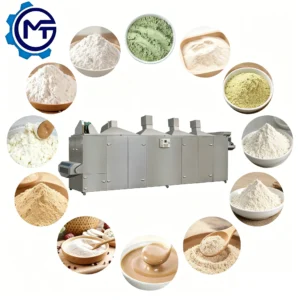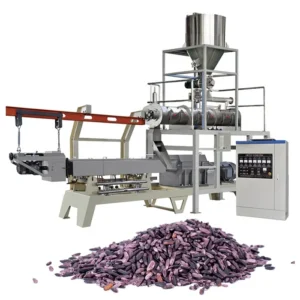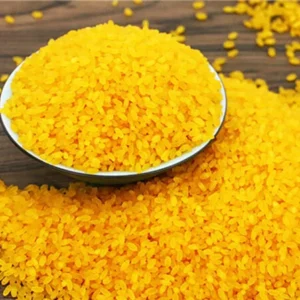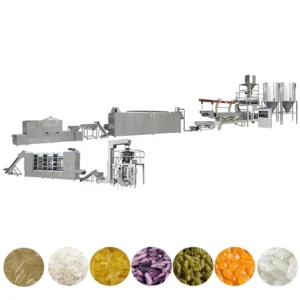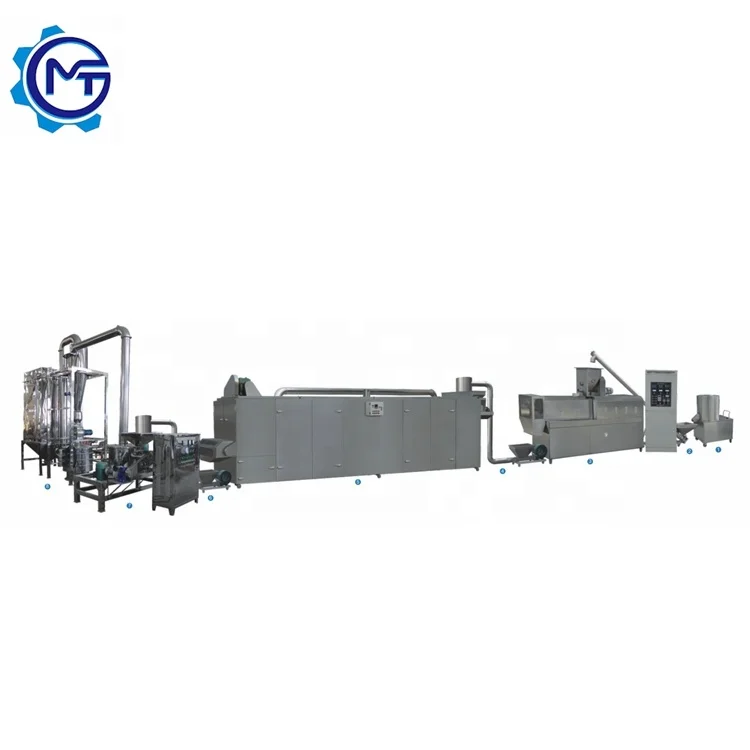


MT65 / MT70 / MT85 Nutritional Powder Processing Line, Twin-Screw, 380V/50Hz — complete turnkey system from mixing through extrusion, drying, milling to packing, all stations throughput-matched as one integrated project.
- Designed for infant formula, FBF and CSB production with screw and die configuration specified to your cereal flour blend
- Full stainless steel construction across every station for food-grade hygiene compliance
Trial runs on your actual raw material are conducted in our in-house testing workshop before shipment, with a complete report documenting output and product quality.
Description
Integrated throughput matching — every station from cereal flour batching to final powder packing is sized to the same real output, so the dryer or mill never waits on the extruder or chokes it.
Technical Specifications
| Parameter | Value |
|---|---|
| Model | MT65 / MT70 / MT85 |
| Product Type | Nutritional Powder Processing Line |
| Output Capacity | MT65: 100–150 kg/h (basis not stated in source — confirm raw material and moisture content); MT70: 200–240 kg/h (basis not stated in source — confirm raw material and moisture content); MT85: 400–500 kg/h (basis not stated in source — confirm raw material and moisture content) |
| Installed Power | MT65: 66 kW; MT70: 100 kW; MT85: 130 kW |
| Real Power Consumption | MT65: 50 kW; MT70: 67 kW; MT85: 80 kW |
| Overall Dimensions (L×W×H) | MT65: 19000×1200×2200 mm; MT70: 21000×1500×2200 mm; MT85: 30000×3500×4300 mm |
| Voltage & Frequency | 380V/50Hz (three phase), 220V/50Hz (single phase) — customizable to local voltage |
| Machine Material | Stainless steel (all stations) |
| Screw Type | Twin-screw |
| Line Stations | Mixing system → Extrusion system → Drying system → Milling system → Packing system |
| Control System | PLC and MCC control available (configuration to be confirmed per line scope) |
| Standards | CE, ISO |
Application Suitability
| Application | Material or Output |
|---|---|
| Infant baby food powder | Cereal flours (corn, rice, wheat, oat) blended with milk powder and natural fruit or vanilla flavors |
| Fortified blended food (FBF / CSB / samaposha) | Corn and soy flour blends with added micronutrient premix for institutional and humanitarian procurement |
| Instant nutritional breakfast drink powder | Oat, wheat and rice flour base with optional protein and vitamin fortification |
| Instant porridge and weaning food | Pre-gelatinised cereal flour with controlled solubility for hot-water reconstitution |
Why Nominal Capacity Numbers Mislead on a Nutritional Powder Processing Line Turnkey
The only capacity figure that matters is the one measured on your exact cereal flour blend at your target moisture content.
I have watched lines ship out with a rated throughput that dropped by half once the buyer’s actual corn-soy ratio hit the barrel. The problem was never the extruder motor — it was that the screw configuration and die geometry had been set for a generic starch profile, not the high-fiber, high-protein mix the customer actually ran. On a nutritional powder processing line turnkey project, a mismatch at the extrusion stage cascades into under-utilised drying capacity and a milling station that cannot reach its design fineness. We now require a raw material sample and a test run in our workshop before any line configuration is finalised [NEED_CITE: extrusion behaviour of high-protein cereal blends versus pure starch].
From Flour Blend to Instant Powder — One Continuous Flow
A nutritional powder processing line turnkey project begins with the batching and mixing station, where cereal flours are weighed and blended with any vitamin or mineral premix before entering the extruder barrel. The twin-screw extrusion step gelatinises the starch fraction and develops the porous structure that later determines how fast the powder dissolves in water or milk. Because every station — mixer, extruder, dryer, mill and packer — is specified under a single line layout, the throughput at each stage is calculated to match the others rather than relying on independent vendor ratings.
Solubility, Density and the Drying-Milling Handoff
After extrusion, the expanded cereal mass enters the dryer where residual moisture is reduced to a level that allows clean milling without clogging the screen. If the dryer removes too little moisture, the mill produces a gummy paste instead of free-flowing powder; too much and the particle becomes brittle, generating excess fines that fail the instant-dissolving test. The milling station then grinds the dried extrudate to the target mesh size, and the packing station fills and seals the finished nutritional powder. Getting the moisture handoff right between dryer and mill is where most line integrations fail, and it is the reason we run the full sequence on your raw material before shipment [NEED_CITE: moisture transfer requirements between extrusion drying and milling stages].
Reading the Spec Sheet Against Your Actual Production Target
The three available extruder models — MT65, MT70 and MT85 — span pilot-scale runs to full commercial volumes, but the installed power figures (66 kW, 100 kW, 130 kW) tell only part of the story. Real power consumption sits noticeably lower (50 kW, 67 kW, 80 kW), which matters when you are sizing the transformer and dedicated circuit for the extrusion hall. The line voltage is confirmed against your local grid standard before production starts, so a buyer in a 415V/60Hz market does not receive a 380V/50Hz cabinet. Overall line length grows from roughly 19 metres for the MT65 layout to 30 metres for the MT85, which directly affects the floor space and utility trench planning at your site.
What Happens When Stations Are Sized Independently
When an extruder is purchased from one vendor and the dryer from another, the supplier of each has no incentive to guarantee the handoff between them. A dryer rated for a certain airflow may not have the residence time to handle the actual moisture load coming off the extruder barrel, and the resulting bottleneck forces the entire line to run below its design rate. On a nutritional powder processing line turnkey project sourced as a single package, that risk is absorbed into the layout phase — the drying capacity, milling throughput and packing speed are all calculated from the same extrusion output figure [NEED_CITE: consequences of unmatched throughput in multi-vendor food processing lines].
Why Buyers Place the Full Line Here
Stainless steel construction across every station means the line meets food-grade hygiene expectations without selective upgrades at contact points. Screw configuration and die design are specified to your cereal flour blend rather than carried over from a generic build, so expansion and density hit the target from the first production day. The in-house testing workshop allows us to run your actual raw material through the full sequence — mixing, extrusion, drying, milling — and document the result before the line leaves Shandong. Voltage, frequency and control panel language are locked in during the specification stage, preventing commissioning delays at your site. Pre-sales consultation continues through installation, operator training and wear-part supply, keeping the line running long after the first batch ships.
Documentation & Verification
- Line layout and capacity calculation showing matched throughput at every station
- Trial run report on your cereal flour blend conducted in our testing workshop
- Screw and die configuration record tied to your raw material and target powder fineness
- Electrical schematic with voltage and frequency confirmation for your destination country
- CE declaration of conformity and ISO certificate for customs and regulatory clearance
- Operation and maintenance manual with wear parts list and replacement intervals
Installation, Commissioning & Support
- Floor plan and utility trench layout sized to the specific line footprint (up to 30 m for MT85)
- Dedicated power circuit specification matching confirmed real power draw (up to 80 kW)
- Modular station delivery allowing staged unloading in workshops with limited door clearance
- On-site extrusion parameter tuning using your production flour blend during commissioning
- Operator training covering PLC screen navigation, screw wear inspection and daily cleaning cycles
- Wear parts inventory list for screws, dies and mill screens with recommended reorder points
What to Prepare Before Requesting a Quotation
Send us a representative sample of the cereal flour blend you plan to run, including any soy, oat or micronutrient premix ratios, along with your target daily output and the mesh size you need for the finished powder. Let us know your local voltage and frequency, the preferred language for the control panel, and whether your existing packing equipment will be integrated or if the line should include a new packing station. If you have a specific instant-solubility standard the powder must meet, share the test method so we can replicate it during the workshop trial.
Frequently Asked Questions
Q: How is the output capacity verified on my specific cereal flour blend and moisture content?
A: We require a raw material sample before the line configuration is finalised. Your blend is run through the full sequence — mixing, extrusion, drying and milling — in our testing workshop, and a trial run report documenting actual throughput and powder fineness is issued before shipment.
Q: How do you ensure throughput is matched between extrusion, drying, milling and packing stations?
A: Every station is specified under a single line layout calculation. The drying residence time, milling screen capacity and packing speed are all derived from the measured extrusion output on your raw material, not from independent vendor nameplate ratings.
Q: What is the phased installation and commissioning schedule for a complete turnkey line?
A: Stations arrive in modular sections that match your workshop access. Mechanical assembly comes first, followed by electrical connection to the confirmed voltage supply, then dry runs and finally production trials on your flour blend with our engineer on site for parameter tuning.
Q: How are voltage, frequency and control language confirmed before production starts?
A: During the specification stage we collect your local grid standard and preferred HMI language. The electrical schematic and PLC programme are built to those values, and the buyer signs off on the configuration document before the control cabinet is wired.
Q: What operator training and ongoing maintenance support is included after installation?
A: Our engineer trains your team on PLC operation, screw and die inspection, mill screen changes and daily cleaning routines. A wear parts list with reorder intervals is provided, and remote troubleshooting support continues after the commissioning visit ends.
Related products
-
Healthy Baby Food Production Line Nutritional Powder Equipment for Baby Food Supplements for Flour Processing Machinery
¥8,500.00 Select options This product has multiple variants. The options may be chosen on the product page -

High Productivity New Condition Safe Healthy and Nutritious Baby Food Meal Replacement Powder Production Line
¥30.00 Select options This product has multiple variants. The options may be chosen on the product page -
CE Approved MT Brand Organic Baby Rice Nutrition Powder Extrusion Production Line with 500kg/h Capacity and Automatic Grade
¥9,500.00 Add to cart -

New Automatic Nutritional Powder Making Machine for Baby Food Production Line
¥20.00 Select options This product has multiple variants. The options may be chosen on the product page