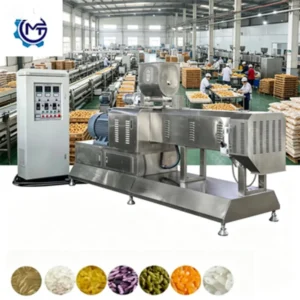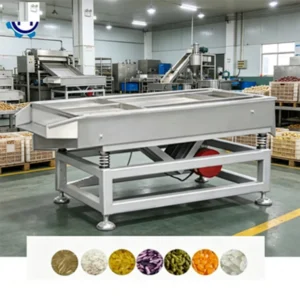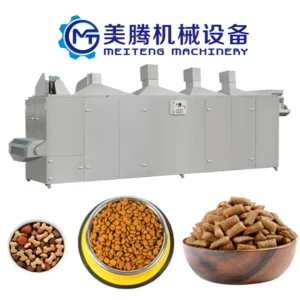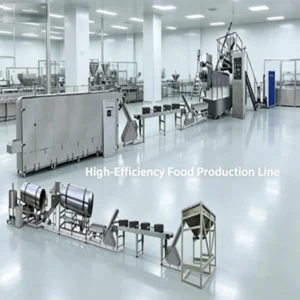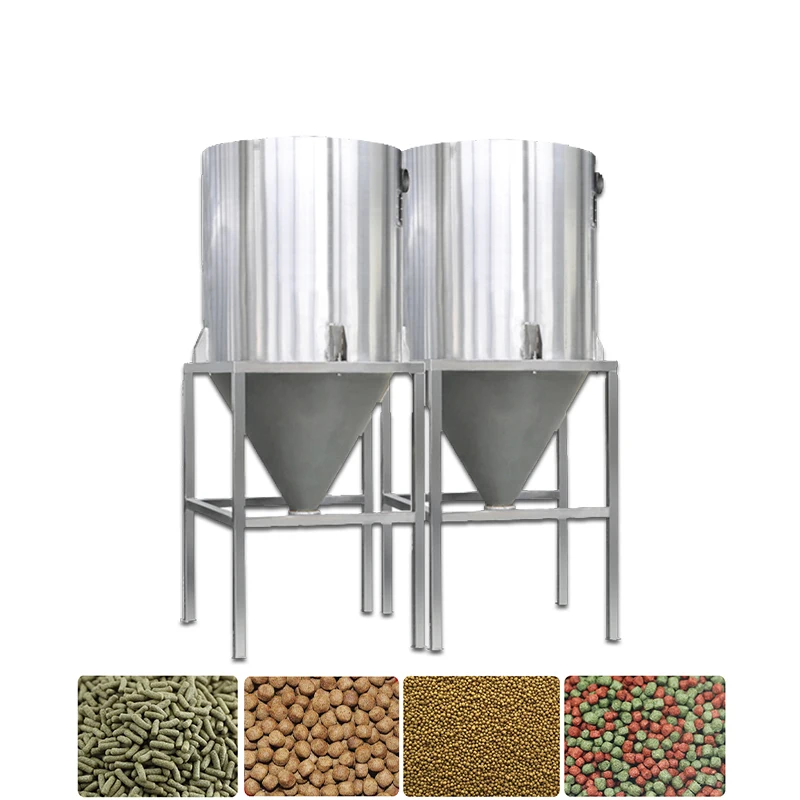

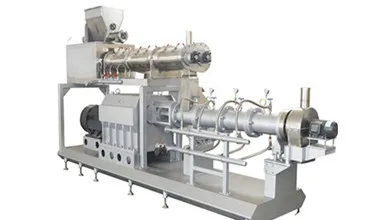

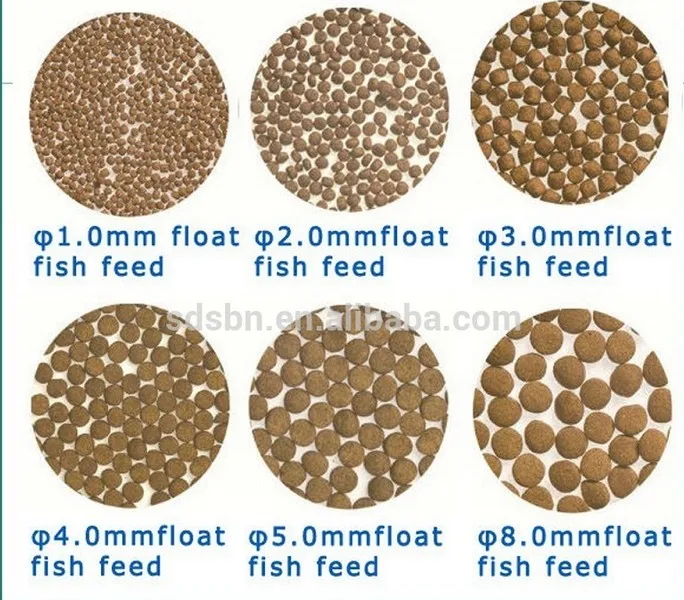
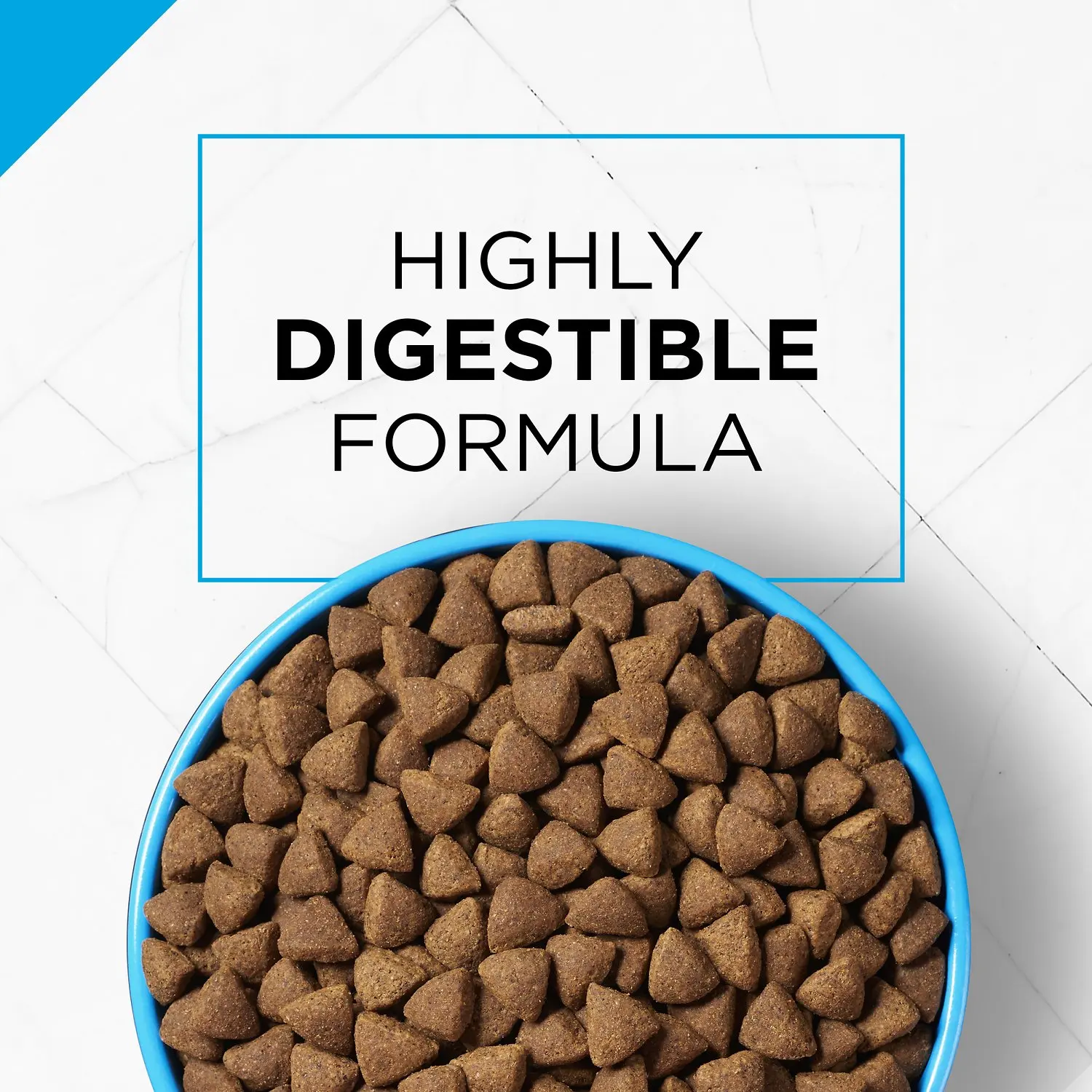
Pet Food Extrusion Production Line, Up to 3 tons/h output, PLC & MCC control, twin-screw configuration — engineered as a complete turnkey system from batching through extrusion, drying, flavouring, cooling, and packing. Each station is throughput-matched to eliminate bottlenecks, with screw and die design specified to your raw material formulation and target pellet density. Supported by in-house trial runs on your actual ingredients before shipment, full line layout with capacity calculations, and on-site commissioning with operator training.
ID9603
Description
Precision throughput matching — Every station from batching through extrusion to packing is calculated against your actual recipe moisture and pellet geometry, preventing the bottlenecks that inflate nominal capacity figures.
Technical Specifications
| Parameter | Value |
|---|---|
| Product Type | Pet Food Extrusion Production Line |
| Output Capacity | Up to 3 tons per hour (basis not stated in source — confirm raw material formulation, moisture content, and pellet size) |
| Extruder Type | Twin-screw |
| Target Products | Dry dog food, cat food kibble, aquatic fish feed (floating and sinking) |
| Process Stages | Batching, mixing, extrusion, drying, flavouring, coating, cooling, packing |
| Control System | PLC and MCC automation |
| Contact Materials | Food-grade stainless steel |
| Warranty | 1 year |
Application Suitability
| Application | Material or Output |
|---|---|
| Dry kibble production for dogs and cats | Corn, wheat, rice, meat meal, fresh meat slurry, vitamin premix |
| Floating aquatic feed for tilapia and catfish | Soybean meal, fish meal, starch binders, lipid coating |
| Sinking aquatic feed for shrimp and bottom feeders | High-protein concentrates, cereal base, mineral additives |
| Prescription and functional pet diets | Hydrolysed protein, fibre blends, targeted supplement carriers |
What "Rated Capacity" Leaves Out About a Pet Food Production Line Turnkey
A line rated at 3 tons per hour on a standard starch mix may deliver half that on a 40% fresh-meat formulation unless screw configuration, dryer length, and coating drum volume are recalculated for the new density and moisture load.
I watched a 500 kg/h line run flawlessly on corn-starch during factory trials, then collapse on day one when the buyer switched to a high-meat recipe. The kibble came out flat and far outside the density the market expected. It took a full week of on-site screw reconfiguration to recover. That failure was not about the extruder itself — it was about every downstream station being sized for a different material behaviour [NEED_CITE: material-specific throughput derating in twin-screw extrusion lines]. When evaluating a pet food production line turnkey, the question is never just what the nameplate says, but what it produces on your exact raw material at your target pellet size.
Screw and Die Geometry Dictate Your Kibble Density
The twin-screw configuration and die plate design determine how much shear, residence time, and expansion pressure your formulation experiences inside the barrel. A high-meat recipe behaves completely differently from a cereal-dominant mix: less starch means less natural expansion, so the screw pitch and compression ratio must compensate. On this pet food production line turnkey, screw elements and die apertures are specified against the buyer’s actual raw material profile and target kibble density rather than pulled from a generic build.
Why Dryer and Coating Capacity Must Track the Extruder
Extrusion is only one station. If the dryer cannot remove moisture fast enough for the actual output mass, or the coating drum cannot tumble the full batch volume within the required residence time, the line backs up and real throughput drops. Each supporting station — mixing, conveying, drying, flavouring, cooling, and packing — is capacity-matched to the extruder output on your specific formulation. This eliminates the silent bottleneck that inflates quoted numbers and frustrates operators [NEED_CITE: throughput balancing across extrusion line stations].
Reading the Specifications That Matter
The twin-screw extruder sits at the centre of the line, but its usefulness depends on how it interfaces with upstream batching accuracy and downstream thermal handling. The L/D ratio of the screw assembly governs residence time, which directly affects starch gelatinisation and protein texturisation. Die hole diameter and count set the pellet cross-section and influence expansion ratio. PLC and MCC control allows the entire line to run from a single interface, maintaining consistent feed rate and barrel temperature profile across shifts. Food-grade stainless steel on all contact surfaces meets the hygiene standards required for pet and aquatic feed production, and the one-year warranty covers the core extrusion and conveying assemblies.
The Hidden Cost of a Mismatched Configuration
Buyers who accept a generic screw-and-die build often discover the problem weeks after commissioning. Floating feed sinks because expansion was insufficient for the formulation. Kibble crumbles during packing because the dryer section was too short to stabilise moisture uniformly. Coating adhesion fails because the flavouring drum was undersized for the actual throughput mass [NEED_CITE: post-installation reconfiguration costs in feed extrusion]. These issues are not equipment defects — they are specification failures that could have been caught before the line left the factory.
Why Source This Line Here
Complete lines from batching to packing under one supplier mean throughput is calculated across every station rather than assembled from separate vendors who each quote their own nominal figure. Screw configuration and die design are specified to your raw material and target product, not copied from a reference build. An in-house testing workshop allows trial runs on your actual formulation before shipment, so product development starts before installation rather than after. Twin-screw expertise spans pet food, aquatic feed, and specialty diet applications. Pre-sales consultation extends through engineer design, on-site installation, commissioning, and ongoing maintenance support.
Documentation & Verification
- Line layout drawing with capacity calculation for each station based on your recipe
- Screw and die configuration record matched to your raw material and target pellet density
- Trial run report on your actual formulation conducted before dispatch
- Electrical schematic with voltage and frequency confirmation for your facility
- CE declaration of conformity and ISO certificate for the complete line
- Operation and maintenance manual with wear parts list
Installation, Commissioning & Support
- Foundation plan and floor space layout provided based on your chosen line configuration
- Dedicated electrical circuit requirements specified per PLC and MCC power draw
- Extruder barrel, dryer sections, and coating drum shipped modular for site assembly
- First-run parameter setting and screw adjustment performed on your raw material on site
- Operator training covers PLC interface, die changes, and daily sanitation procedures
- Wear parts list for screws, dies, and seals with recommended stocking quantities
Before You Send an Enquiry
To configure a line that actually meets your throughput target, provide your raw material formulation with moisture percentages, the target pellet dimensions and density range, and your local voltage and frequency standards. Include your available workshop footprint and ceiling height so the layout can be planned before quotation. If you are running a recipe with significant fresh-meat or fat content, flag it early — it changes the entire downstream calculation.
Frequently Asked Questions
Q: How do you verify the stated capacity of this pet food extrusion line?
A: Capacity depends entirely on raw material formulation, moisture content, and pellet size. We conduct a trial run in our testing workshop using your actual recipe and measure real throughput at every station. The trial run report documents the verified output so you know what to expect before the line ships.
Q: How do you prevent bottlenecks between the extruder and downstream stations?
A: Each station — dryer, coating drum, cooler, packing — is sized against the extruder output calculated for your specific material. We provide a line layout with capacity calculations for every stage, so no single station limits overall throughput.
Q: What does on-site installation and operator training include?
A: Our engineers assemble the modular line sections, set extrusion parameters on your raw material, and train your operators on the PLC interface, die changes, and sanitation routines. Commissioning continues until the line runs stable product at verified throughput.
Q: Can you supply spare screws and dies when the first replacement is due?
A: Yes. Every line ships with a documented wear parts list covering screws, dies, and seals. We recommend stocking quantities based on your production schedule and supply replacements matched to your original screw and die configuration.
Q: How do you confirm voltage, frequency, and control language before production?
A: During the specification phase we collect your facility electrical standards and preferred HMI language. The electrical schematic and voltage confirmation document are reviewed and signed off before manufacturing begins, preventing commissioning delays.
Related products
-
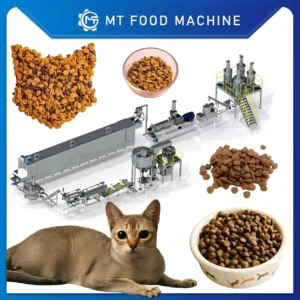
200-250kg/h Capacity PLC Controlled Multi-Species Dog Food Processing Line with MT-70 Extruder
¥35,000.00 Select options This product has multiple variants. The options may be chosen on the product page -
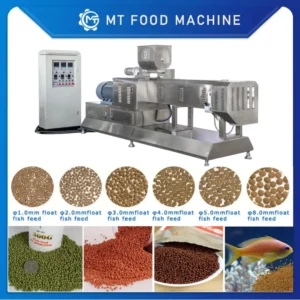
4-5t/h High Capacity Multi-Species Fish Feed Processing Line to Produce Fish Food
¥65,000.00 Select options This product has multiple variants. The options may be chosen on the product page -
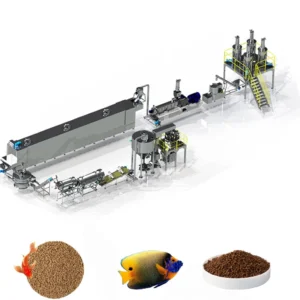
Automatic Fish Feed Production Line Machine Floating Sinking Pellet Manufacturing High Capacity Energy Saving Design
¥9,500.00 Select options This product has multiple variants. The options may be chosen on the product page -
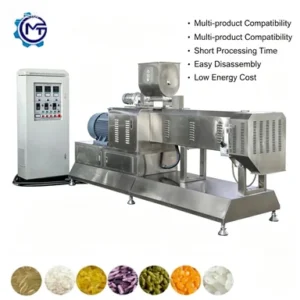
Durable Stainless Steel Twin Screw Extruder Floating Sinking Aquatic Fish Feed Processing Production Equipment
¥65.00 Select options This product has multiple variants. The options may be chosen on the product page