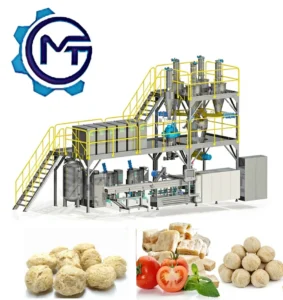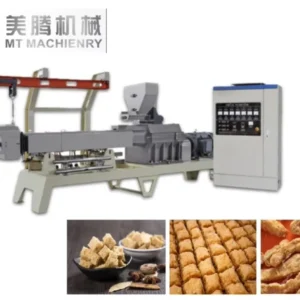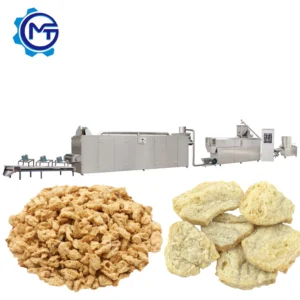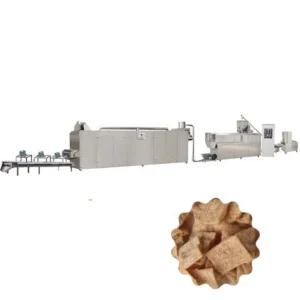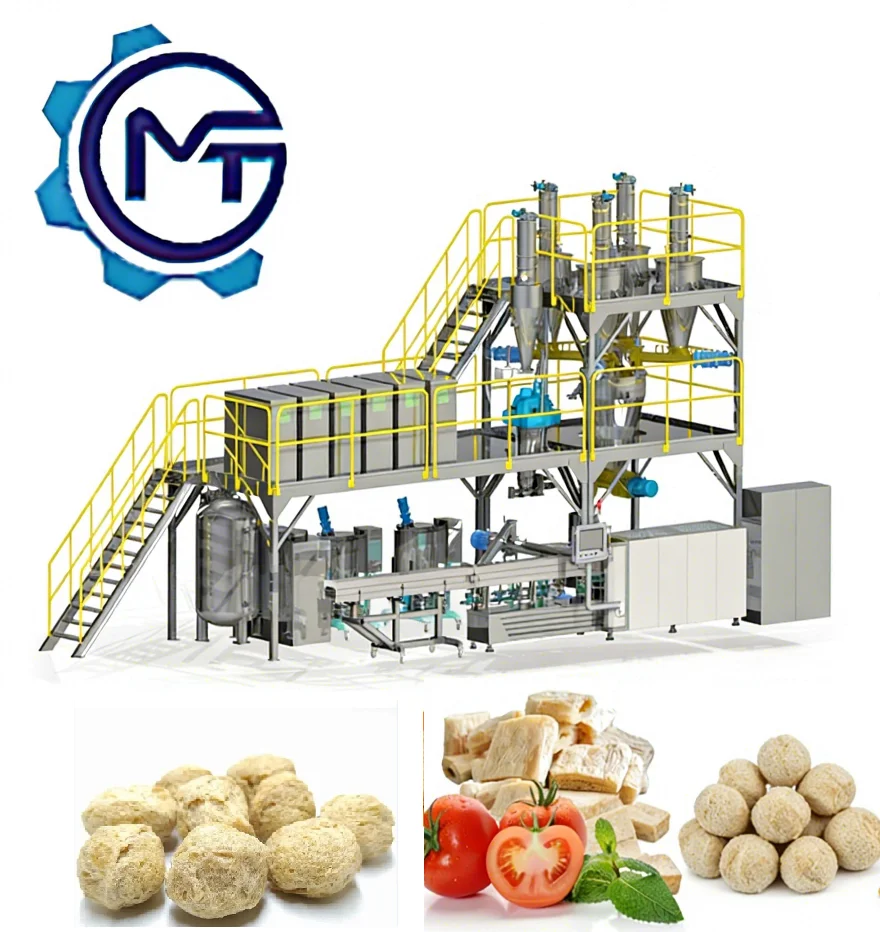
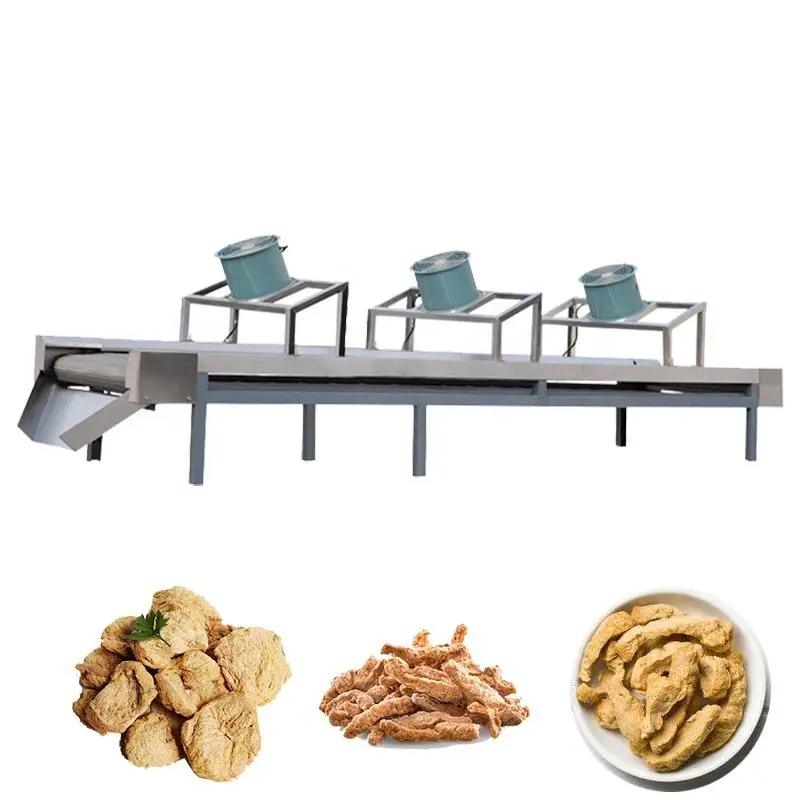
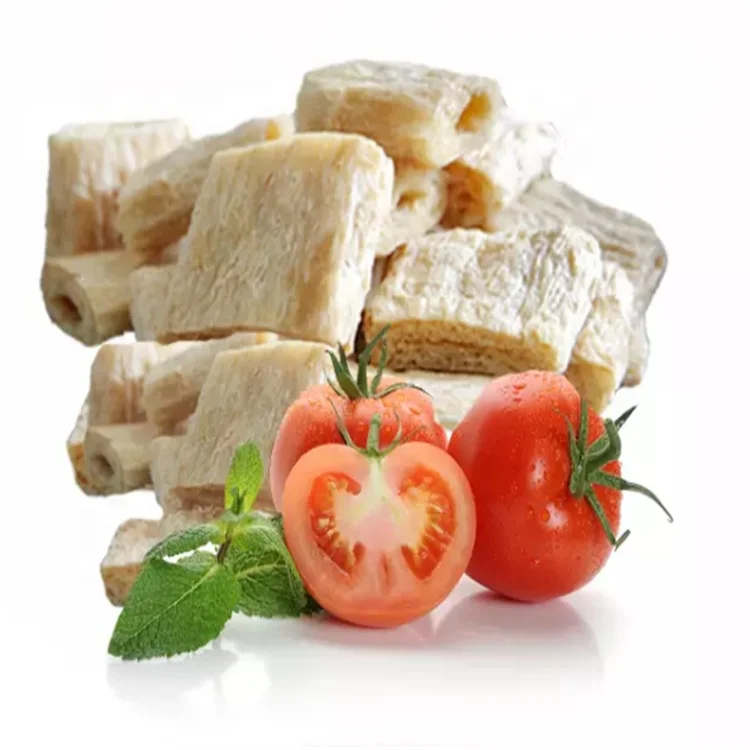
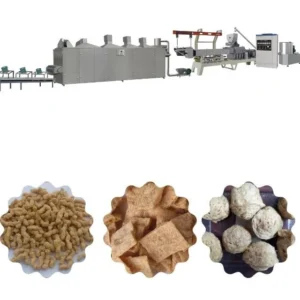
MT65 Textured Vegetable Protein Production Line, Twin-Screw Extruder, Multi-layer Dryer — engineered for consistent TVP fibre structure and density control across soy flour and protein concentrate formulations.
- Screw configuration and die design matched to your raw material for targeted expansion and texture
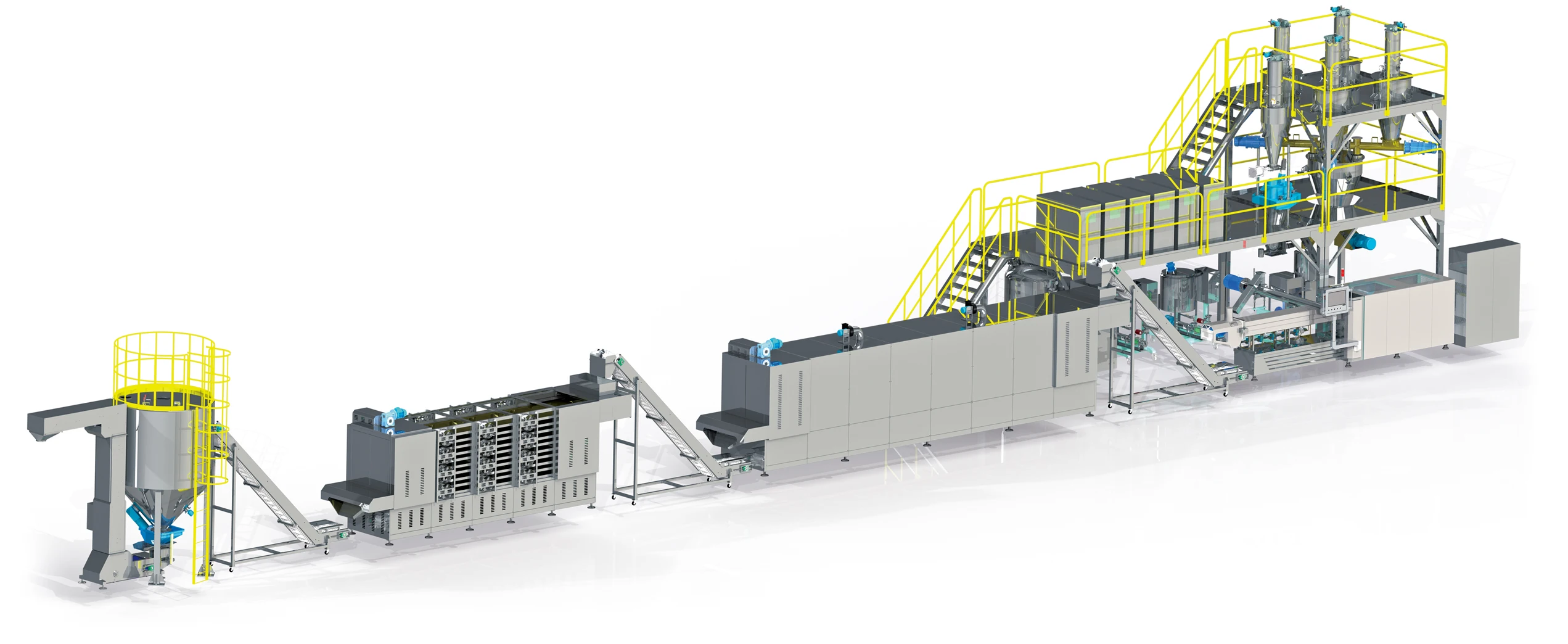
- Complete turnkey layout from batching through extrusion, drying and cooling with throughput balanced at every station
Backed by in-house trial runs on your actual formulation before shipment, plus full line capacity calculation and electrical documentation aligned to your facility requirements.
Description
Screw and die configuration specified to your raw material — Every MT65 through MT85 build starts with the buyer’s actual soy formulation and target TVP fibre structure, not a generic extruder template copied across unrelated applications.
Technical Specifications
| Parameter | Value |
|---|---|
| Model | MT65 / MT70 / MT75 / MT85 |
| Product Type | Textured Vegetable Protein (TVP) Production Line |
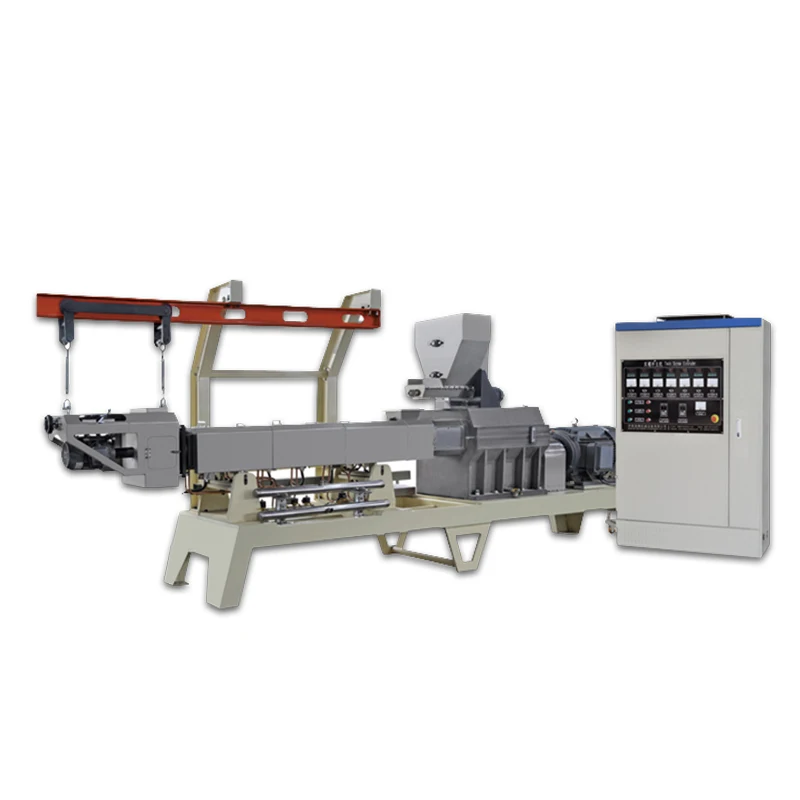
| Screw Type | Twin-screw |
| Installed Power | 84 kW (MT65) / 160 kW (MT70) / 190 kW (MT75) / 210 kW (MT85) |
| Power Consumption | 59 kW (MT65) / 120 kW (MT70) / 140 kW (MT75) / 140 kW (MT85) |
| Output Capacity | 100–150 kg/h (MT65, basis to be confirmed) / 150–200 kg/h (MT70, basis to be confirmed) / 150–200 kg (MT75, basis to be confirmed) / 250–300 kg/h (MT85, basis to be confirmed) |
| Overall Dimensions (L×W×H) | 40,000 × 1,200 × 2,200 mm (MT65) / 41,000 × 1,500 × 2,200 mm (MT70) / 43,000 × 1,500 × 3,200 mm (MT75) / 45,000 × 1,500 × 3,500 mm (MT85) |
| Rotary Cutting Motor | 0.75 kW |
| Feeding Motor | 0.75 kW |
| Pump Motor | 0.37 kW |
| Dryer Type | Multi-layer, chain-driven, adjustable temperature and residence time |
| Dryer Heating Options | Fuel / gas / electric |
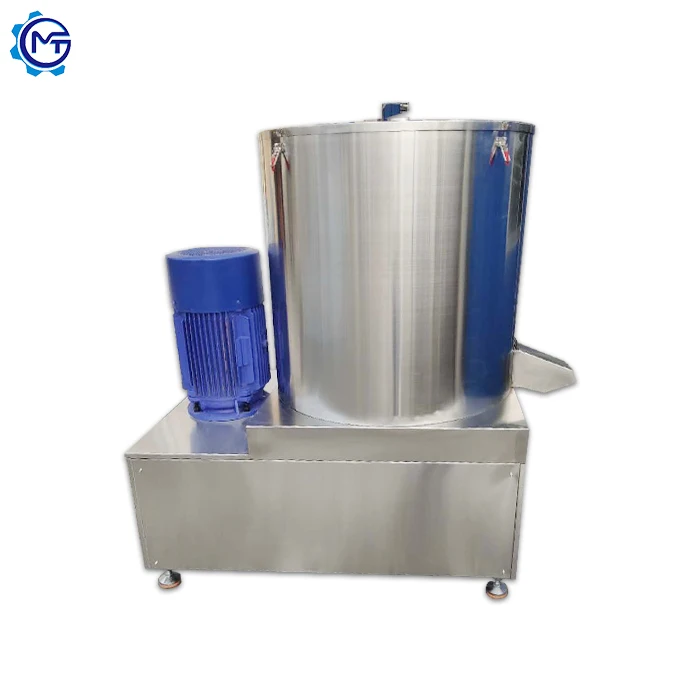
| Mixer Type | Vertical ribbon mixer, stainless steel 304 contact parts |
| Line Stations | Mixer → Screw Conveyor → Twin Screw Extruder → Air Conveyor → Multi-layer Dryer → Cooling Machine |
Application Suitability
| Application | Material or Output |
|---|---|
| TVP nuggets and chunks | Defatted soy flour, soy protein concentrate |
| Plant-based meat analogue blocks | Pea protein, wheat gluten blends |
| Soy protein meat extenders | Soy grits with adjustable moisture and fibre density |
| Alternative puffed formats | Corn and cereal formulations with changed screw and die setup |
What "Rated Capacity" Leaves Out About Plant Based Meat Processing Line Turnkey Projects
A line only produces what its screw profile and dryer can actually handle on your specific formulation.
I spent years on workshop floors and customer sites across Shandong, and the pattern is always the same: a buyer receives an extruder quoted at a nominal output figure, runs their actual protein concentrate through it, and watches the throughput drop because the fibre structure demands a different shear profile and longer barrel residence time. The dryer then cannot keep up, and material backs up at the extruder discharge. A plant based meat processing line turnkey project only works when every station is sized against the real raw material, not a catalogue assumption. [NEED_CITE: effect of protein concentration on extrusion shear requirements]
Screw Configuration Determines Fibre Structure, Not Just Throughput
The twin-screw extruder at the heart of this plant based meat processing line turnkey system is configurable across different screw lengths and heating zone arrangements. The screw profile controls how the protein matrix unfolds under heat and shear, which directly defines whether the output has a loose, open fibre or a dense, meat-like bite. A configuration designed for standard soy flour will produce a different result when fed a high-protein pea concentrate, and that difference shows up in both texture and stable output rate.
Matching Dryer Residence Time to Extruder Discharge Moisture
The multi-layer dryer uses a double pitch roller chain drive for continuous product transport, with adjustable temperature zones and belt speed. When extruded TVP leaves the die at elevated moisture, the dryer must remove that water evenly without case-hardening the surface. If the residence time is too short, the interior remains soft and the product collapses during cooling; if too long, the outer layer over-dries and fractures. This balance depends entirely on the formulation moisture and the extruder discharge rate. [NEED_CITE: multi-layer dryer design considerations for extruded protein products]
Reading the Specs That Actually Matter for Protein Extrusion
Installed power and power consumption figures across the MT65 through MT85 models indicate the thermal and mechanical energy available for protein texturisation. Higher installed power supports longer barrels with more heating zones, which gives the protein matrix additional time to align into fibres before exiting the die. The 0.75 kW feeding motor and 0.37 kW pump motor maintain consistent material and moisture input, because any fluctuation at the feed throat translates directly into density variation at the die face. The vertical ribbon mixer with stainless steel 304 contact parts ensures uniform hydration of the protein blend before it reaches the screw conveyor, and uneven mixing is one of the most common causes of inconsistent fibre structure downstream. The line footprint, ranging from 40 to 45 metres in length, reflects the physical space needed for sequential mixing, extrusion, drying, and cooling without material handling bottlenecks.
The Hidden Cost of Mismatched Line Stations
When the extruder, dryer, and cooling machine come from separate vendors, nobody guarantees that the dryer can handle the moisture load the extruder puts out at sustained operation. The extruder may run fine during a short factory test, but once the line runs continuously, wet product piles up before the dryer inlet, and the entire plant based meat processing line turnkey system stalls. I have watched operators manually clear backlog while the extruder keeps running, wasting both energy and raw material. That kind of mismatch is invisible in a spec sheet and only appears after installation. [NEED_CITE: throughput bottleneck between extruder and dryer in protein lines]
Why This Line Is Built as One Project
The complete sequence from batching through cooling is supplied under one responsibility, so throughput calculations cover every station rather than individual machines. Screw configuration and die design are specified against the buyer’s actual protein source and target fibre density before the build begins. The in-house testing workshop runs customer raw material through the extruder before shipment, confirming that the fibre structure and output rate match expectations. The multi-layer dryer is sized to the confirmed extruder discharge moisture, preventing the bottleneck scenario described above. Documentation includes the screw and die configuration record along with the trial run report, so the buyer has a baseline to reference when production starts on site.
Documentation & Verification
- Line layout drawing with capacity calculation based on your specific soy or pea protein formulation
- Screw and die configuration record matched to your target TVP fibre structure
- Trial run report on your raw material conducted in the testing workshop before dispatch
- Electrical schematic and voltage confirmation aligned to your facility power supply
- Operation and maintenance manual with wear parts list for screws, dies, and cutting blades
Installation, Commissioning & Support
- Foundation and floor space planning based on the 40–45 metre line footprint and station weights
- Dedicated electrical circuits sized to the 84–210 kW installed power range depending on model selected
- Assembly sequence covering extruder barrel alignment, dryer chain tensioning, and cooling conveyor levelling
- First-run parameter setting including barrel temperature profile, screw speed, and dryer zone temperatures
- Operator training covering feed rate adjustment, die changeover, and moisture monitoring at each station
- Wear parts supply schedule for screws, dies, and rotary cutting blades with recommended first replacement intervals
What to Include in Your Inquiry
Send the specific protein source and concentration you plan to run, along with the target product format such as nuggets, chunks, or blocks. Include your facility voltage and frequency, available floor space, and whether you need the dryer configured for gas, electric, or fuel heating. If you have existing upstream mixing or downstream packaging equipment, note the interface points so the line layout accounts for them.
Frequently Asked Questions
Q: How is output capacity validated on my specific protein formulation?
A: We run your actual raw material through the extruder in our testing workshop before shipment. The trial confirms screw configuration, barrel temperature profile, and achievable throughput on your specific formulation. The trial run report documents these parameters and becomes your production baseline.
Q: Which screw length and die configuration fits my target TVP structure?
A: Screw length and die geometry are selected based on your protein source, target fibre density, and desired product shape. Longer barrels with more heating zones suit high-protein concentrates that need extended residence time for proper fibre alignment.
Q: How is dryer capacity matched to extruder throughput?
A: The multi-layer dryer is sized to handle the moisture load at the extruder’s confirmed discharge rate. Belt speed and zone temperatures are set during the trial run so that residence time removes moisture evenly without surface over-drying.
Q: What does on-site commissioning cover?
A: Our technicians handle barrel alignment, dryer chain tensioning, electrical verification, and first-run parameter tuning. Operator training covers feed rate control, die changeover, moisture monitoring, and daily maintenance routines specific to the line configuration you receive.
Q: Which wear parts should I stock for the first year?
A: Screws, dies, and rotary cutting blades experience the most wear during protein extrusion. We provide a wear parts list with recommended first replacement intervals based on your production volume and raw material abrasiveness.
Related products
-
Vegetable Meat Making Machine Textured Soybean Protein Maker
¥30.00 Select options This product has multiple variants. The options may be chosen on the product page -
Dry Protein Drawing Equipment – Intelligent Puffing Machine for Cake Protein & Vegetarian Meat
¥65.00 Select options This product has multiple variants. The options may be chosen on the product page -

Customized Vegetarian Meat Production Line for Food Factory
¥9,500.00 Select options This product has multiple variants. The options may be chosen on the product page -
High Productivity Single Screw Extruder Machine New Condition Textured Soya Meat & Soy Protein Like Meat Making Machine
Price range: ¥20.00 through ¥30.00 Select options This product has multiple variants. The options may be chosen on the product page