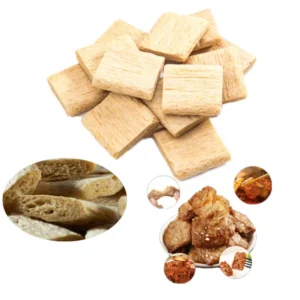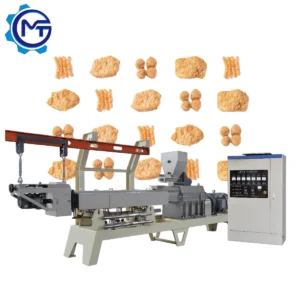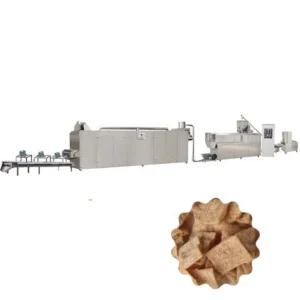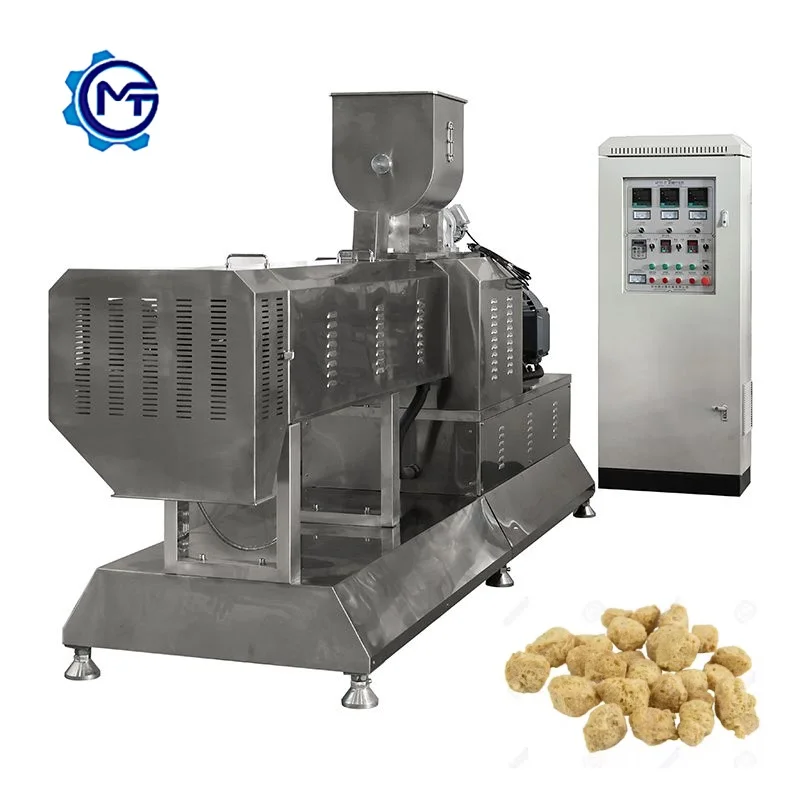
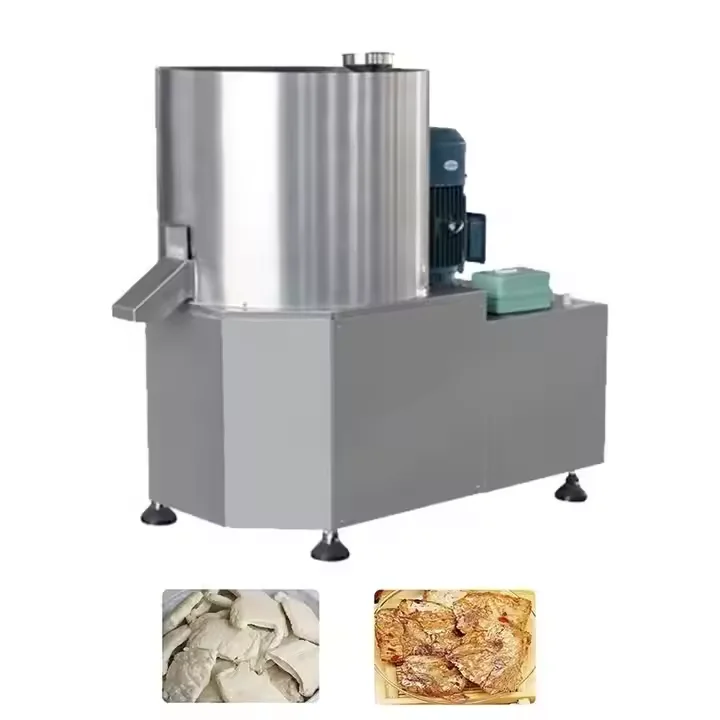
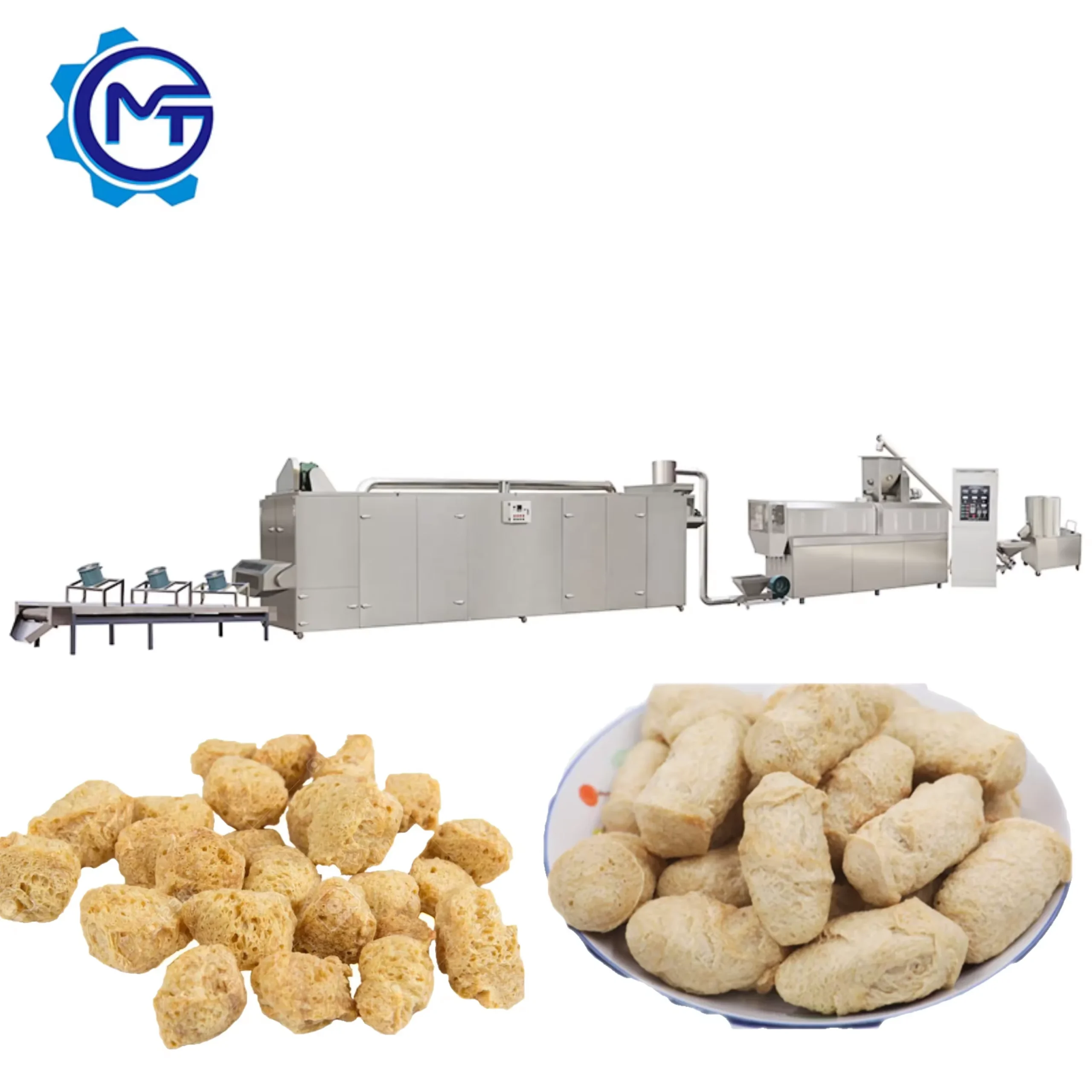
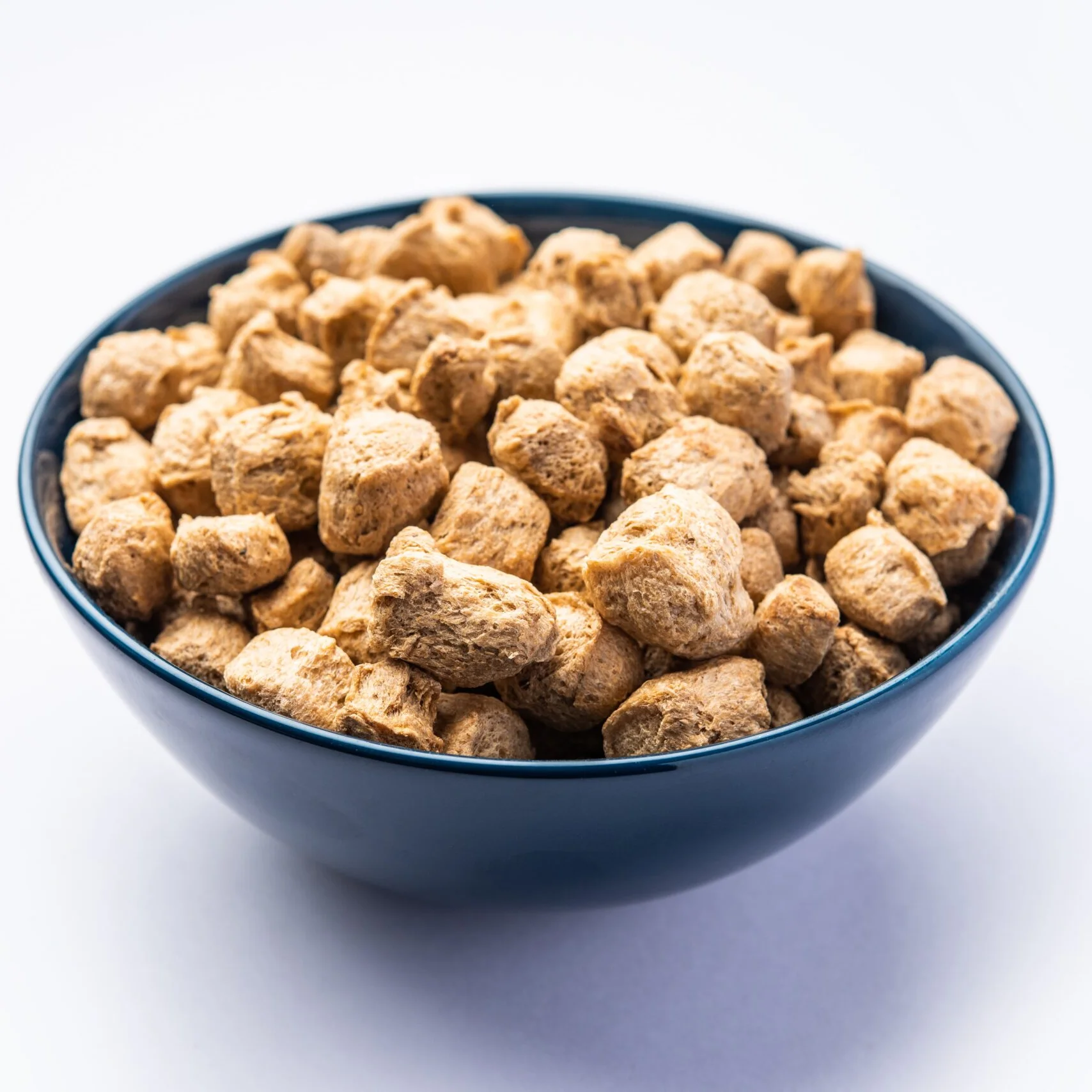
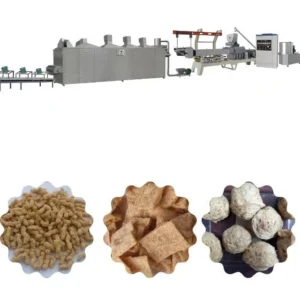
MT65 / MT70 / MT75 / MT85 Twin-Screw TVP Extrusion Line, 84–210 kW Installed Power — engineered for texturized vegetable protein and plant-based meat production from defatted soya flour or low-temperature soya flakes.
- Screw configuration and die design specified to your raw material and target fiber structure, not a generic build
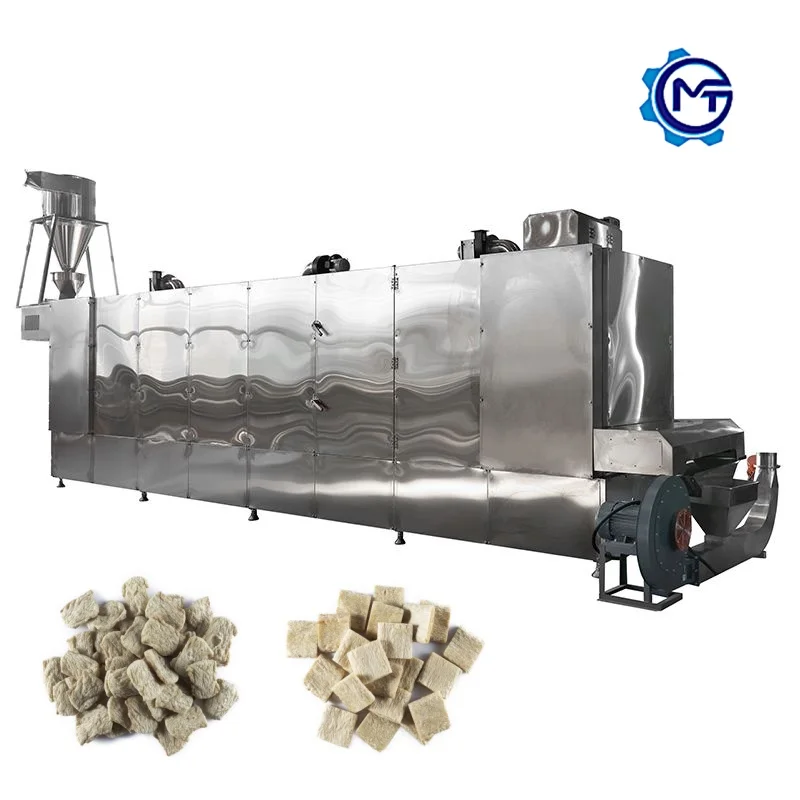
- Multi-layer dryer with selectable fuel / gas / electric heating and adjustable drying profile to match extruder output
- Complete line throughput matched from mixer through cooling to prevent station bottlenecks
Trial runs on your raw material completed in our testing workshop before shipment, with full configuration records provided.
Description
Screw Configured to Your Material — Twin-screw geometry and die moulds are specified against your actual defatted soya flour or flakes, not copied from a generic build, so the target fiber structure emerges on the first production run.
Technical Specifications
| Parameter | Value |
|---|---|
| Model | MT65 / MT70 / MT75 / MT85 |
| Product Type | Twin-Screw Extruder Production Line for Texturized Vegetable Protein (TVP) |
| Extruder Type | Twin-screw |
| Installed Power | 84 kW (MT65) / 160 kW (MT70) / 190 kW (MT75) / 210 kW (MT85) |
| Power Consumption | 59 kW (MT65) / 120 kW (MT70) / 140 kW (MT75) / 140 kW (MT85) |
| Output Capacity | 100–150 kg/h (MT65) / 150–200 kg/h (MT70) / 150–200 kg/h (MT75) / 250–300 kg/h (MT85) (basis not stated in source — confirm raw material specification, moisture content, and die configuration) |
| Main Motor Power | 22 kW / 30 kW / 45 kW (rated or peak not specified) |
| Screw Length | 1050 mm / 1520 mm |
| Overall Dimensions (L×W×H) | 40000×1200×2200 mm (MT65) / 41000×1500×2200 mm (MT70) / 43000×1500×3200 mm (MT75) / 45000×1500×3500 mm (MT85) (full line footprint) |
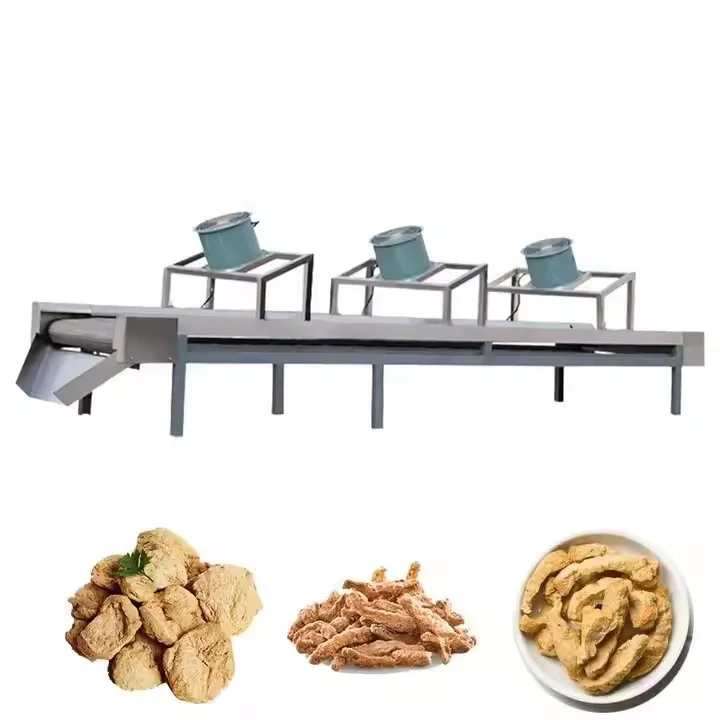
| Line Stations | Mixer → Screw Conveyor → Twin Screw Extruder → Air Conveyor → Multi-layer Dryer → Cooling Machine |
| Mixer Capacity Options | 20–30 kg / 70–80 kg / 170–180 kg |
| Mixer Power Options | 4 kW / 7.5 kW / 15 kW |
| Dryer Drive | Double pitch roller chain drive, round-trip drying |
| Dryer Energy Options | Fuel / Gas / Electricity (buyer selectable) |
| Heating Power | 10 kW / 14 kW |
| Rotary Cutting Motor | 0.75 kW |
| Feeding Motor | 0.75 kW |
| Standards | CE; ISO |
| Warranty | 1 year complete guarantee with lifetime maintenance service |
Application Suitability
| Application | Material or Output |
|---|---|
| Texturized vegetable protein (TVP / TSP) | Defatted soya flour, low temperature soya flakes |
| Soya nuggets and soya chunks | Soya flour blends with varying protein content |
| Plant-based meat analogue blocks | Soybean dregs, peanut dregs mixed with protein concentrates |
| Fortified food and nutrition programme ingredients | High-protein cereal and pulse blends |
| Deepfreeze and fast food production ingredients | Pre-processed TVP chunks for downstream rehydration |
What "250 kg/h" Leaves Out About TVP Extrusion Capacity
Nominal output figures assume a standard protein content and moisture level that rarely match your actual raw material.
A plant based meat extrusion production line quoted at a round number sounds reassuring until the first hour of commissioning. I have watched a Middle East project stall for days because the client’s soya flour protein percentage sat below the benchmark the extruder was tuned for — the melt turned gummy, the fiber structure collapsed, and chunks stuck to the die face. The line was rated for a specific throughput, but that figure evaporated the moment the material changed. Before any capacity number matters, you need a trial run on your exact defatted soya flour or low temperature soya flakes to confirm the screw profile, barrel temperature zones, and moisture addition actually deliver the fiber density your market expects [NEED_CITE: material-dependent throughput variation in twin-screw protein extrusion].
Barrel Zones, Shear, and the Fiber Structure You Actually Sell
The twin-screw extruder in this turnkey TVP processing line uses a sectional barrel with independent heating zones, each adjustable to shape how protein molecules align under shear. Defatted soya flour requires a different temperature ramp than low temperature soya flakes because residual oil content changes how the material plasticises. Getting this wrong means dense, rubbery nuggets instead of the open, meat-like fiber your buyers rehydrate.
Die Geometry Decides Whether the Chunk Holds Together Downstream
Adjustable die moulds on this line produce soya nuggets, TVP chunks, and TSP blocks in varying formats. The die orifice diameter and land length govern expansion ratio and surface skin thickness — two properties that determine whether the chunk survives freezing, transport, and rehydration without disintegrating. Each die configuration is matched to the buyer’s target format rather than swapped from a previous customer’s run [NEED_CITE: die land length influence on TVP chunk integrity].
Reading the Specs That Actually Matter for Protein Extrusion
Screw length options of 1050 mm and 1520 mm directly govern residence time inside the barrel, which controls the degree of protein texturisation. A longer screw allows more gradual shear buildup, producing a more defined fiber structure suitable for larger soya chunks. Main motor power ranging from 22 kW to 45 kW reflects the torque available to push viscous, high-protein dough through restrictive dies — undersizing the motor on a high-protein blend causes screw stall and barrel overload. The multi-layer dryer with selectable energy source then stabilises moisture content to prevent microbial growth while preserving the pore structure that gives TVP its rehydration capacity. Mixer capacity must be matched to extruder feed rate so batching never starves the screw, and the air conveyor between extruder and dryer must handle the full output volume without product accumulation.
The Cost of Skipping the Material Trial
When a turnkey TVP processing line ships without a trial run on your raw material, product development begins on your factory floor — burning through raw material, utility hours, and delivery deadlines while you and the supplier’s technician guess at screw combinations. I have seen weeks lost because the die plate that worked on the supplier’s test flour produced flat, dense discs on the buyer’s locally sourced soya flakes. The fiber never formed correctly, the dryer could not remove moisture uniformly, and the cooling station received a product already outside specification [NEED_CITE: post-installation commissioning delays due to untested material].
Why This Line Is Configured Before It Ships
Every plant based meat extrusion production line from Meiteng goes through an in-house machine testing workshop where your raw material is run before the crate is sealed. The twin-screw configuration and die design are specified to your protein content and target chunk format, not pulled from a catalogue default. Throughput is matched across the mixer, screw conveyor, extruder, air conveyor, multi-layer dryer, and cooling machine so no single station bottlenecks the next. Voltage, frequency, and control language are confirmed against your destination factory before production begins, eliminating the most common cause of delayed commissioning. Complete documentation — from screw configuration records to electrical schematics — travels with the shipment so your maintenance team has every reference from day one.
Documentation & Verification
- Line layout and capacity calculation showing throughput matched across all stations
- Screw and die configuration record specific to your raw material and target format
- Trial run report on your defatted soya flour or soya flakes before dispatch
- Electrical schematic with voltage, frequency, and control language confirmed for your site
- Operation and maintenance manual with wear parts list and replacement intervals
Installation, Commissioning & Support
- Full line footprint up to 45000×1500×3500 mm requires levelled concrete floor with anchor points
- Installed power up to 210 kW demands dedicated electrical circuit with confirmed voltage and frequency
- Twin-screw extruder arrives pre-assembled; dryer and cooling machine require on-site alignment
- First-run commissioning includes barrel temperature profiling and die adjustment for your material
- Operator training covers screw combination changes, moisture dosing, and dryer temperature ramp setting
- Wear parts list covers screws, dies, and cutting blades with reorder specifications included
Before You Request a Quotation
Share the protein content and moisture level of your defatted soya flour or soya flakes, along with the target chunk size and rehydration ratio your market requires. Confirm your factory voltage, frequency, and preferred control language so the electrical cabinet is built correctly before the line enters production. If you are integrating this plant based meat extrusion production line with existing upstream batching or downstream packing equipment, provide the interface specifications so the conveyor heights and control signals align from day one.
Frequently Asked Questions
Q: How is output capacity verified against my specific raw material rather than a nominal figure?
A: Before shipment, your defatted soya flour or soya flakes are run through the twin-screw extruder in the testing workshop. The trial run records actual throughput, fiber structure, chunk density, and moisture content at the die exit, producing a report that replaces any generic capacity claim with data from your material.
Q: Can the screw and die configuration be trialled before shipment?
A: Yes. The in-house testing workshop runs your raw material through the specified screw combination and die mould, documenting barrel temperature profile, screw speed, moisture addition, and resulting product format. The trial run report ships with the line so commissioning starts from a known baseline.
Q: How is throughput matched between the extruder, dryer, and cooling stations?
A: The line layout is calculated so mixer batch size, screw conveyor feed rate, extruder output, air conveyor volume, and multi-layer dryer belt speed all align to the same hourly throughput. No station is oversized or undersized relative to the extruder’s verified output on your material.
Q: How are voltage, frequency, and control language confirmed before production?
A: Your destination factory’s electrical specification and operator language preference are collected during the proposal stage and written into the electrical schematic. The control cabinet is built and tested against those values before the line ships, avoiding on-site rewiring or panel replacement.
Related products
-
Small Multifunctional Textured Soy Protein Machine – Soy Protein Production Line – Vegetarian Meat Processing Equipment
¥65.00 Select options This product has multiple variants. The options may be chosen on the product page -
New High Efficiency Protein Production Line Plant Protein Equipment for Artificial Vegetarian Meat Processing Food Grade
¥65.00 Select options This product has multiple variants. The options may be chosen on the product page -
High Capacity Soy Protein Vegetarian Meat Processing Line
¥9,500.00 Select options This product has multiple variants. The options may be chosen on the product page -
Vegetable Meat Making Machine Textured Soybean Protein Maker
¥30.00 Select options This product has multiple variants. The options may be chosen on the product page