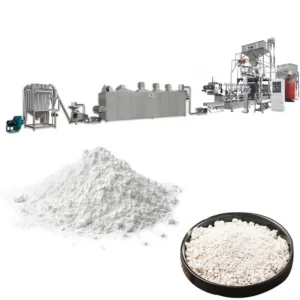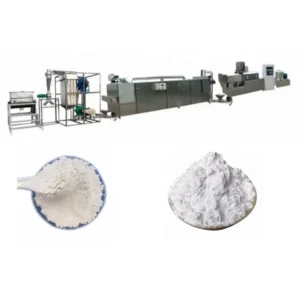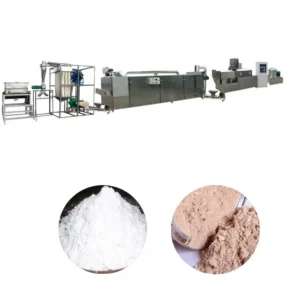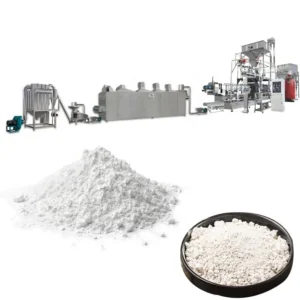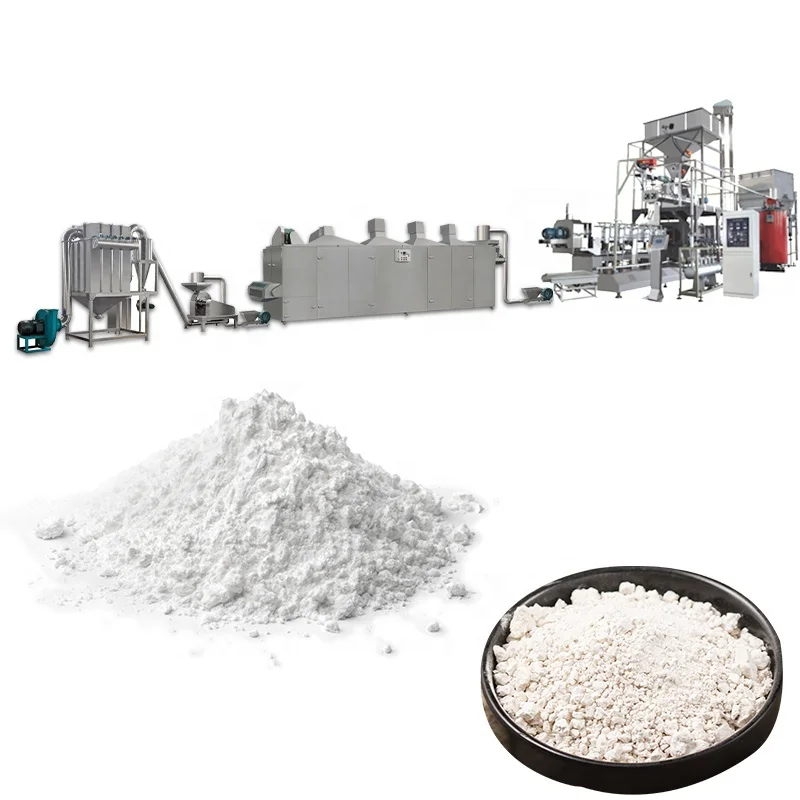


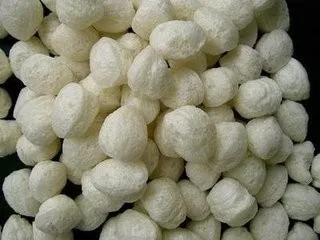

Modified Starch Processing Line, Twin-Screw, PLC Control, 80-500 kg/h — engineered as a complete turnkey project from batching through extrusion, drying and grinding.
- Twin-screw configuration and die design matched to your starch feedstock and target gelatinisation degree, with trial runs on your raw material before shipment
- Throughput balanced across mixer, extruder, dryer and grinder so no station bottlenecks the next
- Multiple heating options (electricity, gas, diesel, steam) to fit your site utility conditions
Single-supplier accountability from line layout through commissioning and operator training.
Description
Single-Supplier Accountability — Every station from the 4.0 kW mixer through the twin-screw extruder to the dryer and grinder is sized against the same throughput calculation, so a modified starch processing line turnkey project does not stall because one machine runs faster than the next can handle.
Technical Specifications
| Parameter | Value |
|---|---|
| Product Type | Modified Starch Processing Line |
| Extruder Type | Twin screw |
| Output Capacity | 80-500 kg/h (basis not stated in source — confirm raw material type, moisture content, target gelatinisation degree) |
| Raw Materials | Wheat flour, corn starch, potato starch |
| Mixer Motor | 4.0 kW |
| Mixer Batch Output | 3.0–4.0 kg/batch |
| Mixer Dimensions | 1.2 × 0.9 × 1.4 m |
| Screw Conveyor Motor | 1.1 kW |
| Screw Conveyor Output | 0–150 kg/h |
| Screw Conveyor Dimensions | 2.5 × 0.6 × 2.3 m |
| Rated Power (Electric Heating) | ~100 kW |
| Rated Power (Gas / Diesel Heating) | 50–60 kW |
| Voltage & Frequency | Three phases 380V/50Hz; Single phase 220V/50Hz (custom voltage available per destination country) |
| Frame Material | Stainless steel 201 |
| Contact Material | Food grade stainless steel 304 |
| Control System | PLC with Siemens (China) or China top brand motors; Delixi or Delta inverters |
| Energy Options | Electricity / Gas / Diesel / Steam |
| Process Flow | Mixer → Screw Conveyor → Twin Screw Extruder → Shift → Air Conveyor → Dryer → Air Conveyor → Conditioning → Conveyor → Grinder |
| Assembly State | Complete line, multiple stations |
| Certification | CE |
| Warranty | 1 year |
Application Suitability
| Application | Material or Output |
|---|---|
| Oilfield drilling fluid additives | API-standard pregelatinised starch from corn or wheat starch requiring consistent viscosity and hydration rate |
| Food-grade modified starch | Pregelatinised or chemically modified starch from potato, corn or wheat flour for bakery, sauce and instant food applications |
| Paper and industrial binders | Modified starch from corn or wheat for corrugated board adhesive, textile sizing and foundry core binders |
What a Nominal Output Figure Leaves Out on a Modified Starch Processing Line Turnkey
Matching throughput across five stations matters more than the headline capacity of the extruder alone.
I once watched a drilling-fluid starch line shut down for a full month because the extruder pushed out material faster than the dryer could handle. The extruder was rated for a certain output, but nobody verified the drying curve of that specific starch at the buyer’s target moisture. The whole project stalled while a larger dryer was sourced and installed. That gap between nominal extruder output and actual line throughput is where most starch projects fail before the first saleable batch is produced. [NEED_CITE: industrial starch gelatinisation and drying curve variables]
How Screw Configuration Controls Gelatinisation in Starch Extrusion
A twin-screw extruder processes starch through controlled shear, moisture and residence time. The screw element arrangement — conveying sections, kneading blocks and reverse elements — determines how much mechanical energy the starch receives and for how long. A modified starch processing line turnkey must specify these elements against the buyer’s raw material because corn starch, wheat flour and potato starch each gelatinise at different temperatures and require different shear profiles. Change the feedstock without adjusting the screw configuration and the degree of gelatinisation shifts, producing starch that either fails to hydrate properly in drilling fluid or gives inconsistent viscosity in a food application.
Why Dryer Sizing Cannot Be an Afterthought
The extruder discharges starch at high moisture and temperature. The dryer must remove that moisture at exactly the rate the extruder produces it. If the dryer capacity lags, material backs up, residence time in the dryer shortens and the starch leaves with uneven moisture content — some particles over-dried and degraded, others under-dried and prone to clumping. This is why the modified starch processing line turnkey is engineered as a single project: the mixer batch cycle, screw conveyor feed rate, extruder output, dryer evaporation rate and grinder capacity are all calculated together before any steel is cut. [NEED_CITE: moisture removal rates in starch drying operations]
Reading the Specifications That Actually Matter
The 4.0 kW mixer motor and 3.0–4.0 kg batch capacity set the upstream rhythm. If batches are prepared slower than the extruder consumes them, the screw runs starved and gelatinisation becomes inconsistent. The twin-screw extruder itself, running at approximately 100 kW with electric heating or 50–60 kW on gas or diesel, provides the thermal and mechanical energy for starch modification. The choice between electric and combustion heating affects not just power consumption but temperature ramp speed and barrel zone control precision. Food-grade 304 stainless steel on all contact surfaces prevents iron contamination that can discolour white starch and interfere with downstream chemical reactions. The PLC with Delixi or Delta inverters gives operators repeatable speed and temperature profiles batch after batch, which matters when a drilling fluid company needs every shipment of pregelatinised starch to meet the same API viscosity specification.
What Happens When Stations Are Sourced Separately
Buying the extruder from one vendor and the dryer from another creates a gap that neither party owns. When output falls short, the extruder supplier blames insufficient drying and the dryer supplier blames excessive feed moisture. The buyer pays for the troubleshooting downtime. On a starch line, this mismatch often surfaces as inconsistent gelatinisation degree, variable powder moisture after grinding or a grinder that cannot keep pace with the dried output — each one a problem that could have been prevented by a single throughput calculation covering every station. [NEED_CITE: turnkey project accountability in food processing lines]
Why Buyers Consolidate This Line Under One Supplier
The entire process from batching through grinding is designed as one project, so throughput is matched at every transfer point rather than assumed from individual machine brochures. Screw configuration and die design are specified to the buyer’s starch type and target gelatinisation degree, not copied from a generic build. An in-house testing workshop runs the buyer’s actual raw material before shipment, generating a trial report that confirms output and product quality. Electrical schematics and voltage are confirmed for the destination country before production starts, preventing commissioning delays on site. The PLC control system and motor selection are documented so replacements and spare parts remain available throughout the line’s operating life.
Documentation & Verification
- Line layout drawing showing throughput calculation across mixer, extruder, dryer and grinder
- Screw and die configuration record matched to your starch type and target gelatinisation
- Trial run report on your raw material produced in the testing workshop before dispatch
- Electrical schematic with voltage and frequency confirmed for your destination country
- CE declaration of conformity covering the complete assembled line
- Operation and maintenance manual with wear parts list for screws, dies and dryer components
Installation, Commissioning & Support
- Foundation plan sized to the full line footprint including the 2.5 m screw conveyor and dryer section
- Dedicated electrical circuit planned for the ~100 kW electric heating load or gas supply connection
- Line arrives as separate stations requiring on-site mechanical assembly and utility connection
- First production run supervised with PLC parameter recording for your specific starch feedstock
- Operator training covering screw speed, barrel temperature zones and dryer air flow adjustment
- Wear parts list identifying screws, dies and conveyor bearings with recommended replacement intervals
What to Include in Your Inquiry
To prepare an accurate line layout, specify the type of starch you will process — corn, wheat or potato — along with your target product application such as API-standard drilling fluid additive or food-grade modified starch. Confirm the voltage and frequency at your facility, the available energy source for the dryer, and whether you need control system labels and documentation in a language other than English. If you have an existing upstream batching system or downstream packing line, provide the connection dimensions so the modified starch processing line turnkey integrates with your current equipment.
Frequently Asked Questions
Q: How is output capacity verified against our specific starch feedstock?
A: The buyer sends a sample of the actual starch or flour to the testing workshop. A trial run on the twin-screw extruder records throughput, gelatinisation degree and moisture at each station. The resulting report confirms the achievable capacity on that material before the line is quoted, so the figure in the proposal reflects real production conditions rather than a generic rating.
Q: How is screw configuration matched to our target gelatinisation specification?
A: The screw element arrangement is selected based on the buyer’s raw material and required degree of starch modification. Kneading block placement and reverse element positions control shear intensity and residence time. A configuration record is documented before production and can be referenced when spare screws are ordered or when the line is adjusted for a different starch type.
Q: What voltage and frequency options are confirmed before production?
A: The line is available in three-phase 380V/50Hz and single-phase 220V/50Hz, with custom voltage configurations for destination countries. The electrical schematic and motor nameplate details are confirmed with the buyer before manufacturing begins, ensuring the PLC, inverters and heating elements match the local supply on arrival.
Q: How is throughput matched across every station on the line?
A: Each station — mixer, screw conveyor, extruder, dryer and grinder — is sized using the same throughput calculation based on the buyer’s material and target output. This prevents situations where one machine produces faster than the next can process, which is the most common cause of unplanned downtime on starch lines assembled from separate vendors.
Related products
-
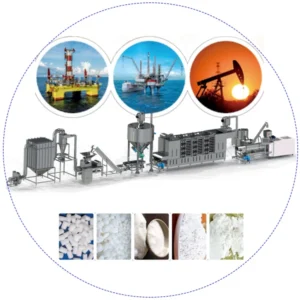
Automatic Pregelatinized Starch Processing Machine – Large-Scale New Condition Modified Starch Production Line
¥65.00 Select options This product has multiple variants. The options may be chosen on the product page -
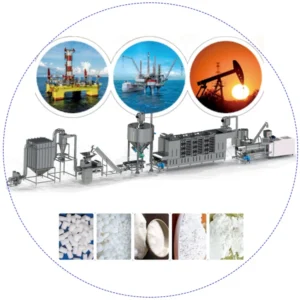
Automatic 304 Stainless Steel Modified Corn Starch Making Machine TWIN SCREW 500kg/h Capacity Starch Processing Production Line
¥50.00 Select options This product has multiple variants. The options may be chosen on the product page -
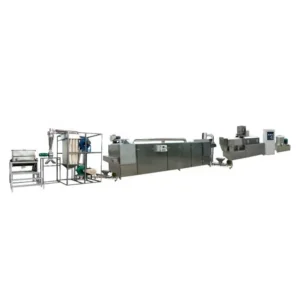
Automatic Modified Corn Starch Making Machine 304 Stainless Steel Gearbox High Efficiency Starch Processing Production Line
¥30.00 Select options This product has multiple variants. The options may be chosen on the product page -
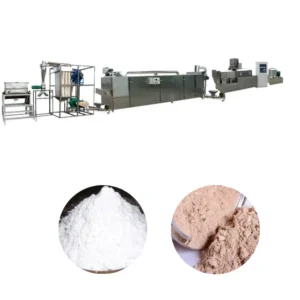
Modified Starch Production Line Modified Starch Processing Line Modified Starch Extruder
¥8,580.00 Select options This product has multiple variants. The options may be chosen on the product page