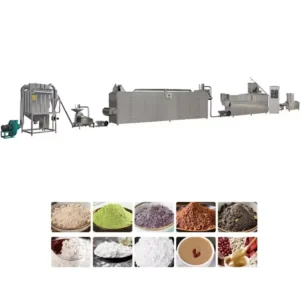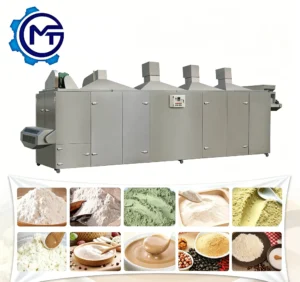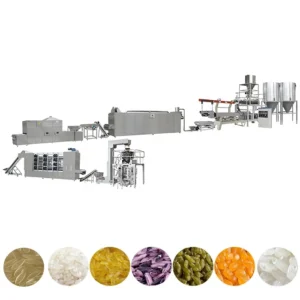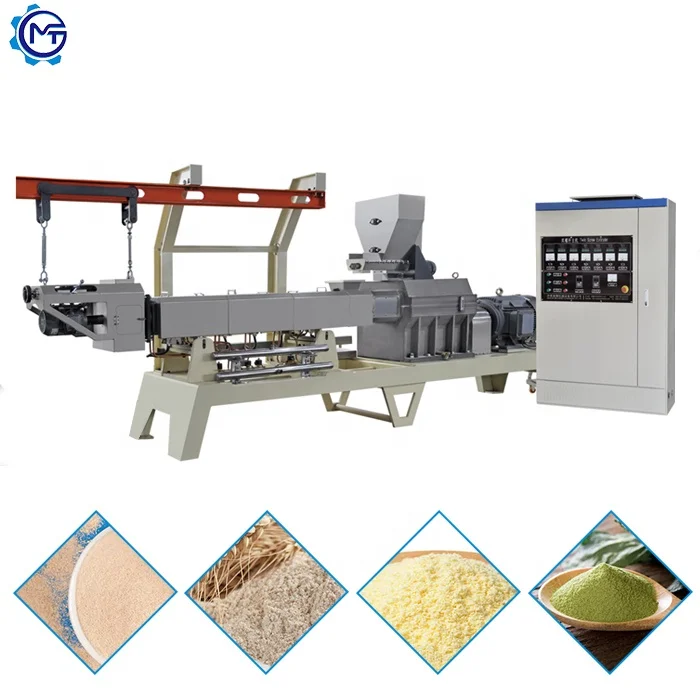
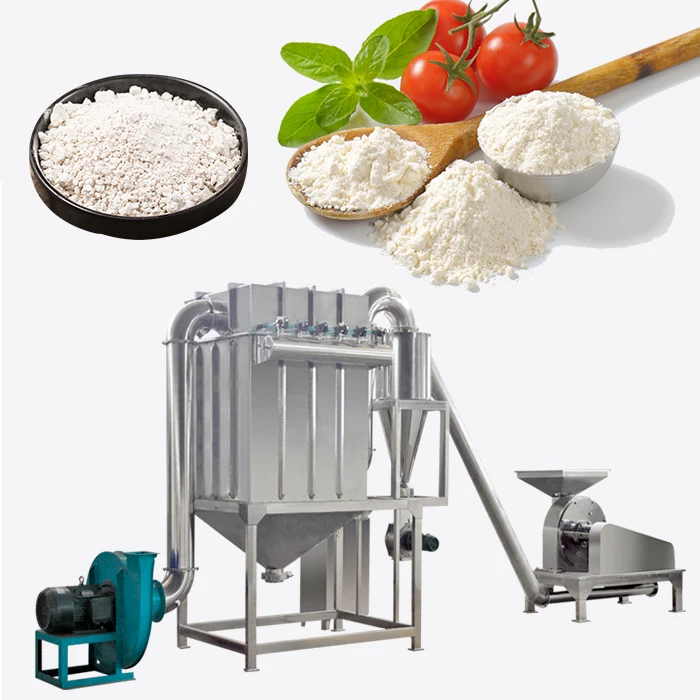
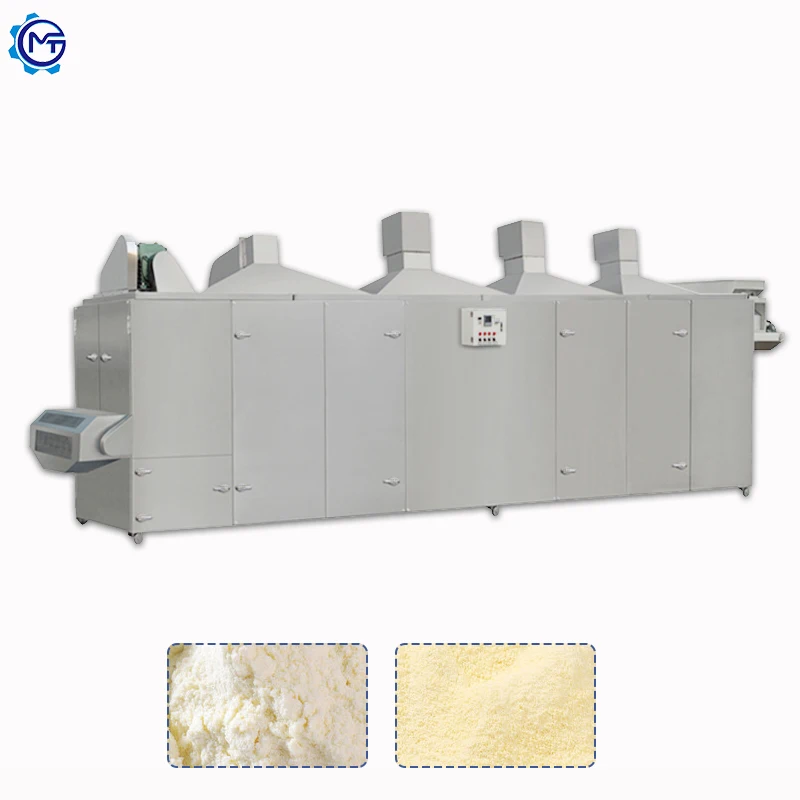
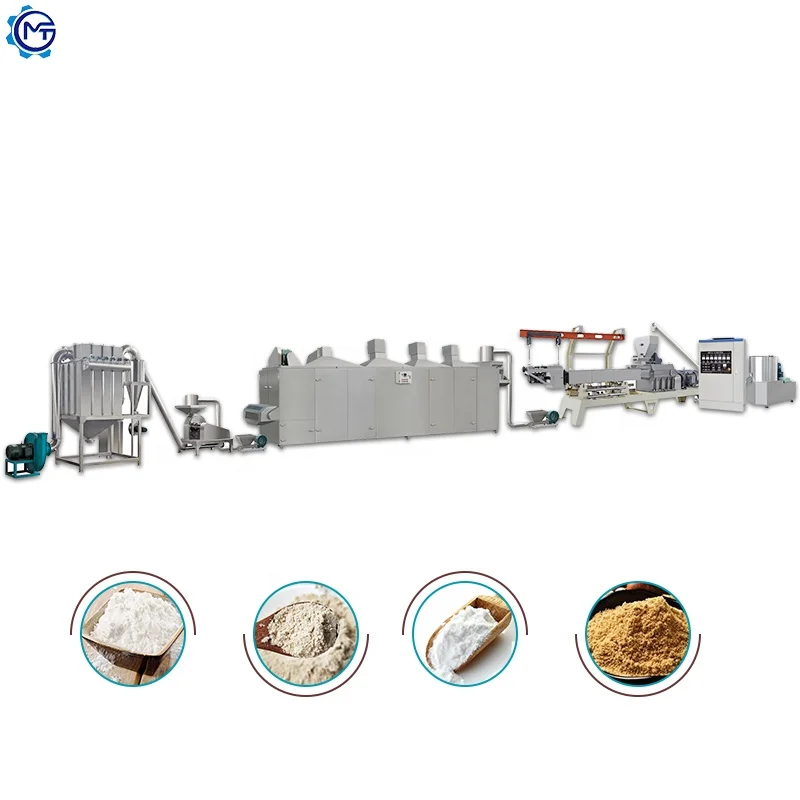
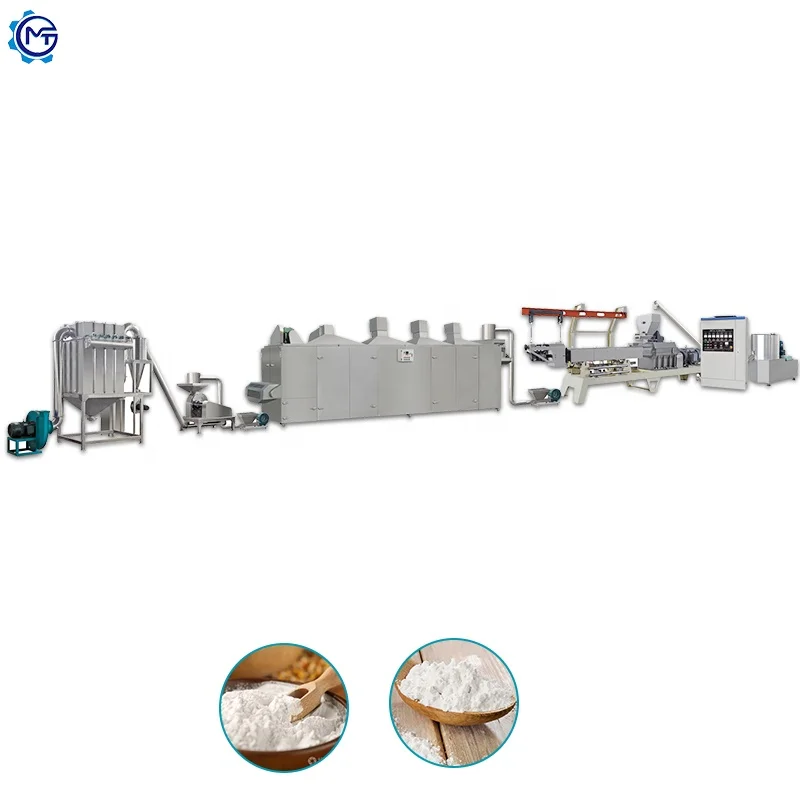
Nutritional Powder Processing Line, Turnkey Solution from Batching to Packing, PLC Control — designed for baby food and meal replacement powder production with throughput matched across every station.
- Screw configuration and die design specified to your raw material and target powder characteristics
- In-house trial runs on customer formulation before shipment, with documented test reports
- Single-supplier scope covering layout design, utility planning, and phased on-site commissioning
Delivered as one integrated project under a single supplier, eliminating coordination gaps and ensuring balanced throughput from mixing through extrusion, drying, and packing.
Description
Turnkey Line Integration — Throughput at every station, from batching to packing, is balanced under a single engineering scope so the nutritional powder processing line runs at its designed rate without bottlenecks.
Technical Specifications
| Parameter | Value |
|---|---|
| Product Type | Nutritional Powder Processing Line |
| Line Configuration | Complete turnkey solution from batching to packing (basis to be confirmed) |
| Output Capacity | (basis not stated in source) |
| Control System | PLC or MCC control (basis to be confirmed) |
| Screw Configuration | Twin-screw or single-screw (basis to be confirmed) |
| Voltage & Frequency | Customized to customer local voltage |
| Machine Customization | Accepted according to customer requirements |
| Formula Support | Basic recipe and machine setting parameters supplied |
| After-Sale Service | On-site installation, testing, and training by engineers |
| Certifications | CE and ISO certified (basis to be confirmed) |
| Packing Method | Plastic bubble film on machine surface, wooden case for spare parts; fumigation available |
Application Suitability
| Application | Material or Output |
|---|---|
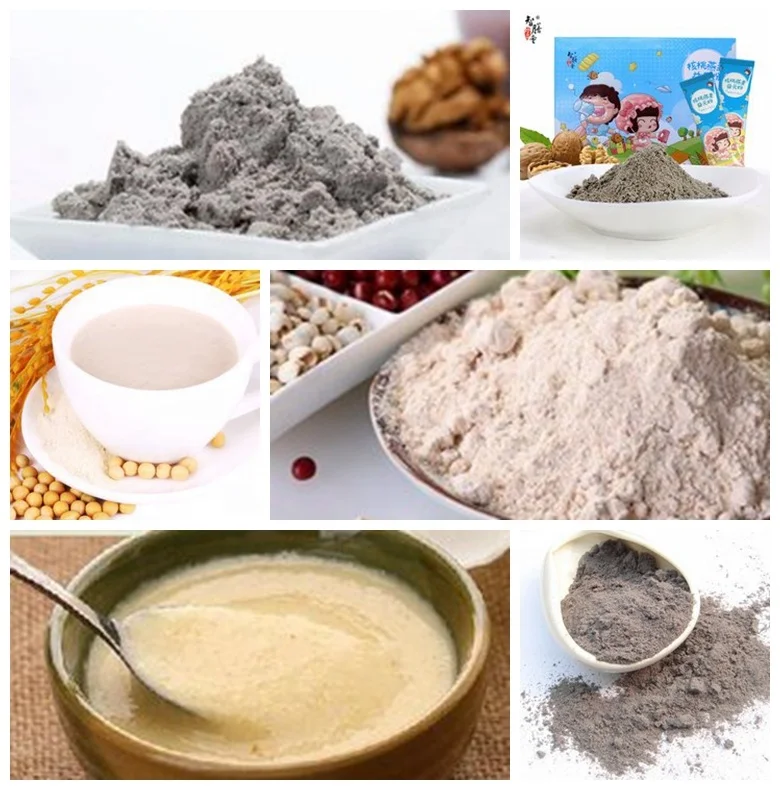
| Infant formula and baby food | Rice flour, oat flour, milk powder blends, vitamin premixes |
| Meal replacement powders | Soy protein isolate, whey protein, pea protein with carbohydrate carriers |
| Fortified nutritional powders | Cereal grain bases with mineral and vitamin fortification |
| Geriatric nutrition blends | Pre-gelatinized starch bases with calcium and fiber enrichment |
| Clinical dietary powders | Hypoallergenic protein substrates with controlled micronutrient dosing |
Why Nominal Capacity Figures Mislead Nutritional Powder Buyers
Real throughput is determined by your specific formulation, not the nameplate rating.
When sourcing a nutritional powder processing line turnkey, the capacity figure on a quotation often assumes a generic raw material under ideal conditions. Infant formula blends with high fat content behave very differently in the extruder barrel than a lean cereal base, affecting residence time, gelatinization, and ultimately the kilograms per hour the line can sustain. I have seen buyers discover this mismatch only after installation, when their actual recipe produces a different expansion ratio and the downstream dryer cannot keep pace. [NEED_CITE: raw material moisture and fat content effects on extrusion throughput]
Matching Every Station to Your Formulation
A nutritional powder processing line turnkey project only performs as well as its most constrained station. If the extruder outputs at a rate the dryer cannot handle, product backs up and moisture content drifts outside specification. Our approach is to calculate throughput at each station — mixing, extrusion, drying, flavoring, cooling, and packing — based on your exact recipe density and target moisture drop. This is the core of turnkey line planning, where every conveyor width, dryer belt length, and cooling fan capacity is sized to the station before and after it.
Trial Runs Before the Line Ships
The testing workshop allows us to run your actual raw material through the extruder before the line leaves the factory. Screw configuration, barrel temperature zones, and die geometry are adjusted during these trials until the powder texture, particle density, and solubility meet your specification. This step eliminates the common scenario where process development begins only after the equipment arrives on your floor — a delay that costs weeks of production time and raw material. [NEED_CITE: in-house extrusion testing protocols for food processing equipment]
Reading Between the Specification Lines
The screw type selection — twin-screw versus single-screw — directly determines how well your nutritional powder processing line handles high-fat or high-moisture formulations. Twin-screw configurations provide better mixing intensity and self-cleaning action, which matters when running vitamin premixes that tend to adhere to flight surfaces. The control system choice between PLC and MCC affects how operators manage barrel temperature profiles and feed rate adjustments during changeovers between different product recipes. Voltage and frequency customization ensures motors and heating elements operate within their designed parameters at your facility, preventing the overheating and premature component failure that occurs when 50 Hz equipment runs on a 60 Hz supply without derating. The packing station must handle the specific bulk density and flow characteristics of your finished powder, which varies significantly between a fine infant formula and a coarser meal replacement blend.
What Happens When Stations Are Sourced Separately
When a buyer assembles a nutritional powder line from separate vendors, the extruder supplier quotes one throughput figure and the dryer supplier quotes another, and neither guarantees the gap between them. The result is a line that either runs below its paid-for capacity or forces operators to manually throttle the feed rate to prevent product buildup. I have encountered situations where the coating drum was undersized relative to the extruder output, leaving powder tumbling through without adequate flavor or nutrient adherence. These coordination gaps are not visible on individual machine quotations but become expensive realities during commissioning. [NEED_CITE: equipment integration risks in multi-vendor food processing lines]
Why Procurement Consolidation Matters Here
Our line layout and capacity calculation document shows the designed throughput at every station, so you can verify that mixing batch cycles, extruder feed rates, dryer belt speed, and packing head capacity all align before the contract is signed. The screw and die configuration record ties the selected geometry directly to your raw material test results, giving you a documented baseline for future production runs. Electrical schematics are prepared with your facility voltage and frequency confirmed in writing, eliminating the commissioning delays that arise from mismatched motor specifications. We provide operator training on-site that covers recipe changeover procedures specific to your product range, not generic machine operation. Wear parts lists are supplied with the first shipment so your maintenance team has screw elements and die plates in stock before the first scheduled replacement is due.
Documentation & Verification
- Line layout drawing showing throughput calculation for each station from batching through packing
- Trial run report documenting extrusion results on your specific nutritional powder formulation
- Screw and die configuration record matched to your target particle density and texture
- Electrical schematic with voltage and frequency confirmed against your facility supply
- Factory test record with running parameters logged before dispatch
- Operation manual covering recipe changeover procedures for your product range
Installation, Commissioning & Support
- Foundation plan prepared for the complete line footprint including mixing, extrusion, and drying stations
- Power distribution schedule listing dedicated circuit requirements for extruder main drive and barrel heaters
- Phased assembly sequence covering extruder barrel alignment and dryer belt tracking before first production run
- Commissioning checklist verifying each station throughput matches the line capacity calculation document
- Operator training program covering screw speed, feed rate, and temperature zone adjustments for recipe changes
- Initial spare parts shipment including screw elements and die plates for first scheduled maintenance interval
Preparing Your Inquiry
To specify a nutritional powder processing line turnkey project accurately, we need your target formulation including raw material types and proportions, the desired finished powder characteristics such as bulk density and solubility, and your daily or hourly production target. Your facility voltage, frequency, and available floor space with ceiling height determine the line layout. Let us also know if you want to send a raw material sample for trial runs in the testing workshop before finalizing the configuration.
Frequently Asked Questions
Q: How is line capacity verified on my specific raw material formulation before shipment?
A: We conduct trial runs using your actual raw material blend in the testing workshop, adjusting screw configuration, barrel temperature profile, and die geometry until the output meets your texture and density specification. The results are documented in a trial run report that accompanies the shipment.
Q: What is included in the turnkey scope, and how is throughput balanced across stations?
A: The scope covers all stations from batching through packing, with each station sized to match the throughput of adjacent equipment. A line layout and capacity calculation document shows the designed output at every point so no station creates a bottleneck.
Q: How are voltage, frequency, and control language confirmed for my target market?
A: Your facility electrical specifications are confirmed in writing before production begins. The electrical schematic reflects your exact voltage and frequency, and the control interface language is set to your operator preference during factory testing.
Q: What does the phased installation and commissioning schedule look like on-site?
A: Installation follows a station-by-station sequence with mechanical alignment, electrical connection, and individual station testing before the full line is started. Engineers remain on-site through initial production runs to verify throughput matches the capacity calculation.
Q: How are spare wear parts such as screws and dies supplied, and what is the lead time?
A: A wear parts list is provided with the initial shipment, and first-replacement components are included in the spare parts wooden case. Subsequent orders follow standard production lead times confirmed at the time of request.
Related products
-

Automatic Instant Powder Production Line Nutritional Powder Extruder Machine
¥10,000.00 Select options This product has multiple variants. The options may be chosen on the product page -
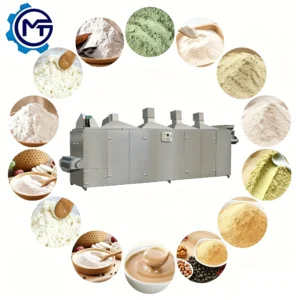
Commercial Stainless Steel Baby Rice Powder Grinding Mixing Machine
¥8,238.27 Select options This product has multiple variants. The options may be chosen on the product page -

High Precision Automatic 500kg/h Baby Food Nutrition Powder Rice Extrusion Processing Line
¥9,500.00 Add to cart -
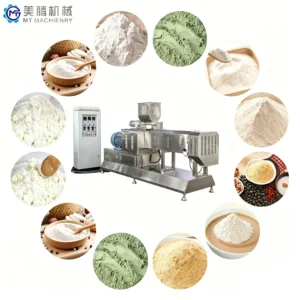
150-500kg/h Twin Screw Extruder Baby Rice Flour Making Machine
¥9,500.00 Select options This product has multiple variants. The options may be chosen on the product page