

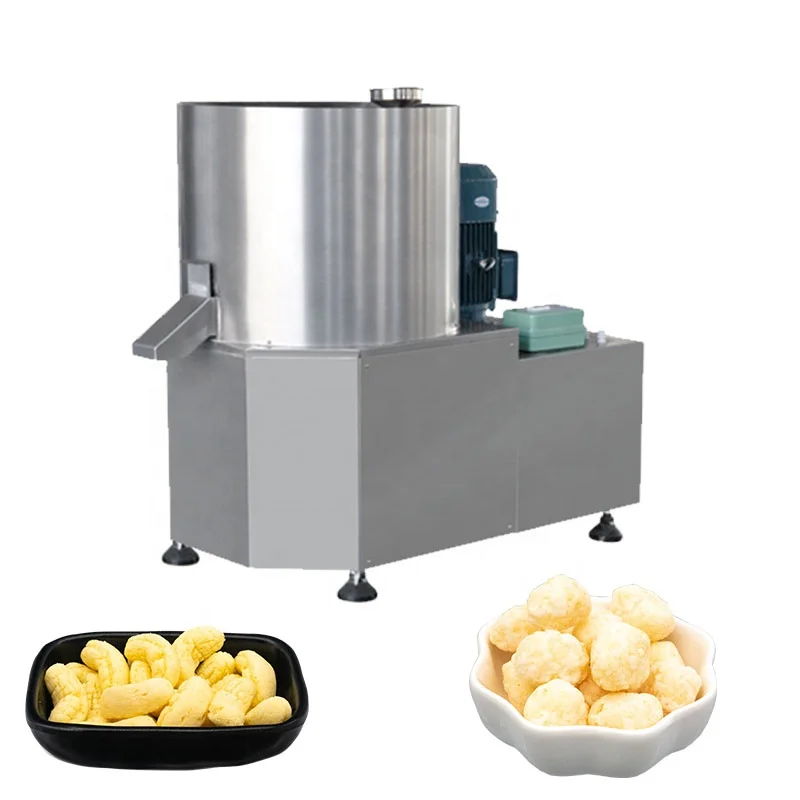
Puff Corn Snack Extrusion Line, Twin-Screw, 100-500 kg/h, Food-Grade Stainless Steel — configured as a complete turnkey project from batching through packing.
- Screw configuration and die design matched to your raw material and target snack density
- Every station sized for balanced throughput, eliminating bottlenecks between extruder, dryer and flavouring drum
- Raw material trial runs in our testing workshop validate expansion and texture before shipment
Layout, throughput matching and phased commissioning delivered under single-source responsibility from one supplier.
Description
Integrated Line Sizing — Every station from mixer to packing is matched against your actual corn or rice formulation before layout drawings are released.
Technical Specifications
| Parameter | Value |
|---|---|
| Product Type | Twin-Screw Puffed Snack Extrusion Production Line |
| Output Capacity | 100–500 kg/h (basis not stated in source — confirm raw material, moisture content and pellet size) |
| Screw Type | Twin-screw |
| Main Motor | Siemens brand (China) or equivalent top Chinese brand |
| Electrical Components | Delixi or Delta inverters |
| Energy Source | Electricity, gas, diesel, or steam (selectable per station) |
| Power Consumption | ~100 kW (electricity mode); ~50–60 kW (gas/diesel mode) (rated or peak not specified) |
| Voltage & Frequency | 380V/50Hz three-phase or 220V/50Hz single-phase; customizable to local grid |
| Material | Food-grade stainless steel 201/304 |
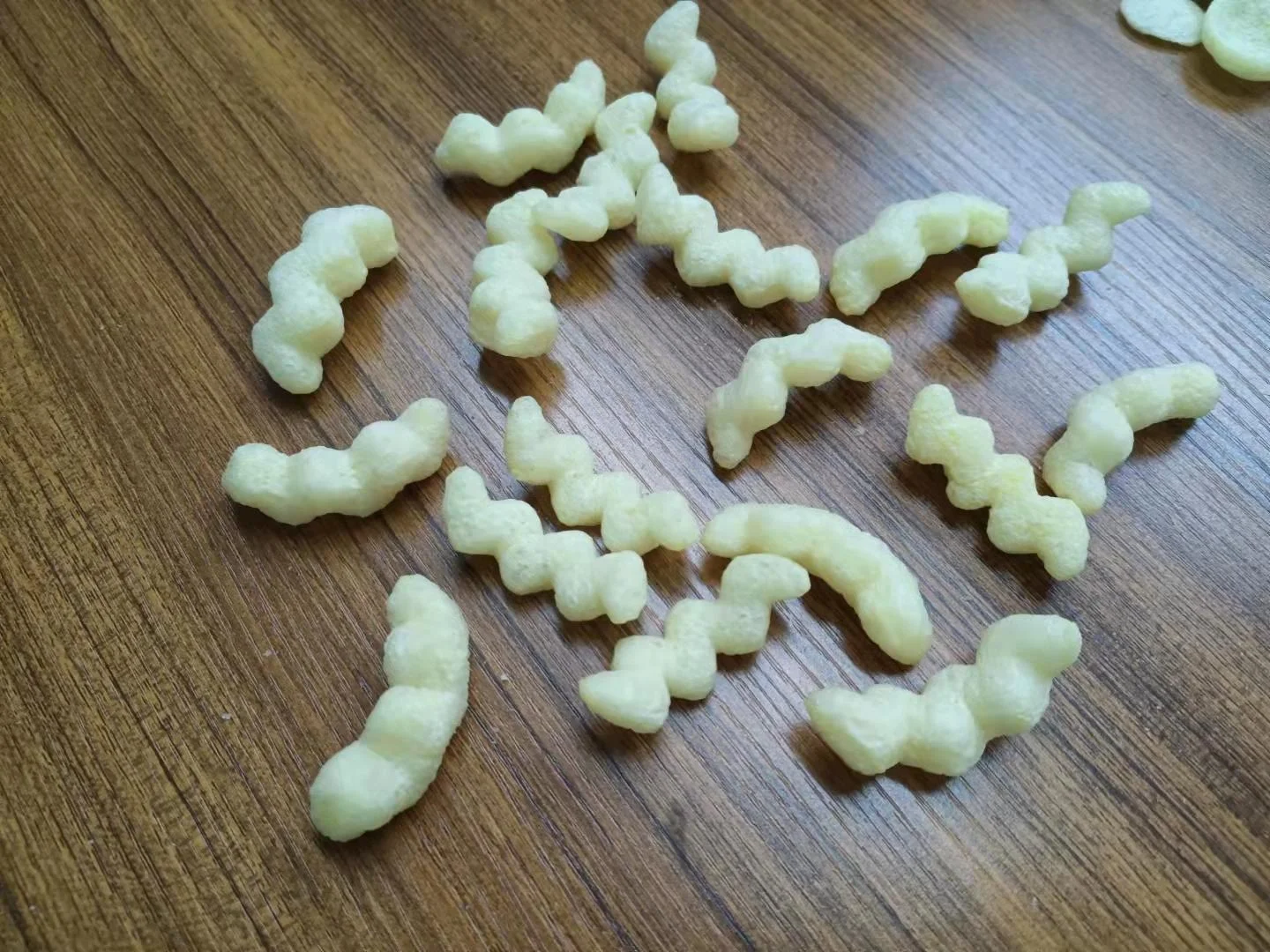
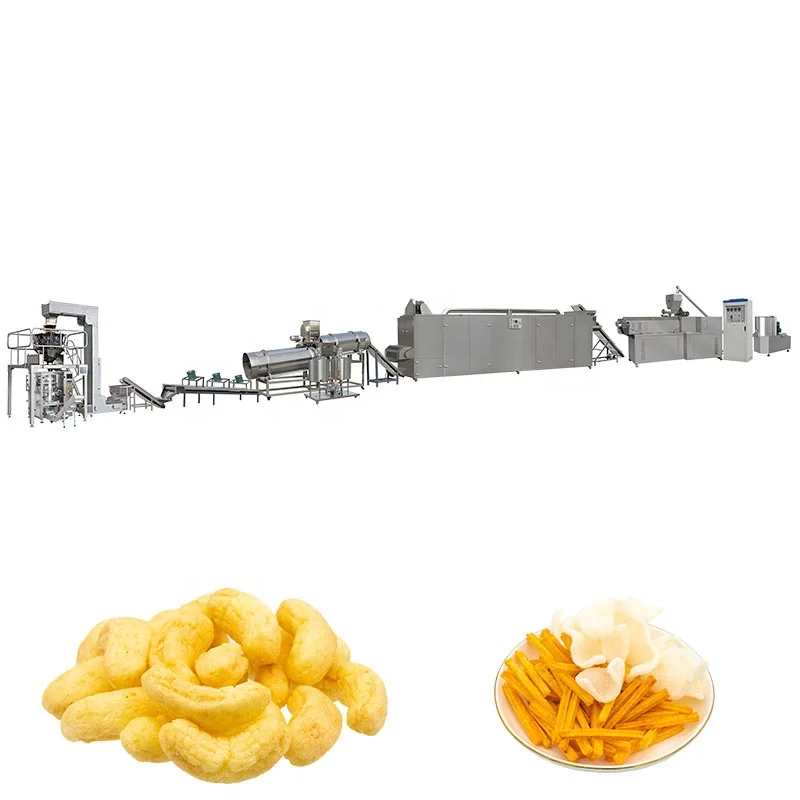
| Die Shapes | Ball, tube, stick, ring, fruit loop, star, wheel, flower, heart |
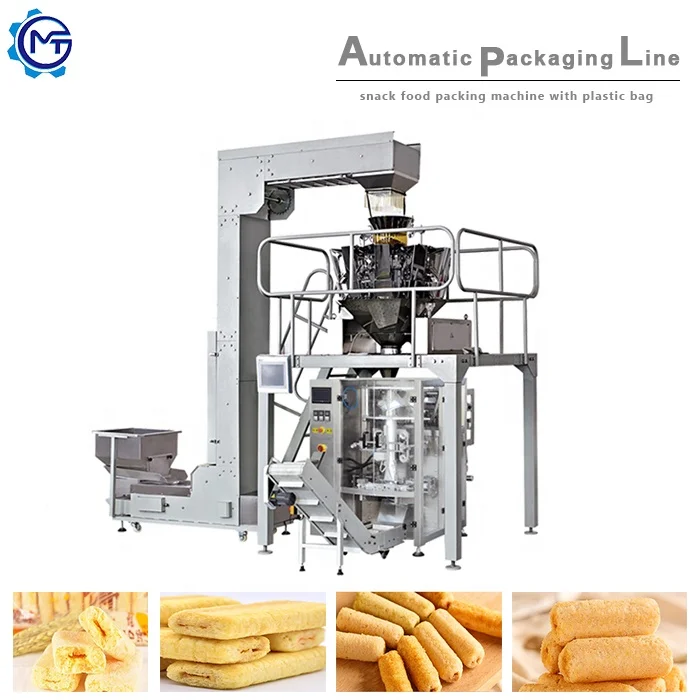
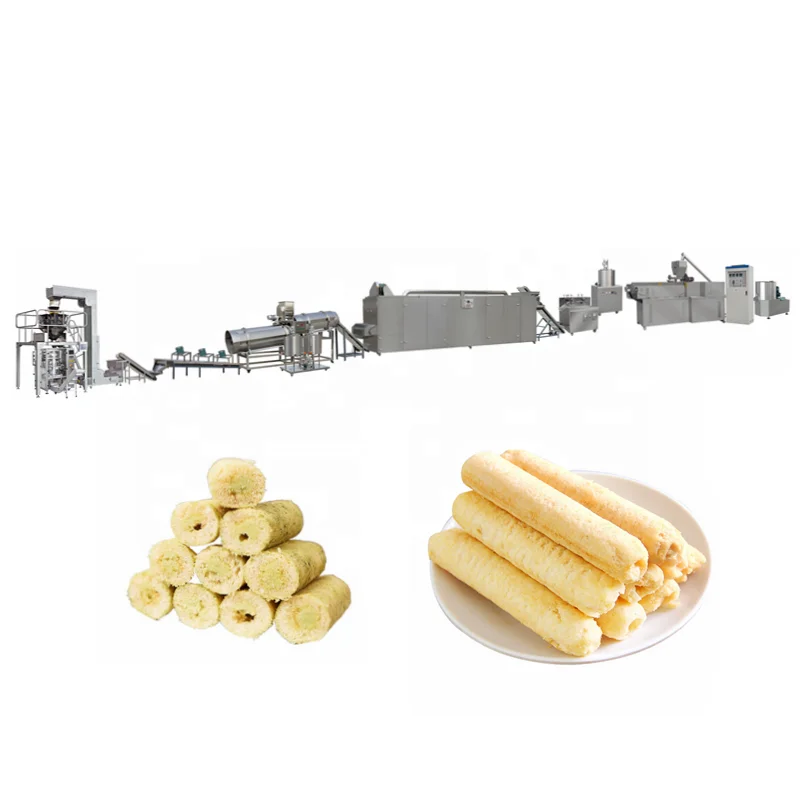
| Line Stations | Mixer → Extruder → Vibrating Cooler → Roasting Machine / Dryer → Packing Machine |
| Flavoring System | Semi-automatic or automatic; supports sugar, oil and powder seasoning |
| Standards | CE certified; ISO certified |
Application Suitability
| Application | Material or Output |
|---|---|
| Puffed corn snacks and cheese balls | Corn grits, corn flour with oil and cheese powder seasoning |
| Rice puffs and cereal bites | Rice flour, brown rice, millet in powder or grits form |
| Extruded snack shapes (rings, loops, stars) | Wheat, oat, barley, buckwheat blends with moisture adjustment |
| Nutritionally fortified puffed cereals | Grain bases blended with vitamin and mineral premixes |
| Co-extruded filled snacks | Dual-texture cereal shell with cream or paste filling |
Why Nominal Capacity Figures Mislead Puffed Snack Buyers
A rated output number means nothing until it is tested against your specific corn variety, particle size and incoming moisture level.
I remember a customer who ordered a puff corn snack extrusion production line turnkey based on a brochure capacity figure. His corn grits ran about three percentage points higher in moisture than the standard test material. The extruder could not reach the stated throughput, and the expansion ratio dropped visibly — the puffs came out dense instead of airy. We had to reconfigure the screw elements and adjust the die plate before the line performed as expected. That situation repeats across the industry more often than equipment makers admit. [NEED_CITE: common causes of extrusion line underperformance in snack production]
How Screw Geometry and Die Selection Shape the Final Puff
The twin-screw extruder on this line allows operators to rearrange screw elements and select from interchangeable die plates — ball, ring, stick, star, and several other profiles. The screw configuration determines how much shear and residence time the dough receives inside the barrel, which directly controls starch gelatinisation. A longer metering section with moderate shear works well for corn-based cheese balls, while rice-heavy formulations often need a shorter high-shear zone to achieve proper expansion without burning the surface. Matching the die orifice diameter to the target puff size prevents over-expansion that leads to fragile, easily broken pieces.
Throughput Matching Across Every Station on the Line
A puff corn snack extrusion production line turnkey only delivers consistent output when the mixer, extruder, vibrating cooler, dryer and flavouring drum are each sized to handle the same mass flow. I have walked into factories where the extruder ran at full speed but the dryer was undersized, forcing the operator to slow everything down and lose effective capacity. On this line, each station is calculated against the others during the layout phase. The vibrating cooler removes surface moisture before the product enters the roaster, so the dryer works on internal moisture removal rather than wasting energy on surface water. This sequencing keeps the line running at a steady pace without product backing up at any single point. [NEED_CITE: principles of mass flow balancing in continuous food processing lines]
Reading the Specs That Actually Matter
The main motor specification — Siemens brand or an equivalent Chinese tier-one brand — tells you the drive can sustain the torque needed for dense grain doughs without overheating during long production runs. The power consumption figures split between electricity mode and gas or diesel mode, which matters because the drying and roasting stations are where most thermal energy goes; running those on gas rather than electric elements noticeably reduces operating cost in regions where gas tariffs are lower. Stainless steel 201 versus 304 is a corrosion-resistance choice — 304 handles acidic seasoning blends and frequent washdowns better, while 201 is adequate for dry corn and rice applications with routine cleaning. The interchangeable die set gives you shape flexibility without swapping the entire extruder barrel, so a single line can produce rings for one customer order and sticks for the next with a changeover measured in minutes rather than hours.
The Cost of Skipping Pre-Shipment Validation
When a buyer accepts a puff corn snack extrusion production line turnkey without insisting on a factory trial run using their own raw material, the first real test happens on the production floor — surrounded by installation crews, with delivery deadlines already pressing. I have seen lines arrive at a site and take several days of adjustment before the product texture met market expectations, because the screw configuration had been set for a generic corn flour rather than the buyer’s actual grits. The downtime, wasted raw material and delayed market launch add up quickly. [NEED_CITE: cost of unplanned downtime in snack food manufacturing]
What Sets This Project Approach Apart
The layout and capacity calculation are completed as a single integrated document, not assembled from separate vendor quotes that leave gaps between stations. Screw and die configuration records are tied to your specific raw material and target product density, so reorders of wear parts match the production recipe exactly. An in-house testing workshop runs trial batches on your corn or rice formulation before the line ships, catching expansion or texture issues while adjustments are still straightforward. Multi-energy options across the dryer and roaster stations let the line adapt to whichever fuel source is most economical at the installation site. Pre-sales engineering consultation continues through on-site installation, commissioning and operator training, so the team that designed the layout is the same team that starts it up.
Documentation & Verification
- Line layout and capacity calculation showing throughput balance across mixer, extruder, cooler, dryer and packing
- Trial run report on your actual corn or rice material documenting expansion ratio and product density
- Screw element arrangement and die plate record matched to your target snack shape and texture
- Electrical schematic with confirmed voltage, frequency and control language for the installation site
- CE declaration of conformity and ISO certificate copies included with shipping documentation
- Wear parts list identifying screw segments, die plates and seals with recommended replacement intervals
Installation, Commissioning & Support
- Foundation plan showing load points for the extruder main motor and vibrating cooler frame
- Dedicated three-phase circuit sized to the confirmed power draw in electricity or gas mode
- Line arrives in modular sections for sequential assembly from mixer through packing station
- First-run commissioning includes screw speed, barrel temperature and die pressure tuning on your material
- Operator training covers die changeover, seasoning drum adjustment and daily cleaning procedures
- Initial spare parts kit includes replacement screw segments, die plates and barrel liners
What to Prepare Before Requesting a Quotation
Share your primary raw material type and its typical moisture content, along with the target snack shape and approximate piece size. Confirm the local voltage, frequency and whether gas or electricity is preferred for the drying stations. Let us know your available floor space and ceiling height so the layout can be drafted without assumptions. If you can send a sample of your corn grits or rice flour, we will run it in the testing workshop and include the trial results with the proposal.
Frequently Asked Questions
Q: How is the output capacity range verified, and what conditions does it depend on?
A: The stated range depends on raw material type, particle size, incoming moisture content and the target puff diameter. We confirm a realistic throughput figure by running your actual corn or rice sample in the testing workshop before finalising the quotation, so the capacity number you receive reflects your specific formulation rather than a generic benchmark.
Q: How do you match dryer and flavouring drum capacity to the extruder?
A: Each station is calculated during the layout phase against the extruder’s confirmed mass flow on your material. The dryer length and airflow are sized to reduce moisture to the target level within the line’s cycle time, and the flavouring drum diameter is matched so seasoning coverage remains even at full throughput without product backlog.
Q: Can a factory trial run be conducted on my raw material before shipment?
A: Yes. Send us a representative sample of your corn grits, rice flour or grain blend, and we will run it through the extruder with the screw and die configuration planned for your line. The trial report documents expansion ratio, product density, texture and any adjustments made, so you see the results before the equipment leaves the factory.
Q: How is installation and operator training organised for a turnkey project?
A: Our engineers follow a phased commissioning schedule at your site, starting with mechanical assembly and utility connections, then progressing to cold runs, hot runs with your material and full-speed production. Operator training covers daily start-up and shutdown procedures, die changeovers, seasoning system adjustment and routine maintenance intervals.
Q: What electrical and control details are confirmed before production begins?
A: We confirm the installation site’s voltage, frequency and phase configuration, then match the motor, inverters and control panel accordingly. Control language and labeling are agreed in advance so operators can read the interface in their working language from the first day of production.
Related products
-

Stainless Steel Corn Puff Cake Making Machine Corn Snack Food Machines Top Selling Snacks Machine
¥8,560.00 Select options This product has multiple variants. The options may be chosen on the product page -

Automatic Rice Crispies Extruder Machine/Chocolate Corn Flakes Extrusion Plant/wheat Flaking Snacks Production Line
¥8,500.00 Select options This product has multiple variants. The options may be chosen on the product page -

Full Automatic Crispy Maize Chocos Corn Flakes Breakfast Cereals Processing Production Line Industrial Equipment
¥1,000.00 Select options This product has multiple variants. The options may be chosen on the product page -

Hot Sale Corn Snack Extruder Puffed Snacks Production Machine Corn Puffs Making Machine
¥20,000.00 Select options This product has multiple variants. The options may be chosen on the product page


