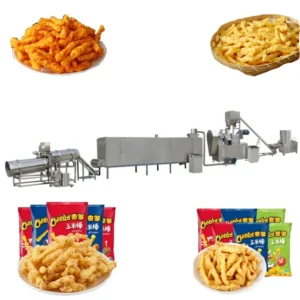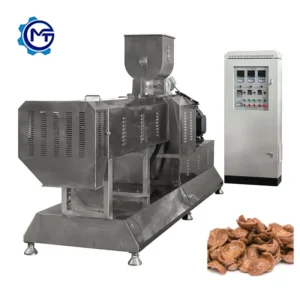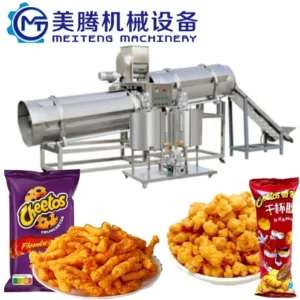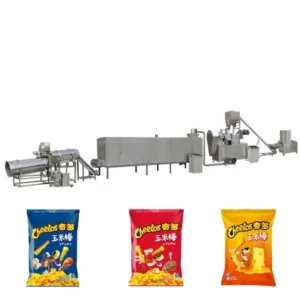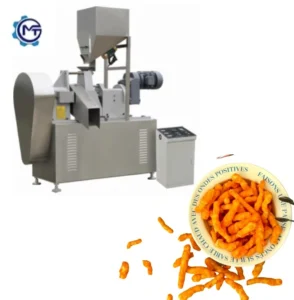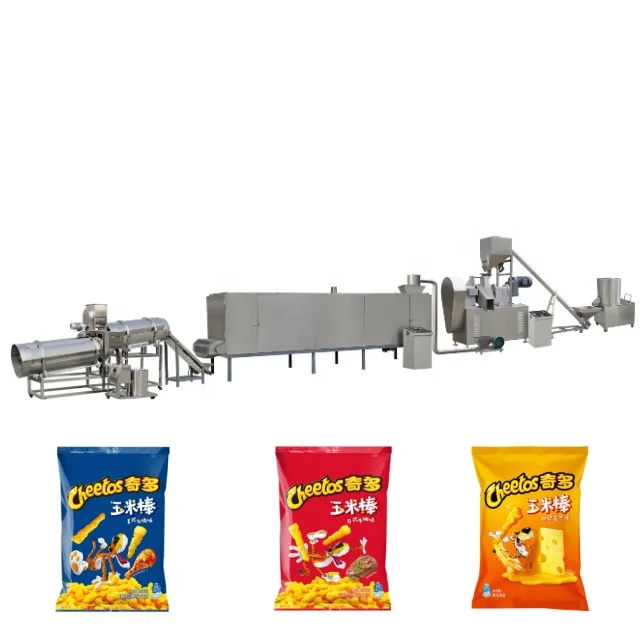
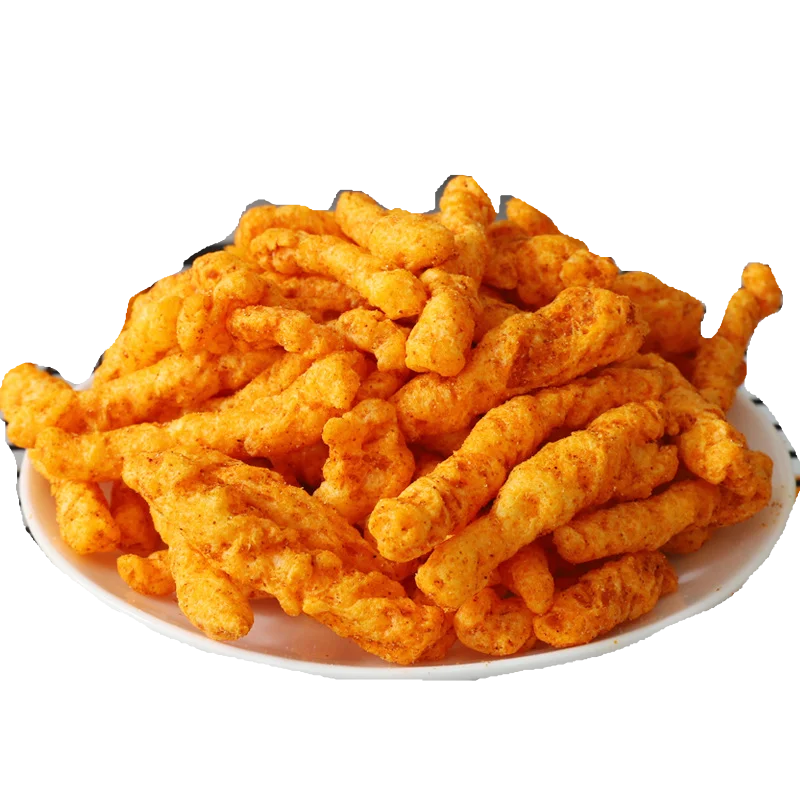

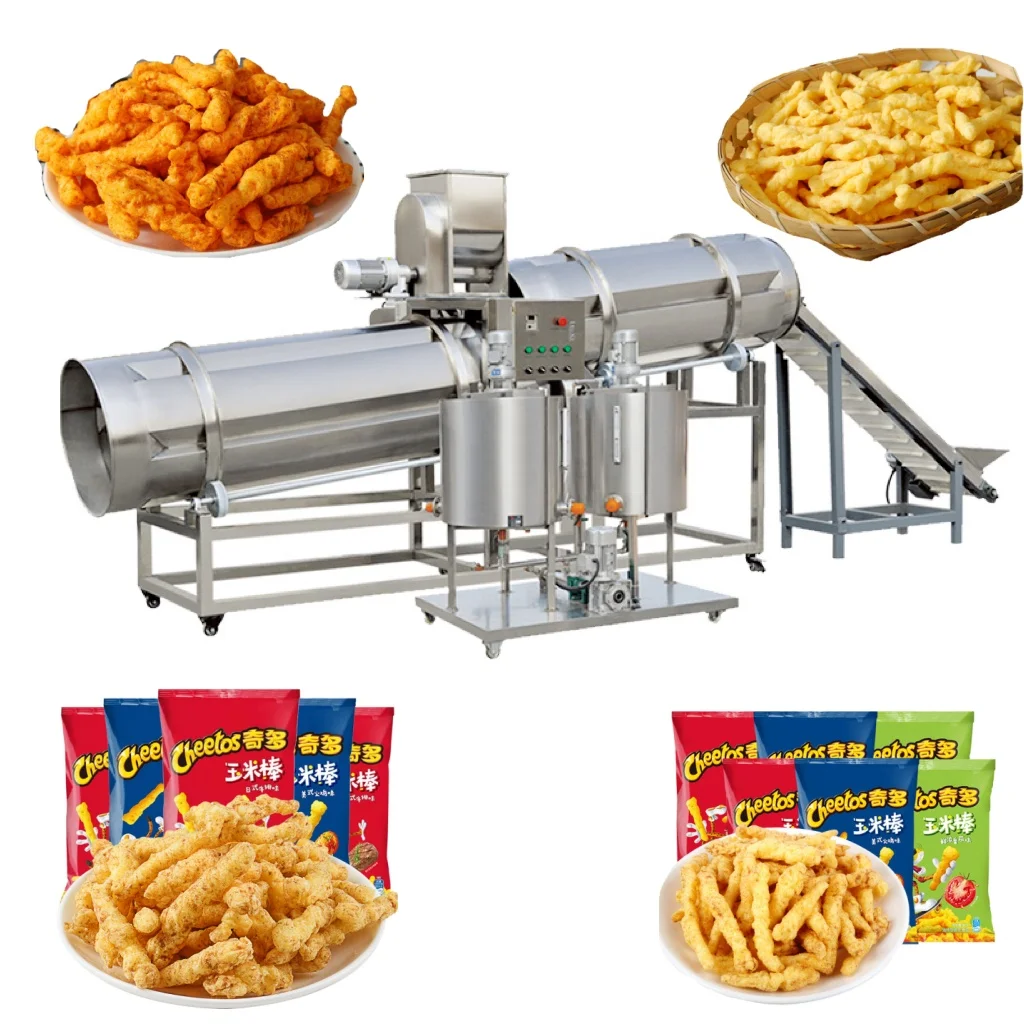


Cheetos Kurkure Production Line, 304 Stainless Steel, Electric Heat, Fully Automatic Control — engineered as a single turnkey project with every station throughput-matched from mixing through extrusion, frying or baking, flavouring, cooling and packing under one scope.
- Line layout and capacity calculation provided per station, not just the extruder
- In-house trial runs on buyer’s actual raw material before shipment
- Screw and die configuration specified to target product texture and density
Backed by CE and ISO certified manufacturing, on-site commissioning with operator training, and phased installation scheduling aligned to facility readiness.
Description
Throughput-Matched Line Scope — every station from batching to packing is engineered under one supplier so the extruder never waits on a mismatched dryer or flavouring drum.
Technical Specifications
| Parameter | Value |
|---|---|
| Product Type | Cheetos Kurkure Production Line |
| Output Capacity | 120–350 kg/h (basis to be confirmed with buyer’s raw material, moisture and product format) |
| Heat Source | Electric |
| Construction Material | 304 Stainless Steel (food-contact stations) |
| Control System | Fully Automatic (PLC and MCC configuration to be confirmed) |
| Net Weight | 80 kg (source value — verify against full line configuration) |
| Voltage & Frequency | Configurable to target facility (to be confirmed) |
Application Suitability
| Application | Material or Output |
|---|---|
| Kurkure-style extruded snacks | Corn grits and maize flour at controlled moisture |
| Cheetos-style puffed snacks | Corn meal and blended grain bases |
| Small-scale snack food manufacturing | Continuous production from raw material intake to packed product |
What the Quoted Capacity Figure Leaves Out on a Cheetos Kurkure Production Line Turnkey
Nominal throughput only holds when every downstream station is sized to the extruder’s actual output on your specific raw material.
I have watched a snack line stall because the flavouring drum could not keep up with the extruder on a high-moisture corn blend. The extruder was rated for a certain output on standard grits, but the buyer’s material behaved differently, pushing real throughput past what the coating station could handle. On a Cheetos Kurkure production line turnkey, the bottleneck is rarely the extruder itself — it is the mismatch between stations that were never engineered as a single system [NEED_CITE: throughput matching principles in extruded snack lines].
Single-Supplier Engineering Across Every Production Stage
A Cheetos Kurkure production line turnkey under one engineering scope means the mixing system, extruder, frying or baking oven, flavouring drum, cooling conveyor, and packing station are all calculated against the same throughput premise. When a line is assembled from separate vendors, each station carries its own safety margin, and those margins compound into either wasted capacity or chronic bottlenecks. Single-supplier scope eliminates that guessing game by matching every motor, belt speed, and thermal zone to the actual material flow leaving the die.
Phased Installation and Commissioning Discipline
Bringing an extruded snack line online is not a single-day event. The extrusion section typically commissions first, running product through the die to confirm expansion and texture before the fryer or oven is even energized. Downstream stations are then introduced in sequence — frying temperature profiles, oil filtration cycles, seasoning drum speed, and cooling belt length are all dialed in against the extruder’s steady-state output. This phased approach prevents the common scenario where every machine runs simultaneously on day one and operators cannot isolate which station is causing off-spec product [NEED_CITE: phased commissioning best practices for food extrusion projects].
How Screw Configuration and Thermal Zones Shape the Final Snack
The texture of a Kurkure or Cheetos-style snack is decided inside the barrel. The screw configuration determines how much shear the corn grits experience, which directly controls starch gelatinisation and, consequently, the expansion ratio at the die. Electric heating across multiple barrel zones allows operators to build a precise temperature gradient — typically starting lower to hydrate the material and ramping up toward the die to trigger the puff. Moisture content at the feed point is equally critical: too dry and the product fractures into fines; too wet and expansion collapses, producing dense, hard pieces. The fully automatic control architecture holds these parameters steady across shifts, reducing the batch-to-batch variation that plagues manually adjusted lines.
When a Generic Build Meets a Non-Standard Raw Material
Most extruder suppliers configure screws and dies around a reference material — typically a standard corn grit at a specific particle size and moisture level. If your flour is finer or your blend includes legume or rice fractions, that generic configuration will produce the wrong density. I once saw a line where the supplier shipped a standard screw set, and on the buyer’s finer grind the product fractured badly at the die exit, generating excessive breakage through the fryer. The fix required re-profiling the screw pitch and adjusting barrel moisture injection — a two-day exercise that could have been resolved before shipment with a trial run on the buyer’s actual material [NEED_CITE: raw material variability impact on extruded snack density].
Why Buying This Line From a Single Engineering Source Matters
Complete line design under one supplier means throughput is matched across every station rather than assembled from independent quotes. Screw configuration and die design are specified to the buyer’s raw material and target snack format, not copied from a generic template. An in-house testing workshop allows trial runs on your actual corn blend before the line ships, locking in parameters so that commissioning on site is a confirmation exercise rather than a development project. Pre-sales consultation flows directly into engineer-led layout design, on-site installation, and operator training — all under a single accountability chain.
Documentation & Verification
- Line layout drawing showing throughput calculation for each station on your corn grit specification
- Screw and die configuration record matched to your raw material trial run results
- Electrical schematic with voltage, frequency, and control language confirmed for your facility
- Factory test record documenting output, product density, and moisture at every station before dispatch
- CE declaration of conformity and ISO certificate issued for the specific line configuration
Installation, Commissioning & Support
- Floor loading and utility plan prepared around the line’s overall footprint and electric heat demand
- Dedicated power circuit sized to the extruder motor and all electric heating zones combined
- Phased commissioning starting with extrusion die trials before fryer and flavouring stations are energized
- Operator training covering screw speed, barrel temperature, and moisture adjustment for your corn blend
- Wear parts list covering screws, dies, and fryer baskets with reorder lead times confirmed before first replacement is due
- Daily and weekly maintenance schedule tied to food-contact surface washdown and oil filtration cycles
What to Share When Requesting a Line Proposal
To size a Cheetos Kurkure production line turnkey accurately, provide your corn or grain specification including particle size distribution and target moisture at the feed point. Share the daily or shift-based output target and the packed product format you intend to sell. Confirm your facility’s available floor area, ceiling height, and local voltage and frequency so the electrical package can be specified before production begins.
Frequently Asked Questions
Q: How is line capacity verified, and what premises apply to the quoted throughput?
A: The 120–350 kg/h range is a starting point. Actual capacity is confirmed by running your specific corn grit or flour blend through the extruder in our testing workshop, measuring output at the die, and then verifying that every downstream station — fryer, flavouring drum, cooler — can sustain that flow without accumulation or starvation.
Q: How are upstream and downstream stations matched to the extruder?
A: Each station is calculated against the extruder’s verified output on your material. Mixer batch size and cycle time are set to feed the extruder continuously. Fryer belt speed and oil volume handle the full extruder output. Flavouring drum diameter and residence time are sized so seasoning coverage is even at peak throughput.
Q: What does the phased installation and commissioning schedule look like?
A: The extruder is commissioned first to confirm product shape and expansion on your material. The fryer or oven is then introduced, and temperature profiles are established. Flavouring and cooling stations follow. Operator training runs concurrently, covering parameter adjustment and basic troubleshooting across all stations.
Q: Which utility requirements must the facility prepare before delivery?
A: You need a dedicated electric supply matching the confirmed voltage and frequency, ventilation capacity for the fryer exhaust and cooling section, and a level floor rated for the combined line weight including oil-filled fryer sections. We provide a utility plan with exact connection points before shipment.
Q: How are spare wear parts handled after the line is running?
A: A wear parts list is included at delivery, identifying screws, dies, and other consumables with estimated service life on your material. We confirm reorder lead times so you can place your first spare parts order before the initial set reaches replacement point, avoiding unplanned downtime.