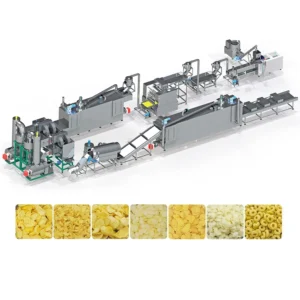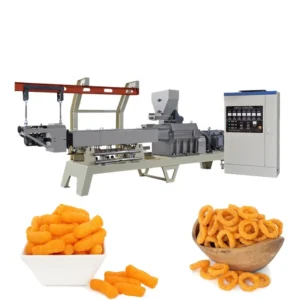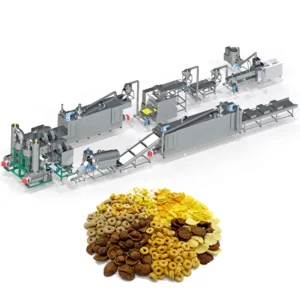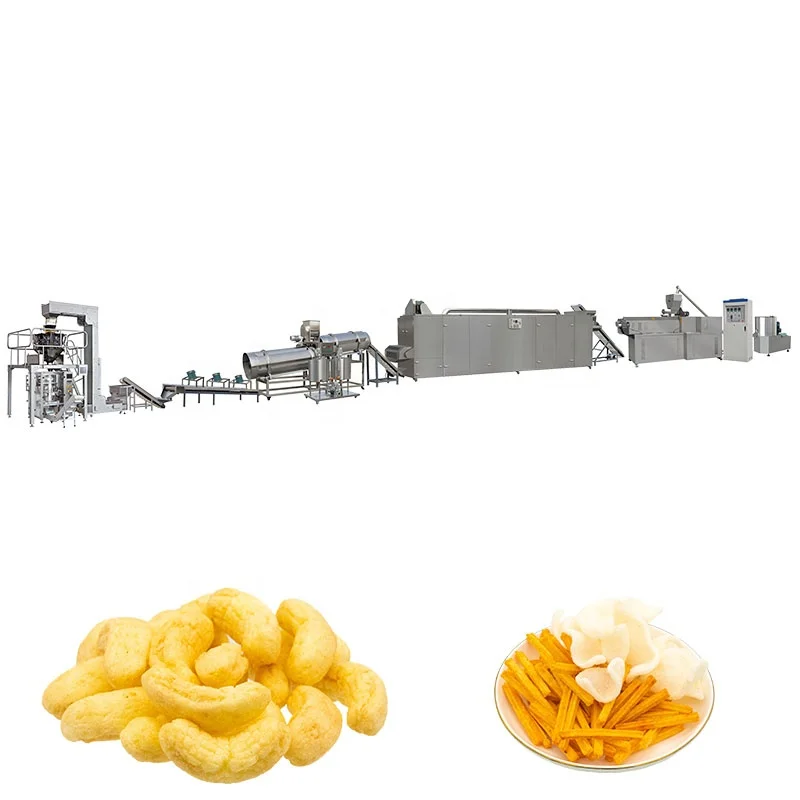
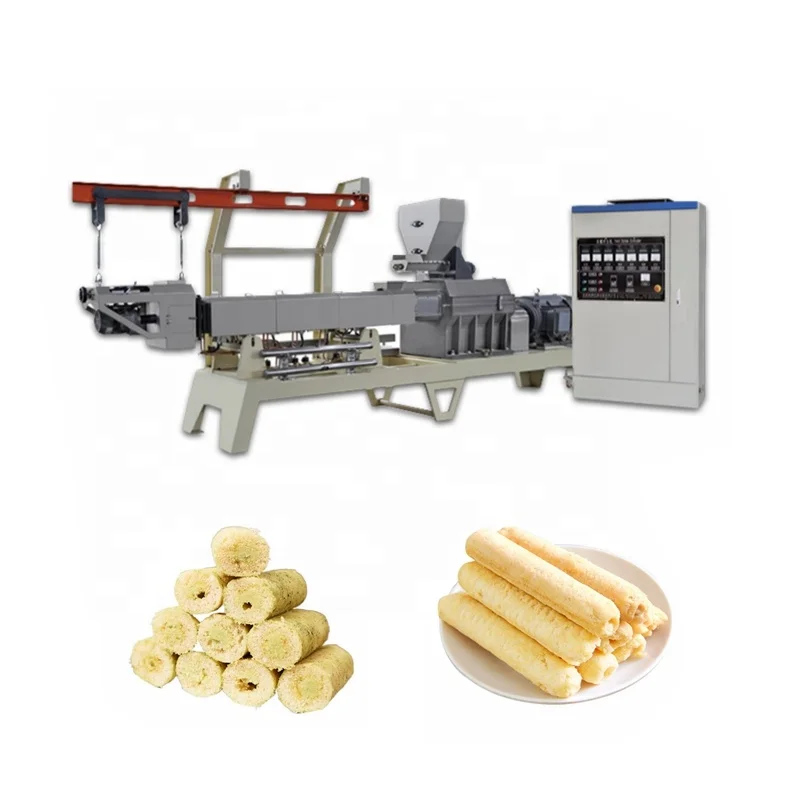
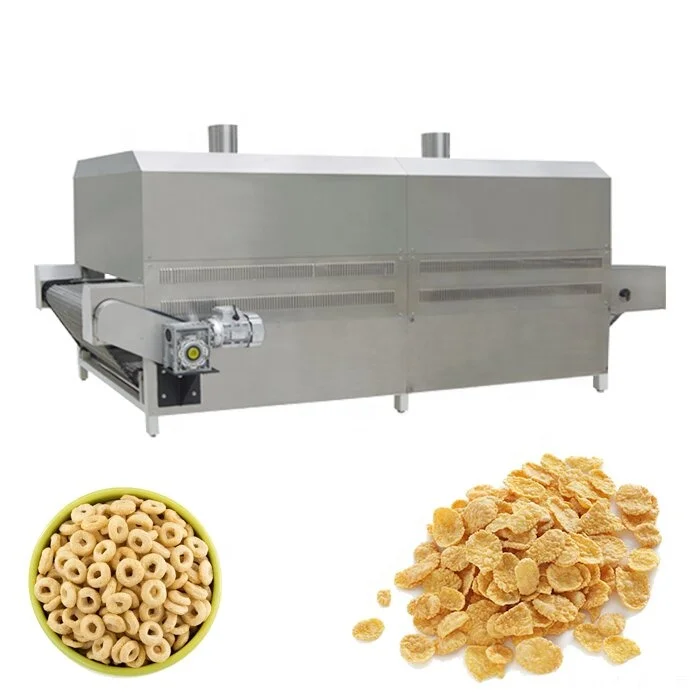
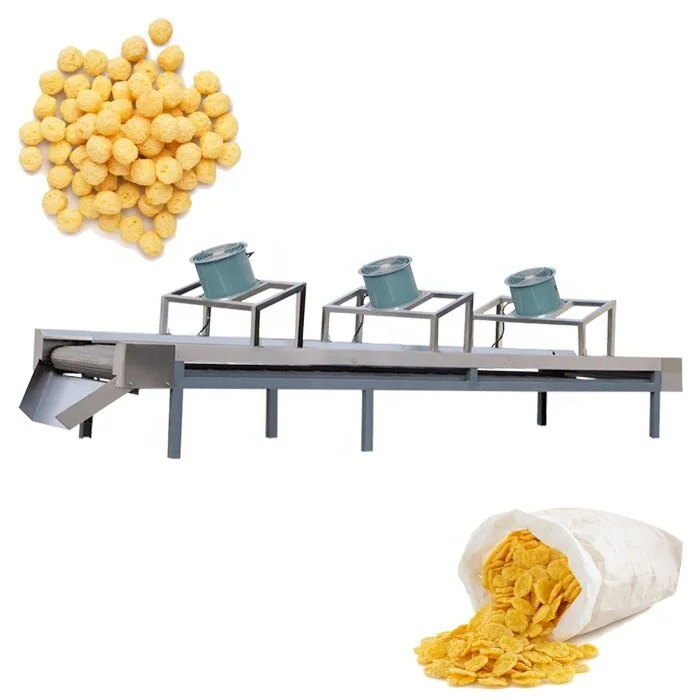


MT-75 Twin Screw Extruder Corn Flakes Production Line, PLC Control, Hydraulic Double-Roller Flaking — engineered as a complete turnkey project from batching through packing with throughput matched across every station.
- Screw configuration and die design specified to your grain formulation for consistent flake density and expansion
- In-house testing workshop trial runs on your raw material before shipment verify actual output capacity
- Line stations — mixing, extruding, flaking, roasting, coating, drying, cooling — integrated under single-supplier accountability with CE and ISO certification
Description
Integrated Line Sizing — every station from mixing to packing is matched to your grain formulation and target flake density before production starts.
Technical Specifications
| Parameter | Value |
|---|---|
| Model | MT-75 Twin Screw Extruder |
| Product Type | Corn Flakes Production Line |
| Screw Type | Twin-screw |
| Output Capacity | 200–300 kg/h (basis not stated in source — confirm raw material / moisture content) |
| Rated Power | 3 kW (rated or peak not specified — verify against manufacturer catalog) |
| Voltage & Frequency | 220V / 380V (frequency not stated — confirm local standard) |
| Control System | PLC control system (flaking machinery); line-wide control type to be confirmed |
| Overall Dimensions | 1330 × 440 × 960 mm (may refer to single station only — verify full line footprint) |
| Net Weight | 50 kg (likely refers to single station or component — confirm full line weight) |
| Line Stations | Mixing → Extruding → Flaking → Drying → Hot Air Roasting → Sugar Spraying → Sugar Coating → Drying → Cooling → Packing |
| Flaking Machinery | Hydraulic double-roller system; separate roller motors; infrared sensor temperature control |
| Hot Air Roasting Oven | Vibrating pan; conciliation burner combustion chamber; dual circulating fans; cyclone dust removal |
| Coating System | Double tumble sugar melting; elevator; coating drum; spraying nozzle |
| Dryer Heating Source | Gas / Electric |
| Assembly State | New |
| Warranty | 1 Year (core components including gearbox) |
| Machinery Test Report | Provided |
| Video Outgoing-Inspection | Provided |
| Standards | CE; ISO |
Application Suitability
| Application | Material or Output |
|---|---|
| Plain corn flakes for breakfast cereal packaging | Corn grits, corn flour |
| Sugar-coated corn flakes for retail cereal boxes | Corn, rice, wheat blends with sugar syrup coating |
| Multi-grain breakfast flakes | Rice, wheat, oat, barley blends |
| Fortified cereal flakes for nutrition programmes | Grain blends with added vitamin and mineral premix |
| Snack cereal flakes for food service | Corn and rice with savoury or sweet seasoning |
Why "Nominal Capacity" Fails on Real Corn Flake Lines
A corn flakes production line turnkey quoted at a single throughput number often collapses at commissioning because the grain blend on-site behaves nothing like the test material used at the factory.
Every station on a flake line depends on the one before it. When the extruder output does not match what the flaker, dryer, and roaster can actually handle, the bottleneck migrates and the whole line stalls. I spent two weeks on a factory floor in Mexico reconfiguring screw elements and drying curves because the local corn variety had higher fibre content than the standard formulation. The flakes came out uneven, the roaster could not keep up, and the packing station sat idle for hours each shift. That line was rated on paper; it only ran after we rebuilt the process around the real raw material. [NEED_CITE: grain composition variability in Latin American corn supply chains]
A corn flakes production line turnkey must be sized station by station against the buyer’s actual grain blend, moisture range, and target flake density — not a generic benchmark.
Extruder Screw Configuration and Grain Behaviour
The MT-75 twin-screw extruder sits at the centre of this corn flakes production line turnkey, and its screw configuration determines whether the dough gelatinises properly before it reaches the flaker. Corn, rice, wheat, oat, and barley all have different starch structures and fibre levels, which means the same screw profile cannot produce consistent half-cooked pellets across all of them. The screw elements and die design are selected based on the buyer’s specific grain formulation and the target texture of the final flake.
How Flaking, Roasting, and Coating Stay in Sync
Downstream of the extruder, the hydraulic double-roller flaking machinery presses each pellet into a uniform sheet. Separate motors on each roller allow independent speed adjustment, and the infrared sensor monitors surface temperature to prevent sticking or cracking. The hot air roasting oven then uses a conciliation burner with dual circulating fans and a cyclone dust removal device to blister the flake surface evenly. If the roaster airflow or temperature profile does not match the flake thickness coming off the press, you get scorched edges and underdone centres in the same batch. [NEED_CITE: thermal profile requirements for cereal flake roasting uniformity]
Reading the Spec Sheet Against Your Production Reality
The rated power and dimensional figures listed for the MT-75 may refer to a single station rather than the full line, so confirming the complete footprint and total connected load is essential before planning the factory floor. The PLC control system governs the flaking machinery, but line-wide integration — whether the dryer, coater, and cooler all communicate through one control architecture — needs to be specified during the proposal stage. The dryer heating source is available in gas or electric configurations, and this choice affects both the utility infrastructure and the thermal response time of the drying stages. Voltage must be confirmed against the target market’s grid standard before the electrical cabinets are wired, because rewiring after build is costly and delays shipment.
What Happens When Stations Are Sized Independently
I have walked into plants where the extruder ran fine but the dryer was undersized, so wet flakes piled up on the conveyor waiting for oven space. The coater then received flakes at inconsistent moisture levels, and the sugar spray crystallised unevenly. The packing line could not maintain weight accuracy because the upstream flow was surging. None of those machines were faulty on their own — the problem was that they had been sourced separately and nobody had matched their throughput to the actual material flow. On a corn flakes production line turnkey, the penalty for mismatched stations shows up as wasted energy, rejected product, and missed shipment windows. [NEED_CITE: impact of station throughput mismatch on cereal line efficiency]
Why Buyers Consolidate the Entire Line Under One Build
Screw configuration and die design are locked to your grain formulation and target flake density before the extruder enters production. The in-house testing workshop runs trial batches on your actual raw material, so the screw profile and drying curves are validated before any station ships. Every supporting station — mixing, flaking, roasting, coating, cooling, packing — is sized as part of one layout rather than assembled from independent vendors, which eliminates the throughput gaps that cause commissioning delays. Electrical schematics, voltage confirmation, and control language are finalised against your factory’s grid and operator requirements before wiring begins. Pre-sales engineering, on-site installation, commissioning, and ongoing wear-part supply all come through one supplier, so accountability does not fracture across multiple contracts.
Documentation & Verification
- Line layout drawing showing throughput matching across every station against your grain blend
- Trial run report on your actual raw material conducted in the testing workshop before dispatch
- Screw and die configuration record specifying element arrangement for your target flake density
- Electrical schematic with confirmed voltage, frequency, and PLC language for your market
- CE declaration of conformity and ISO certificate included with shipping documentation
- Factory test record with video outgoing-inspection of the complete line running your formulation
Installation, Commissioning & Support
- Factory floor plan review to confirm footprint for all stations from mixer to packer
- Dedicated power circuit sized to the total connected load with confirmed voltage and frequency
- Modular station assembly on-site with alignment checks between extruder, flaker, and dryer
- First-run parameter setting for screw speed, barrel temperature, and roller pressure on your grain
- Operator training covering PLC interface navigation, recipe storage, and alarm response
- Wear parts list for screws, dies, and roller surfaces with recommended replacement intervals
- Scheduled maintenance plan covering gearbox lubrication and circulating fan bearing inspection
What to Include in Your Inquiry
To build a line proposal that actually runs at commissioning, share your target grain formulation — including the specific corn, rice, or oat variety and its typical moisture content — along with the daily output you need and whether you plan to produce plain flakes, sugar-coated flakes, or both. Confirm your factory’s available voltage, frequency, and the control language your operators will use. If you have existing upstream milling or downstream packing equipment, note the interface points so the line layout accounts for them.
Frequently Asked Questions
Q: How is line capacity verified against my specific grain blend and moisture content before shipment?
A: Your raw material sample is processed through the MT-75 extruder and downstream stations in the testing workshop. We adjust screw configuration, die design, and drying curves until flake density and texture meet your specification. A trial run report documenting all parameters and product samples is provided before the line is approved for dispatch.
Q: How are extruder, dryer, flaker, and coater throughput matched to prevent line bottlenecks?
A: Each station is sized during the layout phase based on the mass flow calculated from your grain formulation and target capacity. The dryer volume, roaster airflow, and coater drum dimensions are all scaled to the extruder output so material moves continuously without surging or starvation at any point.
Q: What voltage, frequency, and control language configurations are confirmed before production begins?
A: Your factory’s grid specification and operator language preference are confirmed during the proposal stage. The electrical schematic is drawn to match, and the PLC interface labels are set before the control cabinets are wired. Any changes after this point require a formal revision to avoid build delays.
Q: What does the pre-shipment trial run on my raw material cover, and what report do I receive?
A: The trial run processes your grain blend through extrusion, flaking, roasting, and coating. You receive a report covering screw and die configuration, temperature profiles at each stage, flake thickness measurements, moisture readings, and product photographs. Adjustments are made and re-tested until the output matches your target specification.
Q: How is on-site installation, commissioning, and operator training scheduled for a complete turnkey line?
A: Installation follows the approved layout drawing, with each station positioned and connected in sequence. Commissioning begins with single-station tests and progresses to full-line runs. Operator training covers PLC controls, recipe management, routine maintenance, and wear-part replacement, typically conducted over several days during the commissioning window.
Related products
-
Kelloggs Corn Flakes Breakfast Cereal Normal Making Machine Breakfast Cereal Extruder Production Line
¥30,000.00 Select options This product has multiple variants. The options may be chosen on the product page -
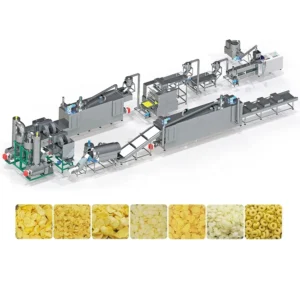
Hot Selling Automatic Corn Flakes Breakfast Cereal Production Line Making Machine
¥20,000.00 Select options This product has multiple variants. The options may be chosen on the product page -
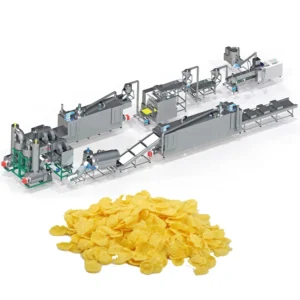
Complete Corn Flakes Production Line Breakfast Cereal Processing Machine Core Motor Component Cornflakes Processing Equipment
¥19,000.00 Select options This product has multiple variants. The options may be chosen on the product page -
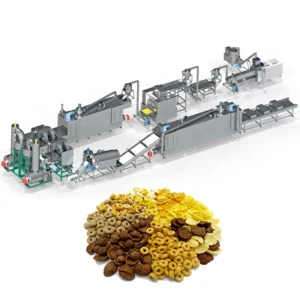
Small Scale Breakfast Cereal Manufacturing Machine for Corn Flakes Process Line
¥45,000.00 Select options This product has multiple variants. The options may be chosen on the product page