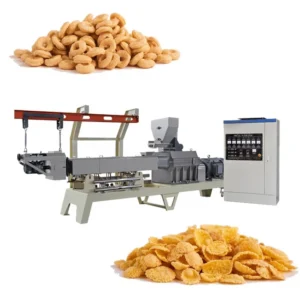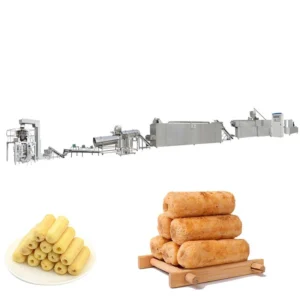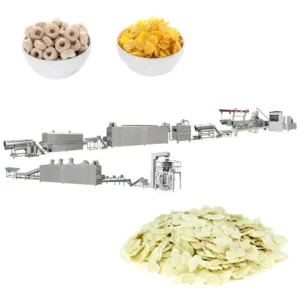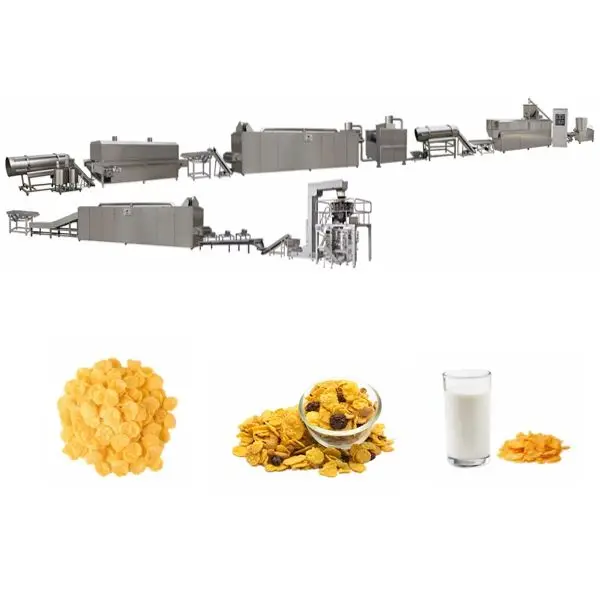


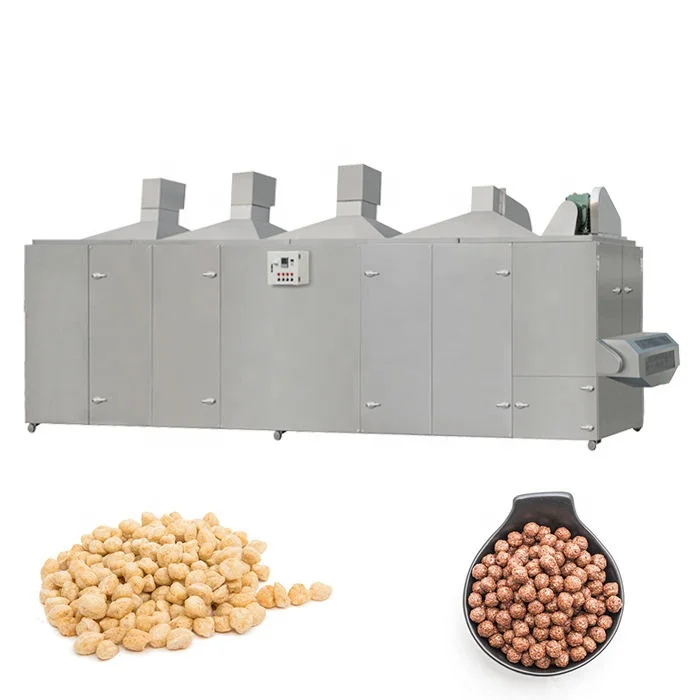
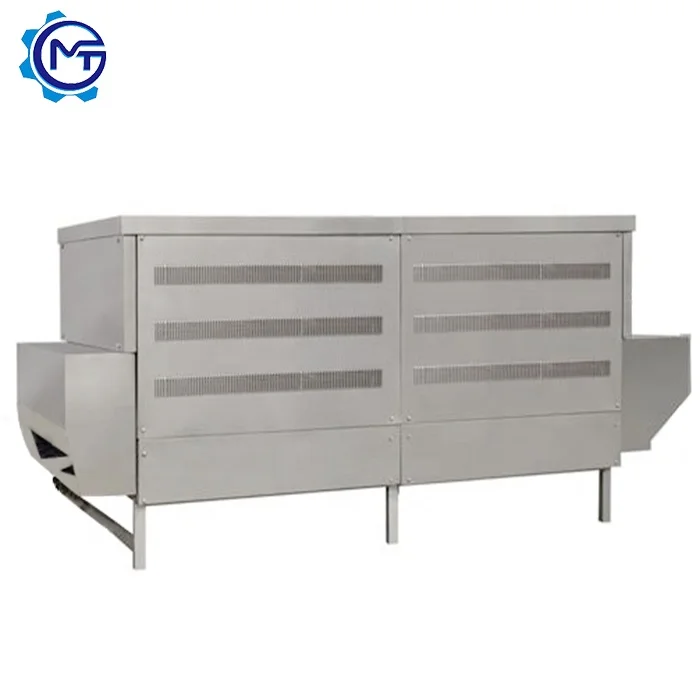

MT70 / MT85 / MT75 Corn Flakes Production Line, Twin-Screw Extrusion, PLC & MCC Control — engineered as a complete turnkey project from batching through flaking, roasting, coating to packing.
- Screw configuration and die design matched to raw material and target flake density
- PLC-controlled hydraulic flaking rollers with dual-motor independent drive
- Hot air roasting oven with conciliation burner and cyclone dust removal
- Throughput calculated and matched across every station to your factory footprint
Layout, commissioning schedule, and operator training delivered under single-supplier responsibility so no station bottlenecks the line.
Description
Matched throughput across every station — we configure the extruder, flaker, dryer, and roaster to the same mass flow rate, verified on your actual corn or cereal blend before the line ships.
Technical Specifications
| Parameter | Value |
|---|---|
| Product Type | Corn Flakes Production Line |
| Extruder Models Available | MT70 / MT85 / MT75 |
| Extruder Type | Twin Screw |
| Installed Power | 160 kW (MT70) / 190 kW (MT85) / 210 kW (MT75) |
| Power Consumption | 120 kW (MT70) / 140 kW (MT85) / 150 kW (MT75) |
| Output Capacity | 150–200 kg/hr (MT70), 300–400 kg/hr (MT85), 300–500 kg/hr (MT75) (basis not stated in source) |
| Overall Dimensions | 41 × 1.5 × 2.2 m (MT70) / 43 × 1.5 × 3.2 m (MT85) / 45 × 1.5 × 3.5 m (MT75) |
| Extruder Working Principle | Feeding system, extruding system, cutting system, heating system, gearing system, controlling system |
| Screw Feature | Automatic lubricating, cooling function, wear-resistant manufacturing technology |
| Flaking Machine | PLC control, hydraulic double rollers, dual-motor independent drive, infrared sensor temperature control |
| Dryer Heating Source | Gas or Electric |
| Roasting Oven | Vibrating pan, conciliation burner, dual circulating fans, cyclone dust removal |
| Coating System | Double tumble sugar melting, elevator, coating drum, spraying nozzle |
| Control System | PLC and MCC |
| Line Stations | Mixing → Extruding → Flaking → Drying → Hot Air Roasting → Sugar Coating → Drying → Cooling → Packing |
| Die Configuration | Multiple shapes (ball, tube, stick, ring, fruit loop, star, wheel, flower, heart) by adjusting mould |
| Standards | CE certified, ISO certified |
Application Suitability
| Application | Material or Output |
|---|---|
| Natural corn flakes production | Corn grits, corn flour, degerminated corn meal |
| Sugar-coated breakfast cereal | Corn base with sugar syrup or honey glaze |
| Multi-grain flake formats | Rice, wheat, oat, and barley powder blends |
| Puffed snack cereal shapes | Fruit loops, rings, stars, wheels from cereal dough |
| Fortified breakfast cereals | Grain blends with added vitamin and mineral premix |
What "Nominal Capacity" Leaves Out About Your Corn Flakes Line
A production rate on paper means nothing if the flaker or dryer cannot keep up at that same mass flow.
I planned a corn flakes line for a South Asian breakfast cereal plant a couple of years back. The extruder ran fine on standard corn flour during our workshop trial. When the line arrived at their facility, they were sourcing degerminated corn meal with a coarser particle size locally. The flakes cracked and crumbled at the rolling stage, and the whole line stalled at my station. Since then, I insist on running every buyer’s actual raw material through our testing workshop before locking the screw configuration, die geometry, and downstream equipment sizing. A corn flakes production line turnkey is only as reliable as the slowest station in the chain, and that bottleneck rarely shows up until you test with real material. [NEED_CITE: particle size distribution effects on flake integrity in cereal processing]
Screw Configuration and Die Design Matched to Your Grain Blend
The twin-screw extruder in this corn flakes production line turnkey accepts a screw configuration specified to your raw material’s starch content, moisture level, and target gelatinisation degree. A high-moisture corn dough requires a different barrel temperature profile and screw pitch arrangement than a dry oat or barley blend. Die geometry directly controls the pellet shape that feeds into the flaking rollers, which determines whether you get intact, uniform flakes or excessive fines at the cooling conveyor.
Flaking and Roasting Precision for Consistent Flake Texture
The flaking machine uses a PLC-controlled hydraulic system with dual motors driving each roller independently, so nip pressure and roll speed can be adjusted without mechanical linkage compromise. Infrared sensors monitor barrel temperature in real time, keeping the dough sheet within the narrow thermal window needed for proper lamination. Downstream, the hot air roasting oven relies on a conciliation burner with two separate circulating fans and a cyclone dust removal device to deliver even surface blistering. This combination is what separates a crisp, bowl-stable flake from one that turns soggy within seconds of hitting milk. [NEED_CITE: thermal profiling standards for breakfast cereal roasting ovens]
Reading the Specification Sheet Against Your Production Reality
The three extruder models span different installed power ratings — 160 kW, 190 kW, and 210 kW — which correspond to distinct motor sizing and gearbox capacities. Higher installed power supports greater torque at the screw shaft, which matters when processing dense multi-grain blends that resist conveying through the barrel. The line dimensions grow from 41 metres to 45 metres in overall length across the range, reflecting longer drying and cooling conveyors needed for higher throughput volumes. Flaking machine hydraulic pressure and roller diameter must scale proportionally; otherwise the dough sheet tears under increased feed rates. Control via PLC and MCC means you can set recipe parameters once and reproduce them across shifts, reducing batch-to-batch density variation that buyers notice on the shelf.
The Hidden Cost of Mismatched Station Capacity
When a buyer sources the extruder from one vendor and the dryer from another, the dryer is often undersized relative to actual extruder output. The result is a wet product pile-up between stations, extended drying times that degrade flake colour, and a roaster that never reaches its design temperature because it is being fed intermittently. I have seen cereal manufacturers run their coating drum at half speed because the upstream dryer could not deliver enough dry flakes to justify a full batch. These throughput mismatches compound across the line and typically surface only after commissioning, when reconfiguring ductwork, conveyor lengths, or burner capacity becomes a costly retrofit. [NEED_CITE: throughput bottlenecking risks in multi-vendor cereal line assembly]
Why Procure the Entire Line From One Supplier
Every station in this corn flakes production line turnkey is throughput-matched during the engineering phase, so the extruder output rate, flaker nip feed, dryer residence time, roaster pan speed, and coating drum batch cycle all align to the same mass flow target. The screw configuration and die selection are specified to your raw material and confirmed by an in-house trial run before shipment, not copied from a generic build. Electrical schematics are prepared with your local voltage, frequency, and control language confirmed before production begins, preventing commissioning delays on site. The same engineering team that designs the layout also handles installation, so there is no information loss between the drawing board and your factory floor. Wear parts such as screws and dies are documented and stocked so your first replacement order is not a scramble. [NEED_CITE: single-supplier accountability in turnkey food processing projects]
Documentation & Verification
- Line layout drawing with throughput matching calculations between extruder, flaker, dryer, and roaster
- Screw and die configuration record specific to your corn or multi-grain raw material
- Trial run report on your actual raw material confirming achievable flake quality before dispatch
- Electrical schematic with voltage, frequency, and PLC language confirmed for your market
- CE declaration of conformity and ISO certificate for export documentation compliance
- Operation and maintenance manual with illustrated wear parts replacement procedures
Installation, Commissioning & Support
- Floor plan review to fit the 41–45 metre line footprint within your available workshop length and column spacing
- Dedicated electrical circuit sized to the 160–210 kW installed power range with proper breaker and cable specification
- Modular station delivery allowing phased uncrating and assembly aligned with your building completion schedule
- First-run parameter setting covering barrel temperature zones, flaker nip gap, roaster fan speed, and coating spray rate
- Operator training on PLC interface navigation, recipe storage, and hydraulic roller pressure adjustment
- Wear parts list covering screws, dies, and roller surfaces with recommended replacement intervals
What We Need to Scope Your Line Accurately
To build a layout that fits your facility and a throughput profile that holds on your material, share your target cereal format, the grain blend you plan to run, and the particle size distribution your local suppliers deliver. We also need your available floor space dimensions, ceiling height, and local voltage and frequency standard so the electrical package is correct from day one. If you have existing upstream batching or downstream packing equipment, let us know the interface specifications so we can match conveyor heights and signal protocols.
Frequently Asked Questions
Q: How is line capacity verified against my actual raw material and recipe?
A: We run your specific corn grits, multi-grain blend, or fortified mix through our in-house testing workshop before the line ships. This trial confirms the screw configuration, die geometry, and downstream station settings can hold your target flake density and texture at the agreed throughput rate, not just on a generic reference material.
Q: How is throughput matched between stations so nothing bottlenecks the line?
A: Each station — extruder, flaker, dryer, roaster, coating drum — is sized during the engineering phase to handle the same mass flow rate. We calculate residence times, conveyor speeds, and batch cycle intervals so no station waits on another, and we document these matching calculations in your layout package.
Q: What voltage, frequency, and PLC language options are confirmed before production?
A: We confirm your local power supply standard, including voltage and frequency, before the electrical schematic is finalised. The PLC interface language is set to your operator preference, and the MCC panel is built with the correct breaker ratings and bus bar sizing for your facility’s incoming supply.
Q: How do screw configuration and die selection affect flake density and shape variety?
A: Screw pitch, flight depth, and kneading block arrangement control how thoroughly the grain starch gelatinises inside the barrel. Die geometry determines the pellet cross-section that enters the flaking rollers. Together they set the flake density, surface blister pattern, and whether you can switch between shapes like rings, stars, and fruit loops on a single line.
Q: What does on-site installation and commissioning cover?
A: Our team handles station positioning, utility connections, first-run parameter tuning, and operator training at your facility. We set barrel temperature profiles, flaker nip pressure, roaster fan speeds, and coating spray rates on your actual recipe, then hand over the line with a complete settings record your team can reference for future batches.
Related products
-
New Technical Automatic Cereal Nutritional Powder Instant Porridge Baby Food Making Machine
¥10,000.00 Select options This product has multiple variants. The options may be chosen on the product page -
Intelligent Corn Flakes Production Line Twin Screw Extruder to Make Corn Flakes amd Morning Cereals
¥30.00 Select options This product has multiple variants. The options may be chosen on the product page -
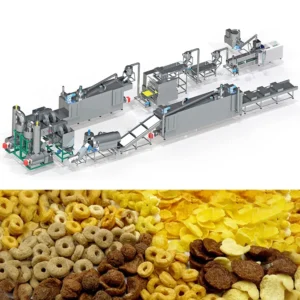
Automatic Instant Breakfast Cereals Snack Food Making Machine
¥10,000.00 Select options This product has multiple variants. The options may be chosen on the product page -
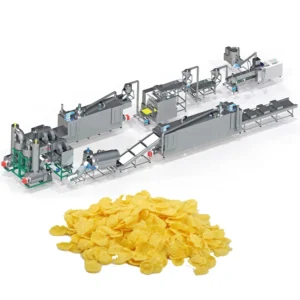
Complete Corn Flakes Production Line Breakfast Cereal Processing Machine Core Motor Component Cornflakes Processing Equipment
¥19,000.00 Select options This product has multiple variants. The options may be chosen on the product page