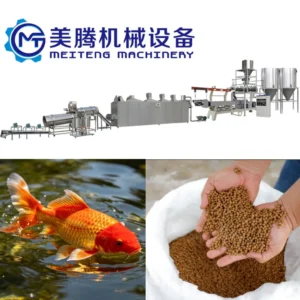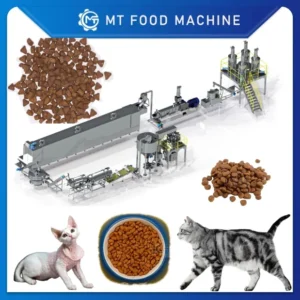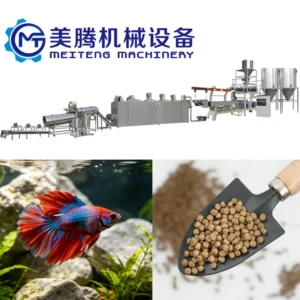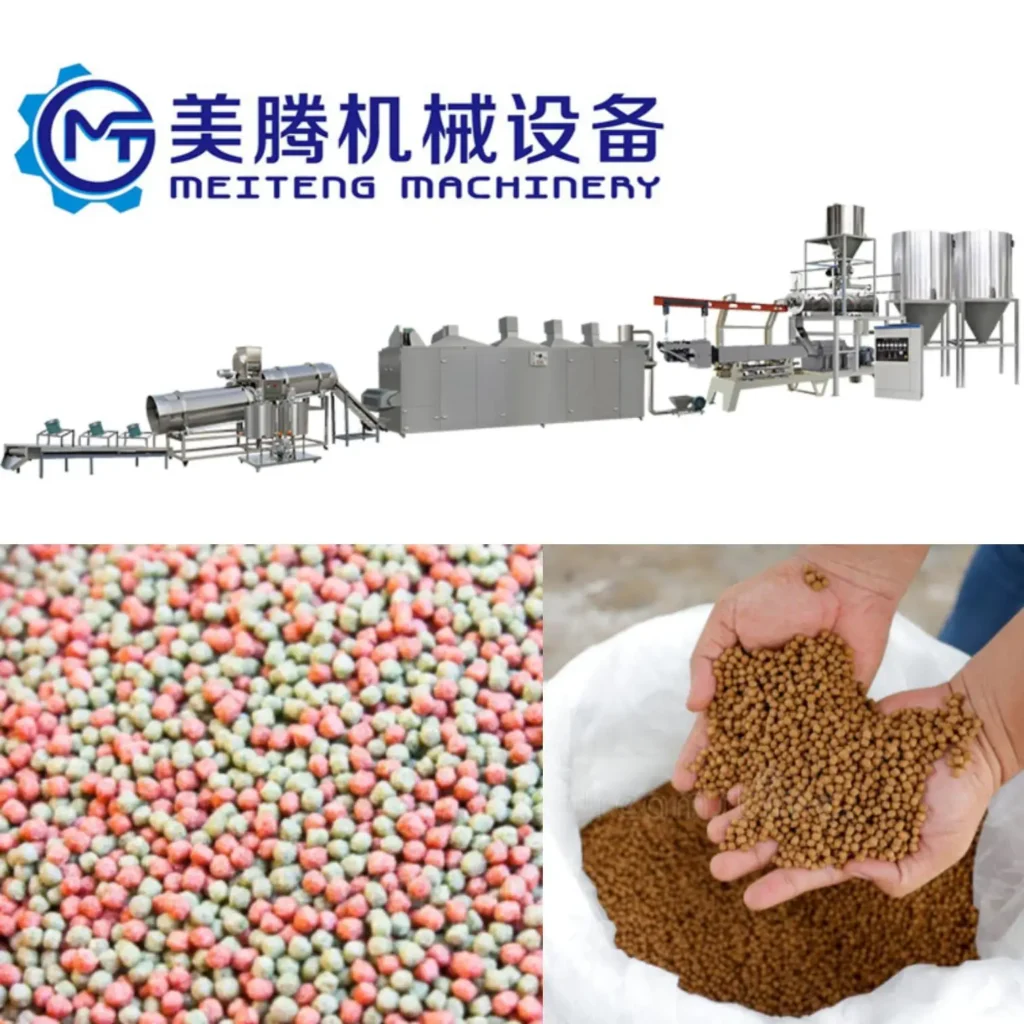


Fish Feed Production Line, Twin-Screw Extruder, Up to 3 t/h, PLC and MCC Control — engineered for multi-species aquaculture output including trout, salmon, catfish, tilapia and shrimp.
- Screw configuration and die design matched to raw material formulation and target pellet density, controlling floating or sinking behaviour through extrusion parameters rather than generic settings.
- Throughput-matched stations from batching through drying, coating and packing eliminate single-point bottlenecks across the line.
Complete turnkey layout, in-house trial runs on your raw material before shipment, and on-site commissioning with operator training included.
Description
Matched Throughput Across Every Station — from batching to packing, each unit is sized against the others so the extruder never waits on the dryer or the coater stalls the line.
Technical Specifications
| Parameter | Value |
|---|---|
| Product Type | Fish Feed Production Line |
| Output Capacity | Up to 3 t/h (basis not stated in source — confirm raw material formulation, moisture content, pellet diameter) |
| Extruder Type | Twin-screw extruder |
| Construction Material | 304 stainless steel contact parts |
| Control System | PLC and MCC control |
| Target Species | Trout, salmon, catfish, tilapia, shrimp |
| Pellet Format | Floating and sinking feed |
| Line Stations | Batching, mixing, extrusion, drying, coating, cooling, packing |
| Assembly State | Complete production line |
| Certification | CE, ISO |
Application Suitability
| Application | Material or Output |
|---|---|
| Marine fish grow-out feed | High-protein floating pellets for salmon and trout |
| Freshwater aquaculture feed | Sinking and slow-sinking pellets for catfish and tilapia |
| Hatchery starter feed | Micro-pellets with precise diameter control for juvenile fish |
| Shrimp feed production | Dense sinking pellets with high aquatic stability |
Why "3 Tons per Hour" Means Nothing Without Your Recipe
Capacity only holds when the extruder, dryer, and coater are balanced against your actual formulation.
A fish feed production line turnkey quoted on a nominal starch-based recipe can lose half its throughput the moment a buyer switches to a high-fat salmon formulation. The extruder screws cannot convey the material at the same rate, the dryer needs longer residence time to hit target moisture, and the coater drips excess fat onto the conveyor. I have watched a line rated for multi-ton output crawl through a single ton because nobody verified the downstream stations against the real recipe [NEED_CITE: throughput derating on high-fat aquatic feed formulations]. The fish feed production line turnkey must be configured around what you actually put in the hopper.
Screw Configuration That Follows the Formula
Every aquatic species demands a different pellet density, and density starts inside the barrel. The twin-screw extruder in this line uses screw elements and die geometry specified to the buyer’s raw material blend and target pellet behaviour. Floating pellets for trout require high expansion and low bulk density, which means a screw profile that generates intense shear and rapid pressure drop at the die face. Sinking pellets for shrimp need the opposite — controlled compression with minimal expansion so the pellet holds together under water. Swapping between species on the same line means reconfiguring the screw elements and die plate, a process that takes a trained crew a matter of hours rather than days.
Holding Pellet Integrity Through the Dryer and Coater
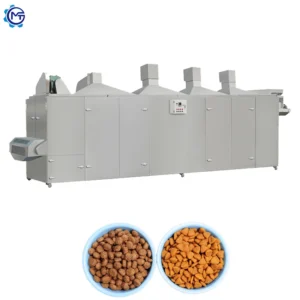
Extrusion shapes the pellet, but drying and coating decide whether it survives the journey to the farm. A fish feed production line turnkey must move pellets from the extruder die into the dryer without crushing them, remove moisture evenly across every layer on the belt, and then apply fat or liquid coating without creating soft spots. If the dryer is undersized relative to extruder output, pellets exit with residual moisture that invites mould in storage [NEED_CITE: moisture content thresholds for mould risk in stored aquatic feed]. The PLC and MCC control system on this line links the dryer belt speed and temperature zones to the extruder feed rate, so a change in output automatically adjusts the drying profile.
Reading the Specs That Actually Matter
The twin-screw extruder sits at the heart of this line, and its screw configuration is the single most consequential specification for any buyer. A screw profile designed for corn-heavy kibble will not process a 45% fishmeal shrimp formulation without severe torque spikes and uneven pellet shape. The 304 stainless steel contact surfaces matter because aquatic feed ingredients are corrosive — salt, fish oils, and mineral premixes attack carbon steel and contaminate the product stream. The PLC control system stores recipes so operators can recall screw speed, barrel temperature zones, and feeder ratios for each species without manual trial and error every shift. Capacity figures only become meaningful once the raw material formulation, target moisture, and pellet diameter are locked in.
What Happens When Stations Are Mismatched
If the coating drum cannot keep pace with the extruder, pellets queue up and cool below the temperature needed for fat absorption, resulting in dusty, under-coated feed that fish reject. An undersized cooler sends warm pellets into the bagging station where condensation forms inside the sack. These bottlenecks do not show up in a brochure that lists only the extruder’s nominal output [NEED_CITE: hidden throughput losses from mismatched downstream equipment in feed lines]. The buyer pays for a high-capacity extruder and receives a medium-capacity line.
Why This Line Is Built Differently
Every station from batching to packing is supplied under one scope, so the extruder output, dryer belt area, coater volume, and packing speed are calculated together before fabrication begins. The screw configuration and die design are specified to the buyer’s raw material and target pellet density rather than copied from a generic template. An in-house testing workshop runs trial production on the buyer’s actual formulation before the line ships, catching density and shape problems at the factory instead of on the installation floor. The 304 stainless steel contact parts and PLC-controlled process parameters are standard across the line, not optional upgrades on the extruder alone.
Documentation & Verification
- Line layout showing throughput balance across batching, extrusion, drying, coating, and packing stations
- Trial run report produced on your raw material formulation in the testing workshop
- Screw and die configuration record matched to your target pellet diameter and density
- Electrical schematic confirming voltage, frequency, and control language for your facility
- CE declaration of conformity and ISO certificate for customs and compliance clearance
- Wear parts list with reorder codes for screws, dies, and dryer belts
Installation, Commissioning & Support
- Foundation plan with load points for the twin-screw extruder and multi-pass dryer
- Power schedule listing dedicated circuits for the extruder main drive and dryer heating zones
- Assembly sequence for line stations arriving in modular shipping frames
- First-run parameter logging on your formulation to establish baseline PLC recipes
- Operator training covering screw element swaps and die changes for multi-species production
- Spare screw elements, die plates, and dryer belt sections shipped with initial order
What to Include in Your Inquiry
Send the raw material formulation you plan to run, including fishmeal percentage, fat content, and target moisture. Specify which species you need to produce and whether floating, sinking, or both formats are required. Confirm the local voltage and frequency at your plant so the MCC and PLC panels arrive wired correctly. If you have existing upstream milling or downstream bagging equipment, share the interface dimensions and throughput so the line connects without modification.
Frequently Asked Questions
Q: How is the capacity of this fish feed production line turnkey verified before shipment?
A: The manufacturer runs your actual raw material formulation in an in-house testing workshop and records output rate, pellet density, and moisture at every station. The trial run report accompanies the shipment, so you know the verified throughput on your recipe before the line leaves the factory floor.
Q: How are floating and sinking pellets controlled on the same line?
A: Pellet density is set by screw configuration, die geometry, and barrel temperature profile. Floating pellets require high expansion at the die face, while sinking pellets need controlled compression. Operators swap screw elements and adjust PLC-stored recipes to switch between formats within a single shift.
Q: What layout and utility planning is provided before installation starts?
A: The supplier delivers a complete line layout showing station placement, material flow direction, utility connection points for steam, water, compressed air, and electrical feeds. This document lets your contractor prepare foundations and routing before the equipment arrives at the site.
Q: How is throughput balanced between the extruder and downstream stations?
A: Each station — dryer, coater, cooler, packing — is sized against the extruder’s verified output on your formulation. The PLC control system synchronizes belt speeds and drum rotation to the extruder feed rate, preventing material backlog or starvation at any point along the line.
Q: What operator training is included during commissioning?
A: On-site training covers PLC recipe recall, screw element and die plate swaps for species changes, dryer temperature zone adjustment, coater spray calibration, and daily maintenance routines. The crew runs production under supervision until target pellet specifications are met consistently.
Related products
-
MT70 200-250kg/h Dog Cat Pet Food Processing Line 380V 50HZ Three Phase 45KW
¥35,000.00 Select options This product has multiple variants. The options may be chosen on the product page -
MT135 Brand 2.5-3.0t/h PLC Controlled Multi-Species Cat Food Processing Line
¥55,000.00 Select options This product has multiple variants. The options may be chosen on the product page -
In Stock Pet Feed Production Line / Dog Cat Food Extrusion Machine
¥9,500.00 Select options This product has multiple variants. The options may be chosen on the product page -
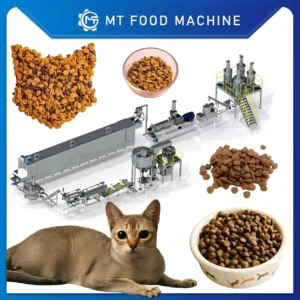
200-250kg/h Capacity PLC Controlled Multi-Species Dog Food Processing Line with MT-70 Extruder
¥35,000.00 Select options This product has multiple variants. The options may be chosen on the product page