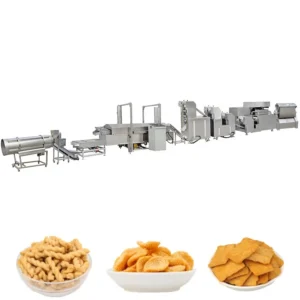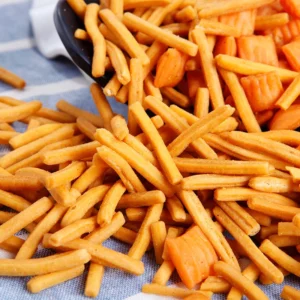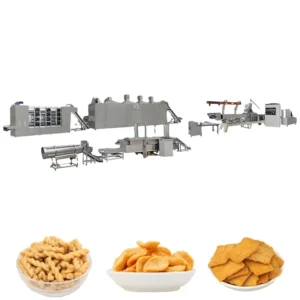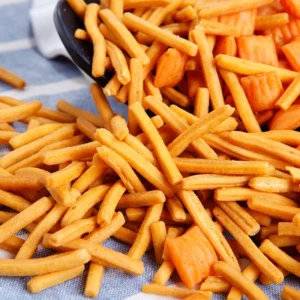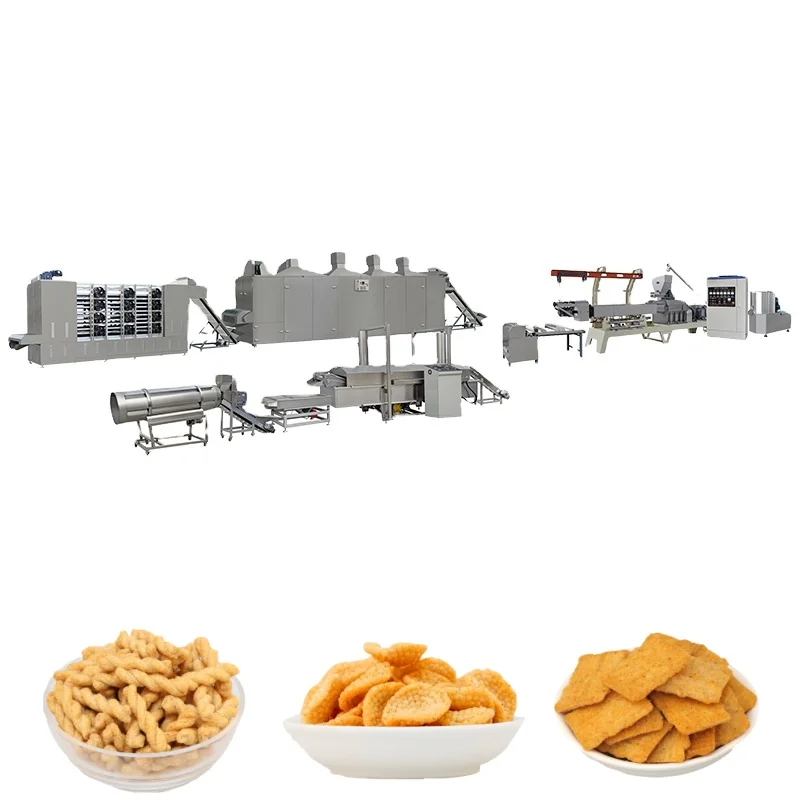
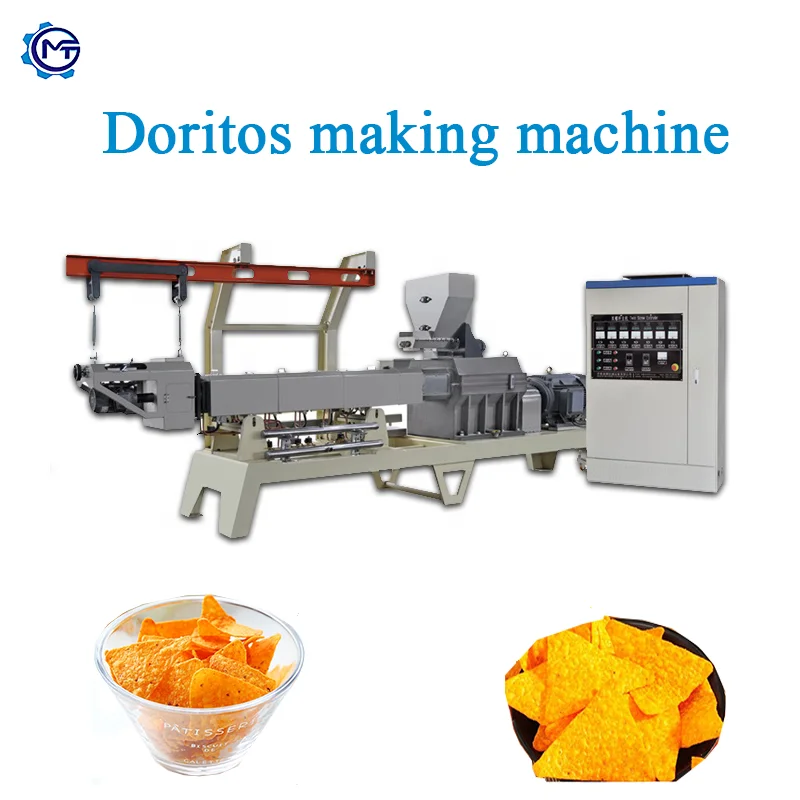

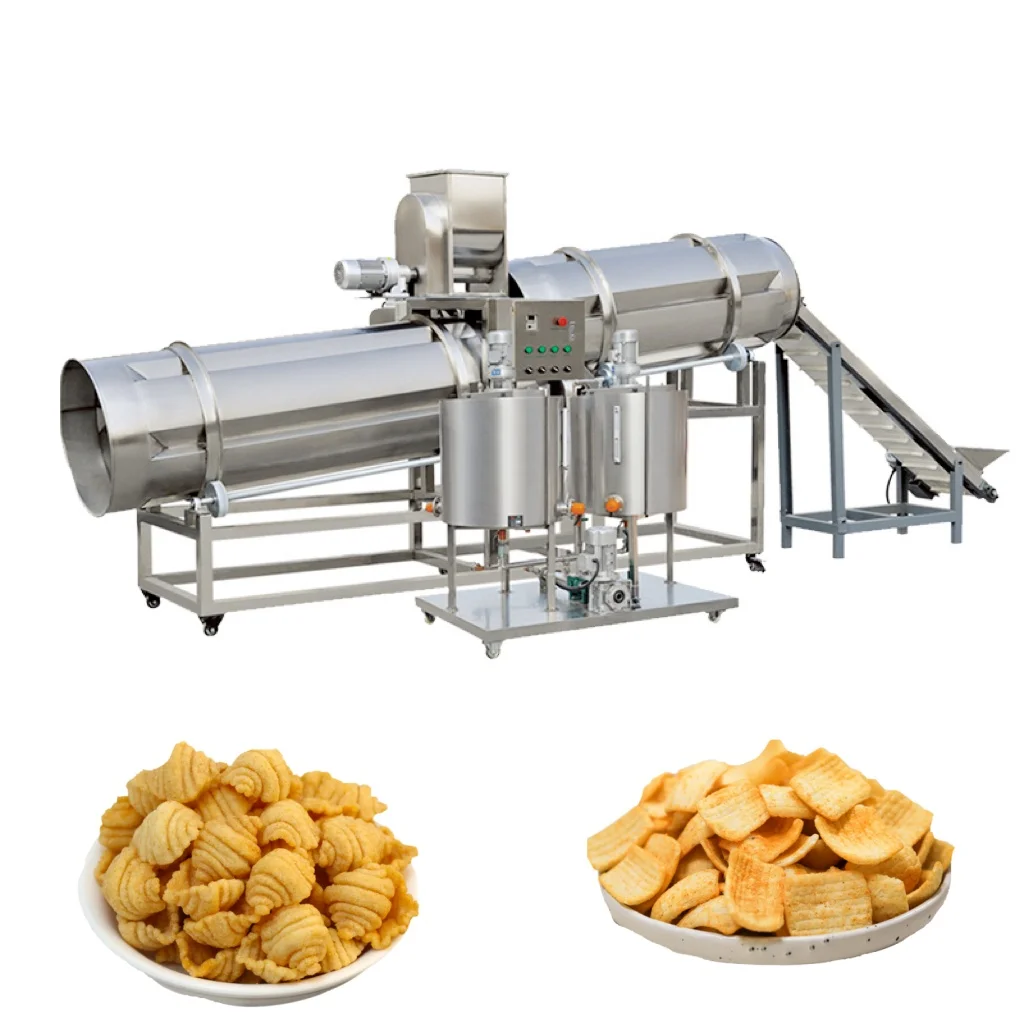


Fried Pellet Snack Production Line, Twin-Screw Extrusion, 600mm Fryer Belt, Gas/Electric/Diesel Heating — engineered for corn bugles, crispy chips and Doritos-style formats with screw and die configured to your raw material.
- Co-rotating twin-screw modules handle gelatinisation, de-gassing and forming in one pass; die changes produce sticks, shells, tubes or wavy chips without replacing the extruder
- Throughput-matched stations from mixer through fryer prevent bottlenecks at any stage
Trial runs on your actual formulation in our testing workshop validate output before shipment.
Description
Integrated line throughput — mixing, twin-screw extrusion, cutting and frying stations are capacity-matched so fried pellet output stays consistent from hopper to discharge.
Technical Specifications
| Parameter | Value |
|---|---|
| Product Type | Fried Pellet Snack Production Line |
| Models Available | MT-65 / MT-70 / MT-85 / MT-75 / MT-95 |
| Extruder Type | Twin screw, co-rotating, sectional modules |
| Main Motor Power | 100kW (MT-65) / 130kW (MT-70) / 180kW (MT-85) / 185kW (MT-75) / 280kW (MT-95) |
| Output Capacity | 120–150 kg/h (MT-65) to 800–1000 kg/h (MT-95) (basis not stated in source — confirm raw material formulation and moisture content) |
| Line Stations | Mixer → Twin Screw Extruder → Cutting Machine → Fryer |
| Mixer Power | 4kW / 7.5kW / 15kW (matched to model) |
| Cutting Machine Power | 1.47 kW |
| Cutting Machine Dimensions | 2500×600×1100 mm |
| Fryer Belt | 600 mm stainless steel belt |
| Drying Method | Gas / Electric / Diesel heating |
| Voltage & Frequency | Customizable (e.g., 3ph 380V 50Hz, 3ph 415V 60Hz, 3ph 220V 60Hz) |
| Control System | PLC / MCC options available (confirm before production) |
| Standby Spare Parts | 2–3 years of wear parts recommended |
| Warranty | 1 year complete warranty with lifetime maintenance service |
| Certification | CE (electronic edition for export) |
Application Suitability
| Application | Material or Output |
|---|---|
| Corn bugles and crispy chips | Corn powder, wheat flour, corn starch |
| Doritos-style corn chips | Corn powder, potato starch |
| Salad sticks and tubes | Wheat flour, potato powder |
| Wavy chips and pillow shapes | Corn starch, wheat flour blends |
| Shell and screw shapes | Corn powder, potato starch blends |
Why Nominal Capacity Figures Fail on Real Formulations
A fried pellet snack production line turnkey is only as productive as its lowest-matched station allows.
When a line is quoted on nominal capacity without accounting for your specific corn or potato formulation, the extruder may physically push dough at the rated kilogram figure, but the downstream cutter and fryer fall behind. Semi-finished pieces pile up between stations. Product sitting too long before frying picks up surface moisture, and color comes out uneven across the batch. I saw this firsthand in Indonesia where a newly installed fried corn bugles line spent its first week producing chips with inconsistent browning because the fryer belt speed had never been calibrated to the extruder’s actual output on that particular starch blend [NEED_CITE: throughput matching between extrusion and frying stations]. The fried pellet snack production line turnkey must be calculated on your raw material, not a generic datasheet figure.
Throughput Matching Across Every Station
The extruder, cutter and fryer on this fried pellet snack production line turnkey are specified together so output flows without intermediate buffering. When the twin-screw extruder runs at a given throughput on your corn or potato formulation, the cutting machine cycles at a corresponding rate, and the 600 mm stainless steel fryer belt advances at a speed that ensures each piece receives equal residence time in the oil. This prevents the half-processed pile-up that causes color variation and texture inconsistency downstream.
Screw Configuration Dictates Gelatinisation Quality
The co-rotating sectional screw modules inside the twin-screw extruder handle continuous mixing, de-gassing, cooking and forming in a single pass. The screw profile and barrel temperature zones are configured to the starch behaviour of your specific raw material, ensuring complete gelatinisation before the dough reaches the die. Incomplete gelatinisation shows up as dense, under-expanded pieces that fry unevenly and produce a hard bite instead of the expected crisp fracture [NEED_CITE: starch gelatinisation requirements in twin-screw extrusion]. The die and roller configuration is selected for your target shape, whether bugles, chips, sticks, shells or tubes, and can be changed without swapping the extruder itself.
Fryer Parameters and Heating Consistency
The 600 mm stainless steel mesh belt carries cut pieces through the fryer at a controlled speed while automatic temperature regulation maintains oil stability across the full belt width. Heating is available through gas, electric or diesel sources depending on local utility economics and availability. Stable oil temperature across the belt means pieces at the edges receive the same heat exposure as those in the center, producing uniform color and moisture reduction throughout the batch.
What Happens When Stations Are Mismatched
An extruder running ahead of the fryer forces operators to either slow the extruder down or let cut pieces queue on conveyors. Queued pieces lose surface moisture at different rates, and when they finally enter the fryer, some absorb oil faster than others. The result is a mixed batch with light and dark pieces that cannot be packed together without triggering quality rejections. I have seen producers lose an entire first production week sorting product by hand because the line was never balanced before shipment [NEED_CITE: quality losses from unmatched line stations in snack processing].
Why Procurement Through This Line Matters
The line is supplied as a complete integrated project rather than individual machines assembled from separate vendors, meaning throughput calculations account for every station from mixer to fryer. Screw and die configurations are documented against your raw material formulation before production begins, not copied from a generic build. A trial run on your actual raw material takes place in the in-house testing workshop so product density, shape and fry behavior are confirmed before the line ships. Voltage, frequency and control language are verified against your facility specifications to avoid commissioning delays. Wear parts including screws, dies and belts are supplied as reserve stock so replacements are on hand when the first changeover is due.
Documentation & Verification
- Line layout and capacity calculation against your raw material formulation and target output
- Screw and die configuration record specific to your product shape and starch blend
- Electrical schematic with confirmed voltage, frequency and control language before build
- Trial run report on your actual raw material processed in the testing workshop
- CE declaration of conformity for export compliance
- Operation and maintenance manual with wear parts replacement schedule
Installation, Commissioning & Support
- Foundation and utility planning matched to the full line footprint and power draw
- Voltage and frequency confirmed to your local supply before electrical panel assembly
- Line arrives as integrated stations with cutting machine at 2500×600×1100 mm footprint
- First-run parameter setting for extruder barrel zones and fryer belt speed
- Operator training covering die changes, screw module swaps and fryer temperature profiles
- Wear parts list covering screws, dies and fryer belt with sourcing guidance
What We Need to Start Your Line Configuration
Share your raw material formulation including starch type and moisture content, your target product shape and daily output requirement, and your facility voltage and frequency specification. If you have existing upstream or downstream equipment that this line must integrate with, provide those connection points and conveyor heights so the layout accounts for them.
Frequently Asked Questions
Q: How is line capacity verified against my specific raw material formulation?
A: Capacity is calculated against your actual starch blend, moisture content and target shape rather than a generic nominal figure. The extruder screw profile, die opening and fryer belt speed are all specified from this calculation, and a trial run on your raw material in the testing workshop confirms output before the line ships.
Q: What voltage, frequency and control language options are confirmed before production?
A: Voltage and frequency are confirmed to your facility specification — options include 380V/415V/220V at 50Hz or 60Hz. Control panel language and PLC interface are set before electrical assembly begins so operators can read all menus and alarms in their working language on day one.
Q: Can I run a trial on my own raw material before the line ships?
A: Yes. Raw material is processed through the twin-screw extruder, cutter and fryer in the in-house testing workshop. You receive a trial run report documenting product shape, density, color and fry behavior, allowing formulation or screw adjustments before the line leaves the factory.
Q: How are extruder, cutter and fryer throughput matched to prevent bottlenecks?
A: Each station is specified together based on your formulation and target output. The cutting machine cycle rate and 600 mm fryer belt speed are calculated to match the extruder’s actual throughput on your material, preventing semi-finished product pile-up between stations.
Q: What spare wear parts are included and how are replacements sourced?
A: The line ships with reserve screws, dies and fryer belt sections covering 2–3 years of typical operation. A wear parts list with specifications is provided so replacements can be ordered directly or sourced locally to the correct dimensions.
Related products
-
Frying Crispy 3D Corn Bugles Pellets Fried Chips Snacks Food Machine Production Line Bugles Making Extruder
¥100.00 Select options This product has multiple variants. The options may be chosen on the product page -
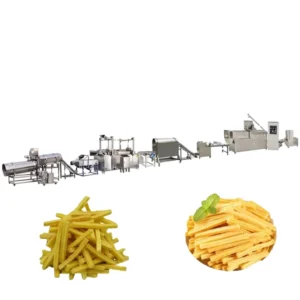
High-Yield Automated Fried Snack Production Line – Double Screw Salad Strips & Millet Crust Making Equipment
¥65.00 Select options This product has multiple variants. The options may be chosen on the product page -
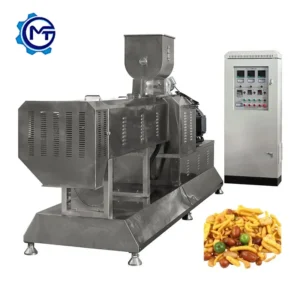
New 100-200kgh Automatic Fried Nimko Extruder Machine Food Grade Stainless Steel for High Productivity Fried Snacks Processing
¥8,575.00 Select options This product has multiple variants. The options may be chosen on the product page -
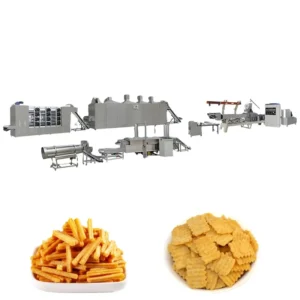
Fried Bugles Chips Production Line Fried Doritos Tortilla Snack Food Extruder
¥100.00 Select options This product has multiple variants. The options may be chosen on the product page